




Bombardier has earned its reputation as a pinnacle of excellence in private aviation, with a distinguished fleet designed for discerning private clients. Among its most celebrated aircraft, the Challenger 300 and Challenger 350 represent two of the most sought-after super-midsize jets, each delivering an exceptional balance of range, comfort, and performance. But what truly distinguishes one from the other?
We’ll guide you through the essential differences between these two remarkable aircraft and why they continue to be preferred choices for both business and personal journeys.
Challenger 300: Performance and Features
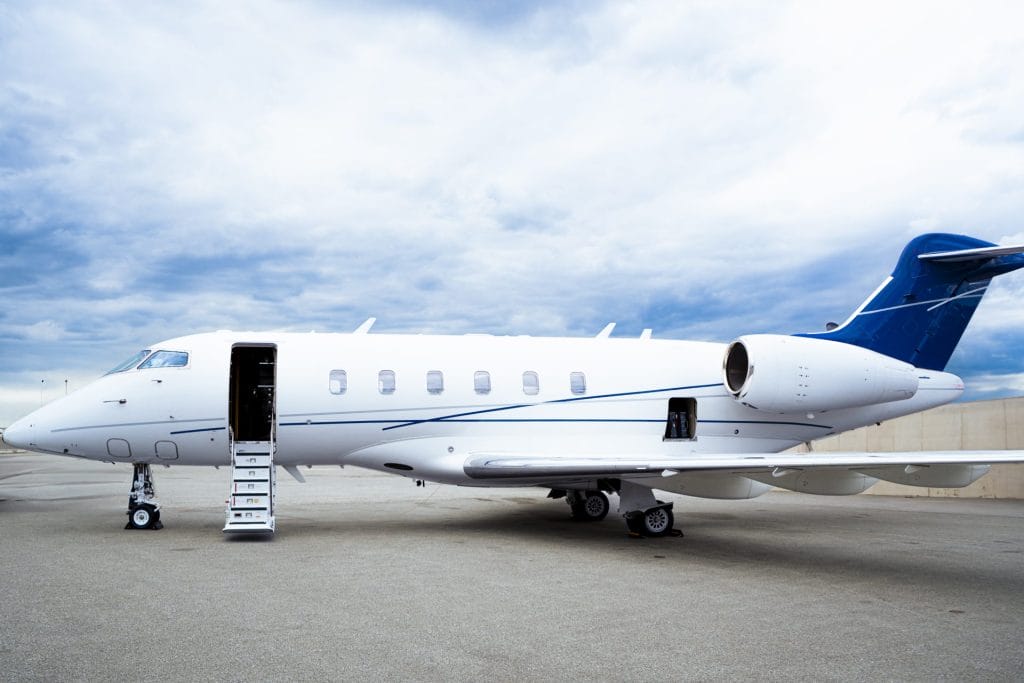
Designed with input from actual private flyers, the Challenger 300 was built to set new industry standards for super midsize private jets. This proven aircraft has earned its reputation for cutting-edge technology, exceptional comfort, and nonstop coast-to-coast capabilities. With deliveries spanning from 2003 to 2014, over 450 Challenger 300s remain in active service worldwide, ensuring excellent charter availability and a mature support infrastructure.
- Holds five over-water and transcontinental records
- Offers a 3,065-nautical-mile range for seamless long-haul travel
- Designed for superior reliability and efficiency, making it an excellent option for frequent travelers
Whether you’re flying for business or pleasure, the Challenger 300 delivers a best-in-class experience with proven performance.
Challenger 350: upgrades and features
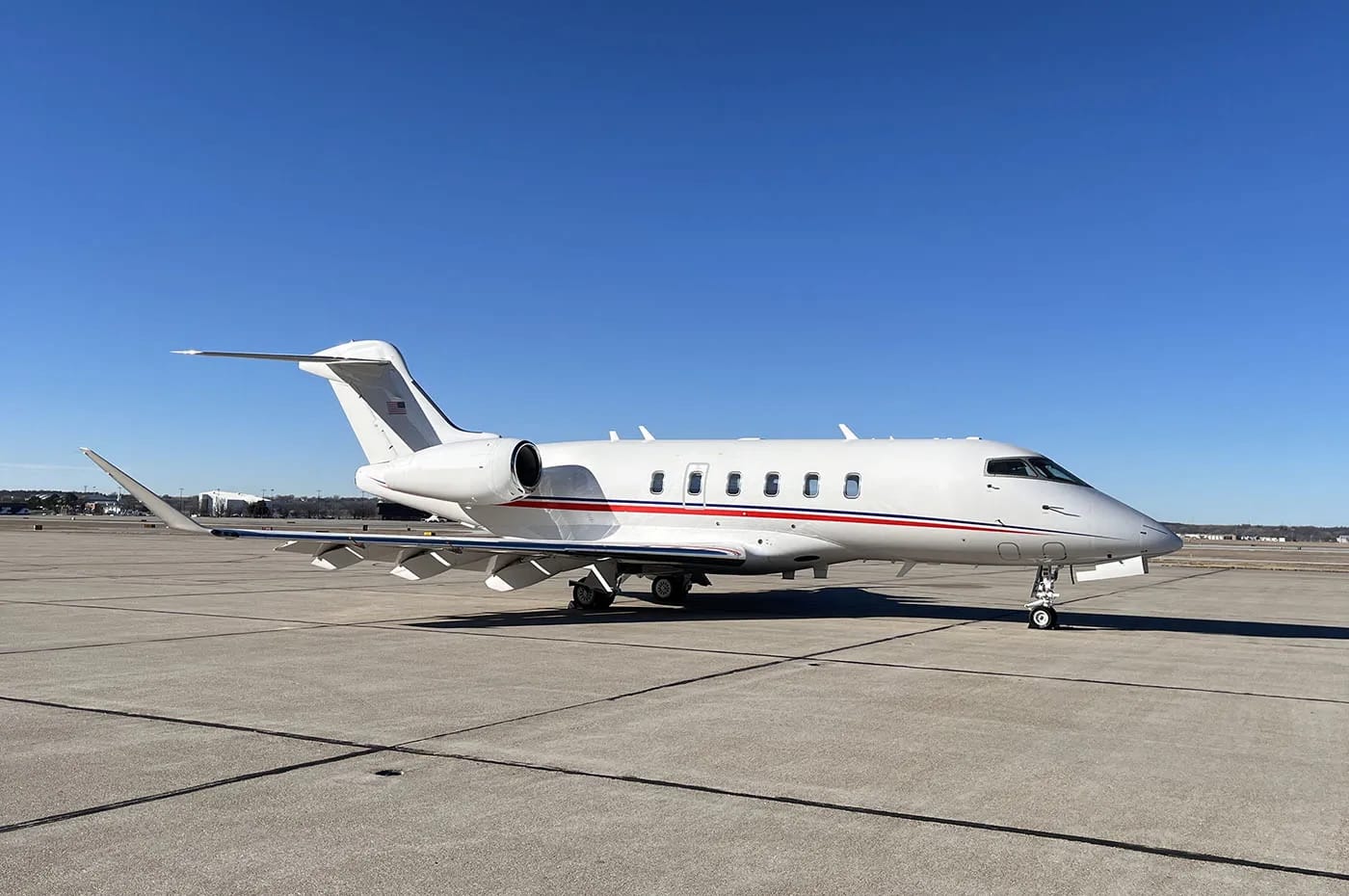
Building on the legacy of the Challenger 300, the Challenger 350 takes innovation to the next level with enhanced avionics, upgraded engines, and an even more refined cabin experience. Introduced in 2014 as an enhanced evolution of the proven Challenger 300 platform, both aircraft share the CL-30 type rating, meaning pilots certified on the Challenger 300 can fly the Challenger 350 with minimal additional training—reducing operational costs and increasing scheduling flexibility for operators.
- Newly designed winglets and more powerful engines increase efficiency and expand possible destinations
- 3,200-nautical-mile range provides extended non-stop capabilities
- Lowest-in-class direct operating costs, making it one of the most economical choices in its category
Both the Challenger 300 and Challenger 350 require two pilots for operation, standard for super-midsize business jets in this category. Inside, the Challenger 350 redefines the in-flight experience with enhanced cabin technology and passenger comfort features.
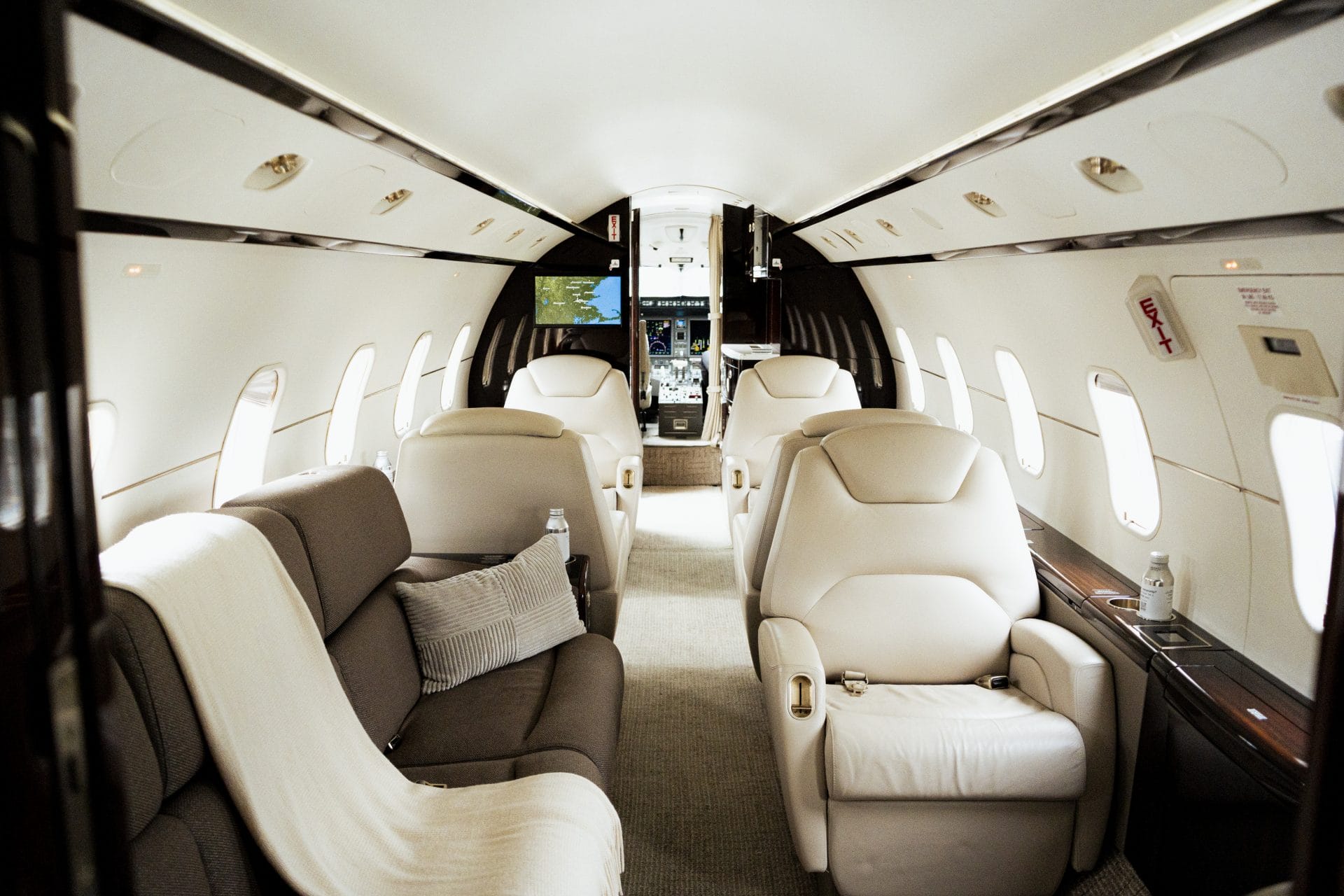
- Widest-in-class cabin with flat floors and stand-up ceilings
- Larger windows for enhanced natural light
- Revolutionary side-ledge concept and advanced Cabin Management System
- Passenger-controlled lighting and temperature for a fully customizable experience
With these enhancements, the Challenger 350 delivers an unparalleled combination of performance and cost-efficiency for private aviation travelers who demand the best.
Challenger 300 and 350 Production Timeline
The Challenger 300 began production in 2003 and quickly established itself as a standard-bearer for super midsize private jets. By 2014, Bombardier introduced the Challenger 350, featuring upgraded avionics and engines, and continued production for discerning Private Clients around the world. Demand remains high for both platforms, with the Challenger 350 expected to remain in production until at least the mid-2020s, ensuring ongoing enhancements and support. Both aircraft are widely utilized in private and charter operations, reflecting their reliability and strong global service network based on fleet reports. Enthusiasts appreciate the Challenger family’s forward-thinking design, which combines proven performance with evolving cabin technology.
Challenger 300 vs 350 comparison
Range
The Challenger 300 offers an impressive range of 3,065 nautical miles, while the Challenger 350 extends this to 3,200 nautical miles—enabling both aircraft to excel at transatlantic missions such as New York to London or Los Angeles to Hawaii.
The difference of approximately 145 nautical miles translates to greater routing flexibility and fuel reserve options on long-haul flights, with the Challenger 350 providing additional operational advantages for Western European destinations.
PASSENGERS: Both aircraft typically accommodate 10 passengers in standard executive configurations, though they can be certified for high-density layouts of up to 16 passengers—a flexibility that’s less common in the private charter market.
Cabin Size:
Challenger 300:
- Cabin length 25 ft 2 in
- Cabin width centerline 7 ft 2 in
- Cabin width floorline 5 ft 1 in
- Cabin height 6 ft 1 in
Challenger 350:
- Cabin length 25 ft 2 in
- Cabin width centerline 7 ft 2 in
- Cabin width floorline 5 ft 1 in
- Cabin height 6 ft 1 in
No Difference in size, but the inside to the 350 has been improved with larger windows and the ability for passengers to control the lighting and temperature.
Avionics:
The Challenger 350 features the advanced Rockwell Collins Pro Line 21 system, significantly upgraded from the Challenger 300’s avionics. Key enhancements include synthetic vision technology that provides pilots with a 3D view of terrain and obstacles, improving safety in poor weather conditions. The dual inertial reference system enhances navigation accuracy, while MultiScan weather radar helps pilots avoid turbulence for a smoother passenger experience. The completely paperless cockpit reduces pilot workload and enables more efficient flight operations.
Engine: Challenger 300: Honeywell HTF7000 turbofans Challenger 350: Two Honeywell HTF7350
Difference: The Challenger 350’s upgraded Honeywell HTF7350 engines deliver 7,323 lbs of maximum thrust compared to the Challenger 300’s 6,826 lbs, providing improved takeoff performance, enhanced high-altitude capabilities, and better performance at hot-and-high airports.
Speed:
Both aircraft cruise at approximately Mach 0.82 (roughly 528 mph), ensuring equally fast travel times whether you choose the Challenger 300 vs Challenger 350 for your private aviation needs.
Both aircraft represent the pinnacle of private jet travel, offering world-class comfort, transcontinental range, and superior efficiency for business aviation and personal travel. Explore all of your options in both of these aircraft and more through our jet-specific Jet Card Programs.
Operating Costs and Efficiency
The Challenger 350 incorporates more powerful Honeywell HTF7350 engines to deliver enhanced thrust and better efficiency during long-haul journeys. Its refined aerodynamics help reduce fuel burn while maintaining a brisk cruising speed. These improvements can result in more cost-effective operations, making the aircraft exceptionally appealing for frequent travelers who value performance without compromise. Though both the Challenger 300 and 350 share similar super-midsize capabilities, the 350’s upgrades offer Private Clients an elevated combination of range, speed, and comfort. Whether flying for business or personal journeys, Private Clients benefit from the Challenger 350’s innovative design aimed at reducing operating costs over the life of the aircraft.
Challenger 300/350 Jet Card Options
Magellan Jets is the leader in domestic and international private jet travel, offering bespoke private aviation solutions including Jet Card Ownership and On-Demand Charter. With a global network of thousands of pre-qualified aircraft, Magellan Jets is committed to the highest safety standards, personalized experiences, and top-level customer service. Speak with our Private Aviation Advisors today, or explore our full range of solutions here.
Frequently Asked Questions about Challenger 300 vs Challenger 350 (FAQs):
Can the challenger 300 fly from New York to London?
Yes, the Challenger 300 often covers this transatlantic route under optimal conditions, given its 3,065-nm range. However, certain factors such as headwinds and passenger load may require an intermediate stop.
What is the maximum number of passengers on a challenger 350?
The Challenger 350 is typically certified for up to 10 passengers in an executive layout. Many Private Clients prefer an 8- or 9-passenger configuration to enhance comfort and overall cabin experience.
Do the challenger 300 and challenger 350 share the same pilot type rating?
Yes, both models share the CL-30 type rating, facilitating a smooth transition for trained pilots.
Experience the Best Private Aircraft With Magellan Jets
Whether you select the proven Challenger 300 or the refined Challenger 350, both aircraft deliver an exceptional super-midsize experience defined by transcontinental range, spacious cabins, and remarkable performance. The choice between these two distinguished aircraft ultimately depends on your specific journey requirements, from extended range capabilities to the latest cabin technology and avionics.
At Magellan Jets, we specialize in matching Private Clients with the perfect aircraft for every journey. Our Private Aviation Advisors understand the nuances of the Challenger family and can help you determine which platform best serves your business and personal travel needs. Connect with a Private Aviation Advisor today to explore how the Challenger 300 or 350 can elevate your next journey.