A 52-year federal ban on supersonic flight over U.S. soil ended with a single signature in June 2025. The road to supersonic private jet travel got shorter, though the honest picture is more nuanced than the headlines suggest. No supersonic private jet carries passengers today, yet the barriers that stalled the category are falling in sequence.
For sophisticated Private Clients, the practical question is what to do now, before the first aircraft arrive.
What Changed: The US Reopened Its Skies to Supersonic Flight
On June 6, 2025, Executive Order 14304, “Leading the World in Supersonic Flight,” reset the rules. It directs the Federal Aviation Administration (FAA) to repeal the overland supersonic prohibition codified at 14 CFR 91.817. That is the specific federal regulation barring civil aircraft from exceeding the speed of sound over land.
The order gives the FAA 180 days to repeal that prohibition. It also sets 18 months to issue a proposed rule for a noise-based certification standard.
The restriction being lifted is old. The noise rules date to 1968, and the outright Mach 1 limit over land followed in 1970. Together they produced a prohibition that stood for roughly 52 years.
The order also instructs the agency to repeal other regulations that industry cites as obstacles.
Why the Sonic Boom No Longer Has to Reach the Ground
The old ban treated every supersonic flight as equally disruptive. Early designs produced a loud boom that carried all the way to the surface. Newer engineering separates speed from noise.
Under a technique called Mach cutoff, an aircraft breaks the sound barrier at altitude. Its shockwaves then refract in the atmosphere and dissipate before reaching the ground. As a result, no audible boom is heard below.
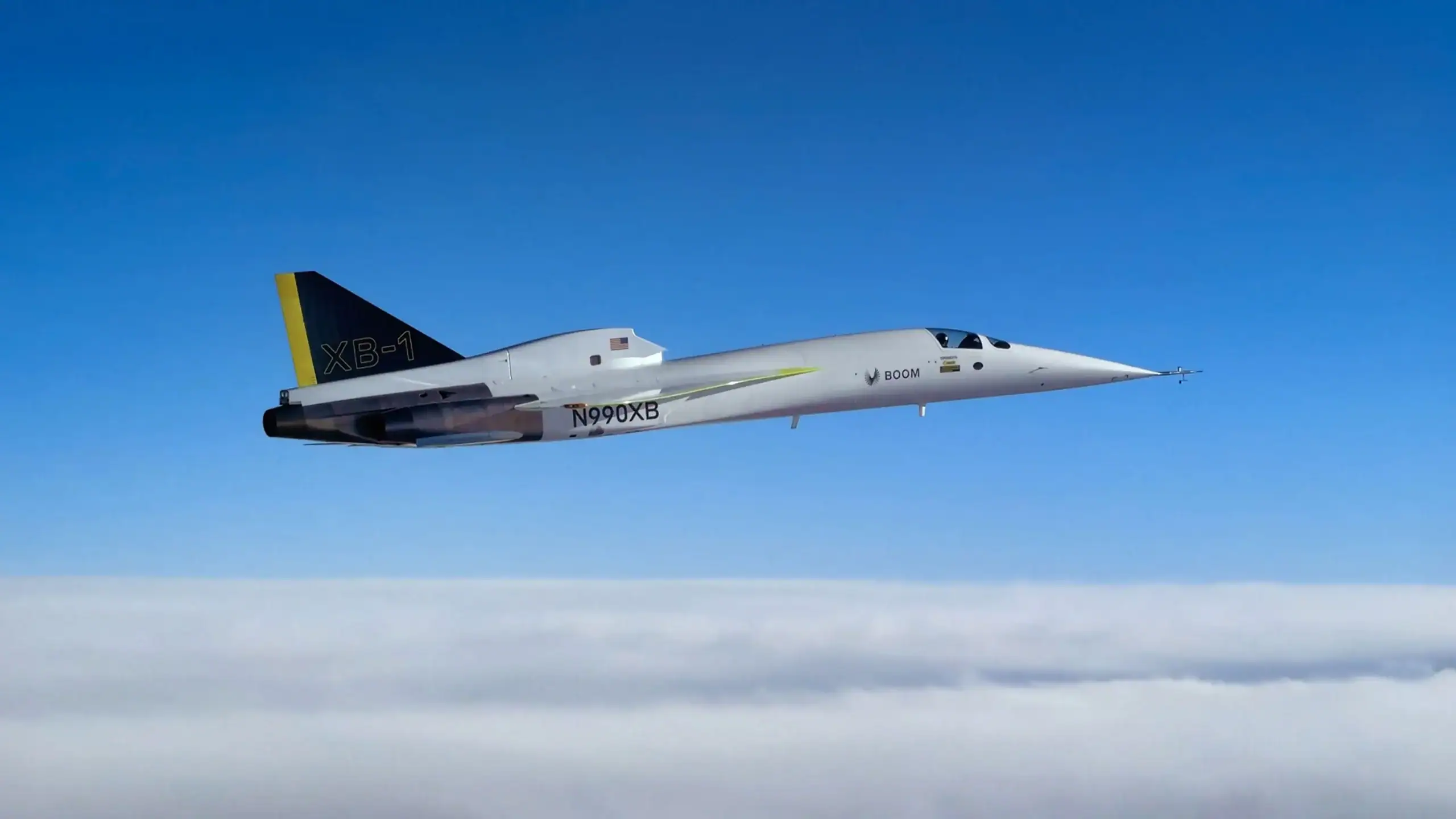
This is not theoretical. Boom Supersonic’s XB-1 demonstrator broke the sound barrier several times in early 2025 with no audible boom on the ground.
A parallel government effort points the same direction. NASA’s X-59 experimental aircraft is engineered to produce a soft “thump” rather than a sharp boom. It completed its first supersonic flight in June 2026 and is now flight testing, generating the data regulators need.
Can You Book a Supersonic Private Flight Today? An Honest Answer

No, you cannot book a supersonic private flight today. As of 2026, no supersonic aircraft is in commercial or private passenger service anywhere in the world. The leading designs now in development, including Boom Supersonic’s Overture, are commercial airliners rather than private jets.
The fastest travel available to a Private Client right now comes from current-generation aircraft, not supersonic lift.
The development pipeline is real, and it is worth watching. Boom holds 130 orders and pre-orders from American Airlines, United Airlines, and Japan Airlines. Its Overture Superfactory in Greensboro, North Carolina is scaling toward a target of 66 aircraft per year.
What Supersonic Private Travel Would Save You Coast to Coast
The reason The Road to Supersonic Private Travel Just Got Shorter matters is the time it stands to return. Overture targets Mach 1.3, its top design speed above the speed of sound. Its Boomless Cruise mode permits supersonic speed over land at up to roughly 50% faster than today’s jets.
That could remove as much as 90 minutes from a U.S. transcontinental flight. Two published examples make the difference concrete. A flight from KLAX to KDCA could shrink to 3 hours 15 minutes from 4 hours 35 minutes. A run from KMIA to KSEA could drop to 3 hours 40 minutes from 5 hours 15 minutes.
The Fastest Private Travel Available Right Now
Until supersonic lift is certified and delivered, the fastest private option means matching each mission to the quickest suitable aircraft in service. That is precisely where an asset-light model earns its keep.
Because Magellan Jets owns no aircraft, its Private Aviation Advisors recommend the fastest current aircraft for a given route. They are never steering you toward a jet a fleet needs to keep flying, as providers with fleets often do.
For raw speed on a single trip, the answer is to access the fastest aircraft available for a given mission through On-Demand Charter. It carries no upfront commitment and ties up no capital. For frequent and predictable travel, today’s long-range heavy jets deliver the greatest range and speed in service and are available for Charter or via Private Jet Card.
Private Clients who value guaranteed access can pair that speed with a customizable Jet Card. It starts at a 25-hour minimum and guarantees 24/7/365 availability with zero blackout dates. It also allows fee-free aircraft interchange, and its hours never expire.
Contact a Private Aviation Advisor
Why an Asset-Light Partner Is Built for What Comes Next
When a technology leaps forward, owning the previous generation’s fastest aircraft becomes a liability.
An operator with capital locked into a specific fleet has a strong incentive to keep those jets flying. A stranded fleet is a financial problem, and can also lead to a sub-par flying experience.
Magellan Jets is an asset-light private aviation solutions provider. Its portfolio spans On-Demand Charter, Jet Cards, Fractional Ownership, and Aircraft Sales & Management. Every mission is sourced from the Magellan Jets Preferred Network, fewer than 100 rigorously vetted operators out of roughly 3,000 licensed in the U.S.
Owning no aircraft, the company carries no stranded-fleet risk. It can adopt new lift as soon as new aircraft are ready and safe to fly.
Frequently Asked Questions About Supersonic Private Travel (FAQs):
Is Supersonic Flight Legal Over the United States Now?
The June 2025 executive order directs the FAA to repeal the overland supersonic ban and replace it with a noise-based standard. That rulemaking is underway but not yet complete. Overland supersonic flight becomes broadly permissible once the FAA finalizes the new rules.
What Is a Sonic Boom, and Why Did It Lead to the Ban?
A sonic boom is the loud sound created when an aircraft’s shockwaves reach the ground at supersonic speed. In 1970, the U.S. barred civil aircraft from flying faster than sound over land. That decision was driven largely by the booms disturbing communities below.
How Much Time Would a Supersonic Jet Save Coast to Coast?
Boom Supersonic estimates its Overture could remove up to 90 minutes from a transcontinental U.S. flight. A KLAX to KDCA run could fall to about 3 hours 15 minutes from 4 hours 35 minutes. Actual savings will depend on the aircraft, route, and winds.
Are the Supersonic Aircraft in Development Private Jets or Airliners?
The leading aircraft now in development, such as Boom Supersonic’s Overture, are commercial airliners. A dedicated supersonic private jet is not yet in production. Private Clients will most likely access supersonic speed through charter arrangements first.
What Is the Fastest Way to Fly Privately Today?
The fastest option today is matching each trip to the quickest suitable in-service aircraft. On-Demand Charter and long-range heavy jets make that possible. An asset-light provider can select that aircraft without favoring an owned fleet.