Updated October 2026
For two decades, the Challenger name has set the standard in super-midsize aviation. The Challenger 3500, launched in September 2021, keeps the airframe that earned that reputation. It also adds autothrottles and a redesigned cabin.
Demand has followed the refinement. Bombardier delivered the 200th Challenger 3500 in July 2026, after a first full year of deliveries in 2023. For Private Clients, the useful question is how this aircraft fits a specific journey, and how to secure one when it does.
What is the Bombardier Challenger 3500
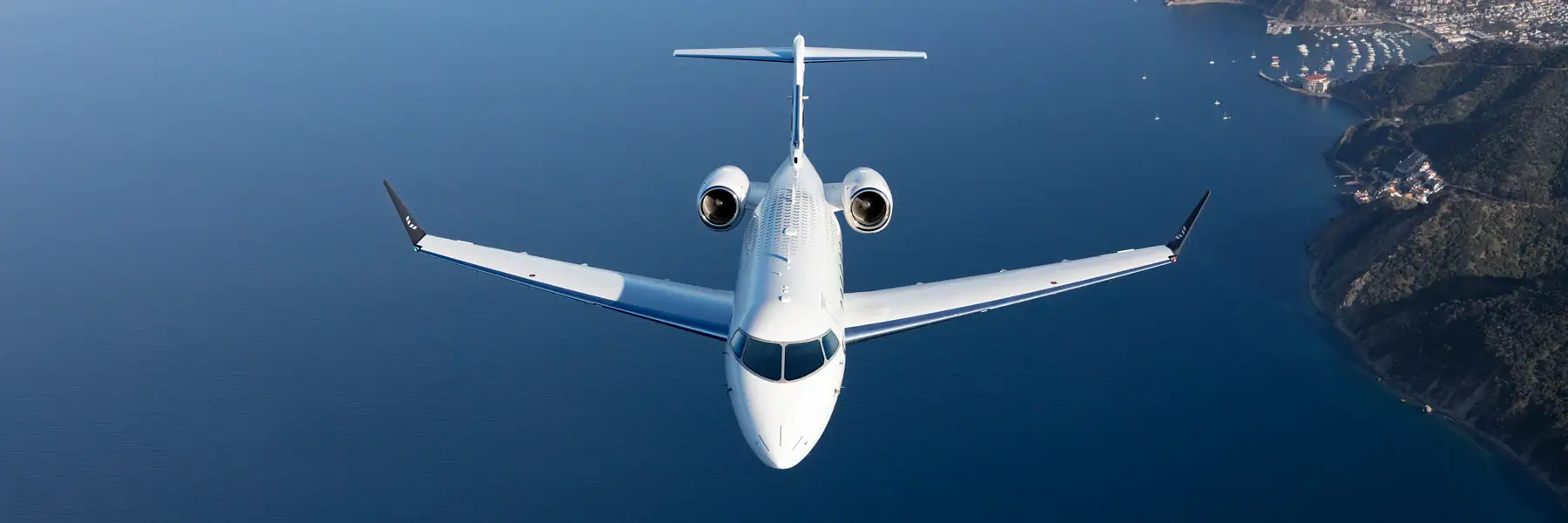
The Bombardier Challenger 3500 is a super-midsize business jet built on the same airframe that defined the Challenger 300 and 350. It keeps the same 930 cu ft cabin volume and two Honeywell HTF7350 engines rated at 7,323 lb of thrust each. What changes is the experience inside, led by a voice-controlled cabin, the Nuage seat, and autothrottles on the flight deck.
Continuity explains its standing. Among super-midsize jets, the category pairing transcontinental range with a stand-up cabin, the 3500 has gained ground quickly since deliveries began. Bombardier says the Challenger 3500 was the fastest platform to reach 100 deliveries in the super-midsize segment.
Why the Challenger Cabin Became the Super-Midsize Benchmark
The Challenger cabin earned its standing through dimensions that change how a long flight feels, especially on a full transcontinental day. On the Challenger 350, the cabin measures 23 ft 7 in long, 7 ft 2 in wide, and 6 ft 1 in tall. A flat floor runs its full length, so Private Clients can stand, stretch, and move between seats on a long leg.
Width shapes the experience most. At 7 ft 2 in, there is room for a proper aisle between facing club seats. This holds true even with a meal service underway. The flat floor means there is no dropped aisle to step around on the way to the galley, the lavatory, or your seat. This is great for accessibility and dogs that like to lie in the aisle.
Baggage is the quieter advantage and often the deciding one for families. There is 106 cu ft of space aboard the 350. The cabin seats up to nine passengers, though six travel most comfortably with room left for skis, golf clubs, and larger pets.
Performance completes the profile. The Challenger 350 holds a normal cruise of 459 kn, reaches a 45,000 ft ceiling, and carries a 3,269 nm range. It needs 4,835 ft for takeoff and 2,303 ft for landing, which opens shorter runways located closer to many final destinations.
What Changed From the Challenger 350 to the Challenger 3500
The Challenger 3500 changes how the cabin is used far more than how the airplane flies, building on the 350’s proven platform. It retains the HTF7350 engines at 7,323 lb of thrust and the 930 cu ft cabin volume of the Challenger 350. That shared foundation means the 3500 inherits a mission profile Private Clients already know.
The upgrades center on the Private Client. Jetcraft describes the 3500 as introducing the industry’s first voice-controlled cabin, along with Bombardier’s Nuage seat for the main cabin. Both reward the traveler who works, dines, and rests aboard on a single long leg. You can adjust the cabin without leaving the seat.
On the flight deck, Bombardier added autothrottles when it launched the 3500 in September 2021, alongside the upgraded cabin. Autothrottles manage engine power automatically through climb, cruise, and descent, which eases crew workload on long missions and busy arrivals. That reduced workload leaves the crew more attention for weather, air traffic, and the decisions that keep every journey safe.
Reported figures for 3500 range, speed, and seating vary across published sources, and each individual aircraft’s configuration and equipment also matter. For exact Challenger 3500 performance on a given route, your Private Aviation Advisor confirms the numbers directly with the operator before you commit.
Why the Newest Model Is Not Always the Right Request
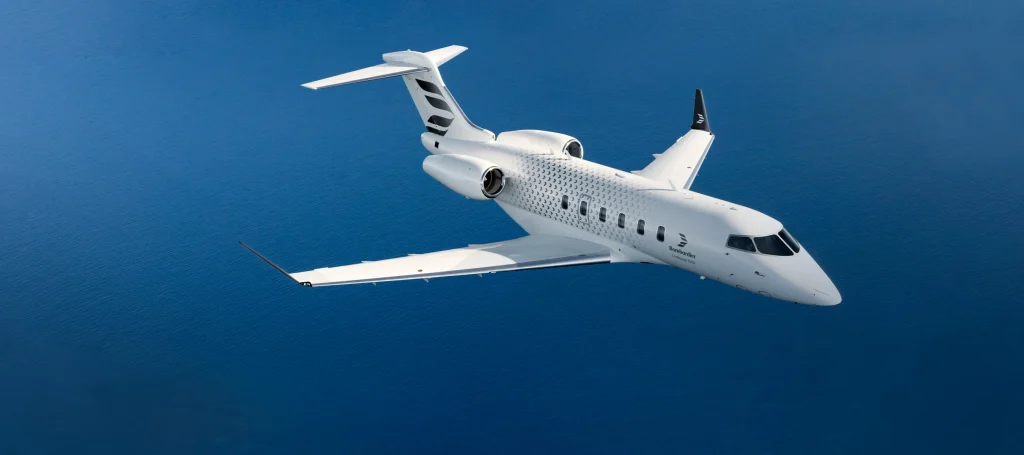
The most common misconception is that the Challenger 3500 belongs to a different class of aircraft than the Challenger 350 that preceded it. It is the same family, sharing the 930 cu ft cabin volume and HTF7350 engines, refined with newer cabin technology. Treating it as a separate category can narrow your options on peak dates.
Seen that way, the Challenger 300, 350, and 3500 deserve evaluation together, judged by the demands of each specific journey. Understanding how the Challenger 300 and 350 differ clarifies the lineage, and the 3500 extends it with a modernized interior. Each generation brings its own cabin details. The specific tail and its interior matter more than the model year alone.
Requesting the newest model is a deliberate choice. Together, the Challenger 300 and 350 offer a larger installed base, built over a longer production run than the newer 3500. Availability of any specific model, including the 3500, varies by date and by fixed-base operator (FBO), the private terminal at each airport. Your Advisor confirms each tail before you commit, and early requests for holiday weekends or major events widen the field.
A well-kept Challenger 350 often delivers the same journey, with the same cabin volume and engines and an interior from the generation before. The right request is the tail that fits the mission, the date, and the departure airport. Name the 3500 as a preference whenever its voice-controlled cabin or Nuage seat matters to how you travel.
Which Missions Suit a Challenger-Family Super-Midsize Jet

Challenger-family jets suit missions where cabin comfort and baggage capacity matter as much as range, whether the trip is business or family. The five journeys below play to strengths the family has refined since the Challenger 300 entered service in 2004 (Wikipedia, 2026).
- Transcontinental business: The 350’s 3,269 nm range suits coast-to-coast missions such as KTEB to KVNY, with room to work en route.
- Mountain weekends: Skis and boots fit within 106 cu ft of baggage for winter journeys into KASE or KJAC, with space left for luggage.
- Family travel: Six travelers sit comfortably in the flat-floor cabin, with baggage space for golf clubs, strollers, and larger pets.
- Limited mobility: The flat floor and stand-up cabin make boarding and moving through the aircraft easier for guests with limited mobility.
- Executive teams: Magellan Jets for Business adds super-midsize supplemental lift when a flight department’s own aircraft is down for maintenance.
Mountain airports add a planning step. At high-elevation fields like KASE and KJAC, the operator confirms takeoff performance for that day’s temperature, aircraft load, and runway conditions. Your Advisor relays any adjustments, such as a fuel stop or a lighter load, well before departure.
Larger groups and ocean crossings call for a heavy jet instead, with more seats, more range, and dedicated cabin zones. Your Advisor will say so plainly and source the right heavy-jet alternative for that journey through the same trusted relationship.
How to Fly a Challenger 3500 Through Magellan Jets
The most direct path to a Bombardier Challenger 3500 is a specific model request through On-Demand Charter. Smart flyers book jets that they know are sourced from vetted operators. Each operator in the Magellan Jets Preferred Network holds a Part 135 certificate, the FAA authority for on-demand, unscheduled air service (FAA, 2026), and meets Magellan Jets vetting standards. Your Advisor names the 3500 in the request and confirms the specific tail, its cabin layout, and its availability before you sign.
Magellan Jets, founded in Boston in 2008, is an asset-light private aviation solutions provider. Its portfolio spans Jet Cards, On-Demand Charter, Fractional Ownership, and Aircraft Sales & Management, all coordinated through one dedicated Advisor relationship. Magellan Jets does not own aircraft. Instead, every mission is sourced from its elite network of fewer than 100 vetted operators.
Safety credentials are specific. Magellan Jets holds a seat on the Air Charter Safety Foundation (ACSF) Board and WYVERN Wingman certification. Captains across the Preferred Network average 9,700+ flight hours, experience that matters most at demanding mountain airports like KASE and KJAC.
Because there is no fleet to fill, your Private Aviation Advisor recommends the perfect aircraft for your journey. You could fly a 3500, 350, or 300 purely on mission fit. The Advisor also confirms the departure FBO, while the Client Experience team coordinates ground transportation and catering for the journey.
Private Clients who fly regularly have two Jet Card paths toward super-midsize access. A Category Jet Card spans Light, Midsize, Super-Midsize, and Heavy aircraft. The Premium Jet Card dedicates access to specific types, including the Challenger 350. Tiers run at 25, 50, and 100 hours, and the 50-hour tier is the flagship.
Super-Midsize On-Demand Charter runs an estimated $9,816 per hour. This is an estimated hourly rate for Super-Midsize charter, inclusive of fuel. It does not include contingencies such as de-icing, positioning, overnight fees, catering, ground transportation, or other trip-specific costs. Final pricing is confirmed at time of quote.
Frequently Asked Questions About the Bombardier Challenger 3500 (FAQs):
What is the difference between the Challenger 350 and the Challenger 3500?
The Challenger 3500 keeps the 350’s 930 cu ft cabin volume and HTF7350 engines at 7,323 lb of thrust each. It adds a voice-controlled cabin, the Nuage seat, and autothrottles, making it the current, refined expression of the same family.
Can the Challenger 3500 fly coast to coast nonstop?
Its predecessor, the Challenger 350, has a validated range of 3,269 nm, suited to coast-to-coast missions like KTEB to KVNY. Published 3500 figures vary by source, so your Private Aviation Advisor confirms exact performance with the operator for each route. That route check accounts for seasonal winds, passenger count, and baggage weight on the specific day you plan to fly.
How many passengers does the Challenger 3500 carry?
Seating depends on the cabin layout each owner selected. Passenger counts differ between individual Challenger 3500 aircraft in the charter market. For reference, the Challenger 350 seats up to nine passengers, and six travel most comfortably with skis, golf clubs, or full luggage aboard. Your Advisor confirms the seating configuration of the specific tail before you book, so every guest has a comfortable seat for the full journey.
How much does it cost to charter a Challenger 3500?
Super-Midsize On-Demand Charter runs an estimated $9,816 per hour. This is an estimated hourly rate for Super-Midsize charter, inclusive of fuel. It does not include contingencies such as de-icing, positioning, overnight fees, catering, ground transportation, or other trip-specific costs. Final pricing is confirmed at time of quote.
Can I fly a Challenger 3500 with a Jet Card?
A Category Jet Card provides access across the Super-Midsize category, and your Advisor can request a 3500 where one is available. The Premium Jet Card lists the Challenger 350 among its dedicated aircraft types, for Private Clients who want one cabin consistently. Both options include guaranteed availability 365 days a year, with zero blackout dates and fixed, all-inclusive hourly pricing across the program.
Is the Challenger 3500 a good choice for ski trips?
Challenger-family jets suit ski journeys well, with 106 cu ft of baggage space on the 350 for skis and boots. At high-elevation airports like KASE and KJAC, the operator confirms takeoff performance for temperature, load, and runway conditions that day. Your Advisor coordinates those checks with the operator well before departure, so the mountain weekend begins on schedule.
Matching the Challenger 3500 to Your Next Mission
The Bombardier Challenger 3500 shows how a benchmark stays relevant through steady refinement of a cabin Private Clients already rely on. Its cabin volume and engines come straight from the 350, now paired with technology that makes long journeys easier to work and rest through.
The strongest request starts with the journey itself: who is traveling, what they carry, where they land, and when they return. An Advisor then compares available Challenger 3500, 350, and 300 tails across the Preferred Network against those details and your preferred FBO. Contact a Private Aviation Advisor to start planning your next super-midsize journey.


