More power on less fuel, greater efficiency and lower CO2 emissions makeup the framework for Porsche’s “Intelligent Performance” philosophy and are ever present in the all-new 2013 Cayenne GTS. Although the 2013 is the most efficient GTS ever built, it boasts an 8 cylinder 4.8 liter engine producing 420 horsepower, excelling the operator from zero to sixty in 5.4 seconds with a top speed of 162 mph. Additionally, in consideration of the more environmentally conscious driver, Porsche has amazingly engineered the GTS to afford its owner 21 highway miles per gallon. An active all-wheel drive layout and 8-speed Tiptronic S transmission provides an overall world-class driving experience, however, the incredible features of the 2013 GTS are not exclusively located under the hood. The driver and passengers of the GTS will experience an immense package of convenient, practical and luxurious accessories to make their trip a world-class automotive adventure.
Porsche believes their vehicles should be as individual as their owner’s fingerprints. This allows a customer to personally outfit their 2013 Cayenne GTS ensuring a unique driving experience every time they get behind the wheel. Buyers have the option to select from a wide range of interiors including light olive or dark olive wood, contemporary aluminum or robust carbon fiber. A sense of direction at every turn and sounds to compliment every destination are inclusive of the 6.5 inch navigation and entertainment system. Can’t find the perfect tune on 170 channels of XM radio? Simply plug-in your personal music device through an auxiliary cord found in the center console. A natural extension of the GTS’ luxury is the vehicle’s versatile accessories. Roof storage systems for your skis or kayak, a custom fit pet cage for the rear storage area or an electrically powered 12v refrigerator are all available directly from Porsche. The 2013 Cayenne GTS combines luxury, performance, and efficiency priced around $82,000. It is as close to perfect as a luxury SUV can get and will be available for delivery this summer.
hbifulco
Private jet setters are another step closer to flying faster, higher and further than ever before as the G650 has reached another certification milestone. FAA test pilots have signed off on the elite aircraft’s fuel, hydraulic and fly-by-wire control systems in addition to other significant components. Gulfstream currently has four test planes in the G650 program which have accumulated 2,675 hours across 820 flights; the longest being 14 consecutive hours covering a distance of 7,000 nautical miles. What this means for the executive traveler is a new world of possibilities when it comes to private aviation. The G650’s capabilities will allow a group of 8 executives to wisp nonstop at 51,000 feet from New York to Tokyo; far beyond the altitude of any weather or airline traffic.
Magellan Jets, the leader in private jet travel, is excited for the opportunity to offer this type of technology to our valued clients. The G650 will easily adhere to our stringent safety requirements while providing an unparalleled experience to its travelers. Gulfstream has rolled out luxurious floor plans featuring all the amenities a business traveler will need to be productive while en route to their next city. The range, speed and technology of the G650 is unmatched by any other aircraft and will make it the ultimate business tool. As for now, uncompromised service, safety and luxury awaits you at Magellan Jets and we look forward to professionally accommodating your next private travel requirement.
We’d like to take this opportunity to remember one of the true visionaries and drivers of our modern world: Steve Jobs. The Associate Press reported earlier today that Jobs finally succumbed to his long battle with pancreatic cancer, ending a career that spanned 35 years and brought us not only the personal computer, but also the iPod, iPhone, iPad, the reemergence of Pixar, and countless other refinements to our everyday lives. Jobs was fiercely independent and a relentless perfectionist–often to the chagrin of those he worked with.
Not only did lead Apple in pioneering the technology field, he was also enthusiastic about private aviation. He owned the iconic Gulfstream V, N2N.
Magellan Jets mourns the loss and extends our thoughts and well wishes to his family and friends. Jobs lived with an ethic that we can all learn from, perhaps summed up best in this quote from his 2005 commencement address to Stanford:
“Remembering that I’ll be dead soon is the most important tool I’ve ever encountered to help me make the big choices in life. Because almost everything — all external expectations, all pride, all fear of embarrassment or failure – these things just fall away in the face of death, leaving only what is truly important. Remembering that you are going to die is the best way I know to avoid the trap of thinking you have something to lose. You are already naked. There is no reason not to follow your heart.”
Rest in peace Steve, you’ll be missed.
Image via Wikipedia
Gulfstream GV vs. G500 vs. G550: What’s the Difference?
Updated August 2026
The Gulfstream GV, G500, and G550 are three distinct heavy jets built for different eras and missions. The GV (1997–2002) and G550 (2003–2021) share the same airframe, cabin dimensions, and Rolls-Royce BR710 engines – the G550 is essentially a GV with upgraded avionics. The current G500, however, is a clean-sheet aircraft from a different family entirely. Introduced in 2018 as part of Gulfstream’s GVII program, it uses Pratt & Whitney PW814GA engines and the Symmetry Flight Deck with active control sidesticks. The shared “G500” name creates confusion, but the two aircraft have nothing in common beyond the manufacturer. Understanding these differences matters when choosing an aircraft for your next journey.
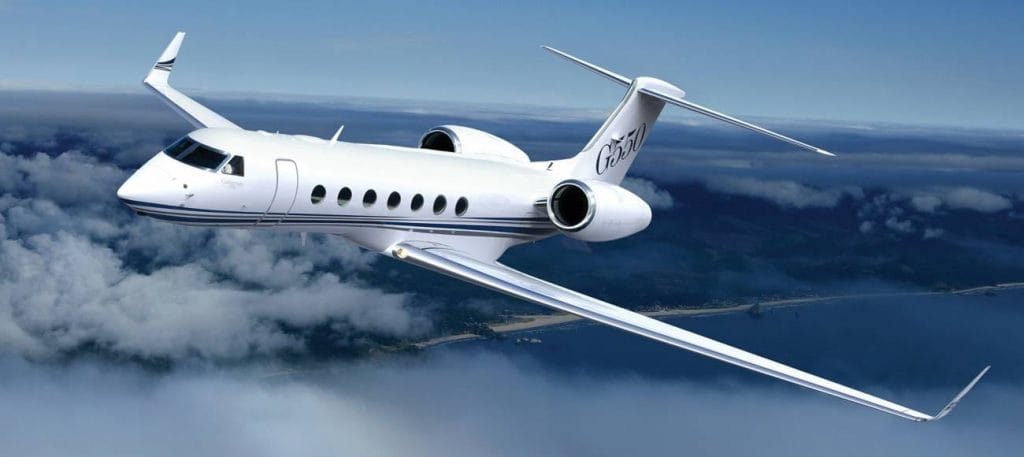
The Three Aircraft at a Glance
Before comparing performance and cabin features, it helps to clarify what each model actually is – and why the naming can mislead.
The Gulfstream GV entered service in 1997 and established Gulfstream’s dominance in ultra-long-range travel. Powered by twin Rolls-Royce BR710 engines and equipped with the Honeywell SPZ-8500 avionics suite, it offered intercontinental capability with a maximum range of 6,675 nautical miles. Production ended in 2002 after 193 aircraft.
The Gulfstream G550 succeeded the GV in 2003 with the same airframe, the same BR710 engines (rated slightly higher at 15,385 lb thrust each), and an extended range of 6,954 nm. The major advancement was the PlaneView cockpit – Gulfstream’s first glass flight deck, built on the Honeywell Primus Epic platform. Production concluded in June 2021.
The current Gulfstream G500 is unrelated to either the GV or the G550. Delivered from 2018 as part of the GVII family, it features an entirely new fuselage, Pratt & Whitney PW814GA engines, and the Symmetry Flight Deck with active control sidesticks – a first for civil aviation. Its maximum speed of Mach 0.925 exceeds that of its predecessor family.
A note on naming: Gulfstream previously produced a “G500” variant in 2003 as an interim GV-SP model sharing the GV/G550 airframe and BR710 engines. That legacy G500 is no longer in production. When referencing “the G500” today, operators mean the current GVII-family aircraft. This article addresses the current G500 exclusively.
Specification Comparison Table
|
Specification |
Gulfstream GV |
Gulfstream G500 (2018) |
Gulfstream G550 |
|---|---|---|---|
|
Class |
Heavy, ultra-long-range |
Heavy, long-range |
Heavy, ultra-long-range |
|
Max range |
6,675 nm |
5,400 nm |
6,954 nm |
|
Max operating speed |
Mach 0.885 |
Mach 0.925 |
Mach 0.885 |
|
Max cruise altitude |
51,000 ft |
51,000 ft |
51,000 ft |
|
Cabin length |
50 ft 1 in |
41 ft 5 in |
50 ft 1 in |
|
Cabin height |
6 ft 2 in |
6 ft 2 in |
6 ft 2 in |
|
Cabin width |
7 ft 3 in |
7 ft 6 in |
7 ft 3 in |
|
Living areas |
Up to 3 |
Up to 2 |
Up to 4 |
|
Max passengers |
Up to 13 |
Up to 19 |
Up to 18 |
|
Engines |
2 × Rolls-Royce BR710 (14,750 lb ea) |
2 × Pratt & Whitney PW814GA (15,144 lb ea) |
2 × Rolls-Royce BR710 (15,385 lb ea) |
|
Flight deck |
Honeywell SPZ-8500 |
Symmetry Flight Deck (active sidesticks) |
PlaneView (Honeywell Primus Epic) |
Performance and Range
Range determines whether an aircraft can reach your destination nonstop. For Private Clients traveling between continents, this is often the deciding factor when selecting an aircraft.
The G550 leads with a maximum range of 6,954 nm – enough to connect New York to Tokyo, Los Angeles to London, or São Paulo to Paris without a fuel stop. This range places it among the longest-legged business aircraft ever produced. The GV’s 6,675 nm capability covers most of the same routes, though certain city pairs may require a technical stop depending on winds and payload. Both aircraft can reach the Middle East from the U.S. East Coast nonstop.
The current G500 posts 5,400 nm – roughly 1,500 nm shorter than the G550. It flies New York to London, Miami to Paris, or Los Angeles to Hawaii with ease. Transpacific missions like New York to Tokyo are beyond its nonstop reach. For Private Clients focused on North Atlantic or domestic transcontinental routes, this range is more than sufficient.
Where the G500 gains ground is speed. Its Mach 0.925 maximum operating speed outpaces both the GV and G550 at Mach 0.885. On a seven-hour flight, the difference translates to arriving 20–30 minutes sooner. For time-sensitive itineraries, the G500’s speed advantage can outweigh the shorter range.
All three cruise at 51,000 ft – above commercial traffic and most weather. This altitude ceiling delivers smoother rides and more direct routing.
Cabin and Interior Experience
Cabin size shapes how you spend your flight. Meetings, rest, and productivity all depend on the space and configuration available.
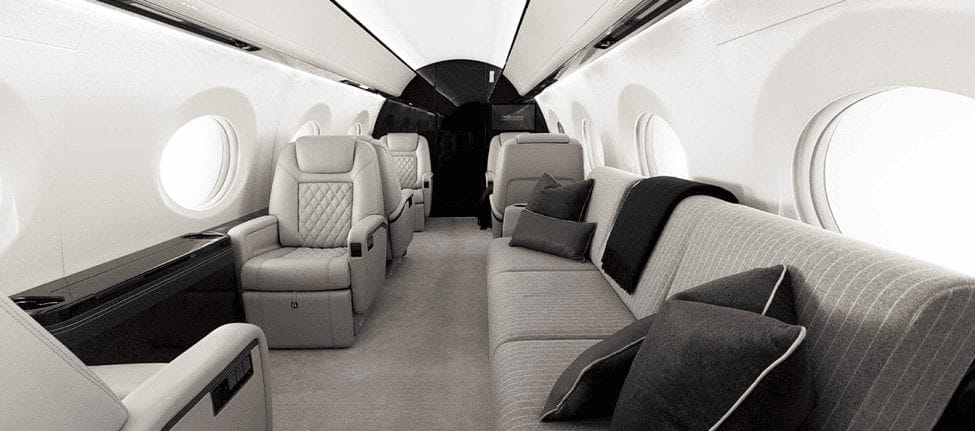
The GV and G550 share identical cabin dimensions: 50 ft 1 in long, 6 ft 2 in tall, and 7 ft 3 in wide. That length supports up to four living areas in the G550 or three in the GV – typically a forward lounge, mid-cabin work area, and aft stateroom. Both accommodate up to 18 passengers in high-density configurations, though most charter layouts seat 13–16 in comfort.
The current G500’s cabin is shorter at 41 ft 5 in but slightly wider at 7 ft 6 in. The extra width creates a more open feel at shoulder level. With up to two living areas, the G500 favors focused productivity over multi-zone configurations. It seats up to 19 passengers in maximum layouts, though typical charter configurations seat 10–13.
Gulfstream cabins are known for low noise, 100% fresh air circulation, and low cabin altitude – typically 4,850 ft at cruising height. These factors reduce fatigue on long-haul journeys and allow passengers to arrive ready to work or enjoy their destination. The G500’s newer systems offer the lowest cabin altitude in the group, though all three perform well by this measure.
When choosing between them, consider your typical mission. Families or executive teams needing multiple distinct spaces benefit from the GV or G550’s longer cabin. Solo travelers or small groups prioritizing speed and a modern interior may prefer the G500.
Flight Decks and Avionics
The cockpit technology in these three aircraft spans three generations – and understanding the differences dispels a common misconception.
The GV uses the Honeywell SPZ-8500 avionics suite, a proven system from the 1990s. It predates the glass-cockpit era that the G550 would introduce. Some older references incorrectly describe the GV as having PlaneView; it does not.
The G550 debuted Gulfstream’s PlaneView flight deck in 2003 – the first Gulfstream to feature integrated glass displays built on the Honeywell Primus Epic platform. PlaneView replaced analog instruments with four large LCD screens, head-up display options, and enhanced situational awareness tools. This cockpit became the template for subsequent Gulfstream models and was designed to reduce pilot workload.
The current G500 introduces the Symmetry Flight Deck, Gulfstream’s most advanced cockpit. It features 10 touchscreen displays, active control sidesticks (a first in civil aviation, replacing traditional yokes), and fly-by-wire controls. The active sidesticks provide tactile feedback and move in unison for both pilots, improving crew coordination. This system represents a generational leap from PlaneView.
For Private Clients, the cockpit affects flight crews more directly than passengers. However, advanced avionics contribute to smoother operations, greater dispatch reliability, and expanded access to challenging airports. Newer systems also support enhanced vision and synthetic vision capabilities, improving operations in low-visibility conditions. All three aircraft operate safely; the Symmetry system simply reflects two decades of technological progress since the GV’s debut.
Which Gulfstream Is Right for Your Mission
Each aircraft suits a different travel profile. The right choice depends on where you fly, how often, and who travels with you.
Choose the G550 for ultra-long-range missions where nonstop travel is essential. Its 6,954 nm range covers nearly any city pair globally. With up to four living areas and a proven track record, the G550 remains a preferred choice for transatlantic, transpacific, and multi-region itineraries. Private Clients who prioritize cabin space and proven technology find the G550 a reliable option.
Choose the GV when the G550’s range isn’t required but its cabin size is. The GV offers nearly identical interior dimensions at potentially lower charter rates. For routes within North America or between North America and Western Europe, the GV provides the same cabin experience with a range that still exceeds 6,600 nm.
Choose the current G500 for missions where speed and modern technology matter more than ultra-long range. The G500 flies faster than either the GV or G550 and features the most advanced cockpit in the group. Its 5,400 nm range handles North Atlantic crossings, transcontinental U.S. flights, and most international routes outside the Pacific. Private Clients flying between New York and London, or Los Angeles and New York, may find the G500’s speed advantage compelling. The wider cabin also appeals to those who prioritize interior comfort on shorter sectors.
Magellan Jets’ aircraft experience page offers additional context on matching aircraft to mission profiles. Your Private Aviation Advisor can evaluate specific routes and recommend the optimal aircraft for your travel patterns.
Chartering a GV, G500, or G550 With Magellan Jets
Magellan Jets is an asset-light private aviation solutions provider – the company sources aircraft from its Preferred Network of rigorously vetted operators rather than maintaining its own fleet. This model ensures that every aircraft recommendation reflects your mission requirements, not fleet utilization.
The Preferred Network includes fewer than 100 operators out of roughly 3,000 licensed in the United States. Each meets safety standards that exceed FAA requirements, including WYVERN or ARG/US certification, $100M to $300M in liability coverage, and proactive safety management systems. Magellan Jets holds WYVERN Wingman Broker Certification and serves on the Air Charter Safety Foundation Board.
Private Clients access these aircraft through several programs:
-
On-Demand Charter provides aircraft on a trip-by-trip basis with no long-term commitment. This suits occasional travelers or those evaluating private aviation.
-
Jet Card programs offer fixed hourly rates, guaranteed availability, and hours that never expire. The 25-hour entry point suits travelers flying 25–75 hours annually.
-
Fractional Ownership suits Private Clients flying 100+ hours yearly who prefer an equity position in a specific aircraft type.
Every Private Client works with a dedicated Private Aviation Advisor who coordinates aircraft selection, ground transportation, catering, and itinerary adjustments. A Client Experience team handles the details that make a journey personal – from preferred catering to ground transportation at your destination. The goal is a journey tailored to your preferences, with one point of contact who knows your travel patterns and anticipates your needs.
Talk to a Private Aviation Advisor to discuss which Gulfstream – or which program – fits your travel profile.
Frequently Asked Questions About the Gulfstream GV, G500, and G550 (FAQs):
What is the difference between the G500 and the G550?
The G500 and G550 are from different aircraft families. The G550 is an evolution of the GV with Rolls-Royce BR710 engines, a 50-foot cabin, and 6,954 nm range. The current G500 (2018) is a GVII-family aircraft with Pratt & Whitney engines, a shorter 41-foot cabin, 5,400 nm range, and a faster Mach 0.925 cruise speed.
Is the Gulfstream GV the same as the G500 or G550?
The GV and G550 share the same airframe and cabin dimensions – the G550 is essentially a GV with upgraded avionics (PlaneView) and extended range. The current G500 is an entirely different aircraft with different engines, cockpit technology, and cabin layout. They share a manufacturer but little else.
Can a G550 fly nonstop from New York to London?
Yes. The G550’s 6,954 nm range covers the New York–London route (approximately 3,450 nm) with substantial reserve. It can also fly nonstop to destinations throughout Europe, the Middle East, and parts of Asia from the U.S. East Coast.
How much does it cost to charter a GV, G500, or G550?
All three are classified as heavy jets. The estimated hourly rate for heavy jet charter is $12,989/hr. This is an estimated hourly rate for heavy jet charter, inclusive of fuel. It does not include contingencies such as de-icing, positioning, overnight fees, or other trip-specific costs. Final pricing is confirmed at time of quote.
Which Gulfstream has the longest range?
The G550 has the longest range at 6,954 nm. The GV follows at 6,675 nm. The current G500 offers 5,400 nm – shorter range, but the fastest cruise speed of the three at Mach 0.925.