The Challenger 300 Interior: Inside Bombardier’s Super-Midsize Cabin
Updated September 2026
The Bombardier Challenger 300 built its reputation as one of the most requested super-midsize jets in private aviation. Much of that reputation lives inside the cabin. The Challenger 300 interior pairs a wide, stand-up living space with transcontinental range, which is why it remains a favorite for both business and leisure travel.
Here is the short version. The Challenger 300 interior is a super-midsize, flat-floor cabin measuring 23 ft 7 in long, 6 ft 1 in high, and 7 ft 2 in wide. It seats up to 8 passengers and accommodates six comfortably. Inside you will find a stand-up center aisle, double-club leather seating, a three-seat divan, an enclosed lavatory, and a refreshment galley.
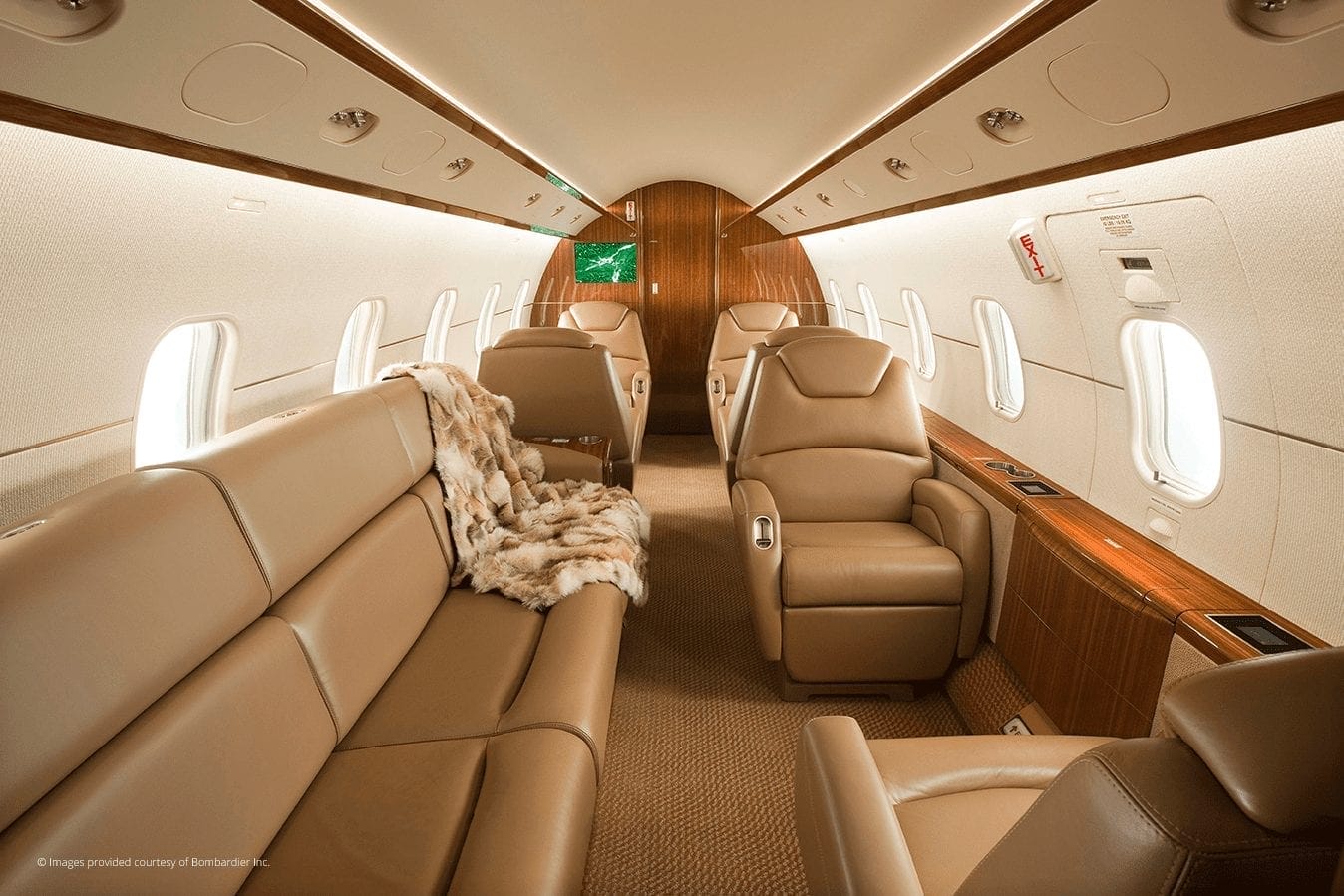
Inside The Challenger 300 Interior
The cabin is the reason this aircraft flies so many missions. At 23 ft 7 in long and 6 ft 1 in high, the Challenger 300 interior gives most adults room to stand and walk the aisle without stooping. The flat floor runs the length of the cabin, so moving between seats feels natural rather than cramped.
Width matters as much as length. At 7 ft 2 in across, the cabin holds a true double-club layout with space to spare at the shoulders and knees. The result is a living space that reads more like a private lounge than a narrow tube.
Total cabin volume reaches 930 cubic feet, which explains why the space feels open rather than confined. Toward the rear sits an enclosed lavatory with a door for genuine privacy. Forward, a refreshment galley holds catering, cold storage, and hot beverages for the journey. Large windows line both sides of the cabin, and natural light reaches every seat.
The layout also supports work. The forward club seats face each other across a fixed table, so a small team can review documents or hold a meeting at altitude. On quieter flights, the same seats recline for rest before an early arrival.
Challenger 300 Seating, Layout, And Passenger Capacity
The standard configuration centers on double-club leather seating for six. Four seats face each other in a forward club, and the remaining pair completes the arrangement for face-to-face conversation or heads-down work. Each seat reclines, swivels, and tracks for legroom.
A three-seat divan runs along one side of the cabin. It adds capacity for shorter legs and converts to a bed for rest on longer flights. That flexibility is why the Challenger 300 seats up to 8 passengers, while six travel most comfortably with room to spread out.
The cockpit is certified for two crew, so every Challenger 300 journey flies with a captain and first officer. Passengers gain a quiet, well-appointed cabin behind a flight deck built for precise, professional operation.
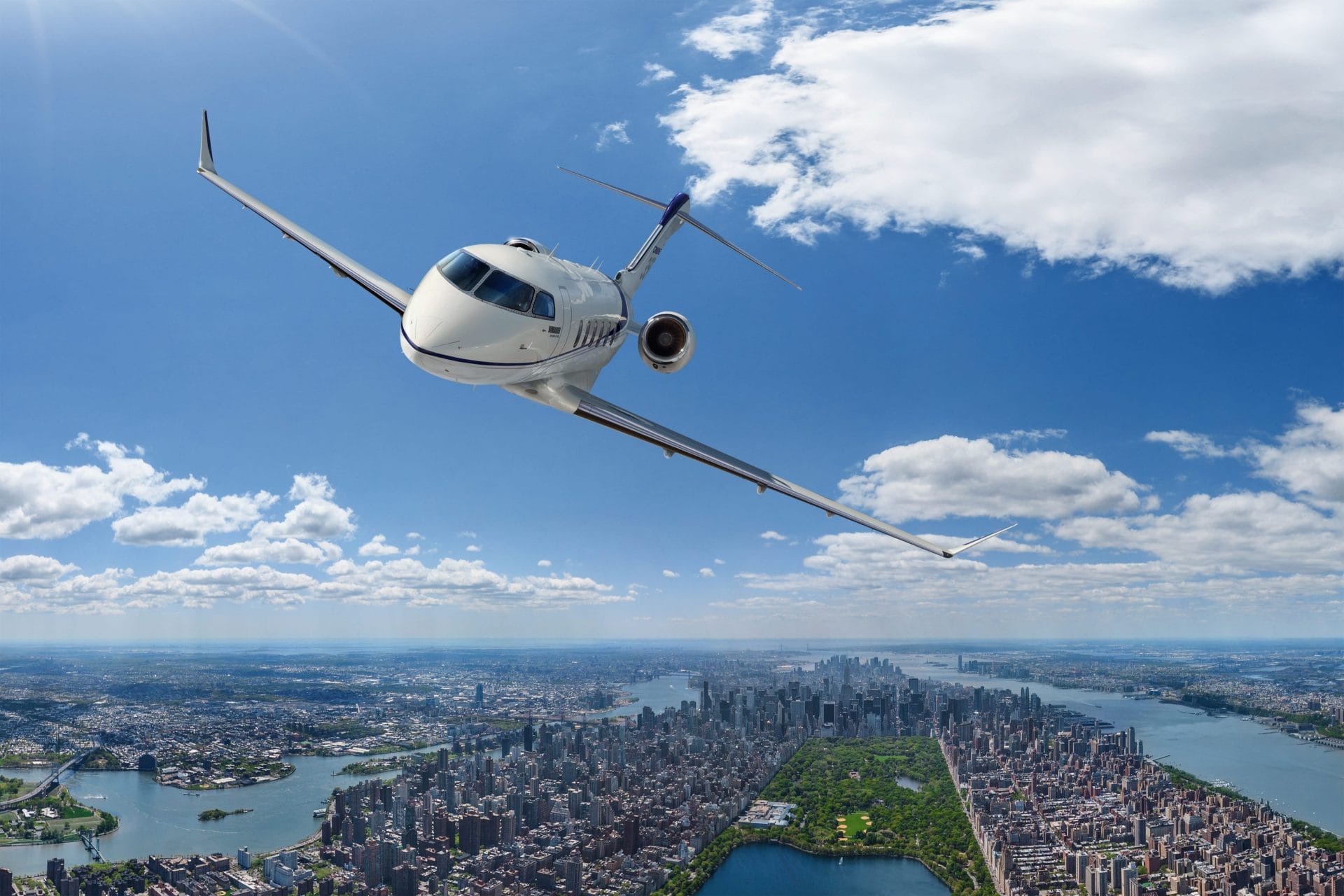
Range And Performance: Coast-To-Coast Nonstop
The Challenger 300 backs its cabin with real reach. It carries a range of 3,340 nautical miles, enough to connect New York and Los Angeles nonstop. That coast-to-coast capability is central to the aircraft’s appeal for transcontinental travel.
Speed and altitude round out the picture. The Challenger 300 cruises at up to 459 knots, roughly 528 mph, and climbs at 4,240 feet per minute. A service ceiling of 45,000 feet lets it fly above much of the weather and commercial traffic below.
For routes beyond its nonstop range, the Challenger 300 reaches farther with a single fuel stop. That keeps longer domestic and select international missions well within its profile while preserving the comfort of the cabin along the way.
Luggage And Versatility For Business And Leisure
The Challenger 300 carries 106 cubic feet of baggage, a generous figure for the super-midsize class. That space accommodates the gear real trips require, not just a few carry-ons.
Skis, golf clubs, and larger pets all travel comfortably. A family heading to the mountains, a foursome bound for a coastal course, and a Private Client traveling with a dog are all well matched to this aircraft. The baggage compartment stays accessible, so gear does not have to be surrendered at the terminal or split across a second aircraft.
This versatility is what keeps the Challenger 300 in steady demand. The combination of cabin room, baggage volume, and coast-to-coast range makes it a genuine business-and-leisure aircraft. You can compare it and other options on the Magellan Jets aircraft experience page.
How To Fly The Challenger 300 Interior With Magellan Jets
Magellan Jets is an asset-light private aviation solutions provider. The company does not own or operate aircraft. Instead, it sources the right jet for each mission from the Magellan Jets Preferred Network, so every recommendation is made in the Private Client’s best interest.
Two access paths put the Challenger 300 within reach. On-Demand Charter suits travelers who fly a handful of trips a year and want to book each journey as it comes. A Jet Card suits those flying more regularly who value fixed hourly rates and guaranteed availability. The Challenger 300 and its successor the Challenger 350 both fly under the super-midsize category.
On-Demand Charter of a super-midsize aircraft starts from an estimated $9,816 per hour. This is an estimated hourly rate for Super Mid charter, inclusive of fuel. It does not include contingencies such as de-icing, positioning, overnight fees, or other trip-specific costs. Final pricing is confirmed at time of quote.
Readers weighing the two generations can review the full Challenger 350 dossier or read our side-by-side look at the Challenger 300 vs. Challenger 350 to see how the cabins, avionics, and range compare.
Frequently Asked Questions About the Challenger 300 Interior (FAQs):
How many passengers does the Challenger 300 hold?
The Challenger 300 seats up to 8 passengers in its standard configuration. Six travel most comfortably, using the double-club seating with room to spread out. The three-seat divan adds capacity for shorter legs and converts to a bed for rest.
What are the Challenger 300 cabin dimensions?
The Challenger 300 interior measures 23 ft 7 in long, 6 ft 1 in high, and 7 ft 2 in wide. The flat floor and stand-up height let most adults move through the cabin without stooping. It is a true super-midsize living space rather than a narrow tube.
Is the Challenger 300 a good private jet?
The Challenger 300 is one of the most versatile super-midsize jets available. It combines a wide flat-floor cabin, 106 cubic feet of baggage space, and coast-to-coast range. Those qualities make it a strong choice for both business and leisure travel.
Can a Challenger 300 fly coast-to-coast or cross the Atlantic?
Yes, the Challenger 300 flies coast-to-coast nonstop, for example New York to Los Angeles, on its 3,340-nautical-mile range. It can reach farther with a single fuel stop. It is not designed for nonstop transatlantic flights, though a fuel stop extends its reach for longer missions.
How much does it cost to charter a Challenger 300?
On-Demand Charter of a super-midsize aircraft such as the Challenger 300 starts from an estimated $9,816 per hour, inclusive of fuel. That estimate excludes contingencies such as de-icing, positioning, overnight fees, and other trip-specific costs. Final pricing is confirmed at time of quote.
How does the Challenger 300 compare to the Challenger 350?
The Challenger 350 is the successor to the Challenger 300, and both fly under the super-midsize category with similar cabins. The 350 introduced refinements to the wing, avionics, and cabin over the earlier model. Our Challenger 300 vs. Challenger 350 comparison covers the differences in detail.
Plan Your Next Challenger 300 Journey
The Challenger 300 interior earns its place through a rare balance of cabin comfort, baggage capacity, and coast-to-coast range. Whether your next trip is a client meeting across the country or a weekend on the slopes, this aircraft is built to carry you and your gear in comfort.
When you are ready to match the Challenger 300 to your travel, Talk to a Private Aviation Advisor.


