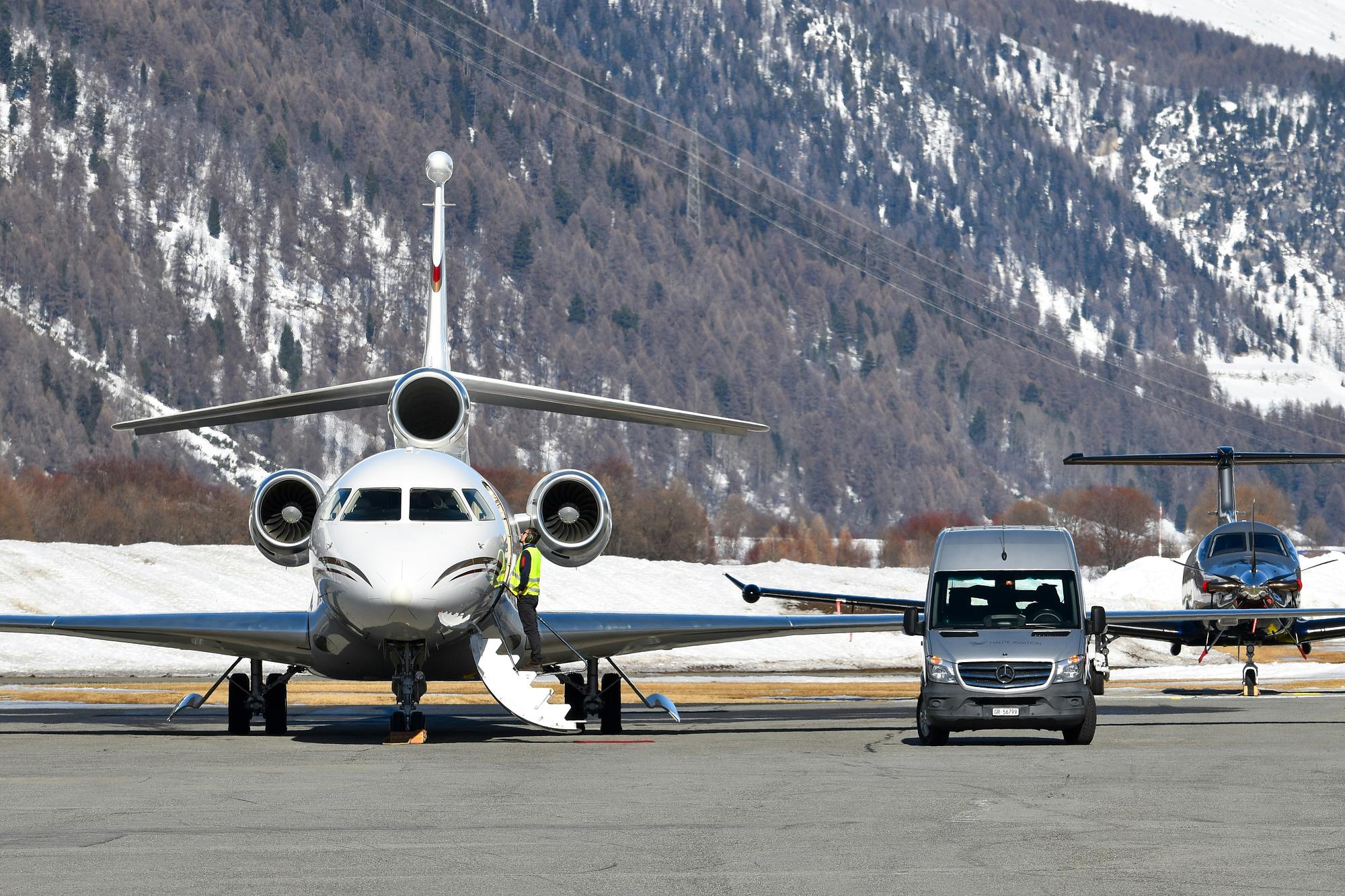
The Bombardier Challenger 300 and Gulfstream G280 are the two aircraft that define the super-midsize category. Both deliver coast-to-coast range, flat-floor cabins, and the performance to access shorter runways that heavy jets cannot. The G280 offers more range (3,700 nautical miles), a longer cabin (25 ft 8 in), and seating for up to 10 passengers. The Challenger 300 earns its reputation with a wider flat-floor cabin (7 ft 2 in), generous 106 cu ft baggage hold, and exceptional versatility across business and leisure missions.
Quick Verdict: Two Approaches to Super-Midsize Excellence
These aircraft occupy the same category, but they serve different priorities. The Gulfstream G280 is the choice when range extends the itinerary – think Teterboro to Cabo San Lucas or Miami to Seattle without a fuel stop. Its longer cabin and 10-seat capacity suit larger groups or passengers who value extra legroom. Strong runway performance opens access to challenging airports that would otherwise require a smaller aircraft.
The Bombardier Challenger 300 remains one of the most chartered super-midsize jets for good reason. Its cabin is nearly five inches wider than the G280’s – a difference you notice when settling into a four-hour transcontinental flight. The 106 cu ft baggage compartment handles skis, golf bags, and large pet crates with ease. For Private Clients flying six passengers or fewer on coast-to-coast routes, the CL300 delivers a hard-to-beat balance of cabin comfort, baggage flexibility, and value.
Cabin and Comfort: Width vs. Length
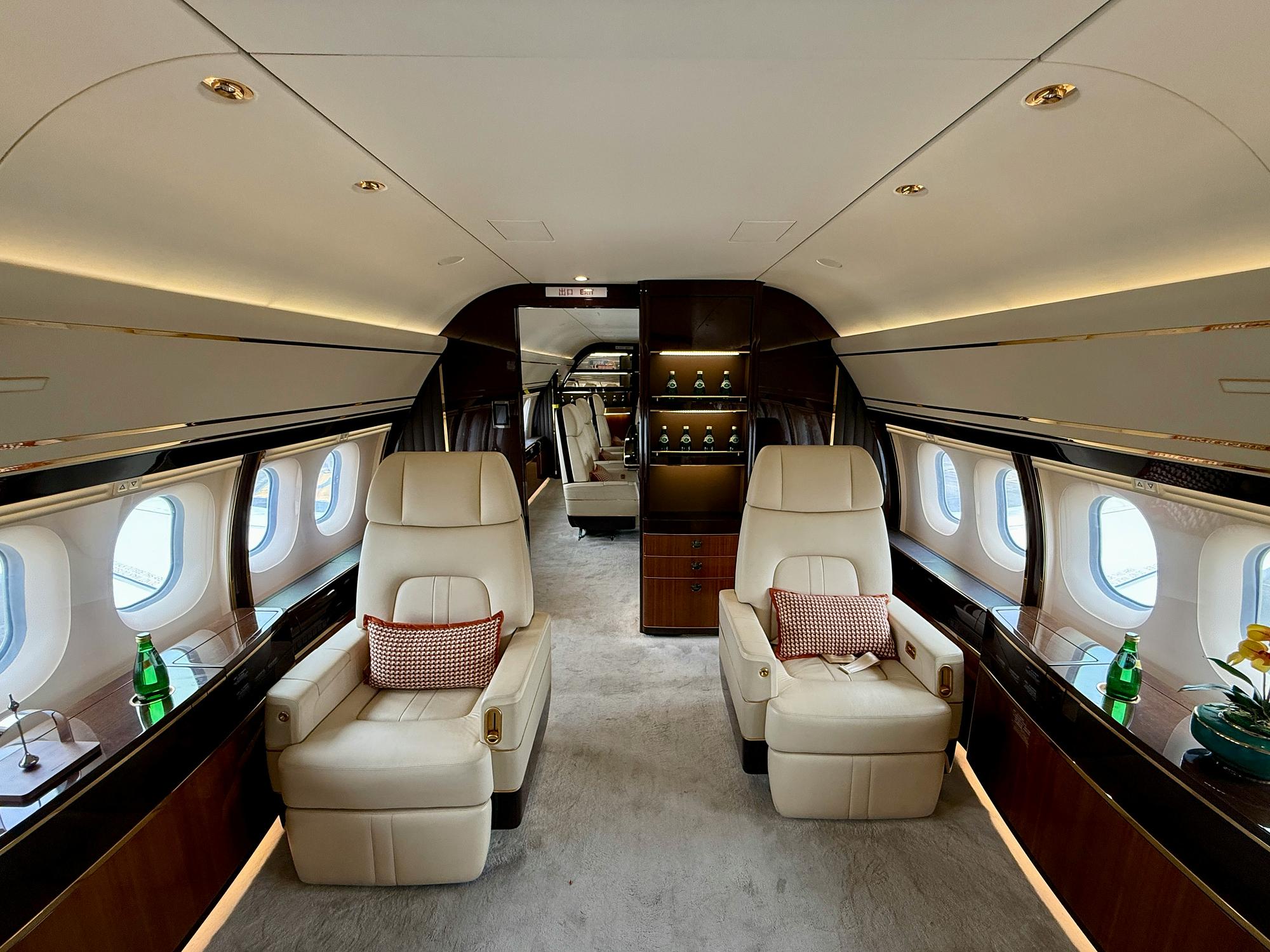
Step aboard the Challenger 300 and the width is immediately apparent. At 7 ft 2 in across, the cabin is among the widest in the super-midsize class. That breadth translates to shoulder room, wider seats, and easier movement through the aisle. Cabin length measures 23 ft 7 in with a 6 ft 1 in ceiling height – comfortable for most passengers to stand upright. Total cabin volume reaches 930 cu ft. Most configurations seat eight, though six passengers travel in particular comfort.
The Gulfstream G280 cabin stretches 25 ft 8 in – roughly two feet longer than the Challenger. Width narrows slightly to 6 ft 9 in. Both aircraft share the same 6 ft 1 in cabin height and a flat floor throughout, meaning no step-ups or awkward transitions between zones. The G280’s 935 cu ft cabin volume allows for a three-zone layout: forward galley, midcabin conference or club seating, and an aft divan or additional seating. Maximum seating reaches 10 passengers.
Baggage matters on leisure trips. The Challenger 300’s 106 cu ft external baggage hold accommodates oversized items – ski bags, large kennels, golf clubs for a foursome – without compromising cabin space. The G280 offers 154 cu ft of baggage capacity, useful when the passenger count climbs. For families traveling with sporting equipment or Clients with accessibility needs, both aircraft’s flat-floor layouts simplify boarding and movement during flight.
Performance and Range: How Far Can You Go Nonstop?
Range is the headline difference between these two super-midsize jets. The Gulfstream G280 covers 3,700 nautical miles – far enough to connect New York to London’s closest fuel stop or Los Angeles to Honolulu without hesitation. Its Honeywell HTF7250G engines produce approximately 7,624 lbf of thrust each, and the aircraft climbs at 5,000 feet per minute to a 45,000 ft service ceiling.
The Challenger 300’s range of 3,340 nautical miles handles transcontinental U.S. routes comfortably. Boston to San Francisco, Miami to Seattle, Teterboro to Scottsdale – these missions fit well within its envelope. Two Honeywell HTF7000-series engines deliver about 7,000 lbf thrust each, lifting the aircraft to its 45,000 ft ceiling at 4,240 feet per minute. Both jets cruise at the same maximum speed: 459 knots, roughly 528 mph or Mach 0.80.
For most domestic itineraries, both aircraft perform the mission without compromise. The G280’s additional 360 nautical miles become decisive on longer routes – Hawaii from the West Coast, transcontinental flights with strong headwinds, or positioning for international connections that require maximum fuel reserves.
Avionics and Flight Deck
The Challenger 300 features Rockwell Collins Pro Line 21 avionics with four displays, delivering reliable situational awareness and solid integration with modern air traffic management systems. The system has proven itself across thousands of flight hours in the charter fleet.
Gulfstream equipped the G280 with its proprietary PlaneView280 flight deck, built on the Honeywell Primus Epic platform. The system includes Enhanced Vision System (EVS) and Head-Up Display (HUD) as standard – technology that aids pilots during low-visibility approaches and reduces minimums at qualified airports. For Private Clients flying into challenging destinations, these capabilities can mean the difference between landing and diverting.
Challenger 300 vs. Gulfstream G280: Side-by-Side Specifications

Which Super-Midsize Jet Should You Charter?
Aircraft selection begins with the mission. Start with your passenger count, route distance, and what you are bringing aboard.
Choose the Gulfstream G280 When:
- Your route exceeds 3,300 nautical miles or requires reserve fuel for alternate airports
- You are traveling with 8–10 passengers who need individual seating
- Cabin length matters more than width – perhaps for an aft work zone or divan
- Your destination has a shorter runway, where the G280’s performance shines
- Enhanced vision and head-up display are priorities for low-visibility approaches
Choose the Bombardier Challenger 300 When:
- Your party is six passengers or fewer, and cabin width enhances comfort
- You are traveling with skis, golf clubs, large pet crates, or oversized luggage
- Transcontinental U.S. routes are your primary mission profile
- Versatility matters – the CL300 transitions easily between business and leisure
- Passengers with mobility considerations benefit from the flat floor and wider cabin
Both aircraft are available through On-Demand Charter or as part of a Jet Card membership. To explore the full range of super-midsize options, visit the Magellan Jets aircraft experience.
Frequently Asked Questions About Challenger 300 vs. Gulfstream G280 (FAQs):
Can a Challenger 300 cross the Atlantic?
The Challenger 300’s 3,340-nautical-mile range is not sufficient for a direct transatlantic crossing. New York to London, for example, is approximately 3,450 nautical miles – beyond the aircraft’s nonstop capability. Transatlantic flights in a CL300 require a fuel stop in Iceland, Greenland, or eastern Canada. For nonstop Atlantic crossings, a heavy jet such as a Gulfstream G550 or Bombardier Global is better suited to the mission.
Can a Gulfstream G280 cross the Atlantic?
The G280’s 3,700-nautical-mile range makes direct transatlantic flights marginal. Under ideal conditions – light passenger load, favorable winds, optimal routing – a G280 can reach western Europe from the U.S. East Coast. More typically, a fuel stop in Iceland or Newfoundland ensures safe reserves. Most transatlantic Private Clients choose a heavy or ultra-long-range jet for nonstop service.
How fast is the Challenger 300?
The Challenger 300 cruises at a maximum speed of 459 knots, equivalent to approximately 528 mph or Mach 0.80. Typical long-range cruise speed is slightly lower to optimize fuel efficiency. At this speed, a coast-to-coast flight from New York to Los Angeles takes approximately five hours.
How fast is the Gulfstream G280?
The Gulfstream G280 shares the same maximum cruise speed as the Challenger 300: 459 knots (528 mph, Mach 0.80). Flight times between the two aircraft are effectively identical on the same routes.
How long of a runway does the Gulfstream G280 need?
The Gulfstream G280 is known for strong short-field performance among super-midsize jets. Takeoff distance varies by weight, temperature, and altitude, but the G280 can operate from runways as short as 4,750 feet under favorable conditions. This opens access to airports that require smaller aircraft for other super-midsize types – a meaningful advantage for destinations like Aspen or Jackson Hole.
What is the difference between the Challenger 300 and the Challenger 350?
The Bombardier Challenger 350 is the updated production variant of the Challenger 300, introduced in 2014. Key improvements include upgraded Rockwell Collins Pro Line 21 Advanced avionics, a redesigned interior with improved soundproofing and LED lighting, and aerodynamic enhancements that slightly extend range. The cabin dimensions remain identical. In the charter fleet, both aircraft deliver a comparable experience; the 350 offers incremental refinements rather than a generational leap.
How much does it cost to charter a super-midsize jet per hour?
Magellan Jets estimates super-midsize charter at approximately $9,700 per hour. This rate is inclusive of fuel but does not include contingencies such as de-icing, overnight or positioning fees, catering, ground transportation, or other trip-specific costs. Final pricing depends on route, aircraft availability, schedule, and other factors, and is confirmed by a Magellan Jets Private Aviation Advisor with a formal quote.
Ready to Fly?
The right aircraft depends on your destination, your party, and what you bring with you. A super-midsize jet offers the range of a heavy with the agility to reach airports that larger aircraft cannot. Whether the Challenger 300’s width and versatility or the G280’s range and capacity suits your mission, Magellan Jets sources the right aircraft from our Preferred Network of rigorously vetted operators.


