Choosing between the Hawker 800XP and the Cessna Citation Excel comes down to mission profile. Both are proven midsize jets, but the Hawker 800XP vs. Citation Excel comparison reveals distinct strengths: the Hawker offers a larger cabin and longer range (up to 2,540 nautical miles), making it the choice for longer legs and larger groups. The Citation Excel counters with strong short-runway access, 90 cubic feet of baggage capacity, and a lineage (the XLS and XLS+) that remains in active production. Both are available through On-Demand Charter and Jet Card programs.
Hawker 800XP vs. Citation Excel: How They Compare at a Glance
The Hawker 800XP descends from the British Aerospace HS.125 line and was built by Raytheon (later Hawker Beechcraft) between 1995 and 2005. It remains a cabin-space benchmark in the midsize category, with a longer fuselage and wider interior than most direct competitors.
The Citation Excel, certified in 1998 under the Cessna Model 560XL designation, was engineered for a different priority: accessing shorter runways that heavier midsize jets cannot reach. Its lineage continues today in the Citation XLS+, giving operators and Clients access to factory support and ongoing upgrades.
The core trade-off: cabin volume and range favor the Hawker; runway flexibility and baggage volume favor the Excel.
The Hawker 800XP: A Spacious Midsize Benchmark
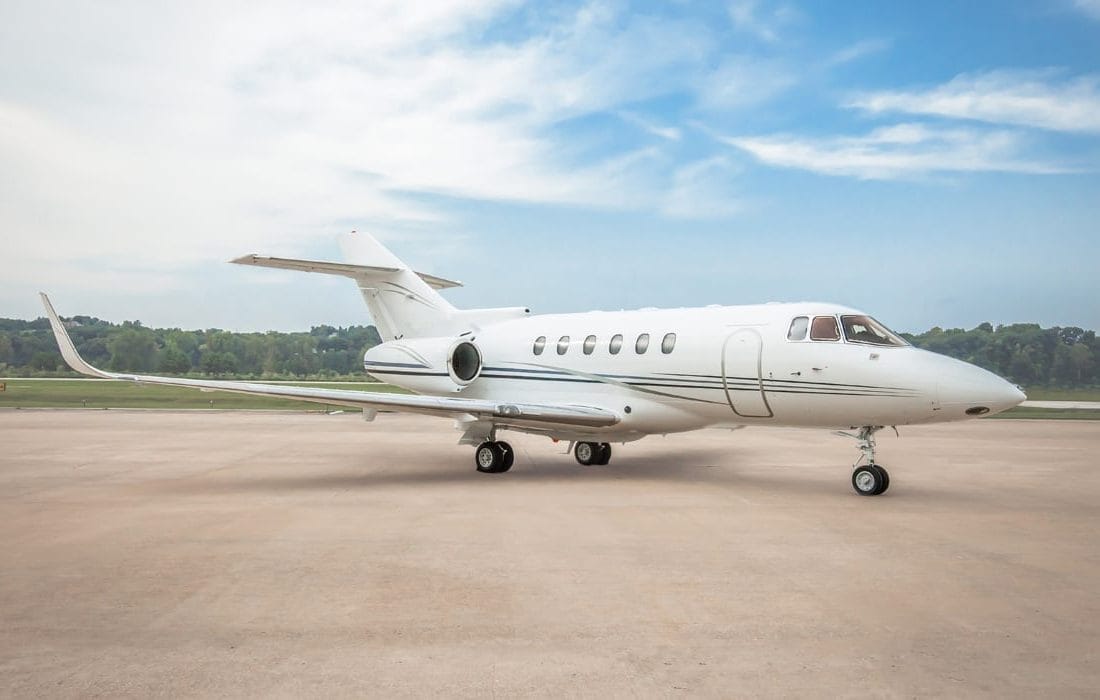
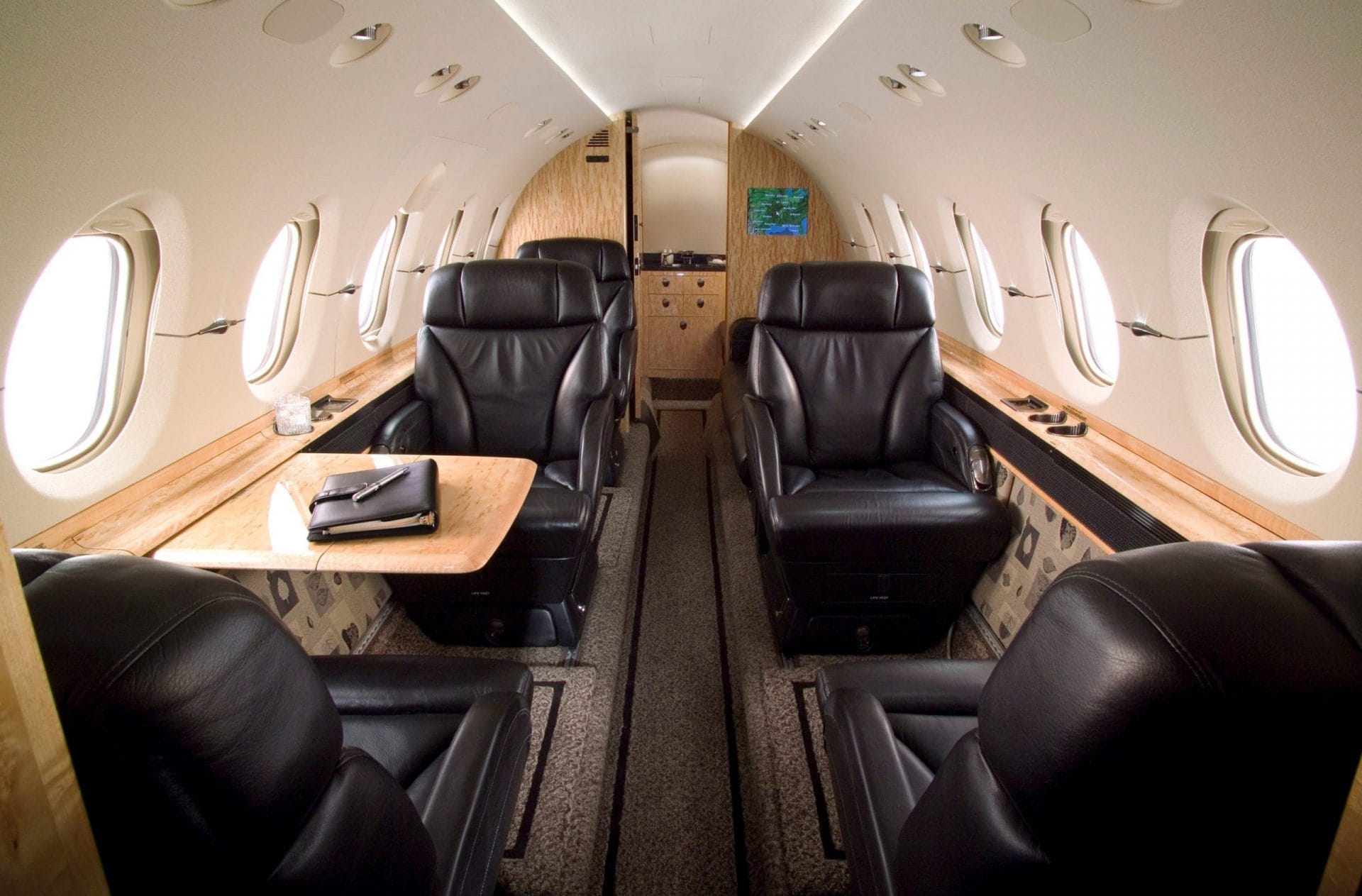
The Hawker 800XP seats up to eight passengers in a cabin measuring about 21.3 feet long, 6.0 feet wide at its widest point, and 5.7 feet tall. That combination of length and width places it among the most spacious midsize interiors of its era. Passengers can move comfortably, work across from one another, or configure the cabin for rest on longer flights.
Range is the Hawker’s calling card. With four passengers and NBAA IFR reserves (the industry-standard range measurement that accounts for fuel reserves, an alternate airport, and a 45-minute hold), the 800XP can cover up to 2,540 nautical miles nonstop. That connects city pairs like New York to Denver, Boston to Miami, or Los Angeles to Chicago without a fuel stop.
Two Honeywell TFE731-5BR turbofans, each producing about 4,660 pounds of thrust, power the aircraft to a high-speed cruise of 447 knots. Service ceiling reaches 41,000 feet, where the 800XP can climb above most commercial traffic and weather.
The flight deck features a Honeywell SPZ-8000 avionics suite with a five-screen EFIS (electronic flight instrument system, which replaces traditional analog gauges with digital displays). While the SPZ-8000 was state-of-the-art when these aircraft were delivered, many in-service Hawkers have been upgraded with modern glass cockpits.
Production ended in 2005 after approximately 426 deliveries. The 800XP is no longer manufactured, but well-maintained examples remain active on the pre-owned and charter market. Clients who prioritize cabin space and range over access to factory-new airframes will find strong options in this fleet.
Baggage volume is 48 cubic feet, adequate for soft bags and a few hard cases but noticeably smaller than the Excel’s hold.
The Cessna Citation Excel: Short-Runway Access and Baggage Room
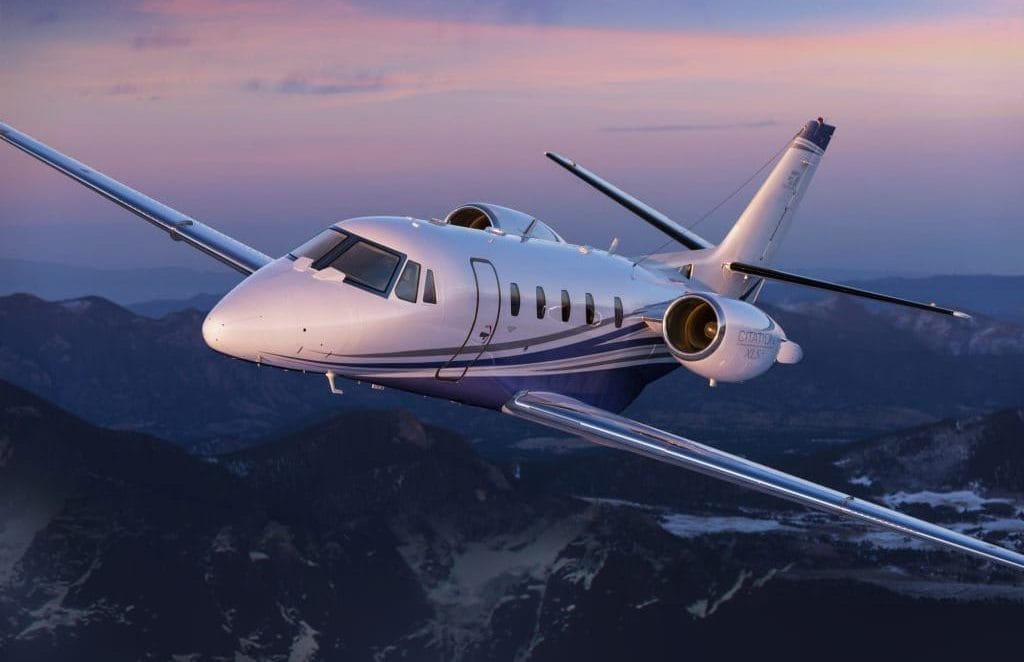
The Citation Excel was designed around a specific mission: midsize performance with light-jet runway requirements. Two Pratt & Whitney PW545 turbofans give the Excel the thrust to operate from runways that would ground heavier midsize aircraft. That opens access to mountain airports, island strips, and regional fields closer to final destinations.
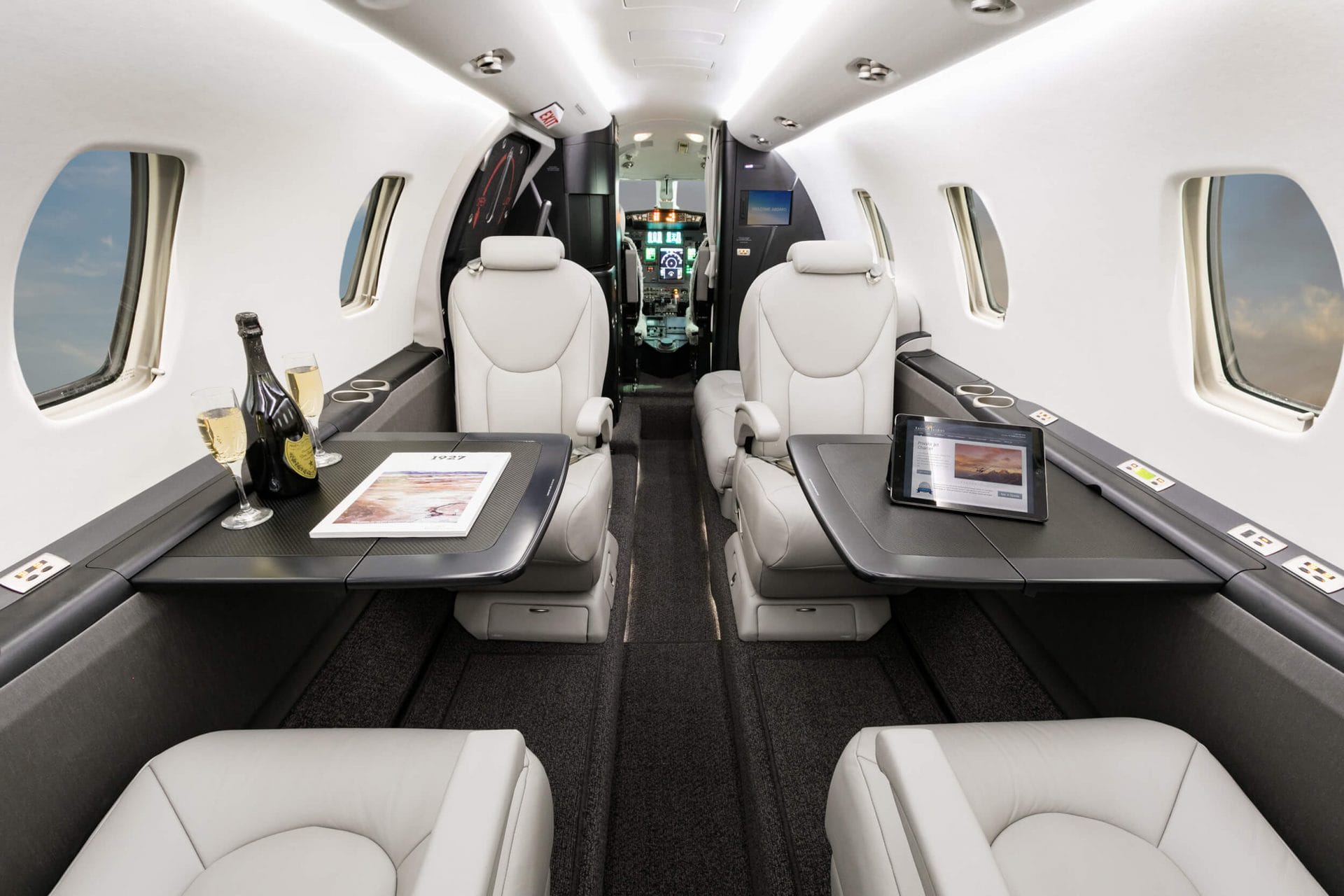
The cabin seats up to seven passengers (the later XLS and XLS+ seat up to eight). Interior dimensions measure 18.4 feet long, 5.6 feet wide, and 5.4 feet tall, with a total cabin volume of 422 cubic feet. The proportions are tighter than the Hawker, but Cessna optimized the layout for efficiency.
Where the Excel stands out: baggage. The 90-cubic-foot baggage compartment is nearly double the Hawker’s capacity. For Clients traveling with golf clubs, ski equipment, or pets in large carriers, that difference can determine whether an aircraft works for the mission.
Range is 1,839 nautical miles using NBAA IFR reserves. High-speed cruise is 433 knots, and service ceiling reaches 45,000 feet. The Excel will not match the Hawker on transcontinental routes, but for regional and mid-range flights, the performance gap narrows considerably.
The Citation Excel was FAA-certified in 1998. Cessna (now Textron Aviation) succeeded it with the Citation XLS in 2004 and the Citation XLS+ in 2008. The XLS+ remains in production today, which means factory parts, service bulletins, and avionics upgrades continue to flow. Clients who value that support infrastructure often favor the Excel lineage.
Side-by-Side Specifications

Note: Range figures use NBAA IFR reserves (fuel for the planned flight, an alternate airport, and a 45-minute hold). Actual range varies with passenger count, baggage weight, winds, and atmospheric conditions.
Which Midsize Jet Is Right for Your Mission?
The answer depends on where you fly, how often, and what you bring.
Choose the Hawker 800XP when:
- Range is a priority. The 2,540-nautical-mile envelope covers more city pairs nonstop, reducing fuel stops and total travel time.
- Your group is larger. Eight passengers travel comfortably, with room to work or rest.
- Cabin space matters. The Hawker’s wider, taller, and longer interior accommodates taller passengers and more flexible seating arrangements.
Choose the Citation Excel when:
- Your destinations include short or challenging runways. Mountain airports, coastal strips, and regional fields are within reach.
- You travel with significant baggage. Golf trips, ski weekends, or traveling with large pet carriers benefit from 90 cubic feet of hold space.
- Factory support and parts availability are important. The XLS+ production line keeps the Excel family current.
Both aircraft are available through Magellan Jets’ On-Demand Charter and Jet Card programs. Every operator in the Magellan Jets Preferred Network is held to rigorous safety standards, including independent third-party auditing and a formal Safety Management System (a structured framework for managing operational risk). Your Private Aviation Advisor can match the aircraft to your specific mission, whether that means a single On-Demand Charter flight or a Jet Card with guaranteed availability.
What It Costs to Charter a Midsize Jet
Both the Hawker 800XP and Citation Excel fall into the midsize (Mid Jet) charter category. Because this comparison is not tied to a specific route, the general estimated hourly rate applies: an estimated $8,550 per flight hour.
This is an estimated hourly rate for midsize (Mid Jet) charter, inclusive of fuel. It does not include contingencies such as de-icing, positioning, overnight fees, catering, or other trip-specific costs. Final pricing is confirmed at the time of quote, and your Private Aviation Advisor can provide an exact figure for your mission.
For Clients who fly regularly, a Jet Card locks in rates and guarantees availability without the commitment of aircraft ownership. For occasional travelers, On-Demand Charter offers access to the same aircraft categories on a per-trip basis.
Frequently Asked Questions About the Hawker 800XP vs. Citation Excel (FAQs):
What is the main difference between the Hawker 800XP and the Citation Excel?
The Hawker 800XP offers a larger cabin and longer range, while the Citation Excel provides superior short-runway access and nearly double the baggage space. The Hawker suits longer flights and larger groups. The Excel is ideal for regional trips to challenging airports with substantial luggage.
Which has longer range?
The Hawker 800XP has the longer range at up to 2,540 nautical miles with four passengers and NBAA IFR reserves. The Citation Excel reaches up to 1,839 nautical miles under the same conditions. The Hawker can cover more transcontinental routes nonstop.
How many passengers can each carry?
The Hawker 800XP accommodates up to eight passengers. The original Citation Excel seats up to seven, while the later XLS and XLS+ variants seat up to eight. Both aircraft offer comfortable midsize interiors for business or leisure travel.
Is the Hawker 800XP still in production?
No. Production of the Hawker 800XP ended in 2005 after approximately 426 aircraft were delivered. The 800XP is available only on the pre-owned and charter market. Well-maintained examples with updated avionics remain popular in the midsize category.
Is the Citation Excel still in production?
The original Citation Excel is no longer produced, but its successor, the Citation XLS+, remains in active production by Textron Aviation. This means factory support, parts availability, and avionics updates continue for the entire Excel family.
How much does it cost to charter a midsize jet like these?
The estimated hourly rate for a midsize (Mid Jet) charter is $8,550, inclusive of fuel. This does not include variable costs such as de-icing, overnight fees, positioning, catering, or international fees. Your Private Aviation Advisor can provide an exact quote based on your specific route and requirements.
Find the Right Aircraft for Your Next Mission
The Hawker 800XP and Citation Excel represent two distinct approaches to midsize private aviation. One prioritizes cabin volume and transcontinental range. The other prioritizes runway flexibility and baggage capacity. The right choice depends on how you travel, where you go, and what you need to bring.
Magellan Jets’ Private Aviation Advisors can help you identify the aircraft that fits your mission profile, whether that means a Hawker for cross-country legs or an Excel for a weekend in Aspen. Every aircraft in the Preferred Network meets the same safety and service standards.


