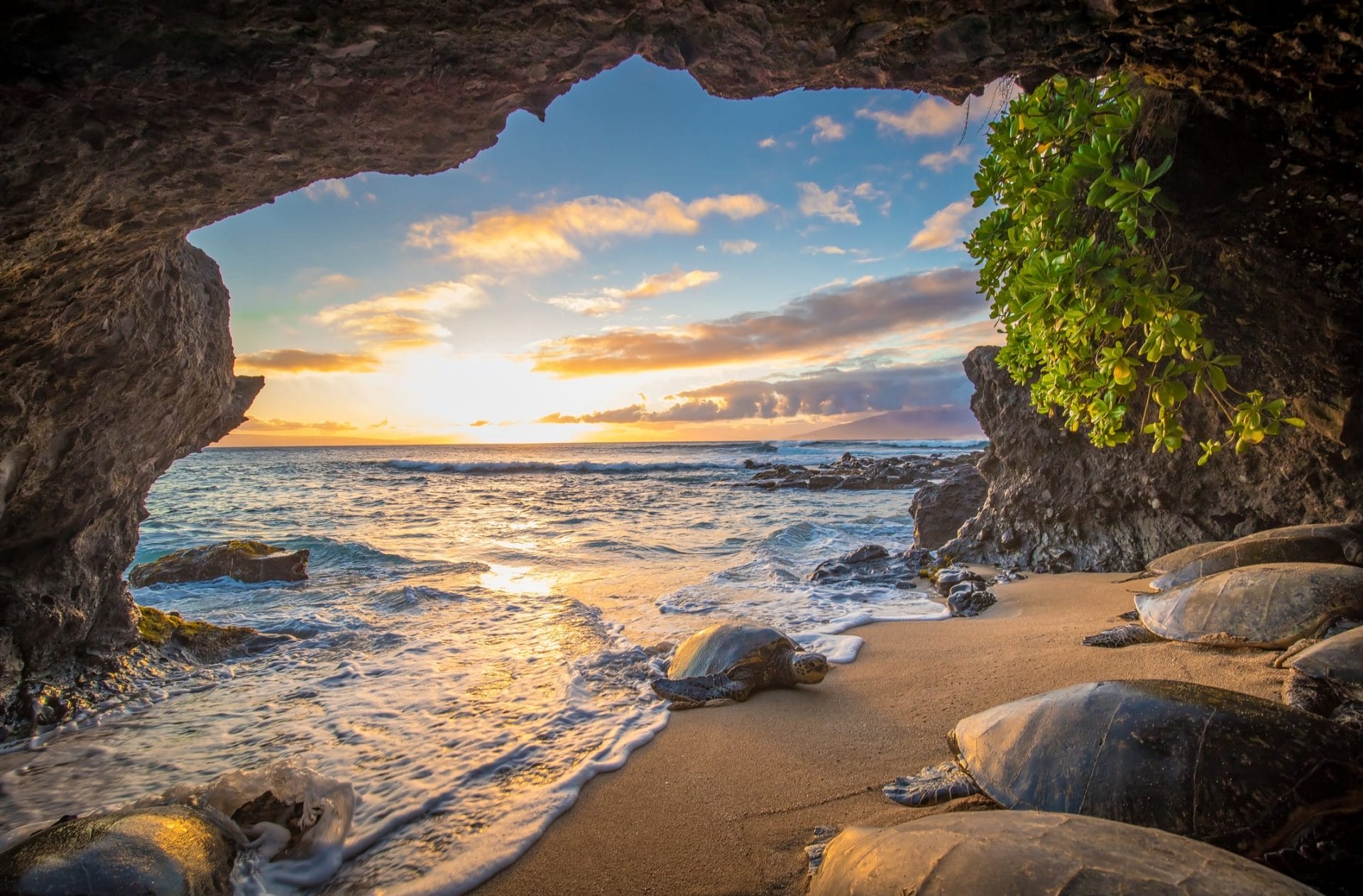
Flying privately to Maui means departing from nearly any U.S. airport aboard a super-midsize or heavy jet, arriving at Kahului Airport (OGG), and stepping into the Hawaiian sun within minutes of landing. The flight takes roughly five hours from Los Angeles or San Francisco, eight hours from Austin or Dallas, and 10–11 hours from the East Coast. A Private Aviation Advisor matches the right aircraft to your route and confirms availability, so the only decision left is where to go first.
Few destinations in the Pacific carry Maui’s particular pull. The island offers volcanic peaks, quiet bays, and stretches of coast where the light shifts hourly. Private aviation makes that world immediate: no layovers, no gate changes, no crowds parsing their boarding groups. You arrive in Maui the way it deserves to be entered – unhurried, present, ready.
Arriving in Maui: Airports and FBOs
Kahului Airport (OGG) is Maui’s primary airport and the only facility on the island that accommodates private jets. Located on the island’s north-central coast, Kahului sits between Haleakala’s slopes and the West Maui Mountains, offering clear approaches in most conditions. Kahului’s primary runway (Runway 2/20, roughly 7,000 feet) accommodates aircraft up to heavy jets, with a shorter secondary runway serving smaller aircraft.
Two fixed-base operators (FBOs) serve private arrivals at Kahului: Signature Aviation and Atlantic Aviation. Both offer ground handling, fueling, customs clearance for international flights, and concierge coordination for onward ground transportation. Private terminals are separate from the commercial concourse, allowing passengers to move directly from aircraft to vehicle.
Kapalua Airport (JHM), located near the island’s northwest tip, handles only propeller-driven and inter-island flights – no jets. Hana Airport (HNM), on the remote east coast, is limited to light propeller and turboprop aircraft. For any private jet arriving from the mainland, Kahului is the destination.
From Kahului, South Maui’s resort corridor along Wailea and Makena is roughly a 40- to 45-minute drive along the Piilani Highway, depending on traffic. West Maui’s Kaanapali and Kapalua resorts lie about 50 to 55 minutes to the northwest via the Honoapiilani Highway, depending on traffic. Many Private Clients arrange car service in advance through their Magellan Jets Client Experience team, ensuring ground transportation is waiting at the FBO upon arrival.
Choosing the Right Aircraft for a Private Jet Charter to Maui
The mainland-to-Hawaii routing presents one of private aviation’s true overwater challenges. The distance from California alone exceeds 2,400 nautical miles, well beyond the range of light jets and most midsize aircraft. The flight requires a super-midsize jet or larger – aircraft with the fuel capacity, range certification, and overwater equipment to cross the Pacific nonstop.
Magellan Jets works exclusively with operators equipped and certified for overwater missions, drawn from the Magellan Jets Preferred Network of rigorously vetted FAA Part 135 carriers.
West Coast Departures
For flights from Los Angeles, San Francisco, or San Diego, a super-midsize jet is often the ideal match. The Challenger 350 offers a range of approximately 3,269 nautical miles and seats up to nine passengers in a spacious stand-up cabin. The Praetor 600 extends range to approximately 4,040 nautical miles with seating for up to eight.
Longer Departures: Denver, Austin, Dallas, and the East Coast
Flights originating from Central or East Coast cities require a heavy jet for nonstop service. The Challenger 650 and Challenger 604 both deliver a range of approximately 4,119 nautical miles with seating for up to 10 passengers. These aircraft offer extended cabin comfort for longer flights – space to work, dine, or rest before arrival.
Your advisor will recommend the right category based on your departure city, passenger count, and travel preferences. Explore the full On-Demand Charter offering or lock in guaranteed access through a Jet Card.
What It Costs to Charter a Private Jet to Maui
Charter pricing to Hawaii reflects the distance, overwater routing, and aircraft category required for the mission. As a destination in the Non-Contiguous U.S. region, Maui flights typically command higher hourly rates than domestic mainland routes.
Magellan Jets’ estimated hourly rates for Hawaii routings:
- Super-Midsize Jet: approximately $12,200 per hour (estimate)
- Heavy Jet: approximately $13,700 per hour (estimate)
These are estimated hourly rates inclusive of fuel. They do not include contingencies such as de-icing, positioning, overnight fees, or other trip-specific costs. Final pricing is confirmed at time of quote.
A round-trip charter to Maui from the West Coast aboard a super-midsize jet would involve roughly 10 flight hours; from the East Coast aboard a heavy jet, roughly 20–22 flight hours. Your Private Aviation Advisor will provide a complete quote based on your itinerary and preferences.
Empty Legs to Maui
Empty-leg flights – repositioning legs flown without passengers – occasionally become available on Hawaii routes. Because Maui is a premium leisure destination, aircraft often reposition back to the mainland after one-way drop-offs. When timing aligns, empty legs can offer value for flexible travelers.
Availability is limited and opportunistic. If you have flexible travel dates, your advisor can monitor for matching inventory. Reach out through Talk to a Private Aviation Advisor to express interest.
Where to Stay in Maui
Maui’s South Shore and West Side host the island’s most distinguished resorts, each calibrated to different rhythms of travel. South Maui’s Wailea corridor offers proximity to calm beaches and reliable weather, while West Maui provides a more lush, tropical setting with access to world-class golf and protected marine areas.
South Maui: Wailea
The Four Seasons Resort Maui at Wailea anchors the Wailea coastline with the island’s most refined service. A new Spa and Wellness Centre opened in July 2026, featuring a co-ed aquathermal experience, a hyperbaric chamber, and extensive wellness treatments. The resort’s three pools descend toward the ocean in a tiered design that feels integrated with the landscape. Ferraro’s Restaurant & Bar remains the only oceanfront open-air restaurant in Wailea – a table worth reserving at sunset.
Nearby, Grand Wailea, A Waldorf Astoria Resort delivers expansive grounds and a family-friendly energy, while Andaz Maui at Wailea Resort appeals to travelers seeking a more contemporary aesthetic.
West Maui: Kapalua
The Ritz-Carlton Kapalua sits on the island’s quieter northwest coast, surrounded by two championship golf courses and protected marine preserves. It offers a more secluded alternative for visitors drawn to West Maui’s coastal trails and uncrowded beaches.
Where to Dine in Maui
Ferraro’s Restaurant & Bar at Four Seasons Maui sets the standard for oceanfront dining in South Maui – Italian-inflected seafood, local ingredients, and an open-air setting directly on the water. For Private Clients staying in Wailea, it is the evening destination.
Beyond the resorts, Maui’s dining landscape rewards curiosity. Upcountry farms supply many of the island’s best kitchens. Small plates and fresh fish dominate coastal menus in Paia and Kihei. Your concierge or Client Experience team can secure reservations at sought-after spots in advance.
What to Experience in Maui
Maui’s geography spans volcanic summits, tropical rainforest, and hundreds of miles of coastline. The island invites both active exploration and quiet days anchored to a single stretch of sand.
Haleakala National Park
Watching sunrise from the summit of Haleakala – 10,023 feet above the Pacific – remains one of Maui’s defining experiences. Sunrise viewing requires advance reservations through recreation.gov, available up to 60 days ahead. Entry is restricted between 3 a.m. and 7 a.m.; plan to arrive early and dress warmly. Temperatures at the summit often hover near freezing before dawn.
Road to Hana
The winding 64-mile route to Hana crosses 59 bridges, 46 of them just one lane wide, and passes waterfalls, black-sand beaches, and dense rainforest. Notable stops include Twin Falls near the start, the cascading Wailua Falls, and the pools at Oheo Gulch (Seven Sacred Pools) near the journey’s end. The drive is best experienced over a full day or, better still, with an overnight in Hana to avoid the return drive in fading light. Private touring services can handle the driving, allowing passengers to focus on the scenery.
Whale Watching
Humpback whales migrate to Maui’s warm, shallow waters each winter. The season runs from November through April, with peak activity in January through March. Morning excursions from Lahaina or Maalaea harbors often encounter mothers and calves within minutes of leaving port.
Molokini Crater
The crescent-shaped volcanic crater off Maui’s south shore shelters some of the clearest snorkeling waters in Hawaii. Visibility often exceeds 100 feet, revealing coral formations and more than 250 species of tropical fish. Morning departures offer the calmest conditions; by midday, trade winds typically pick up and stir the surface. Private charters departing from Maalaea or Kihei harbors reach the crater in roughly 30 minutes. Molokini is a protected Marine Life Conservation District, so expect regulated access and limited vessel capacity.
Visiting Maui Today
South Maui – including Wailea, Kihei, and Makena – is fully open and welcoming visitors. So is West Maui’s Kaanapali coast, the Kapalua area, Upcountry Maui, Haleakala National Park, and the Road to Hana.
Lahaina’s historic town core remains under restricted access as the community rebuilds following the August 2023 wildfire. In a milestone for the island’s recovery, Lahaina’s Small Boat Harbor reopened in December 2025 for limited daytime commercial ocean tours. Visitors are asked to respect these boundaries while supporting Maui’s ongoing recovery through their presence elsewhere on the island.
Why Fly to Maui with Magellan Jets
Magellan Jets arranges private travel through an exclusive network of fewer than 100 rigorously vetted operators – all FAA Part 135 (charter and Jet Card) or Part 91K (fractional) certificate holders. The company does not own or operate aircraft. This asset-light model ensures every aircraft recommendation reflects your needs, not fleet utilization pressures.
Operators in the Magellan Jets Preferred Network carry liability insurance between $100 million and $300 million, exceed federal safety requirements, and are continuously audited through a proactive Safety Management System (SMS). Magellan Jets is the only private aviation solutions provider whose CEO and COO have held the Air Charter Safety Foundation (ACSF) Chairman seat, a role held for over six years.
For international charter flights or transoceanic routings like mainland-to-Hawaii, Magellan’s operational team confirms overwater certification, fuel contingencies, and customs handling before every departure. Your dedicated Private Aviation Advisor coordinates every detail, from aircraft selection to ground transportation, while the Client Experience team handles catering preferences and resort arrangements.
Frequently Asked Questions About Flying Privately to Maui (FAQs):
How much does it cost to charter a private jet to Maui?
Magellan Jets’ estimated hourly rates for Hawaii routings are approximately $12,200 per hour for a super-midsize jet and approximately $13,700 per hour for a heavy jet. These estimates are inclusive of fuel but do not include contingencies such as de-icing, positioning, overnight fees, or other trip-specific costs. Final pricing is confirmed at time of quote by your Private Aviation Advisor.
Can you fly a private jet from California to Hawaii?
Yes. A super-midsize jet or larger can fly nonstop from California to Maui. The route is approximately 2,400 nautical miles, requiring an aircraft with sufficient range and overwater certification. Light jets do not have the range for this mission.
What airport do private jets use in Maui?
Kahului Airport (OGG) is the only airport on Maui that accommodates private jets. Two FBOs – Signature Aviation and Atlantic Aviation – handle private arrivals. Kapalua and Hana airports serve only propeller and turboprop aircraft.
What size jet do you need to fly to Maui?
The mainland-to-Hawaii route requires a super-midsize jet for West Coast departures or a heavy jet for longer routings from Denver, Texas, or the East Coast. Aircraft like the Challenger 350 (range approximately 3,269 nm) or Challenger 650 (range approximately 4,119 nm) are commonly recommended.
How far in advance should you book a private jet to Maui?
For peak travel periods – including winter holidays, spring break, and summer weeks – booking two to four weeks in advance is advisable. Shoulder seasons offer more flexibility, though overwater-certified aircraft availability can vary. Your advisor can confirm current lead times.
When is the best time to visit Maui?
Maui offers year-round appeal. Winter months (November through April) bring humpback whale season and comfortable temperatures, though slightly higher rainfall on the windward (north and east) sides of the island. Summer and early fall deliver drier conditions and calmer ocean swells, ideal for snorkeling and beach days. Haleakala sunrise and the Road to Hana are accessible throughout the year. Peak travel periods include late December through early January, Presidents’ Day week, and mid-June through mid-August.


