Across the American West, wildfire season has become a travel-planning problem long before any flame reaches a property line. For a Private Client, the disruption rarely comes from the fire itself. It comes from losing control over departure.
Smoke drifts hundreds of miles from its source and closes visibility at major airports far from any active burn. Regulators lock the airspace directly over fires to protect the aircraft fighting them. A family with homes in Napa (KAPC), Lake Tahoe (KTRK), or Aspen (KASE) can find its schedule frozen while the local sky still looks navigable.
So the real question is one of access. Will the airports you depend on stay open, and will the route between them stay clear? Both can close on a day your own horizon looks calm, and that is the gap worth planning for.
When Wildfire Season Runs and Why It Keeps Growing More Severe
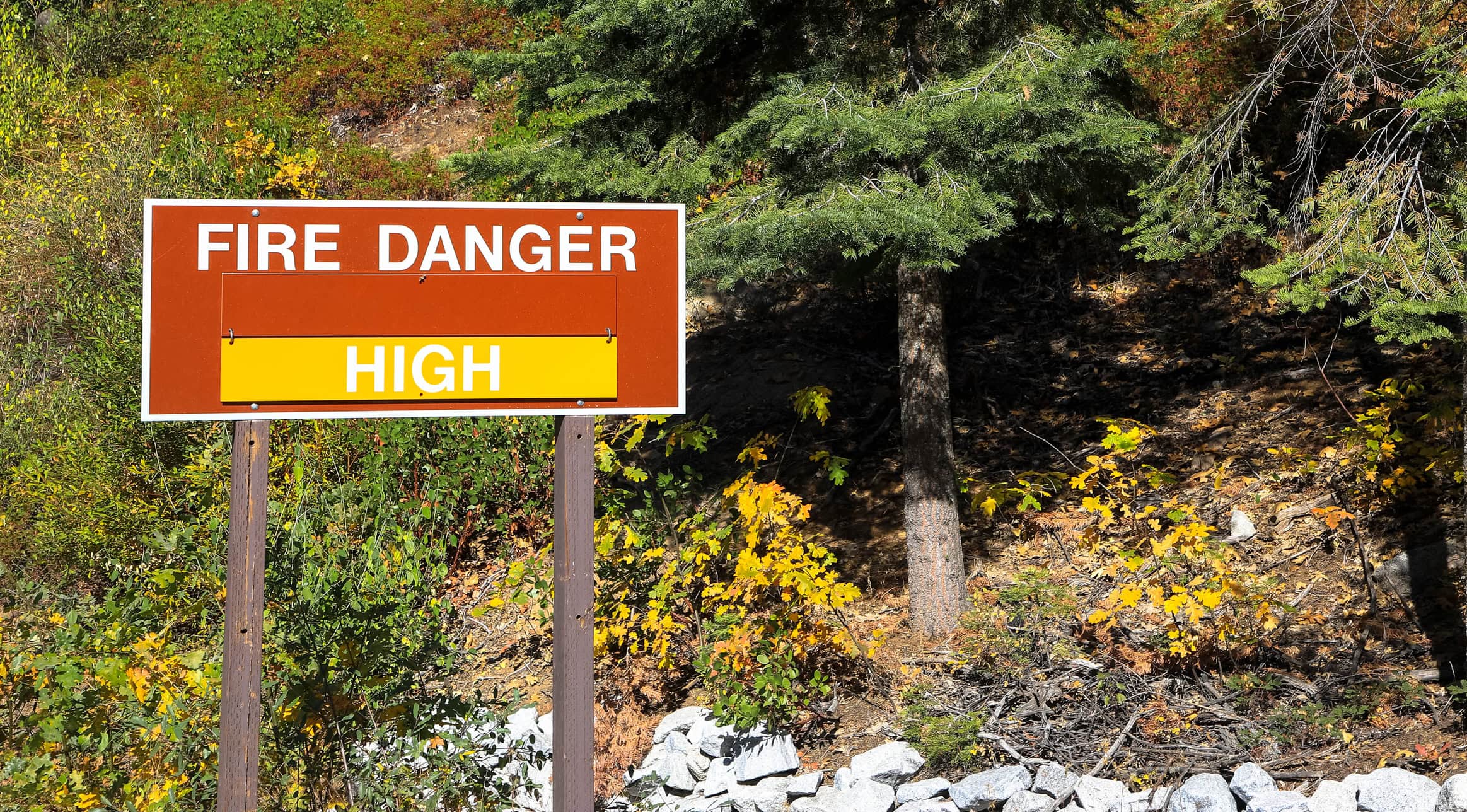
Western wildfire season runs roughly from May through November, with the most active stretch falling between July and September. That window has grown less predictable at its edges. In 2024, the season wound down about three weeks later than the average end date, extending the period when travel disruption stays on the table.
In 2024, 64,897 wildfires burned 8,924,884 acres across the United States, which is 127% of the 10-year average. NOAA attributes the surge in western wildfire frequency and severity to rising temperatures, declining snowpack, and frequent drought.
How Wildfire Smoke Triggers Ground Stops and Flight Delays
Smoke does not respect the distance between a fire and a runway. When it thickens over an airport, visibility drops, and air traffic control must space arriving and departing aircraft farther apart, which cuts the number of flights the airport can handle each hour. The result is a slower system, felt at gates hundreds of miles from any flame, where disruptions ripple across the commercial network.
In June 2023, smoke from Canadian wildfires reached the Northeast corridor with measurable operational effect. The FAA delayed flights bound for Newark (KEWR) nationwide, grounded departures to Philadelphia (KPHL), and delayed flights bound for LaGuardia (KLGA). More than 230 flights across the country were delayed in a single morning.
What a Temporary Flight Restriction Over a Wildfire Does to Airspace
A Temporary Flight Restriction (TFR) is a temporary FAA restriction on flight operations over a defined area, communicated to pilots through a NOTAM, or Notice to Air Missions. Under federal rule 14 CFR 91.137, the FAA issues TFRs over active wildfires to protect the aircraft dropping water and retardant. Every non-participating aircraft, private jets included, must comply.
These restrictions are common. The FAA processed 1,362 wildfire and disaster-related TFRs in 2024 and 1,251 in 2025, with wildfire restrictions dominating the summer months. Private aviation carries no exemption from them. What it carries is the flexibility to plan around them, choosing routes and departure points that keep a mission clear of restricted airspace.
Why Private Aviation Holds Up Better Than Commercial Schedules in Fire Season
Wildfire season affects flying primarily through smoke and restricted airspace rather than direct flame. Smoke lowers visibility and slows air traffic at major hubs, while Temporary Flight Restrictions close the airspace over active fires. Private aviation helps because it reaches more than 5,000 US airports, against roughly 500 served by commercial carriers, letting Private Clients depart from smaller regional fields away from smoke-choked hubs and route around restricted airspace.
Magellan Jets is a private aviation solutions provider founded in Boston in 2008, offering On-Demand Charter, Jet Cards, Fractional Ownership, and Aircraft Sales & Management. It works through an asset-light Preferred Network of fewer than 100 vetted operators, and it is the only private aviation provider represented on the Air Charter Safety Foundation Board.
That structure matters in fire season. Large-fleet programs and fixed-block operators route around the airports and aircraft they already control. An asset-light model sources each mission to fit the conditions on the day, including which fields are actually clear of smoke.
How to Fly Out of a Wildfire-Prone Western Home on Short Notice

When a departure has to happen within a day, On-Demand Charter is the trip-by-trip solution. It requires no membership and no pre-committed hours, which suits the unpredictable timing that smoke and Temporary Flight Restrictions impose. For each mission, Magellan Jets sources the right aircraft from the Preferred Network, matched to the route, the size of the group, and the fields that are actually open.
Pricing for On-Demand Charter is estimate-based, calculated per mission rather than fixed in advance. A Midsize jet out of the West Coast region starts from an estimated $9,557/hr, which your Private Aviation Advisor confirms against the specific routing and conditions before you commit.
This is an estimated hourly rate for Midsize charter, inclusive of fuel. It does not include contingencies such as de-icing, positioning, overnight fees, catering, ground transportation, or other trip-specific costs, and final pricing is confirmed at time of quote.
When the season is active and the timing is yours to control, the fastest path to a confirmed plan is a direct conversation. Contact a Private Aviation Advisor.
How to Lock In Travel Certainty Before Wildfire Season Starts
A Jet Card secures guaranteed availability 365 days a year, with zero blackout dates and no peak-day surcharges, before the season starts. Call-out windows run as short as 24 hours. Jet Card funds never expire, so hours you do not use carry into the next season rather than lapsing.
Corporations with western operations often formalize this readiness through corporate travel programs such as Magellan Jets for Business, keeping leadership moving when a region’s flights seize up. Whether the need covers one home or an entire executive team, a Private Aviation Advisor can structure the right plan before smoke ever reaches the field.
Wildfire Season Is Now a Planning Reality, and Control Is the Answer
Fire season is now a fixed feature of the western calendar, and its reach extends far beyond any burn scar. Smoke and restricted airspace turn a settled itinerary into a waiting game whenever the season peaks. Private aviation restores the one thing those conditions take away, which is control over when and how you leave. The next step is a short conversation about what that certainty looks like for your homes and your year. Contact a Private Aviation Advisor.
Frequently Asked Questions About Wildfire Season and Private Aviation (FAQs):
When is wildfire season in the western United States?
Western wildfire season generally runs from May through November, with the most active period falling between July and September. The edges have grown less predictable, and in 2024 the national season wound down about three weeks later than the average end date. Timing varies year to year and by region.
How does wildfire smoke cause flight delays?
When smoke settles over an airport, it reduces visibility, and air traffic control must space aircraft farther apart, which lowers how many flights the airport can handle each hour. Smoke travels far, so hubs hundreds of miles from a fire can slow down. In June 2023, Canadian wildfire smoke delayed more than 230 flights across the country in a single morning.
Can private jets fly through a wildfire Temporary Flight Restriction (TFR)?
No. A Temporary Flight Restriction over an active wildfire prohibits non-participating aircraft from the airspace, and private jets are not exempt. The advantage of private aviation is planning flexibility: choosing routes and departure fields that stay clear of the restricted area rather than waiting on a fixed schedule.
Is it better to fly private during wildfire season?
Private aviation reaches more than 5,000 US airports, compared with roughly 500 served by commercial carriers, which allows departures from smaller regional fields away from smoke-choked hubs. It also allows flexible routing around restricted airspace. That combination preserves departure options on days when commercial schedules stall.
How quickly can I arrange a private flight to leave during a wildfire?
On-Demand Charter can be arranged trip by trip for short-notice departures, with aircraft sourced per mission from the Preferred Network. Jet Card holders have guaranteed availability 365 days a year with call-out windows as short as 24 hours and no blackout dates. A Private Aviation Advisor coordinates the aircraft, routing, and open fields for the specific situation.


