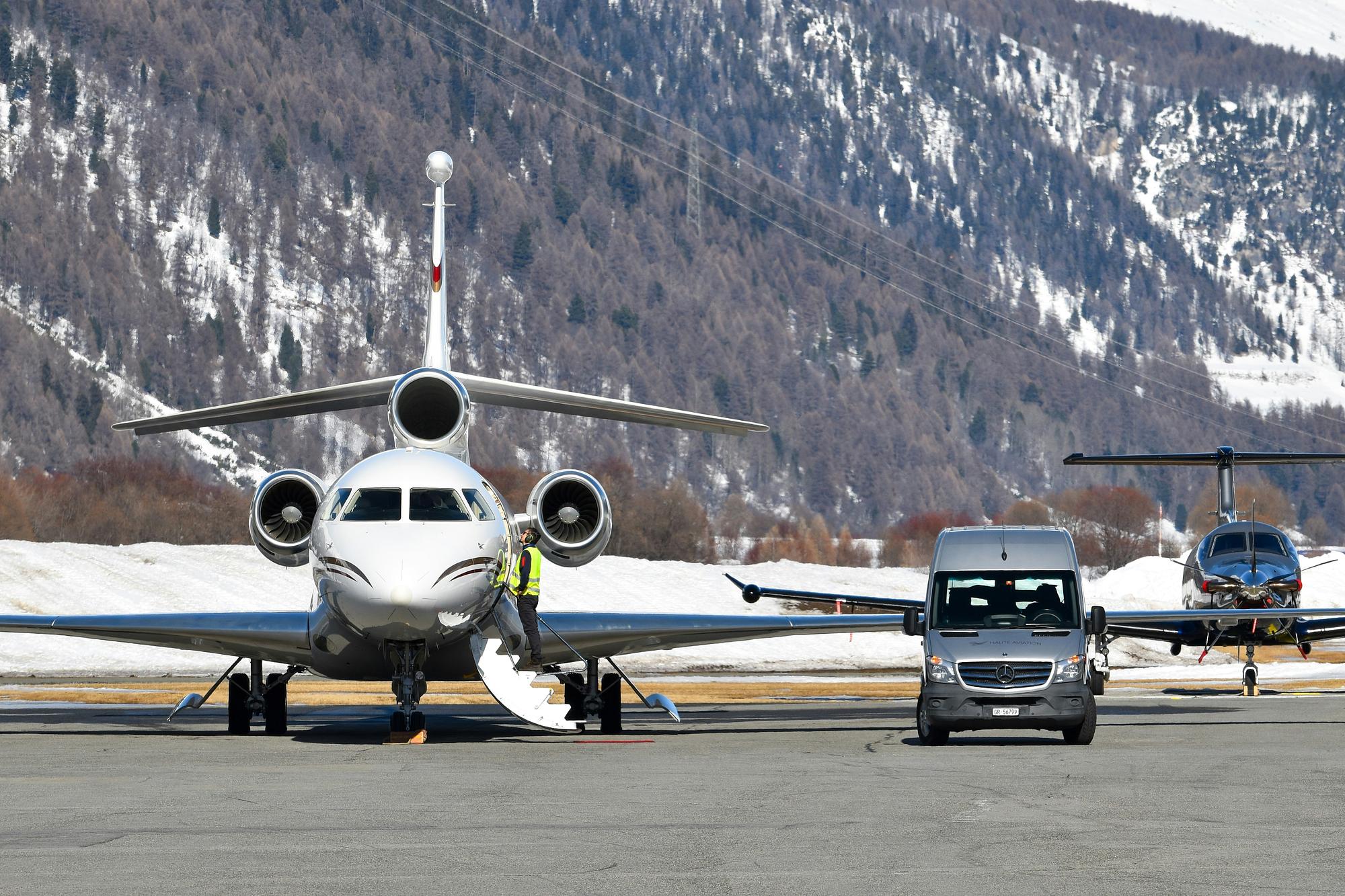
The Falcon 2000 vs Gulfstream G450 comparison pits two exceptional aircraft against each other – but they belong to different categories, serve different missions, and suit different traveler profiles. Choosing between them is less about which is better and more about which is right for you.
The direct answer: The Dassault Falcon 2000 is a super-midsize jet offering efficient transcontinental range (up to 4,100 nm in the LXS variant) with seating for up to 10 passengers – ideal for smaller groups prioritizing operating economy and runway flexibility. The Gulfstream G450 is a heavy jet with a substantially larger cabin (1,658 vs 1,028 cu ft), room for up to 13 passengers, and 4,425 nm of range – the choice for larger groups or those who value maximum cabin space for overnight flights and onboard meetings.
Falcon 2000 vs Gulfstream G450: Specifications at a Glance

Cabin Experience: Refined Efficiency vs. Expansive Comfort
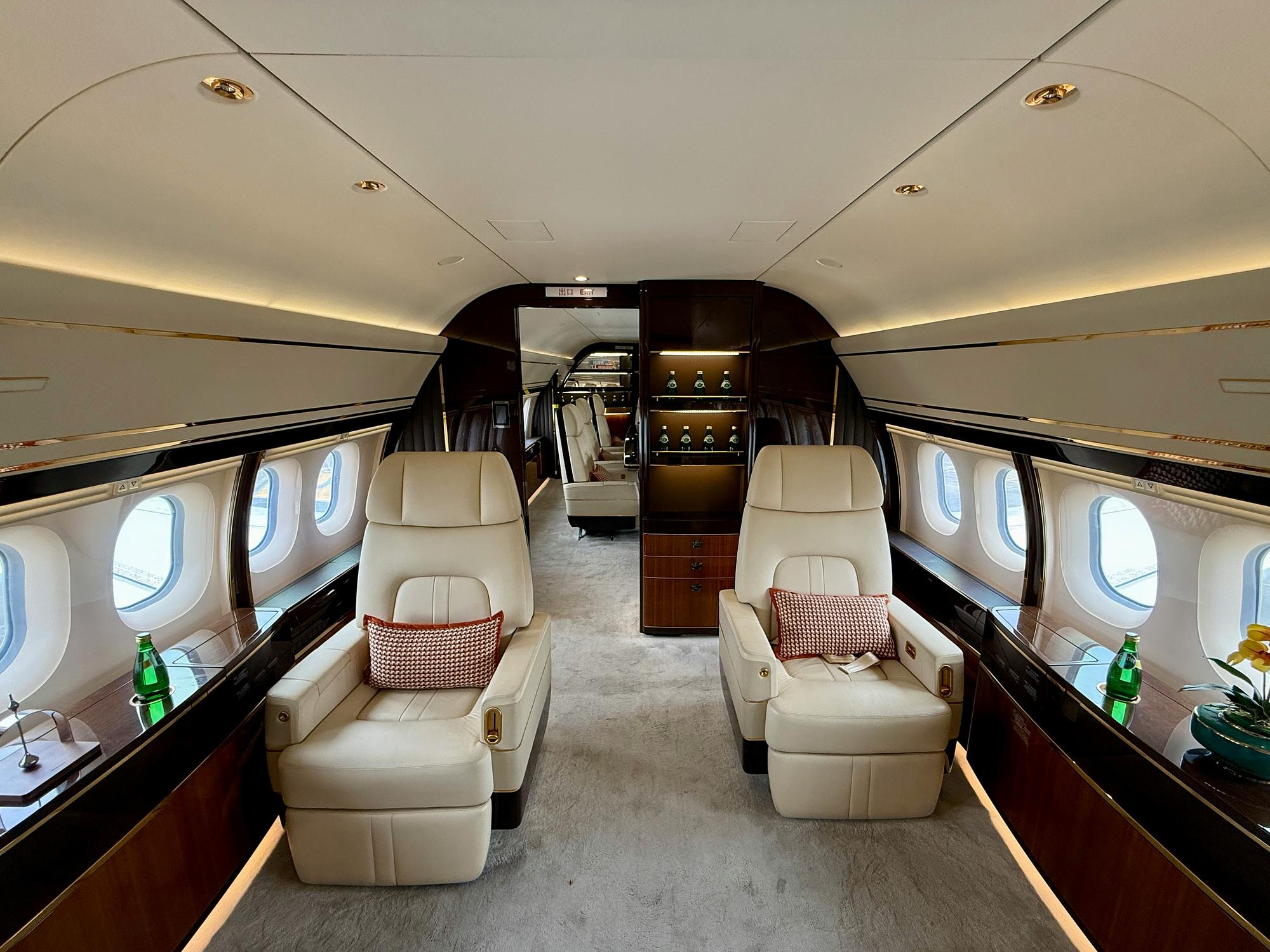
The Falcon 2000’s cabin reflects Dassault’s philosophy of thoughtful proportion. At 7 ft 7 in wide, it is actually four inches wider than the G450 – a difference you notice when settling into a club seat or working at the drop-down table. The fuselage cross-section traces back to the Falcon 900 trijet, a lineage that gives the aircraft an established, refined feel.
Where the G450 dominates is sheer volume. Its 45 ft 1 in cabin stretches nearly 20 feet longer than the Falcon 2000’s 26 ft 2 in interior. That additional space typically configures into three distinct zones – forward club seating, a mid-cabin work area, and an aft lounge or berthing section. For executive teams traveling together or families seeking room to spread out, the difference is unmistakable.
Both cabins stand 6 ft 2 in tall, comfortable for most passengers to move about freely. The G450’s Honeywell Primus Epic PlaneView flight deck keeps the cockpit modern; the Falcon 2000LXS counters with the EASy II avionics suite, known for its pilot-friendly design. Private Clients rarely see these systems – but they benefit from the safety margins and operational flexibility they enable.
Range and Speed: Transcontinental Reach vs. Ocean-Crossing Capability
The Falcon 2000 family spans several variants, from the original model (approximately 3,130 nm range) to the current-production LXS (approximately 4,100 nm). That upper figure covers routes like New York to Los Angeles, Boston to London’s closer alternates, or Miami to São Paulo with favorable winds.
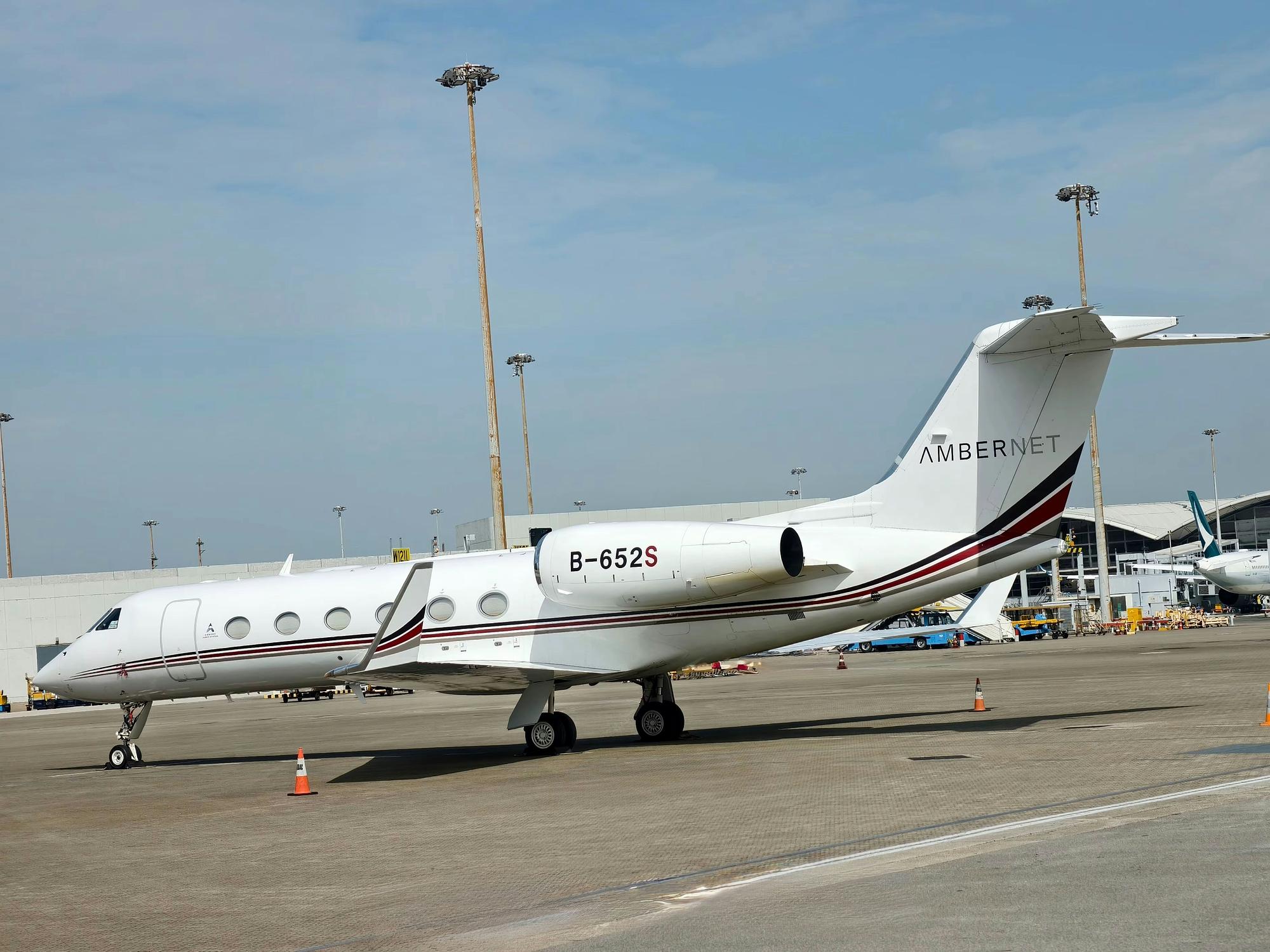
The G450’s 4,425 nm range adds roughly 325 nm to the envelope – enough to open certain transatlantic routings or extend legs that would otherwise require a fuel stop. It also cruises faster, reaching 476 knots versus the Falcon’s 437 knots. On a coast-to-coast flight, that speed advantage translates to roughly 20–25 minutes saved.
Yet the Falcon 2000 holds an advantage of its own: a 47,000 ft ceiling compared to the G450’s 45,000 ft. At those altitudes, the aircraft rides above most weather and competing traffic. Pilots often cite this when explaining the Falcon’s reputation for smooth, efficient flights.
Mission Profiles: Which Aircraft Fits Your Travel Pattern?
Choose the Falcon 2000 when your typical group runs four to six passengers, your routes stay within North America or reach to the Caribbean and northern South America, and operating efficiency matters alongside comfort. The super-midsize category also unlocks shorter runways, expanding your access to regional airports near coastal retreats or mountain destinations.
Choose the G450 when you regularly travel with eight or more passengers, conduct onboard meetings that require space to spread out, or fly routes that push past 4,000 nm. The additional baggage capacity (169 vs 139 cu ft) also suits extended trips with golf clubs, skis, or presentation materials.
Neither choice is wrong. They serve distinct purposes. A Private Client who flies quarterly to Europe with a full team has different needs than one who travels monthly between New York and Aspen with a spouse.
Chartering the Falcon 2000 or G450 With Magellan Jets
Magellan Jets coordinates charter access to both the Falcon 2000 and G450 through the On-Demand Charter program. Working with rigorously vetted operators in the Magellan Jets Preferred Network, Private Aviation Advisors match each journey to the right aircraft – whether that means a super-midsize Falcon for a quick transcontinental hop or a G450 for a longer leg with a larger group.
Estimated hourly charter rates:
- Dassault Falcon 2000 (Super-Midsize): starting from an estimated $9,816/hr
- Gulfstream G450 (Heavy Jet): starting from an estimated $12,989/hr
These are estimated hourly rates, inclusive of fuel. They do not include contingencies such as de-icing, positioning, overnight fees, catering, or other trip-specific costs. Final pricing is confirmed at time of quote.
For Private Clients who fly 25 hours or more annually, the Jet Card program locks in rates and guarantees availability with call-out windows as short as 24 hours. The Magellan Jets portfolio also extends to Fractional Ownership and Aircraft Sales & Management – ensuring that as your travel patterns evolve, your aviation partner evolves with you.
Frequently Asked Questions About the Falcon 2000 vs. Gulfstream G450 (FAQs):
Is the Falcon 2000 a heavy jet?
No. The Dassault Falcon 2000 is classified as a super-midsize jet. While the current LXS variant’s range of approximately 4,100 nm approaches heavy-jet territory, its cabin volume (1,028 cu ft) and passenger capacity (up to 10) place it firmly in the super-midsize category.
Which has the longer range – the Falcon 2000 or the G450?
The Gulfstream G450 offers approximately 4,425 nm of range compared to the Falcon 2000LXS’s 4,100 nm. That 325 nm difference can determine whether certain transatlantic routings require a fuel stop.
Which has the bigger cabin?
The G450’s cabin is substantially larger at 1,658 cu ft versus 1,028 cu ft for the Falcon 2000. The G450’s 45 ft 1 in cabin length is nearly 20 feet longer than the Falcon’s 26 ft 2 in interior. However, the Falcon 2000 is four inches wider (7 ft 7 in vs 7 ft 3 in).
How much does it cost to charter each aircraft?
Estimated hourly charter rates start from $9,816/hr for a super-midsize Falcon 2000 and $12,989/hr for a heavy-jet G450. These rates are inclusive of fuel but exclude positioning, de-icing, catering, and other trip-specific costs. Final pricing is confirmed at time of quote.
Which should I choose for a transatlantic trip?
For most transatlantic missions, the G450’s combination of longer range (4,425 nm), faster cruise speed (476 knots), and larger cabin for overnight comfort makes it the stronger choice. The Falcon 2000LXS can reach closer European destinations with favorable winds, but the G450 provides more margin and more space for long-haul travel.
The best aircraft is the one that fits your mission, your group, and your standards for comfort. Whether you lean toward the Falcon 2000’s efficient elegance or the G450’s expansive capability, your Private Aviation Advisor can map both options to your specific routes and preferences.


