When golf meets nature’s grandeur, there’s no spectacle quite like a waterfall cascading beside a fairway or green. Beyond their jaw-dropping beauty, these courses blend drama with world-class design, elevating the game into experiences you’ll never forget.
What follows are seven (plus a bonus!) waterfall courses, each bucket-list worthy and each offering a unique test of skill surrounded by awe-inspiring visuals. Whether tucked in tropical paradise, etched into desert canyons or nestled into lush forests, these destinations promise a lifetime of memories.
Huge oaks, rolling limestone hills dramatic drops to fairways and greens, and natural waterfalls. This sets the stage for this Texas Hill Country course that’s hosted Tour and PGA of America tournaments. The 7,125-yard Fazio Foothills is the signature track, a rollercoaster ride of sorts, where creeks tumble through canyon walls and greens protected by cliffs perched near water’s edge. Precision is critical and nature itself becomes the course’s greatest defense. Its companion Palmer Lakeside course is well known for its signature hole No. 11 highlighted by a torrential waterfall and native flora.
Big Cedar Lodge – Ridgedale, MO
Johnny Morris’ Ozark resort blends rugged wilderness with theatrical waterfalls carved into limestone bluffs. Tiger Woods’ first public design, Payne’s Valley, is indescribably cool. The waterfall starts on the par-3 No. 2, aptly named “Cascades,” where water on golfers’ left must be avoided. No. 3, Lion’s Den, is unlike any golf hole on earth as tee shots are hit from inside a cave behind a breathtaking waterfall to a downhill green. No. 8 could represent a watery grave with a long green from front to back protected by a bunker short right and a large waterfall with rapids on the backside. Yet another waterfall is on No. 15; however, the closing hole with a gargantuan 200-foot waterfall, natural rock formations and a drive-through cave steals the show. Add Buffalo Ridge and Ozarks National exceptional layouts, and this lodge is full of golf escapades .
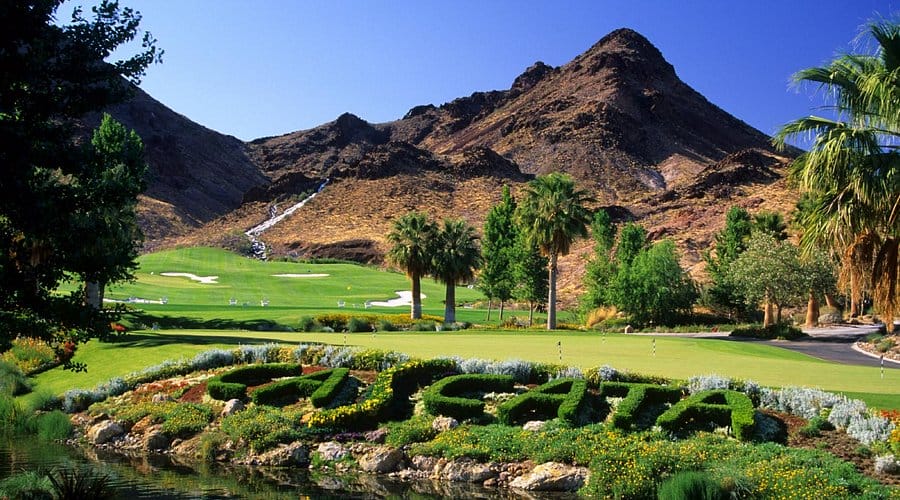
Cascata Golf Club – Boulder City, NV
Photo from TripAdvisor
“Cascata” literally means waterfall in Italian. At this Rees Jones, par-72 design soaring to 3,200 feet above the Las Vegas desert valley amid the foothills of the River Mountain Range, you’ll hear it before you see it. A 418-foot man-made waterfall flows from the steep mountainside, over boulders and through the clubhouse while also weaving into fairways and ravines. Combined with gigantic mountain peaks contrasting lush fairways and accented by lakes, streams and wildlife, Cascata Golf Club is breathtaking thanks to a mix of lavishness, drama and tranquility at every turn.
Horseshoe Bay Resort – Horseshoe Bay, TX
Perched on Lake LBJ in the Texas Hill Country northwest of Austin, Horseshoe Bay features four championship courses. Ram Rock is known for narrow fairways and its stunning waterfall holes. No. 14 on the Slick Rock course boasts a bi-level waterfall that sends approximately 8,000 gallons rushing down every minute, creating an intense visual as golfers tee off. The aquatic feature costs nearly $1 million to construct in 1990; hence the nickname “Million Dollar Hole.” It embodies the shot-value philosophy of designer Robert Trent Jones, Sr. with a “hard par, easy bogey” layout.
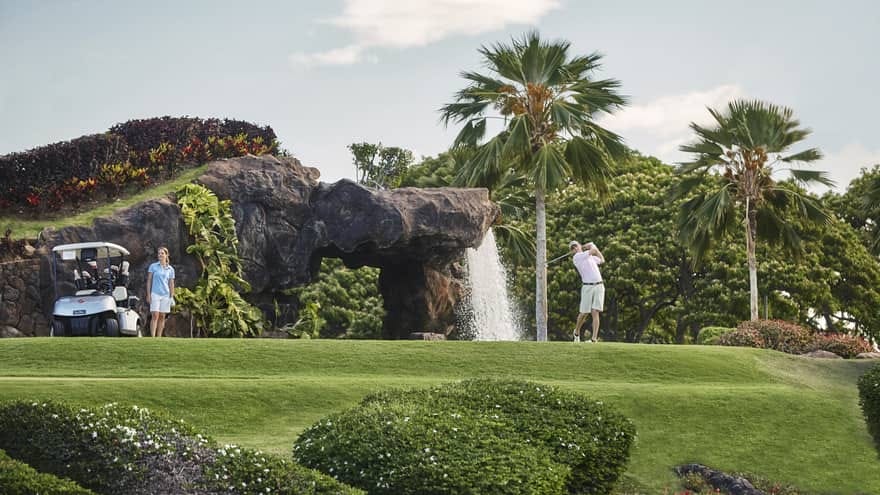
Ko Olina Golf Club – Oahu, HI
Photo from the Four Seasons
Hawaii is synonymous with waterfalls, and Ko Olina captures that magic with lush tropical landscaping and water features framing eight holes. Designed by Ted Robinson, waterfalls on Nos. 12 and 18 are especially memorable. That’s what Tour players faced at Ko Olina, where not only water hazards but multi-tiered greens often drove them batty. And that’s partly why Golf Digest lauds this course annually. Don’t’ forget, LPGA star Michelle Wie, who grew up in Honolulu, developed her championship game here; lest we forget her countless golf cart drives through a cascading waterfall en route to the No. 12 tee box.
The Golf Club at Black Rock – Coeur d’Alene, ID
Since its opening in 2003, Black Rock has remained in Golf Digest’s “Top 100 Golf Courses” rankings. Cut into wooded mountains overlooking Lake Coeur d’Alene, the private Black Rock is the poster child for alpine wilderness golf, traversing through wooded forests, across prairies and wetlands, up and down elevations, and around enormous outcroppings of basalt from which Black Rock gets its name. Naturally, there’s much-talked-about No. 11, a par 4, 413-yard gem with an approach shot that involves splitting a pair of waterfalls to reach the unique, V-shaped, two-tiered green that’s located within a rock amphitheater.
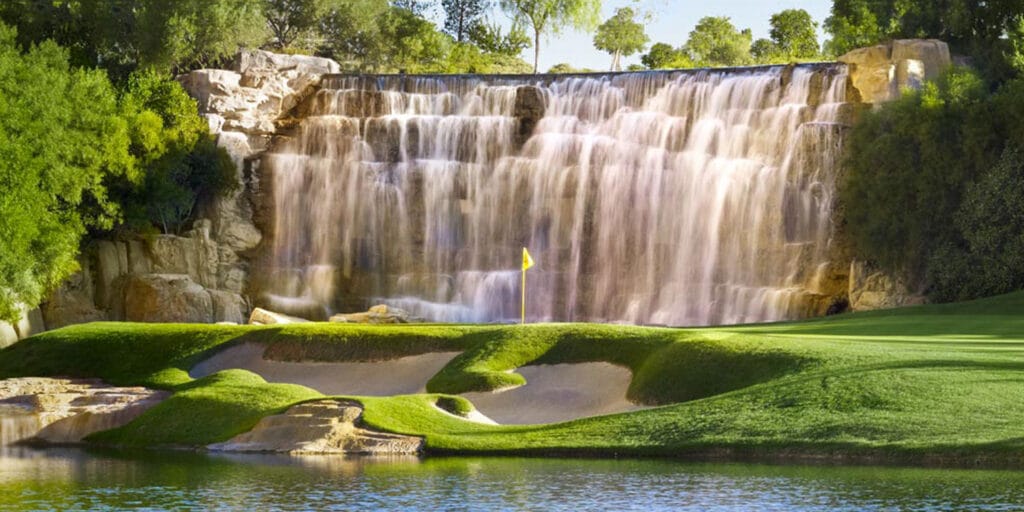
Wynn Golf Club – Las Vegas, NV
Photo from the Wynn Las Vegas
Las Vegas’ only Strip-side course delivers luxury golf at its peak. All class and in always immaculate condition, golfers revel in the par-70 masterpiece with six par 3s for birdie opportunities. Surprisingly, despite views of resort towers, Wynn Golf Club often feels more like Pinehurst than Sin City with towering trees, pine straw and secluded feel. The finishing hole showcases a 35-foot, 100-foot-wide waterfall tumbling into a shimmering lagoon and other parts of the course. Visually stunning is a complete and utter understatement. Overall, Tom Fazio’s blend of modern design and theatrical water features makes every round feel like an event. Yes, you can see The Sphere from the course.
Bonus No. 8: Highland Falls Country Club – Highlands, NC
Perched on a rock ledge at the base of a 100-foot waterfall created by the headwaters of the Cullasaja River is the private Highland Fall’s signature par 3, No. 15, that Ron Whitten, longtime Golf Digest Senior Editor of Architecture, described as “the most memorable par three in golf.” Only 130 yards from the tips, it requires a dead-aim-at-the-pin flop shot away from the massive flow down a steep, rocky cliff. And, yes, you’ll get sprayed with water coming off the rocks while standing by the rail along the green’s backside. The other 17 holes are outstanding with panoramic views and amid a quietly charming, mountain-style layout.
Planning your next golf trip? We’ve got you covered.
Play these roaring courses and return home to deliver stories worth telling.
Magellan Jets helps you reach these iconic destinations with ease. Our Private Aviation Advisors are well versed in golf and will tailor your journey to experience these breathtaking waterfall backdrops. Contact a member of the team here.
Although it means summer is coming to a close, the Fall is undoubtedly a spectacular time to travel. Mountains turn gold, Vineyards harvest their grapes, and private jets make chasing autumn’s brief spectacle not just possible, but effortless.
If you want to witness Vermont’s peak foliage, you have exactly two weeks to catch those blazing maples before they give way to bare branches. With private aviation, you can depart when conditions are perfect, land at smaller airports closer to scenic drives, and easily adjust plans if weather shifts.
September through November offers ideal flying and traveling weather. Fall tourists take advantage of clear skies, stable air, and temperatures that make both morning hikes and afternoon tastings comfortable.
Why Fall Is Ideal for a Luxury Journey
Autumn travel is a favorite for our savvy Private Clients. Tourist crowds thin out dramatically after Labor Day, yet destinations remain fully operational.
Weather conditions during fall create some of aviation’s smoothest flying. Cool, dense air provides better lift and performance. Visibility stretches for miles—perfect for scenic approaches into mountain valleys or along dramatic coastlines. Those stunning aerial views of fall foliage you’ve seen in magazines? Private jet windows frame them perfectly.
But here’s what makes autumn the most special: the authenticity. Harvest celebrations aren’t tourist traps. Vermont’s apple festivals, Napa’s crush parties, and Tuscany’s truffle fairs are all well-loved and heavily attended by locals. Private jet flexibility puts you at authentic events right when they happen, not a week later when commercial flight schedules align.
Top Fall Destinations for Private Jet Travelers
The view from Mount Battie, Camden, Maine
New England Foliage
Vermont is one of the most reliable places in the U.S. for fall foliage, with peak colors typically arriving from late September through mid-October. Sugar maples dominate the landscape, turning hillsides into a patchwork of fiery reds, golds, and bright orange. Unlike in other parts of the country, the shift can happen quickly here, with whole valleys transforming in just a few days.
For travelers flying private, Rutland Southern Vermont Regional Airport (KRUT) and Lebanon Municipal Airport (KLEB) are ideal gateways. Both place you within minutes of Route 100, a two-lane byway often called Vermont’s “foliage highway,” which winds past small towns, covered bridges, and general stores where you can stop for cider doughnuts or local cheeses.
Accommodations in the Green Mountains are equally appealing in autumn. Many ski lodges and resorts transition seamlessly into fall escapes, offering hiking, cycling, and leaf-peeping packages. Expect stone fireplaces in common rooms, menus featuring Vermont apples, fresh-pressed cider, and maple-based desserts, plus spas that often use local ingredients in their treatments.
Flying directly into Vermont means you bypass Boston’s crowded airports and traffic, landing closer to the quiet charm and rural scenery that define a true New England fall getaway.
New Hampshire’s White Mountains
New Hampshire’s White Mountains deliver some of the most dramatic foliage views in New England, with elevations ranging from rolling valleys to alpine ridges. Colors typically peak in early October, with higher elevations turning first. The Kancamagus Highway (“the Kanc”) is the state’s most famous foliage drive, stretching 34 miles between Lincoln and Conway, offering sweeping views, trailheads, and river pull-offs.
Private travelers can land at Manchester-Boston Regional Airport (KMHT) or Lebanon Municipal Airport (KLEB), both within easy reach of the White Mountains. Helicopter transfers are also popular, offering bird’s-eye views of the color-drenched forest canopy.
Resorts and historic inns in the region embrace the season with activities beyond leaf-peeping: guided hikes, fly fishing, and early-season scenic gondola rides. Classic spots like Omni Mount Washington Resort pair mountain views with fine dining and spa services, while smaller country inns add authenticity with farm-to-table breakfasts and quiet porches for stargazing on crisp fall nights.
Maine’s Coastal & Mountain Blend
Maine offers a unique mix: rugged coastline and mountain backdrops painted in fall color. The season stretches a little longer here, with peak inland foliage in early October and coastal areas holding color into late October. Visitors can pair lighthouse-hopping along the rocky shore with inland drives through forests and lakes.
For private aviation, Portland International Jetport (KPWM) provides convenient access to southern Maine’s coast, while Bangor International (KBGR) or Bar Harbor (KBHB) position you closer to Acadia National Park, where trails wind through vibrant forests and open onto sweeping ocean views.
Accommodations range from waterfront inns in towns like Camden and Bar Harbor to rustic retreats deep in the North Woods. Outdoor options are plentiful: leaf-lined hiking trails, kayak trips on calm lakes, or simply enjoying the view from a porch with a glass of Maine craft cider.
Aspen Mountain Retreat
Dawn at Maroon Bells With Autumn Aspen Trees and Maroon Lake in the Rocky Mountains near Aspen Colorado
In Colorado, fall belongs to the aspens. Hillsides turn brilliant shades of yellow and gold, creating striking contrasts against evergreen forests and snow-dusted peaks. The season is short but spectacular: late September through early October is typically the prime window, with high-elevation groves turning first. Photographers and hikers will find almost every switchback and ridgeline framed in color, but the timing matters: many alpine trails close soon after the first snows.
Aspen itself remains lively after summer, offering a quieter but still vibrant version of its winter energy. Restaurants and cafes stay open, often highlighting seasonal harvests from the Roaring Fork Valley. Boutiques refresh with fall collections, and galleries showcase new exhibitions ahead of ski season. Outdoor recreation continues at full pace. Fly fishing peaks as rivers run low and clear, mountain biking trails dry out from summer storms, and scenic drives like Independence Pass or Maroon Creek Road reward visitors with sweeping mountain vistas wrapped in gold.
For private travelers, Aspen/Pitkin County Airport (KASE) is one of the most convenient mountain airports in the U.S., located just minutes from downtown. Landing directly here saves hours compared with connecting through Denver and navigating the mountain passes by car, letting you step almost immediately into the heart of Colorado’s fall scenery.
Napa Valley Harvest
October marks the height of crush season in Napa Valley, when grapes are harvested and transformed into new vintages. The air often carries the sweet, yeasty aroma of fermentation, and vineyards are alive with activity from dawn to dusk. Cabernet Sauvignon and Chardonnay dominate the valley, but fall is also a chance to discover small producers crafting limited blends you won’t find outside the region.
Flying private into Napa County Airport (KAPC) puts you directly in the valley, avoiding Bay Area traffic and long drives from San Francisco or Oakland. From there, you’re minutes from both Highway 29 and the Silverado Trail, the twin routes that wind past world-class wineries, boutique estates, and tucked-away tasting rooms.
Fall brings unique opportunities beyond tastings: hands-on harvest experiences like grape stomping or blending sessions, intimate vineyard dinners, and educational tours led by winemakers themselves. Many resorts and boutique inns position guests right among the vines, offering vineyard-view rooms, curated wine lists, and concierge teams with access to otherwise hard-to-get reservations. For a different perspective, sunrise hot air balloon rides reveal the valley’s checkerboard of vineyards glowing gold in the morning light.
Jackson Hole Escape
Few backdrops rival the Teton Range, where jagged peaks rise dramatically above golden valleys. In fall, cottonwoods and aspens along the Snake River turn bright yellow, elk herds move through open meadows, and bald eagles and osprey circle overhead. The Jackson Hole Airport (KJAC), uniquely located inside Grand Teton National Park, delivers you directly into the wilderness within minutes of arrival.
September and October bring an ideal balance: active wildlife, vibrant color, and cooler temperatures, all without summer’s crowds. Lodges that book out a year in advance during ski season often have availability, making it easier to enjoy Jackson Hole’s luxury accommodations. Morning wildlife tours frequently spot elk, moose, or even grizzlies preparing for winter. Afternoon float trips down the Snake River pass through cottonwood groves alive with birdlife, while clear evening skies offer spectacular stargazing in one of the darkest night environments in the lower 48.
Tuscany in Autumn
October is one of the most rewarding times to visit Tuscany. The grape harvest overlaps with truffle season, and olive presses begin turning out the year’s first oils. Medieval towns like Siena and Montepulciano, quieter after peak tourist months, return to a more local rhythm. The soft golden light of autumn, long praised by painters and photographers, bathes vineyards and hilltop villages in warmth.
Private travelers can fly into Florence Airport (KFLR), which handles business aviation smoothly and avoids the complexities of Rome or Milan. Accommodations range from converted monasteries to elegantly restored farmhouses, many set among rolling vineyards and olive groves. Seasonal activities abound: cooking classes featuring freshly foraged mushrooms and truffles, olive oil tastings at local mills, and vineyard dinners with pairings direct from the harvest. Mild evenings often allow for al fresco dining beneath the stars.
Tailoring Your Fall Itinerary
Scheduling for Peak Colors and Harvest Times
Timing makes or breaks fall travel. New England’s colors march south predictably.
Maine peaks in late September
Vermont peaks by early October
Massachusetts peaks around mid-October
Wine harvests vary by weather but typically run September in Europe, October in California
Build flexibility into your plans. Morning fog can delay mountain departures. Afternoon storms close smaller airports. Having buffer days means waiting for perfect conditions instead of pushing through marginal weather. At Magellan Jets, your Private Aviation Advisor and Flight Support team tracks conditions and adjusts accordingly.
Choosing the Right Aircraft Category
Short New England hops work beautifully in Light Jets. A light jet from Burlington to Nantucket, for example, takes under an hour. Cross-country leaf tours benefit from Super-midsize Jets with coast-to-coast range. European destinations require Heavy Jets or ultra-long-range aircraft for nonstop flights.
Your Private Aviation Advisor will consider your group’s needs holistically and ensure that no detail is overlooked.
Important Considerations for Fall Travel
Before finalizing autumn plans, consider several factors:
• Local festivals might create unexpected opportunities or affect hotel availability • Mountain resorts sometimes reduce operations between summer and ski seasons • Wine regions book ground transportation months ahead during harvest • Weather flexibility becomes critical: have backup dates ready • Flight support availability matters when weather forces sudden changes
FAQs About Fall Private Jet Destinations
Can I bring seasonal gear like skis or golf clubs on board?
Some private jets accommodate sporting equipment easily, however it’s critical to work with a Private Aviation Advisor to ensure that you book the correct aircraft for your needs.
Is importing local wines or specialty foods an option?
Domestic flights face zero restrictions on wine or food transport. Buy cases in Napa, fly them home same day. International flights require customs declarations. European wine purchases might face import duties. We can help you navigate the regulations for each country.
Are pets allowed on private autumn flights?
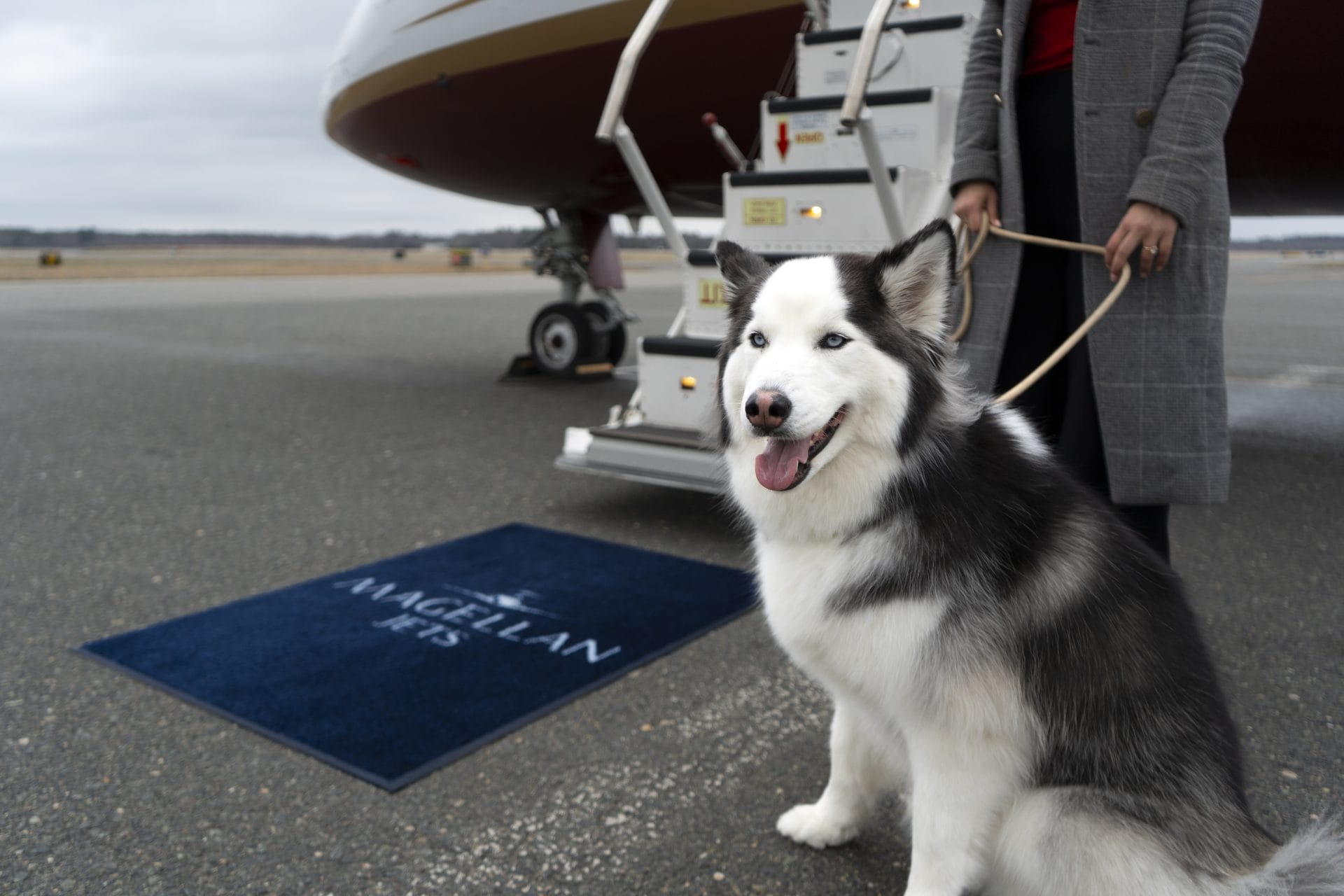
Private jets welcome pets in the cabin without size limits or cargo holds. International pet travel requires health certificates and varies by country. Some destinations require quarantine periods. Your Private Aviation Advisor will help you understand the requirements for your particular journey.
Your Path to an Unforgettable Fall Journey
Magellan Jets turns fall’s challenges into seamless experiences. Our Private Aviation Advisors know which airports put you closest to peak colors. They track weather patterns and adjust schedules proactively. Every detail, from aircraft selection to ground transportation, aligns with autumn’s unique demands.
When seeking golf courses that challenge your strategic thinking, Bill Coore and Ben Crenshaw consistently deliver all things extraordinary. The duo’s minimalist philosophy of letting natural terrain guide most design decisions has produced seven of the world’s top 100 courses.
Here’s what also sets them apart: strategy beats power every time.
Major championships and other professional tournaments unfold on their fairways. From Pinehurst’s crowned greens to Kapalua’s volcanic slopes, each layout rewards pinpoint accuracy and course management. PGA TOUR and LIV Golf professionals gravitate toward these designs because they test every aspect of the game without artificial tricks.
Collecting course experiences? Indeed, you’ll appreciate why Coore & Crenshaw represents the apex of modern architecture.
Origins of Coore & Crenshaw Design
Bill Coore’s journey began under Pete Dye’s mentorship before he ventured solo. Then came 1986 when Ben Crenshaw, fresh from his 1984 Masters victory, visited Coore’s Rockport Country Club. What happened next changed golf architecture forever. Their handshake partnership was built on shared reverence for classical design.
Ruling the day are wide fairways offering multiple attack angles and green complexes rewarding creativity over aggression. Nature provides the golf course, and Coore & Crenshaw simply reveal it. No need to move tens of thousands of cubic yards of earth across 18 holes.
The mantras: wide fairways offer multiple attack angles. Greens complexes reward creativity over aggression. At Sand Hills, they proved minimalism works—moving just 4,000 cubic yards of earth across 18 holes. Nature already provided the golf course; they simply revealed it.
To wit, Tiger Woods, Phil Mickelson and Jordan Spieth have all praised how Coore & Crenshaw designs test every shot imaginable, from delicate chips to powerful drives.
The par-5 18th tumbles downhill toward the Pacific – and Jon Rahm once drove the green from more than 400 yards. Trade winds transform this closer: sometimes it’s a two-shot birdie chance, other times a three-shot battle for par.
Former pineapple fields cling to volcanic slopes where Coore & Crenshaw crafted their first collaboration. Gravity-fed irrigation works with nature, not against it. Their 2019 renovation brought back firm conditions, so now you can use the ground as your ally, running shots onto greens.
Xander Schauffele owns the course record. What draws PGA TOUR stars? Elevation changes and wind calculations create shots you won’t find anywhere else, especially on typical resort tracks.
Sheep Ranch – Bandon, OR
Meet the par-3 16th that requires a 200-yard carry over churning Pacific waters. Many golfers aren’t exaggerating when they call it “the most intimidating tee shot in golf.” Pull it left? Oh, no, your ball becomes ocean debris.
No formal bunkers exist here –none. Instead, windswept fescue and natural contours defend par. Nine greens hover above oceanside cliffs while weathered trees frame your targets. It is links golf stripped to its essence.
Brooks Koepka made the pilgrimage. So did Viktor Hovland. Shot makers thrive because creativity beats distance at Sheep Ranch, exactly why professionals seek out these pure conditions.
Barnbougle Lost Farm – Tasmania, Australia
The par-3 4th shoots across a valley toward Bass Strait, and Adam Scott hit the nail on the head when describing the hefty winds. “More unpredictable than St. Andrews,” he said after watching his ball dance in the breeze.
Twenty holes weave through towering marram grass. Sand formations dwarf players yet provide natural galleries. Wide corridors forgive wayward drives, only if you know where to miss.
Jason Day calls Barnbougle Lost Form Australia’s finest examination. Marc Leishman agrees. International stars add Tasmania to their itineraries specifically for this remote test of skill.
The par-4 6th tempts aggressive players to drive the green over water. Or should they play it safe? Scottie Scheffler went for it during a corporate outing. Two eagles proved his point about calculated risks.
Phosphate mining left 100-foot sand ridges and azure lakes – not your typical Florida landscape. Coore & Crenshaw saw opportunity where others saw wasteland. Now firm fairways and sandy scrub evoke Scotland’s links, not Orlando’s parkland.
Rory McIlroy tunes his game here before Florida Swing events. Why? Conditions mirror Open Championship venues thanks to wind, firmness and creative shot requirements.
Cabot Cliffs – Inverness, Nova Scotia
Drop 175 yards from cliff to green on the par-3 16th where Gulf of St. Lawrence winds affect every millisecond of ball flight. Justin Thomas nailed it: “golf’s most photogenic hole.”
Ocean views dominate the clifftop routing while forest holes provide contrast. Bunkers frame shots rather than simply punish mistakes. Natural land movement ensures you’ll rarely find a flat lie. It’s all classic Coore & Crenshaw architectural thinking.
Bryson DeChambeau chartered a flight here. Several LIV Golf stars followed. Cabot Cliffs’ remote location adds privacy these players crave, not to mention bragging rights few can match.
Sand Valley – Nekoosa, WI
The par-5 opener introduces prehistoric blowout bunkers. Tony Finau learned that bombing drives doesn’t always help as his ball found sand that predates civilization.
Wisconsin farmland hid ancient dunes until Coore & Crenshaw exposed them. Native fescue eliminates irrigation beyond greens. Every hole flows naturally into the next, promoting —walkability.
PGA TOUR players compare conditions favorably to Nebraska’s Sand Hills. That’s certainly high praise!
Pinehurst Resort No. 2 – Pinehurst, NC
The par-4 5th showcases Pinehurst’s crowned greens where anything less than a perfect shot rolls away. Martin Kaymer’s 2014 U.S. Open approach landed inches from disaster yet held. Precision or bust.
Forty acres of rough disappeared, sandy waste areas were added and greens significantly expanded in Coore & Crenshaw’s 2014 restoration. Yet they still honored history while enhancing playability, masterfully achieving a delicate balance.
Payne Stewart immortalized Pinehurst No. 2 and DeChambeau dominated it. Every professional considers Pinehurst mandatory preparation for major championships.
Ready for Your Next Journey?
You’ve seen what makes Coore & Crenshaw special. Now it’s time to experience these courses yourself. Talk with a Private Aviation Advisor at Magellan Jets for bespoke flight solutions tailored to remote course access.
Behind every smooth and secure private aviation journey lies a critical framework that professionals refer to as an SMS—a Safety Management System. This system isn’t just an industry trend: it’s a transformative approach to aviation safety that benefits every private flier.
What Is an SMS and Why It Matters
A Safety Management System is a structured, organization-wide approach to proactively managing safety risks. Unlike traditional safety programs that focus on rule compliance, an SMS is dynamic, predictive, and preventive. It’s about integrating safety into every decision before problems arise.
In private aviation, where operators face thousands of airport environments, varied aircraft types, and unique mission profiles, SMS helps create flexible, responsive safety strategies.
Regulatory Landscape: When SMS Became Mandatory
For years, SMS was not a regulatory requirement for Part 135 (on-demand charter) operators in the U.S. That changed in 2024 when the FAA began requiring these operators to implement an SMS by 2027. However, not all operators have implemented it yet, which is why clients should verify their provider works with operators with a documented and functioning SMS.
The Core of Every SMS: Industry Principles
Every effective SMS includes four foundational pillars:
Safety Policy – Leadership sets the tone for safety across the organization.
Risk Management – Hazards are identified, assessed, and mitigated.
Safety Assurance – Continuous monitoring and improvement.
Safety Promotion – Fostering a culture where safety is everyone’s responsibility.
Private aviation companies use SMS to:
Share safety observations across teams.
Analyze maintenance trends for preventive actions.
Evaluate airport-specific risks like short runways or sudden weather changes.
Train staff through simulators and real-time data integration.
Modern SMS platforms also rely on data analytics and advanced technology to track thousands of flight parameters, optimize planning, and maintain readiness across all departments.
Magellan Jets: Pioneering Private Aviation Safety
Although an it is not required for asset-light solutions providers, Magellan Jets voluntarily adopted a Safety Management System and uses it to ensure every flight meets our safety standards. Unlike at other solutions providers, our leadership recognized early that safety excellence isn’t about compliance: it’s about commitment.
Learn more about how we go above and beyond compliance here: Safety Whitepaper.
Our Unique Safety Approach
Magellan’s asset-light model allows us to make aircraft decisions based solely on safety and suitability, not utilization quotas. We are free to say “no” to any aircraft that doesn’t meet our standards, even for minor concerns.
We created the Magellan Jets Preferred Network, representing the top percentageof U.S. operators, vetted through strict evaluation. This process, guided by a leadership team with over 100 years of combined aviation experience, examines pilot credentials, SMS, training programs, maintenance practices, and more.
Safety isn’t just physical: it’s financial. Unlike others, Magellan keeps your funds fully dedicated to your travel. We don’t co-mingle your deposits with operational costs, which builds long-term trust.
Around-the-Clock SMS in Action
Our SMS integrates seamlessly with our 24/7, 365 Flight Support team. They continuously monitor:
Weather patterns
Airport conditions
Aircraft performance and airworthiness
Operator performance
If conditions change, we adjust flight plans proactively. This vigilant approach is part of why Magellan maintains a 4.9/5 trip satisfaction rating.
SMS Isn’t Just Theory—It’s Practice
Our Preferred Network operators are selected, in part, based on how effectively they use SMS principles. We exceed minimum requirements by conducting frequent reviews and integrating real-time feedback into every mission.
For our clients, this means every journey benefits from institutional-grade safety practices, with the attention and personalization of bespoke aviation service.
Frequently Asked Questions About SMS
Is SMS only for large airlines? No. SMS scales to fit any size operation. Even a one-aircraft operator can and should implement an SMS.
Does SMS increase charter costs? While SMS involves investment, it often reduces costs over time by preventing delays, repairs, and incidents, keeping operations efficient.
Can an SMS prevent all incidents? No system can eliminate all risk, but a strong SMS significantly reduces the likelihood and severity of incidents through proactive management.
Choose Magellan Jets for Trusted, Transparent Safety
As temperatures rise during the summer months, environmental conditions can introduce logistical and operational considerations for private aviation. From reduced aircraft performance to weight limitations and potential fuel stops, high heat can impact flight planning in ways that are important for Private Clients to understand.
At Magellan Jets, our operations and safety teams account for every variable to ensure a secure and seamless travel experience. With record-breaking temperatures predicted for summer 2025, it’s essential to plan for the weather, especially when flying into or out of high-altitude or high-temperature airports.
Below are the five key factors that may influence your summer travel and how to work with your Private Aviation Advisor to ensure every trip is executed safely and efficiently.
1. Beat the Heat: Opt for Cooler Departure Times
High temperatures reduce air density, which can impact aircraft performance during takeoff, particularly on shorter runways or at high-altitude airports. To avoid these constraints, we often recommend flying in the early morning or evening when temperatures are lower.
2. Aircraft Type Matters: Choose the Best Jet for Your Needs
Hot temperatures can impact aircraft performance, but it’s not as simple as one type or size of jet always performing better than another. Each aircraft handles differently, and some are more limited under high-temperature or high-elevation conditions than others.
That’s why it’s essential to choose the right aircraft for the mission. Factors like temperature, runway length, elevation, passenger count, and winds all play a role in determining what’s possible for a given flight. In some cases, performance limitations may require a fuel stop or adjustment to the itinerary.
Your Magellan Jets Private Aviation Advisor will evaluate the full picture and recommend the most suitable aircraft , ensuring a balance of performance, comfort, and safety tailored to your needs.
3. Travel Light: Understand Weight Limitations
Hot temperatures can affect an aircraft’s takeoff performance, which may introduce operational weight limits depending on the jet type, runway length, and airport elevation. However, this doesn’t mean you need to limit how many people or how much luggage you bring.
We work with you tomatch your passenger count, baggage needs, and trip details to the right aircraft, timing, and routing to make your flight efficient and safe in challenging summer conditions. In some cases, this may involve using a longer runway, selecting a larger aircraft, or incorporating a brief fuel stop to ensure optimal performance.
We’ll communicate these details early in the planning process, so your experience remains seamless and personalized.
4. Prepare for Possible Fuel Stops
Aircraft departing in hot weather may not be able to carry a full fuel load at takeoff. If that’s the case, a short refueling stop might be added mid-route. It’s a common, safety-first decision made in partnership with the operator, and we will work to ensure minimal disruption to your journey.
Thanks to our network of strictly vetted operators, we can arrange fast, efficient stops that keep your travel time optimized.
5. Alternate Airports May Be the Better Option
If your preferred airport has a short runway or is located at a higher elevation we may recommend a nearby alternate airport that offers safer takeoff and landing conditions in extreme heat.
Our Flight Operations team uses real-time data and decades of experience to make these recommendations, always putting safety first.
Safe Summer Travel, Tailored for You
At Magellan Jets, we are proud to Lead with Safety in all our operations. By proactively managing environmental conditions, matching you with the right aircraft, and adjusting departure strategies, we ensure your flight remains safe, smooth, and effortless.
“Our team evaluates every detail, from airport elevation to weight and runway length, to make sure each mission is aligned with our strict safety standards. It’s about anticipating the seasonal challenges and planning accordingly.” — Christian Schaible, Senior Director, Safety & Joint Operations at Magellan Jets
If you attend high-level conferences for investing, media, policy, or family office strategy, travel logistics can be as critical as the event itself. These gatherings attract global leaders and often take place in locations with limited infrastructure, heightened security, or seasonal congestion.
Below is a curated list of major upcoming conferences that may be on your calendar. For each, we’ve outlined practical aviation insights: which airports to use, what type of aircraft to plan for, and how to streamline ground transportation and accommodations. If you’re attending any of these events, Magellan Jets can help ensure your arrival is seamless, discreet, and on schedule.
Allen & Company Sun Valley Conference
Location: Sun Valley Resort, Idaho
Date: July 9-13, 2025 Audience: Tech titans, media moguls, and financial elites
Arrival Airport: Friedman Memorial Airport (KSUN), just 15 minutes from the resort
Ground Transfer: Pre-arranged SUVs with mountain road experience are standard whereas helicopter transfers are ideal for larger groups avoiding the single access road
Where to Stay: The iconic Sun Valley Lodge is steps from meetings while private residences offer discretion for high-profile guests
Hawaii Family Office Retreat
Location: Honolulu, Oahu
Date: July 15, 2025 Audience: UHNW families and their advisors
Arrival Airport: Daniel K. Inouye International (PHNL), private terminal available for expedited customs
Aircraft Requirements: From the West Coast, charter a super-midsize jet or larger for the 2,400-mile Pacific crossing
Accommodations:The Four Seasons Oahu offers private meeting spaces, luxury amenities, and world-class golf for informal networking
Ground Transportation: Executive car services are recommended and can be arranged
Family Office & Private Wealth Legacy Summit
Location: Water Mill, The Hamptons
Date: August 26-27 2025 Audience: Family principals, wealth strategists, and succession planners
Best Airport: East Hampton (KJPX) accommodates most jets whereas larger aircraft should route to Francis S. Gabreski (KFOK)
Discretion & Security: Unmarked vehicles and vetted chauffeurs ensure complete privacy from tarmac to estate
Arrival Tip: Morning landings are optimal due to afternoon fog in June through August
United Nations General Assembly
Location: Manhattan, New York
Date: September 9, 2025 Audience: Heads of state, diplomats, and NGO leaders
Primary Airports: Teterboro (KTEB) enables 12-minute transfers to East Side heliports and White Plains (KHPN) offers reliable ground routes if weather grounds helicopters
Security Measures: Delegates may access NYPD motorcades while others should consider water taxis to bypass gridlock
Critical Planning: Hangar space is gone 60+ days in advance; Stewart International (SWF) is a viable contingency
AIMA Global Investor Forum
Location: Toronto, Canada
Date: October 15-16, 2025 Audience: Hedge fund managers, private equity leaders, and institutional allocators
Proximity Airport: Billy Bishop (CYTZ) lands you within 10 minutes of downtown, which is ideal for same-day meetings
International Access: Pearson (CYYZ) provides full customs support for larger aircraft
Date: October 21-22, 2025 Audience: Direct investors, multi-generational wealth holders, and philanthropic leaders
Arrival Airports:
KHPN (White Plains): Quick access to Grand Central via 35-minute Metro-North express
Downtown Manhattan or East 34th Street Heliports: Serve Wall Street and Midtown arrivals
Insider Tip: Book a 7 AM arrival and reserve a day-use suite at The St. Regis to freshen up before sessions
The Magellan Difference: Conference Travel, Reimagined
With our asset-light model, we’re not limited by fleet; we’re empowered by flexibility. We source the ideal aircraft from our Magellan Jets Preferred Network of vetted operators exceeding the industry’s highest safety standards. We even have dedicated solutions for businesses that include surcharge-free interchange, multi-aircraft usage, and your own personal support team. See all of the benefits of Magellan for Business here.
Our Approach Includes:
Dedicated Flight Support: Weather and airspace conditions are monitored in real time to proactively adjust your flight plan if needed.
Strategic Planning: Arrival windows are selected to minimize congestion and expedite access through FBOs.
Ground Coordination: Private SUVs, helicopters, or water taxis are synchronized with your flight for seamless transfers.
In-Flight Experience: Conference table seating, onboard catering, and Wi-Fi support productivity en route.
“Magellan Jets went above and beyond to create an amazing and special experience for us.” Magellan Jets Client
Frequently Asked Questions
Does a conference count as business travel? Yes. The IRS generally classifies conference attendance as deductible when tied to professional development or client meetings. Keep registration records and consult your tax advisor.
Do conferences pay for attendee travel? Typically no. Unless you’re a keynote speaker or VIP, travel expenses are usually self-funded.
Tailored Solutions for Executive Travelers
Every itinerary begins with a detailed assessment of passenger count, routing, schedule, in-flight needs, and more Our team then matches you with the best aircraft for your mission.
Expect:
24/7 flight monitoring and dispatch
Fully synchronized ground and air logistics
No compromises on safety or discretion
Learn more about why Magellan Jets is the best solution for executive travel here.
Established in 1927, the Ryder Cup is the world’s foremost team golf event. Broadcast in roughly 50 markets globally, the biennial, three-day men’s competition pits 12-person teams from Europe and the United States in fourball, foursome and singles matches.
This year’s Ryder Cup will test mettles of the world’s best players at Bethpage Black on Long Island, New York, September 26-28.
For golfers like us, there’s something undeniably special about playing a championship course where legends have battled for national pride. They inspire every golfer who tees up there, delivering drama, beauty, prestige and the chance to walk the same fairways as the game’s greats.
From breathtaking oceanfront layouts to grand European parklands and storied American resort icons, these seven accessible Ryder Cup courses are not to be missed.
Whistling Straits – Kohler, Wisconsin (Public)
Ryder Cup: 2021
Perched along the bluffs of Lake Michigan, Whistling Straits is a windswept masterpiece designed by Pete Dye. Its rugged, Irish-inspired links style features nearly 1,000 bunkers, wondrous elevation changes and unrelenting challenge. It’s a bucket-list course for any golfer, especially those who watched Team Europe and Team USA battle it out here in 2021. Open to the public, golf is a major part of the five-star Destination Kohler resort.
Kiawah Island Ocean Course – Kiawah Island, South Carolina (Resort)
Ryder Cup: 1991
Dubbed the “War by the Shore,” the 1991 Ryder Cup at Kiawah’s Ocean Course was one of the most intense ever. Today, the experience remains electric. Hugging the Atlantic Ocean, this Pete Dye masterpiece boasts North America’s most seaside holes. With coastal winds and postcard views, it’s both brutal and beautiful – ideal for players craving challenge and charm in equal measure. Guests of the Kiawah Island Golf Resort can secure coveted tee times.
PGA National Resort – Palm Beach Gardens, Florida (Resort)
Ryder Cup: 1983
Home to the famous “Bear Trap,” PGA National’s Champion Course hosted the 1983 Ryder Cup where Team USA narrowly edged out Europe. Today, golfers still test themselves against water-lined holes and tournament pedigree. Recently renovated, the course remains a flagship of Florida resort golf, and resort guests enjoy full access to its fairways, spa and dining options.
The Greenbrier – White Sulphur Springs, West Virginia (Resort)
Ryder Cup: 1979
Nestled in the Allegheny Mountains, The Greenbrier is more than a luxury resort – it’s a national treasure. The Old White course hosted the 1979 Ryder Cup where the expanded U.S. team welcomed European legends like Seve Ballesteros for the first time. Open to resort guests, it blends Southern charm with championship layout, offering immaculate conditions and a historic backdrop that’s hard to beat.
Pinehurst No. 2 – Pinehurst, North Carolina (Resort)
Ryder Cup: 1951
Designed by Donald Ross and restored by Bill Coore and Ben Crenshaw, Pinehurst No. 2 is a spiritual home of American golf. Site of the 1951 Ryder Cup and multiple U.S. Opens, it’s known for crowned greens, native sandscapes and a layout that reveals its brilliance more with each round. It’s the anchor of Pinehurst Resort, where golf history lives and modern luxury thrives. While you’re there, play The Cradle, the new nine-hole course that’s a brilliant test of golfers’ short-game skills and a joyful experience to boot.
Le Golf National – Paris, France (Public)
Ryder Cup: 2018
The Albatros Course at Le Golf National delivered one of the most dominant European performances in Ryder Cup history. Just outside Paris, it’s a modern, stadium-style layout with risk-reward holes, dramatic water features and pristine conditions. Best of all, it’s a public course, welcoming international visitors year-round. If you’re heading to France, bring your clubs because this layout is a must-play.
Gleneagles – Perthshire, Scotland (Resort)
Ryder Cup: 2014
The PGA Centenary Course at Gleneagles combines Scottish charm with American-style design, courtesy of Jack Nicklaus. It was here that Europe triumphed in 2014, set against the lush Highlands. The Gleneagles resort is a luxury destination in and of itself, offering three courses, Michelin-star dining and a world-class spa. Play it for the Ryder Cup history; stay for the Scottish hospitality.
Hassle-Free Travel with Magellan Jets
It’s time to follow in Ryder Cup footsteps. Whether planning a golf group getaway, couples’ trip, or solo pilgrimage, Magellan Jets will make your journey as exceptional as the destination. Our Private Aviation Advisors specialize in crafting seamless golf itineraries, complete with tailored flight options and flexible scheduling.
Choose from On-Demand Charter for single trips or Jet Cards for frequent flyers looking to hit all seven courses in style.
The Hamptons are New York’s premier summer escape, with pristine beaches, exceptional dining, and social gatherings that define the season. As the summer approaches, the Long Island Expressway becomes increasingly congested, making private aviation the best way to travel.
Summer 2025 already shows record demand for Hamptons access. Booking early ensures you’ll secure the perfect aircraft and schedule for your needs. Let’s explore how to elevate your Hamptons experience through private aviation.
Why Fly Private to the Hamptons
The Hamptons is a long-loved favorite of East Coast seasonal destinations. During peak summer weekends, the drive from Manhattan can often stretch beyond five hours; a private flight delivers you there in just 30-45 minutes.
No commercial terminals. No highway congestion. You arrive minutes before departure, walk directly to your aircraft, and board immediately. Your travel becomes an extension of your premium experience rather than an obstacle to overcome.
During the period from Memorial Day through Labor Day, demand surges for travel to the Hamptons, particularly Thursdays through Sundays. Planning ensures aircraft availability during these high-traffic periods and access to the airports closest to your final destination.
Top Benefits of Your Private Hamptons Journey
When considering a private flight to the Hamptons, these advantages make the decision clear:
Time Reclaimed — Convert a 3-5 hour drive from Manhattan into a 30-45 minute flight, adding valuable hours to your vacation
Schedule Control — Depart when you want, with aircraft ready at your preferred time
Airport Proximity — Land at smaller airports minutes from your destination, not distant commercial hubs
Immediate Boarding — Arrive just 15 minutes before takeoff with no security lines
Tailored Experience — Enjoy your preferred refreshments and special accommodations arranged beforehand
Consistent Pricing — Jet Card Ownership eliminates seasonal pricing fluctuations that affect On-Demand Charter
Family-Friendly Travel — Bring four-legged companions in the cabin with you
Cost Factors for Private Flights to the Hamptons
Several variables influence private flight costs to the Hamptons. Aircraft category, departure location, seasonality, and booking method all affect final pricing.
Light Jets
Light jets comfortably seat 4-5 passengers, making them perfect for small groups or families. These aircraft excel on short routes, with New York to East Hampton taking approximately 30 minutes and Boston to East Hampton around 50 minutes.
Midsize Jets
Seating up to 7 passengers with additional baggage space, midsize jets offer enhanced comfort for larger groups. Their increased cabin height provides more headroom, while expanded luggage capacity accommodates extended Hamptons stays.
Heavy Jets
For international arrivals heading directly to Long Island, heavy jets provide unmatched capability. These aircraft accommodate 9-15 passengers with stand-up cabins, extensive storage, and often feature dedicated sleeping quarters, ideal for transcontinental comfort.
Airport Options in and around the Hamptons
The Hamptons region offers several landing options, each with distinct advantages depending on your final destination.
East Hampton (KJPX)
East Hampton Airport sits just minutes from the heart of the Hamptons. Its 4,255-foot runway accommodates helicopters, turboprops, and select light jets but operates with noise restrictions and limited hours. From here, East Hampton village and Sag Harbor are just a short drive away.
Westhampton (KFOK)
Francis S. Gabreski Airport features a 9,000-foot runway capable of handling any private jet. Located in Westhampton Beach, it’s approximately 20-30 minutes from Southampton but offers greater operational flexibility with fewer restrictions.
Montauk (KMTP)
Montauk Airport serves the easternmost reaches of Long Island with a 3,200-foot runway. Operations are limited primarily to helicopters, but the airport places you minutes from Montauk’s beaches and fishing spots.
Jet Categories Suited for Hamptons Travel
Light jets are a popular choice for Hamptons flights due to their efficiency and runway flexibility. The Phenom 300 excels here, with exceptional short-field performance allowing access to East Hampton’s restricted runway while providing generous cabin space.
For corporate groups, midsize options like the Citation XLS+ deliver enhanced meeting capabilities.
Families traveling with children and extensive luggage to West Hampton often prefer super-midsize aircraft such as the Challenger 300. The additional cabin space provides comfort on routes where a smaller jet might otherwise suffice.
Exclusive Hamptons Highlights
Your private flight marks just the beginning of an exceptional Hamptons experience:
Hampton Classic Horse Show (Late August) — One of the largest outdoor equestrian events in America
Parrish Art Museum — Contemporary art housed in a striking Herzog & de Meuron building
Eleven Madison Park Summer House — Seasonal outpost of the celebrated Manhattan restaurant
The Bridge — Members-only golf club on the former Bridgehampton Race Circuit
Topping Rose House — Jean-Georges’ farm-to-table restaurant in a restored 1842 mansion
Navy Beach — Waterfront dining with spectacular sunset views in Montauk
The Magellan Jets Hamptons Advantage
Magellan Jets elevates Hamptons travel through our uniquely flexible approach. Unlike operators tied to specific fleets, our asset-light model means we select aircraft based solely on your needs.
Our Jet Card ownership program addresses the specific challenges of Hamptons travel during peak season. While other providers impose blackout dates or surcharges during summer weekends, Magellan Jets offers guaranteed availability 365 days a year with fixed rates. This consistency proves invaluable during holiday weekends when demand for Hamptons access spikes dramatically.
For Hamptons regulars, our Private Aviation Advisors create bespoke travel plans that account for the seasonal nuances of East End airports. We maintain relationships with premium FBOs at East Hampton and Westhampton, ensuring seamless arrivals and departures with ground transportation arranged in advance.
FAQs About Flying Private to the Hamptons
What airport is the shortest drive away from East Hampton?
East Hampton Airport (HTO) provides the most direct access to East Hampton village, Sag Harbor, and Bridgehampton.
Is a private helicopter transfer from Manhattan faster than a jet to the Hamptons?
Helicopter transfers from Manhattan heliports match jet flight times (approximately 30-40 minutes) but limit passenger capacity to 5-6 people with minimal baggage. Jets accommodate more guests and substantially more luggage.
Can pets travel on private flights to the Hamptons?
Absolutely. Private flights welcome pets without commercial airline restrictions. Your companions travel alongside you in the cabin. Simply inform your Private Aviation Advisor beforehand so appropriate arrangements can be made. Learn more about flying private with dogs here.
Final Thoughts for Your Hamptons Trip
Flying private to the Hamptons transforms travel stress into precious time. Whether attending summer events, meeting clients, or enjoying family beach days, private aviation enhances every moment of your Hamptons experience.
Magellan Jets creates bespoke Hamptons journeys through our Jet Card Ownership programs with guaranteed availability throughout summer — no blackout dates. Our Private Aviation Advisors provide personalized guidance to ensure your experience exceeds expectations.
The East Coast features exceptional private jet airports that connect travelers to major metropolitan centers with speed and efficiency. From New York to Miami, private aviation facilities along the Atlantic seaboard offer direct access to financial hubs and vacation destinations alike.
Selecting the right airport dramatically impacts your travel experience. A well-chosen facility shaves valuable minutes off ground transfers and ensures smoother departures and arrivals.
Want to make your next East Coast journey more efficient? Understanding the strengths of each airport helps you optimize your travel time and enhance comfort. Let’s explore the standout private aviation gateways of 2025.
Why East Coast Airports Are Ideal for Private Flyers
Fortune 500 companies cluster along the East Coast corridor , and private jet airports position themselves accordingly. Manhattan, Boston, and DC access points sit minutes from corporate headquarters, creating natural efficiency for business travelers.
When commercial airports like JFK and Logan buckle under holiday congestion, private facilities maintain smooth operations. Even during peak Florida migration seasons, private jet terminals process arrivals and departures with minimal delays.
Top Private Jet Airports on the East Coast
Teterboro Airport (KTEB), New Jersey
Only 12 miles from Midtown Manhattan, Teterboro serves as the premier gateway to New York City. Wall Street executives reach their destinations in under 30 minutes in normal traffic conditions; a compelling advantage over commercial alternatives.
Five distinct FBOs operate 24/7 with dedicated customs facilities. Each offers signature services: luxury rental vehicles, private meeting rooms, and comprehensive catering options for departing flights.
Need to reach Manhattan faster? Helicopter transfers connect KTEB to downtown heliports in minutes. The 7,000-foot runway accommodates most private aircraft, though fully-loaded heavy jets occasionally require weight adjustments.
Westchester County Airport (KHPN), New York
Located 33 miles north of Manhattan, KHPN serves Connecticut and Westchester County residents perfectly. The facility provides convenient access to major hedge funds and corporate campuses throughout the region.
Car-to-aircraft time averages just 5–10 minutes, which is significantly faster than larger facilities. Short taxiing distances further reduce overall journey time.
Three well-equipped FBOs deliver personalized service with private lounges and dedicated concierge staff. International travelers appreciate on-site customs processing during business hours, streamlining arrival procedures.
Laurence G. Hanscom Field (KBED), Massachusetts
Just 20 miles northwest of Boston, Hanscom Field provides a premier private aviation experience for travelers bound for the city and its surrounding innovation hubs. As the largest general aviation airport in New England, KBED serves as a vital reliever to Boston Logan, ensuring smooth operations even during peak travel periods.
Situated near Route 128, the airport offers convenient access to Boston’s financial district and the high-tech corridor of MetroWest. Two FBOs provide high-touch services for both corporate and private flyers.
A key differentiator: the Magellan Jets terminal at Hanscom Field ensures a seamless experience from arrival to takeoff. With priority access, enhanced privacy, and tailored ground support, it’s the go-to gateway for discerning travelers flying in and out of Greater Boston.
Palm Beach International (KPBI), Florida
KPBI sits just three miles from downtown Palm Beach, creating effortless access to the island’s communities and resorts. Seasonal residents value the airport’s proximity to oceanfront properties.
Three distinct FBO options range from boutique operations to network facilities. Each provides dedicated lounges, concierge services, and specialized amenities for frequent travelers.
The airport handles substantial Canadian and European traffic during winter months. Customs facilities process international arrivals efficiently, though advance notice maximizes smoothness.
Opa-locka Executive Airport (KOPF), Florida
Located 10 miles from downtown Miami, KOPF offers quick access to financial districts and beach communities. The airport provides an excellent alternative to congested Miami International.
Private Clients clear customs in approximately 20 minutes; dramatically faster than MIA’s dreaded lengthy processing times. This efficiency proves invaluable during peak international arrival periods.
Latin American business travelers particularly favor KOPF. The 8,002-foot runway accommodates intercontinental aircraft, while three sophisticated FBOs feature multilingual staff familiar with regional needs.
Morristown Municipal (KMMU), New Jersey
KMMU serves New Jersey’s corporate travelers, particularly those in pharmaceutical and financial sectors west of Manhattan.
Unlike KTEB, Morristown rarely imposes slot restrictions during busy periods. This flexibility accommodates last-minute schedule changes which can be a significant advantage for dynamic business travel.
The 6,000-foot runway handles all private jet categories with particular strength serving midsize and super-midsize aircraft. Corporate flight departments appreciate the facility’s maintenance capabilities and hangar availability.
Key Benefits of These Airports
Fast processing through dedicated security channels with direct aircraft access
Minimized transfers with dramatically shorter drives to city centers
Comprehensive ground services from helicopter connections to executive car arrangements
Aircraft compatibility across categories from light jets to intercontinental planes
Weather readiness with advanced snow removal and de-icing capacity
Reduced wait times for takeoff and landing compared to commercial facilities
Privacy protection with discreet arrival and departure procedures
How Magellan Jets Enhances Your East Coast Airport Experience
At Magellan Jets, we leverage deep relationships with every major East Coast FBO to create seamless journeys. Our Flight Support team monitors real-time conditions at KTEB, KHPN, KBED, KPBI, and other key facilities to recommend optimal arrival and departure times.
Our asset-light model means complete freedom to select the perfect East Coast airport for your needs. Unlike operators tied to specific bases, we recommend facilities based solely on your destination and not our operational convenience.
Private Aviation Advisors maintain constant communication with East Coast customs facilities, securing priority clearance windows during peak international arrival seasons. For Florida-bound travelers during winter months, this advantage proves particularly valuable.
Ground transportation arrangements receive meticulous attention from our Concierge team. Whether arranging helicopter transfers from Teterboro to Manhattan or securing executive car service at Palm Beach International, every logistical element receives careful coordination.
Unique among private aviation providers, we monitor East Coast airport construction, runway closures, and temporary flight restrictions in real time. This operational intelligence allows us to adjust recommendations as conditions evolve.
For Private Clients with regular East Coast travel patterns, we develop personalized airport strategies based on historical performance data. This approach optimizes efficiency across seasons, accounting for weather patterns and peak congestion periods at each facility.
FAQs About East Coast Private Airports
What airport has the most private jet traffic on the East Coast?
Teterboro Airport consistently leads East Coast operations with over 76,000 movements annually. Its dominant position stems from Manhattan proximity and continuous infrastructure investment.
Despite newer competitors, KTEB handles triple the private jet traffic of any other East Coast facility. The airport maintains this volume through operational efficiency and strategic NYC access.
Is customs available for international arrivals?
Yes. Major East Coast executive airports maintain on-site customs facilities. Teterboro, Palm Beach, and Opa-locka offer customs processing with proper advance notice.
Your Private Aviation Advisor coordinates international arrivals directly with customs officials. Most facilities require at least 24-hour notification with specific documentation submitted electronically pre-departure.
How do I choose the right airport?
Prioritize proximity to your final destination. Ground transfer time often represents the largest variable in door-to-door efficiency. Consider both distance and typical traffic patterns for your arrival time.
Verify aircraft compatibility with your chosen facility. Runway length, weight restrictions, and operating hours vary significantly between airports. Your Private Aviation Advisor provides tailored recommendations based on your specific requirements.
Planning Your Next Journey on the East Coast
The perfect airport choice transforms efficiency into excellence. Each facility offers distinct advantages based on your destination, schedule needs, and personal preferences.
Magellan Jets simplifies selection through deep operational knowledge of East Coast facilities. Our Private Aviation Advisors provide bespoke recommendations aligned with your priorities.
Looking for your next private jet getaway? France beckons with its timeless charm, exquisite cuisine, and cultural richness. Flying private to France means bypassing crowded terminals and lengthy security lines while delivering comfort and efficiency.
The 2025 landscape for private aviation to France brings fresh advantages. Recent infrastructure improvements have enhanced the arrival experience at key destinations throughout the country. Private terminals now offer expedited customs clearance and personalized ground services.
From vibrant Paris to the sun-drenched Riviera and majestic Alps, each region presents unique attractions easily accessible via private aircraft. Let’s explore what makes France the perfect destination for your next private aviation journey.
Cost To Fly Private Across The Atlantic
Flying private to France involves several key cost factors to consider. Aircraft category significantly impacts your investment. Larger cabins with transatlantic range reflect higher rates than smaller jets requiring fuel stops. Flight distance affects operational requirements, with positioning legs sometimes necessary depending on aircraft availability.
Ground handling varies significantly between French airports. Paris-Le Bourget charges reflect its premium facilities, while regional airfields often provide more economical options. Catering, customs arrangements, and special requests add personalization but affect total costs.
France implemented new environmental taxes in March 2025 affecting private aviation. These progressive fees scale with aircraft size and flight distance. Magellan Jets’ Private Aviation Advisors can provide complete guidance on these regulatory updates, ensuring transparency throughout your planning process.
Aircraft Type
Crossing the Atlantic demands specific aircraft capabilities. Super-midsize jets manage shorter transatlantic routes but with limited passenger capacity and potential fuel stops. The Challenger 300/350 represents this category with impressive range yet practical limitations for full-cabin transatlantic travel.
Heavy jets and ultra-long-range aircraft offer ideal solutions for US-France routes. Gulfstream 450/550 and Global models deliver necessary range, speed, and cabin space. These aircraft maintain comfortable cabin pressure at cruising altitude — a significant consideration for ocean crossings — while providing ample space for both passengers and luggage.
France’s calendar significantly impacts aircraft availability. Major events create demand spikes: Cannes Film Festival and Monaco Grand Prix (May), Paris Fashion Week (February/September), and Art Basel (June) attract global elite, limiting aircraft options during these periods.
Booking 45-60 days ahead secures optimal availability for most dates. Summer months (May-September) and ski season (December-March) require longer lead times — ideally 90 days. Off-season travel often yields more favorable terms and greater aircraft selection.
Airports In France For Private Jets
Major International Hubs
Paris-Le Bourget (LFPB) stands as Europe’s premier private aviation hub, handling over 50,000 private flights annually. Six FBOs offer exceptional arrival experiences — including dedicated lounges, concierge services, and direct tarmac access. Le Bourget’s proximity to central Paris (just 7 miles) makes ground transfers remarkably efficient.
Nice Côte d’Azur (LFMN) serves as the gateway to the French Riviera with two terminals dedicated exclusively to private aviation. The spectacular approach over the Mediterranean leads to comprehensive services including helicopter transfers to Monaco (7 minutes) and Saint-Tropez (20 minutes). The airport handles peak summer demand with remarkable efficiency.
Regional Airfields
France boasts an extensive network of regional airports providing direct access to business centers and leisure destinations. Cannes-Mandelieu welcomes aircraft up to midsize jets with no slot restrictions. Lyon-Bron serves France’s second-largest business center with dedicated private facilities. Chambéry provides prime access to Alpine resorts.
These facilities excel in personalized service — customs pre-clearance arrangements, rapid turnarounds, and flexible operating hours. Many accommodate smaller aircraft categories that larger hubs cannot, placing you closer to final destinations while avoiding major airport congestion.
Advantages Of Personal Transatlantic Flights
Flying private across the Atlantic eliminates connection stress. Direct routing removes the need for layovers, while private terminals bypass crowds entirely. Upon arrival, you proceed directly to ground transportation without delays. No connections means no missed flights or lost luggage.
Privacy remains absolute throughout your journey. The cabin becomes your personal space for confidential conversations, family time, or restful sleep. Connectivity options keep you productive or entertained according to preference. Your schedule remains flexible. Depart when you’re ready, not when the airline dictates.
Our safety standards exceed commercial aviation requirements. Magellan Jets’ Preferred Network includes only the top percentage of operators worldwide, with enhanced maintenance protocols and experienced flight crews specifically trained in transatlantic operations. Our 365-day availability ensures your travel plans proceed without blackout dates or seasonal restrictions.
Popular Getaways In France
Paris
Beyond the iconic landmarks, Paris offers exclusive experiences accessible only through private connections. The city hosts numerous trade shows at venues like Porte de Versailles, making it vital for business travelers.
Fashion enthusiasts enjoy privileged access to ateliers and private showings. The 8th arrondissement houses prestigious accommodations like the Peninsula and George V — both offering helicopter access for direct transfers from Le Bourget.
French Riviera
The Côte d’Azur embodies Mediterranean refinement. Cannes transforms during its famous Film Festival, when private jet traffic quadruples. St. Tropez, accessible via La Môle airport, maintains its status as the ultimate summer playground.
Monaco’s proximity allows seamless helicopter transfers, enabling efficient combination of business and leisure. The region’s yacht charters integrate perfectly with private aviation arrivals, creating seamless land-to-sea transitions.
French Alps
Courchevel features its own airport (LFLJ) at 6,583 feet elevation, accommodating specialized aircraft and skilled pilots. Megève, Chamonix, and Val d’Isère remain accessible via Geneva or Chambéry airports, with helicopter transfers completing the journey.
Winter sports dominate from December through April, while summer offers exceptional hiking and wellness retreats. Corporate gatherings benefit from Alpine venues combining isolation with impressive facilities and breathtaking backdrops.
The Magellan Jets Approach To France Travel
At Magellan Jets, we understand that flying to France demands specialized knowledge of European regulations, airport operations, and seasonal considerations. Our asset-light model gives us a distinct advantage when arranging your European journeys. We select aircraft based solely on your specific needs, not because we need to fill seats on planes we own.
Our Private Aviation Advisors excel in navigating France’s unique aviation landscape. They maintain direct relationships with top FBOs at Le Bourget and Nice, securing preferred handling during peak periods when other travelers face delays. This translates to smoother arrivals during Cannes Film Festival, Fashion Week, or ski season when airport capacity reaches its limits.
Frequently Asked Questions About Flying Private To France
How long is a private flight from NYC to Paris?
Direct flights from New York to Paris typically take 6.5-7.5 hours depending on aircraft type and winds. Heavy jets and ultra-long-range aircraft make this journey non-stop.
Seasonal jet stream patterns can reduce eastbound times by up to 45 minutes. Door-to-door time savings compared to commercial travel often exceeds 5 hours when accounting for simplified arrival and departure procedures.
What documents are required for US travelers to France?
US citizens need valid passports with at least six months’ validity beyond their stay. No visa is required for stays under 90 days. Customs clearance occurs upon arrival, with pre-clearance options available at certain departure points.
Magellan Jets’ Flight Support team handles passenger manifests and customs declarations in advance, streamlining the arrival process. Our team monitors regulatory changes, ensuring your documentation remains current.
Where can I find an aircraft if my preferred jet is unavailable?
Magellan Jets maintains access to a curated network of aircraft from the top providers worldwide. Our asset-light model provides unbiased aircraft recommendations based solely on your requirements, ensuring alternatives when your preferred option isn’t available.
Early booking during peak periods and flexibility on departure times maximize options. For transatlantic journeys, equivalent aircraft substitutions maintain similar range and comfort capabilities.
A Final Note On Exclusive Travel
Private aviation transforms your France experience from ordinary to extraordinary. The journey becomes meaningful—not merely transportation. Each detail aligns with your preferences, creating memorable moments from departure to arrival.
Your next French journey deserves nothing less than perfection. Our Private Aviation Advisors stand ready to craft your bespoke travel solution, ensuring every aspect meets your unique requirements.











 The Côte d’Azur embodies Mediterranean refinement. Cannes transforms during its famous Film Festival, when private jet traffic quadruples. St. Tropez, accessible via La Môle airport, maintains its status as the ultimate summer playground.