Fractional jet ownership means acquiring a share — typically one-eighth or one-sixteenth — of a specific aircraft, which entitles you to a guaranteed number of flight hours each year under a multi-year agreement. Full ownership means acquiring the entire aircraft outright and taking on every aspect of its operation, maintenance, and management. The right choice depends on how often you fly, how much operational responsibility you want, and how you think about capital.
More Private Clients are choosing shared and managed access over sole aircraft ownership than at any point in the industry’s history. That trend is not slowing down. This guide walks through the four factors that matter most (capital, usage profile, safety expectations, and control) so you can make the decision with confidence.
What Is Fractional Jet Ownership?

Fractional Jet Ownership is the acquisition of a share in a specific aircraft — commonly a 1/8 or 1/16 interest — that guarantees a set number of flight hours per year, typically 50, 75, or 100. You hold an equity stake in a real asset, and a program manager handles every operational detail: crew, maintenance, scheduling, insurance, and compliance.
Fractional programs operate under FAA Part 91 Subpart K (91K), a regulatory framework that applies commercial-level oversight to fractional operations. Part 91K requires structured pilot training programs, time-in-type minimums for all crew members, and strict maintenance standards — requirements that go beyond what standard Part 91 private operations mandate.
Key features of fractional ownership:
- Long-term commitment, typically 3 to 7 years
- Guaranteed aircraft access, including during peak travel periods
- Predictable pricing structure with upfront capital investment, monthly management fees, and hourly usage rates
- Depreciation eligibility on the aircraft share for qualifying business use
- FAA Part 91K safety and operational oversight
- Professional crew and full maintenance management included
For Private Clients who fly between 50 and 150 hours annually, fractional ownership delivers the benefits of having a dedicated aircraft without the full financial and operational weight of sole ownership.
What Is Full Aircraft Ownership?

Full aircraft ownership is exactly what it sounds like: you acquire the entire aircraft and assume complete responsibility for its operation, either directly or through a management company. The aircraft is yours to fly whenever and wherever you choose, subject only to weather, maintenance requirements, and crew availability.
Full ownership operates under FAA Part 91, the broadest and most permissive regulatory category for private aircraft operations. Part 91 gives owners maximum freedom to set their own operational standards, choose their own crew, and determine their own maintenance schedules. That freedom comes with a corresponding level of responsibility.
As a full owner, you are accountable for:
- Hiring and vetting qualified pilots, including conducting background checks and verifying training records
- Scheduling and overseeing all required maintenance inspections
- Managing regulatory compliance and record-keeping
- Securing adequate insurance coverage
- Coordinating hangar space, fuel contracts, and ground logistics
One reality that surprises many first-time owners: downtime. Aircraft require scheduled maintenance, unscheduled repairs, and periodic inspections that can ground the plane for days, weeks, or even months. During those periods, the aircraft is unavailable — and unless you have a backup plan, so is your travel schedule.
Key features of full ownership:
- Exclusive, 24/7 access to your aircraft (when it is not in maintenance)
- Total control over crew selection, cabin configuration, and operational standards
- High upfront capital commitment plus significant ongoing operating costs
- All operational and safety responsibilities rest with the owner
- Must plan for and manage aircraft downtime
- Most cost-effective structure at 200 or more flight hours per year
Safety & Availability: A Critical Difference
Safety is the most consequential difference between fractional and full ownership, and the one that deserves the most careful consideration.
FAA Part 91K (fractional programs) imposes structured requirements that mirror many aspects of commercial aviation oversight:
- Mandatory, recurrent pilot training programs with documented proficiency checks
- Time-in-type minimums ensuring crew members have extensive experience on the specific aircraft they fly
- Formalized maintenance tracking and inspection schedules
- Drug and alcohol testing programs for crew
FAA Part 91 (full ownership) gives the owner discretion over nearly all operational decisions. That freedom is a genuine advantage for experienced aviation operators who want to set their own standards. It also means that safety is only as strong as the owner’s commitment to it. There is no external body auditing pilot qualifications, verifying training currency, or enforcing maintenance standards beyond the baseline regulatory requirements.
Magellan Jets’ Fractional Ownership program exceeds standard Part 91K requirements. The company holds WYVERN Wingman Broker Certification and is the only asset-light private aviation company represented on the Air Charter Safety Foundation (ACSF) Board — a position Magellan’s leadership has held, including the Chairman seat, for more than six years. Captains in the Magellan Jets Preferred Network average 9,700+ flight hours. Every operator in the network carries $100M to $300M in liability insurance coverage. Proprietary audits, rigorous pilot training protocols, and continuous maintenance oversight add additional layers of protection that go well beyond regulatory minimums.
There is also a structural safety advantage to fractional ownership that often goes unmentioned: fleet access. A full owner with a single aircraft faces a binary choice when that aircraft is grounded for maintenance — cancel the trip or charter an unfamiliar replacement on short notice. A fractional program with fleet interchange capability eliminates that risk entirely.
Cost of Fractional Jet Ownership vs Full Ownership
Understanding the true cost of each model requires looking beyond the initial capital outlay.
Fractional jet ownership costs follow a three-part structure. First, the upfront capital investment for the aircraft share, with programs like Magellan Jets’ Fractional Ownership starting at $1.25M for a 12.5% share. Second, a monthly management fee that covers crew salaries, training, insurance, maintenance reserves, and hangar costs. Third, an hourly usage rate charged only when you fly. Programs that lock hourly rates for the year — as Magellan Jets does — provide meaningful cost predictability that protects Private Clients from market fluctuations in fuel prices and operating costs.
Full aircraft ownership costs are higher and less predictable. Acquisition prices range from approximately $3M for a light jet to $75M or more for a new large-cabin aircraft. Annual operating costs typically run between $500,000 and $1.5M or more, covering crew compensation, recurrent pilot training, scheduled and unscheduled maintenance, hull and liability insurance, hangar lease, fuel, and landing and handling fees. These costs are largely fixed — they accrue whether the aircraft flies 50 hours or 500.
The break-even point: Full ownership generally becomes the more cost-efficient structure at approximately 200 or more flight hours per year. Below 150 hours annually, the fixed costs of sole ownership — crew salaries, hangar fees, insurance premiums — are spread across too few flights to justify the capital commitment. Fractional ownership is typically the stronger financial decision for Private Clients flying between 50 and 150 hours per year.
One additional cost factor worth considering: residual value risk. A full owner bears the entire depreciation curve of the aircraft and must navigate the pre-owned market at the time of disposition. This process that can take months and involve significant transaction costs. Fractional programs that offer a guaranteed share repurchase, as Magellan Jets does, remove that uncertainty entirely. You know the exit terms before you enter the agreement.
Tax and Depreciation Considerations
Both fractional and full aircraft ownership may offer depreciation benefits under current tax law. Fractional owners may be able to depreciate their share of the aircraft based on how it is used for business purposes. Full owners may have access to accelerated depreciation schedules, including bonus depreciation provisions, depending on qualifying use.
Tax treatment varies based on individual circumstances, how the aircraft is used, and current tax law. Consult a qualified tax advisor before making any ownership decision. The financial implications are significant enough to warrant professional guidance specific to your situation.
Magellan Jets Fractional Ownership: A New Standard
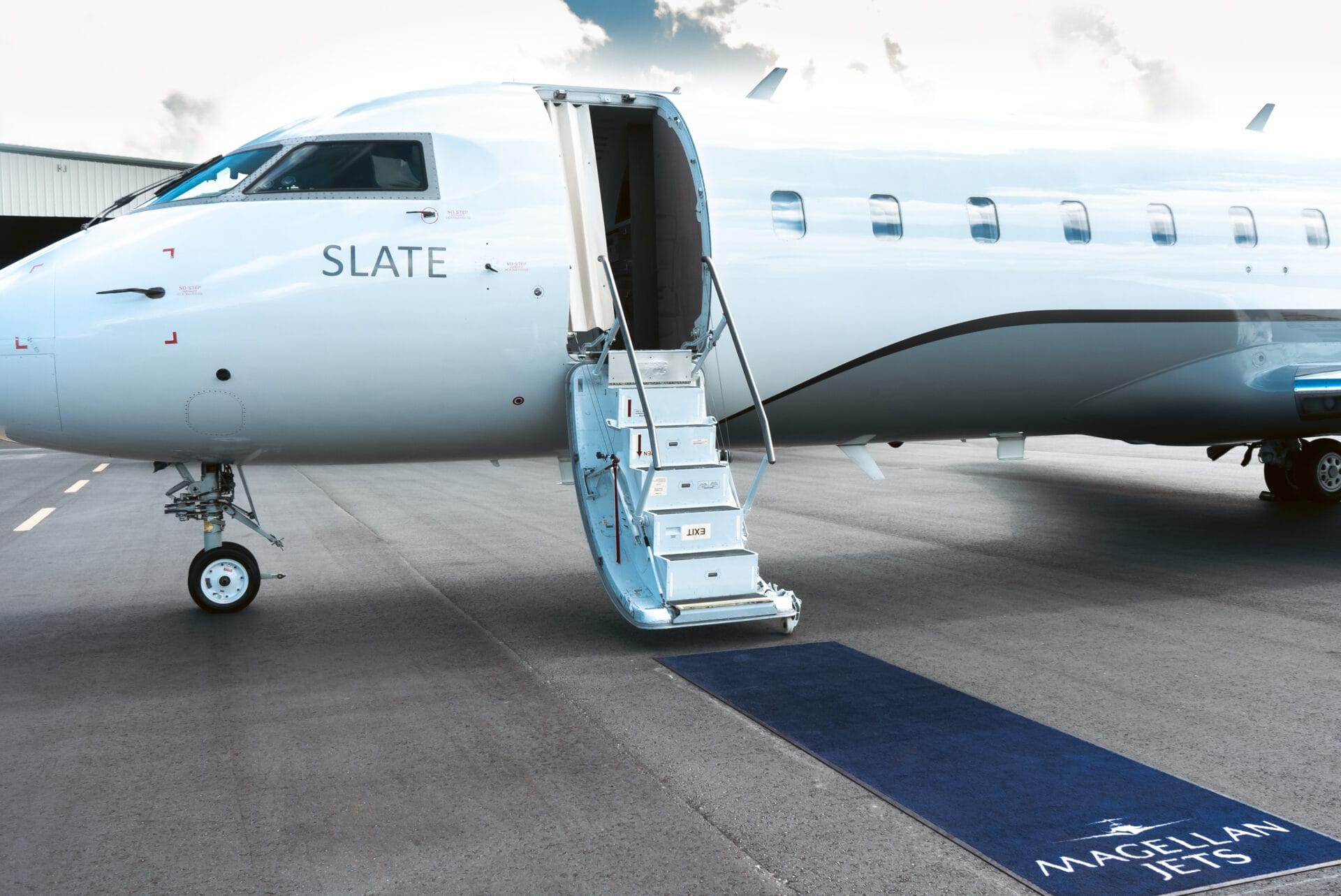
In addition to industry-leading Jet Card, Charter, and Business solutions, Magellan Jets offers a premium Fractional Ownership program built around the Bombardier Challenger 850, one of the most spacious and luxurious jets in the super-midsize category.
This program is designed for high-frequency travelers who want guaranteed access, predictable pricing, and a seamless luxury experience, without the full responsibility of sole ownership.
Magellan Jets Fractional Ownership Highlights:
- Challenger 850 with brand new interior and seating for up to 19 passengers
- 50 hours per year, 3-year term with flexible early exit
- Uniformed attendant and crew and premium in-flight experience, including plated dining and Wi-Fi
- Guaranteed availability, even during peak seasons
- Guaranteed share repurchase and rollover flexibility
- No blackout dates
- Access to Magellan’s entire private aviation ecosystem (Jet Cards, Charter, Aircraft Sales & Management, and Business solutions)
Magellan Jets goes beyond standard 91K safety requirements, with additional proprietary audits, rigorous pilot training, and maintenance oversight that meet or exceed the most respected third-party safety ratings. Clients enjoy not just guaranteed access but peace of mind.
Fractional vs Full Ownership: How to Choose
When evaluating Fractional vs Full Ownership, ask yourself:
- How often do I fly?
- 200+ hours annually may justify full ownership.
- 50–150 hours per year is often more cost-efficient with fractional.
- Am I prepared to manage safety and operations?
- Full ownership gives you freedom but places responsibility on you for crew vetting, maintenance, and compliance.
- Fractional provides structured oversight and safety standards built in.
- Can I handle downtime?
- Full ownership means your aircraft could be unavailable for months during maintenance.
- Fractional programs guarantee fleet access and continuity of service.
- What’s my appetite for capital investment?
- Full ownership requires millions upfront plus annual operating costs.
- Fractional offers predictable costs with lower entry investment.

“Choosing between Fractional and Full Ownership is really about freedom and peace of mind. Full ownership gives total control, but also every responsibility. With Magellan’s Fractional program, you keep the access and luxury without the stress of running an aircraft yourself.”
— Shehnaz Vollmuth, Senior Manager of Sales, Success and Development at Magellan Jets
Explore More Ways to Fly with Magellan Jets
At Magellan Jets, we offer multiple options tailored to your lifestyle and travel preferences:
- Fractional Ownership: For frequent flyers seeking consistency and guaranteed access under the safety and oversight of Part 91K.
- Jet Cards: Fixed-rate flying with the flexibility to switch aircraft types.
- On-Demand Charter: Pay-as-you-go access to a global fleet of vetted aircraft.
- Aircraft Sales & Management: Support for clients looking to buy, sell, or manage their own jets (including Part 91 support for owners).
Every Journey is Personal, and our Private Aviation Advisors are here to help you navigate your options with expert care.
Frequently Asked Questions About Fractional vs Full Ownership (FAQs):
What is the difference between fractional and full aircraft ownership?
Fractional ownership means buying a share of a jet for guaranteed hours per year under the oversight of Part 91K. Full ownership means you buy and operate the entire aircraft under Part 91, assuming full responsibility for safety and operations.
Which is more cost-effective?
For frequent flyers and companies exceeding 200+ hours annually, full ownership can provide value. For those flying 50–150 hours, fractional is typically the smarter investment.
What about safety oversight?
Full ownership gives you maximum control but requires you to vet pilots, enforce standards, and manage maintenance. Fractional providers like Magellan operate under 91K with higher safety requirements and internal audits.
Can I combine fractional or full ownership with other solutions?
Yes. Many Private Clients supplement their owned assets with Jet Cards or Charter to maintain flexibility when their aircraft is down or a different cabin size is needed. Magellan’s Fractional Ownership program actually allows you to use any amount of your 50 hours per year to fly on other Magellan Jets aircraft.
Make the Right Investment
When it comes to Fractional vs Full Ownership, the choice often comes down to how much you fly, your appetite for operational responsibility, and your safety expectations.
Magellan Jets provides solutions for every type of flyer—Fractional, Jet Cards, Charter, or Full Aircraft Management—delivered with award-winning service, industry-leading safety standards, and unmatched flexibility.
Ready to explore what’s right for you? Talk to a Private Aviation Advisor here.


