In the Gulfstream G450 vs. Falcon 900 conversation, the two jets play to different strengths. The G450 offers a larger Heavy-category cabin, more baggage room, and a faster cruise. The Falcon 900LX answers with longer range, a higher ceiling, and access to shorter runways, aided by a third engine on long overwater legs. Both are large-cabin jets that discerning Clients cross-shop, and the right choice comes down to how you like to fly.
The Gulfstream G450: Heavy-Cabin Presence
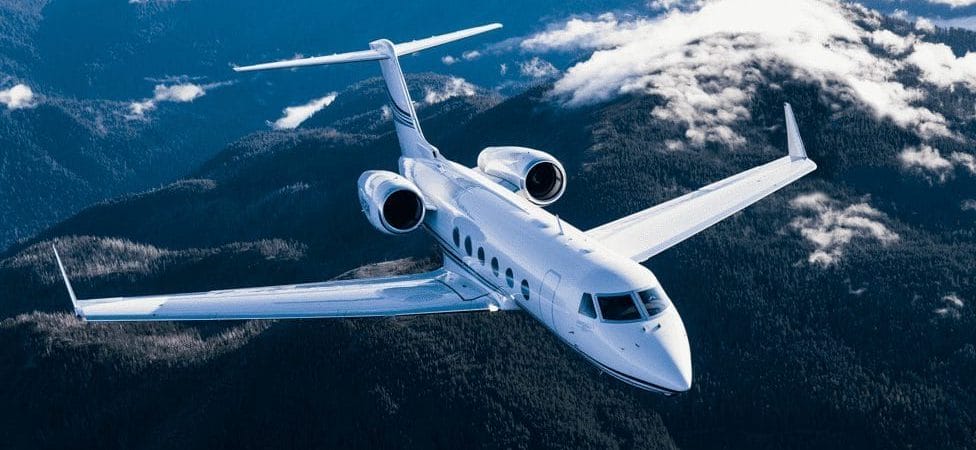
Step aboard a G450 and the room announces itself. This is a proper heavy jet, built for the traveler who wants to stretch out and arrive composed. The cabin runs long, the baggage hold is generous, and the pace is quick.
Gulfstream delivered the last G450 in January 2018, closing a run of 365 aircraft. Today it lives on the pre-owned and charter market, where its blend of space and speed still turns heads. Gulfstream’s G500 and G600, both in service since 2018 and 2019, carry the torch forward, yet the G450 remains a favorite for coast-to-coast and transatlantic days.
The Falcon 900LX: The Trijet That Goes Farther
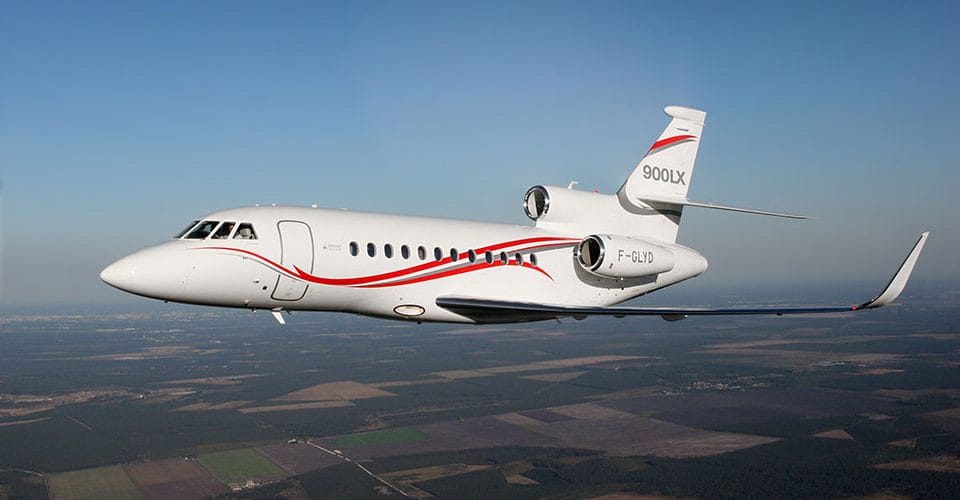
Dassault built the Falcon 900LX for reach and finesse. It is the current flagship of the storied 900 line, offered with the EASy II flight deck, blended winglets, and an optional FalconEye combined-vision head-up display. On the market you will find it through charter, prized by Clients who value range and short-field composure.
The trijet layout is the signature. Three engines climb the aircraft higher and faster, open access to tighter runways, and add reassurance across long stretches of open water. The cabin is slightly more compact than the G450, yet Dassault’s craftsmanship makes every inch feel considered.
Gulfstream G450 vs. Falcon 900 at a Glance
Here is how the two large-cabin jets stack up side by side.
Category | Gulfstream G450 | Dassault Falcon 900LX |
|---|---|---|
Category | Heavy | Super-Midsize |
Passengers | Up to 13 | Up to 12 |
Cabin length | 45’1″ | 33’2″ |
Cabin width | 7’3″ | 7’7″ |
Cabin height | 6’2″ | 6’2″ |
Cabin volume | 1,658 cu ft | 1,270 cu ft |
Baggage | 169 cu ft | 127 cu ft |
Range | 4,425 nm | 4,685 nm |
Max cruise speed | 476 kn | 431 kn |
Ceiling | 45,000 ft | 51,000 ft |
Takeoff / landing distance | 5,600 ft / 2,663 ft | 5,360 ft / 2,455 ft |
Engines | Two Rolls-Royce Tay 611-8C | Three Honeywell TFE731-60 |
Range and Speed: Gulfstream vs. Falcon
Speed is the Gulfstream’s calling card. The G450 cruises at up to 476 knots, trimming precious minutes off long days. When you want to be first on the ground for a dinner or a deal, that pace matters.
The Falcon 900LX plays the long game. It flies up to 4,685 nautical miles, edging past the G450’s 4,425, so it reaches a touch farther on a single leg. For the traveler weighing which private jet for transatlantic crossings, the two are close, and mission profile decides it.
Consider the practical picture. A westbound Atlantic crossing into headwinds can push either jet near its limit, and here the Falcon’s extra reach earns its keep. On a shorter domestic hop, the G450’s speed usually matters more than range. Your typical routes, not a single number, point to the better fit.
Cabin and Comfort
The G450 wins on sheer room. With 1,658 cubic feet of cabin and 169 cubic feet of baggage, it invites full-height movement, dedicated work zones, and space for the whole party’s luggage. It suits the group that packs for two weeks and works the whole way.
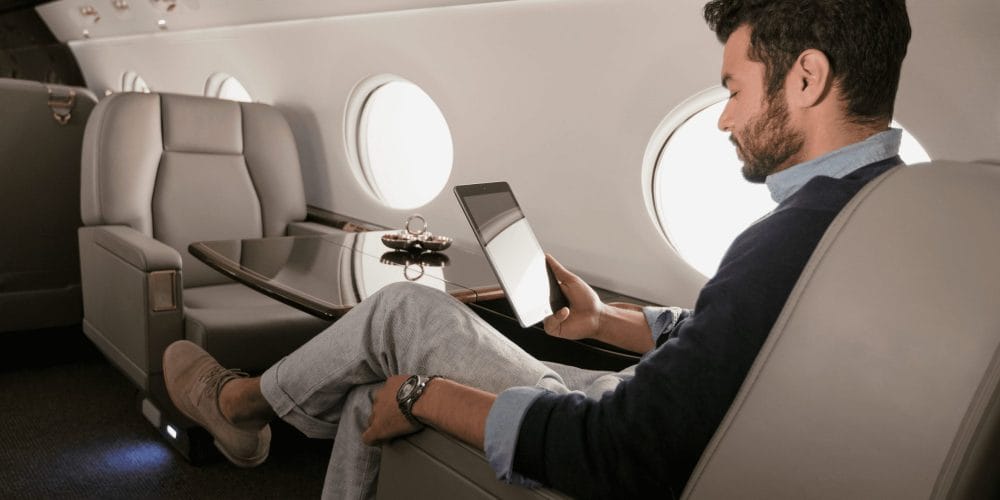
The Falcon 900LX is a shade narrower in volume yet slightly wider across the shoulders at 7’7″. Dassault’s cabin favors quiet refinement and thoughtful detail. Both stand at 6’2″ tall, so you move about with ease in either.
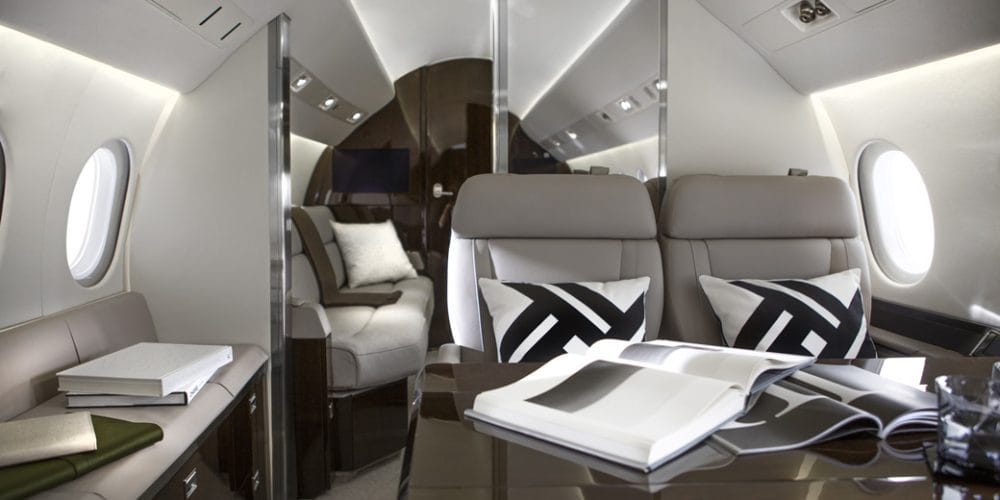
Comfort is also about how you spend the hours aloft. The G450’s extra length lends itself to distinct zones: a place to work, a place to dine, a place to rest. The Falcon’s cabin comes alive for smaller groups who prize intimacy and calm. Neither jet asks you to compromise on the finer touches.
Engines and Airport Access
This is where the Dassault vs. Gulfstream story turns most interesting. The G450 runs two Rolls-Royce Tay 611-8C engines, a clean and proven pairing. The Falcon 900LX carries three Honeywell TFE731-60 engines, and that third powerplant changes the character of the aircraft.
Three engines lift the Falcon off shorter runways, needing 5,360 feet to depart and just 2,455 feet to land. That opens mountain airfields, island strips, and city-adjacent runways the G450 may pass over. The trijet also brings added assurance on long overwater legs, and its layout tends toward efficient long-haul cruising.
Avionics and Flight Deck
Both flight decks are built for confident, precise flying. The G450 uses Gulfstream’s PlaneView suite with head-up and enhanced-vision capability, giving crews sharp situational awareness in low visibility.
The Falcon 900LX flies behind Honeywell’s Primus Epic EASy II flight deck, with the optional FalconEye system layering synthetic and enhanced imagery into a single head-up view. Both cockpits keep the experience smooth from wheels-up to touchdown.
Current Market and Availability
Neither jet is fresh off an assembly line, and that is part of their appeal. The G450 trades exclusively pre-owned and by charter now, with the G500 and G600 representing Gulfstream’s newer generation. The Falcon 900LX remains the flagship of the 900 line and comes to Clients primarily through charter.
Access to either aircraft is what keeps them special. Working with the right advisor puts the finest available airframes within reach, tail by tail, without the commitment of ownership.
How to Charter the G450 or Falcon 900
Chartering either jet through Magellan is straightforward and personal. You can fly by on-demand charter or through a Magellan Jet Card. A private aviation advisor then matches the aircraft to your mission, your calendar, and the experience you have in mind.
As a guide to planning, Magellan’s estimated hourly rates by category help set expectations:
Heavy Jet, such as the Gulfstream G450: estimated around $13,000 per hour.
Super-Midsize, such as the Falcon 900LX: estimated around $9,700 per hour.
These figures are estimates only. Actual hourly rates vary by route, date, availability, and the specifics of your trip, and a Magellan advisor confirms exact pricing before you fly.
Which Should You Choose?
Both aircraft belong to travelers with high standards, so the decision comes down to how you fly most.
Choose the G450 if you want the largest cabin, the most baggage room, a faster cruise, and room for a full party of up to 13.
Choose the Falcon 900LX if you want longer range, a higher ceiling, access to shorter and more remote runways, and the assurance of a third engine on transatlantic legs.
Frequently Asked Questions
Is the Gulfstream G450 still in production?
No. Gulfstream delivered the final G450 in January 2018 after building 365 aircraft. It now flies on the pre-owned and charter market, where it remains a sought-after large-cabin choice.
Is the Falcon 900LX still made, and what replaced the G450?
The Falcon 900LX remains the flagship of Dassault’s 900 line and comes to Clients through charter. Gulfstream’s G500 and G600, in service since 2018 and 2019, succeeded the G450 and G550 generation.
Which has longer range, the G450 or the Falcon 900LX?
The Falcon 900LX flies farther, with a range of 4,685 nautical miles against the G450’s 4,425. The margin is modest, so route and payload shape the real difference.
Which jet is faster?
The Gulfstream G450 is quicker, cruising at up to 476 knots compared with the Falcon 900LX’s 431. On long days, that speed can put you on the ground sooner.
How many passengers can each jet carry?
The G450 seats up to 13 passengers, while the Falcon 900LX seats up to 12, and the G450’s larger cabin gives that party more room to spread out. Exact layouts vary by aircraft, and your advisor confirms the configuration.
Why does the Falcon 900 have three engines?
The trijet design lets the Falcon 900LX climb higher, use shorter runways, and cross long stretches of open water with added assurance. It is a hallmark of Dassault’s 900 line.
Which jet needs a shorter runway?
The Falcon 900LX. It departs in about 5,360 feet and lands in roughly 2,455, opening tighter and more remote airfields than the G450 typically reaches.
Which is better for transatlantic flights?
Both handle transatlantic missions well. The Falcon 900LX offers slightly longer range and its third engine adds reassurance over water, while the faster G450 favors speed and cabin space.
Which jet is more fuel-efficient?
Directionally, the Falcon 900LX’s trijet design lends itself to efficient long-haul cruising. Real-world figures depend on route, payload, and mission, which a Magellan advisor can walk through with you.
Talk to a Magellan Private Aviation Advisor
The best way to settle the Gulfstream G450 vs. Falcon 900 question is a conversation about where you are going and how you like to travel. Talk to a Magellan private aviation advisor and let us match the right large-cabin jet to your next journey.


