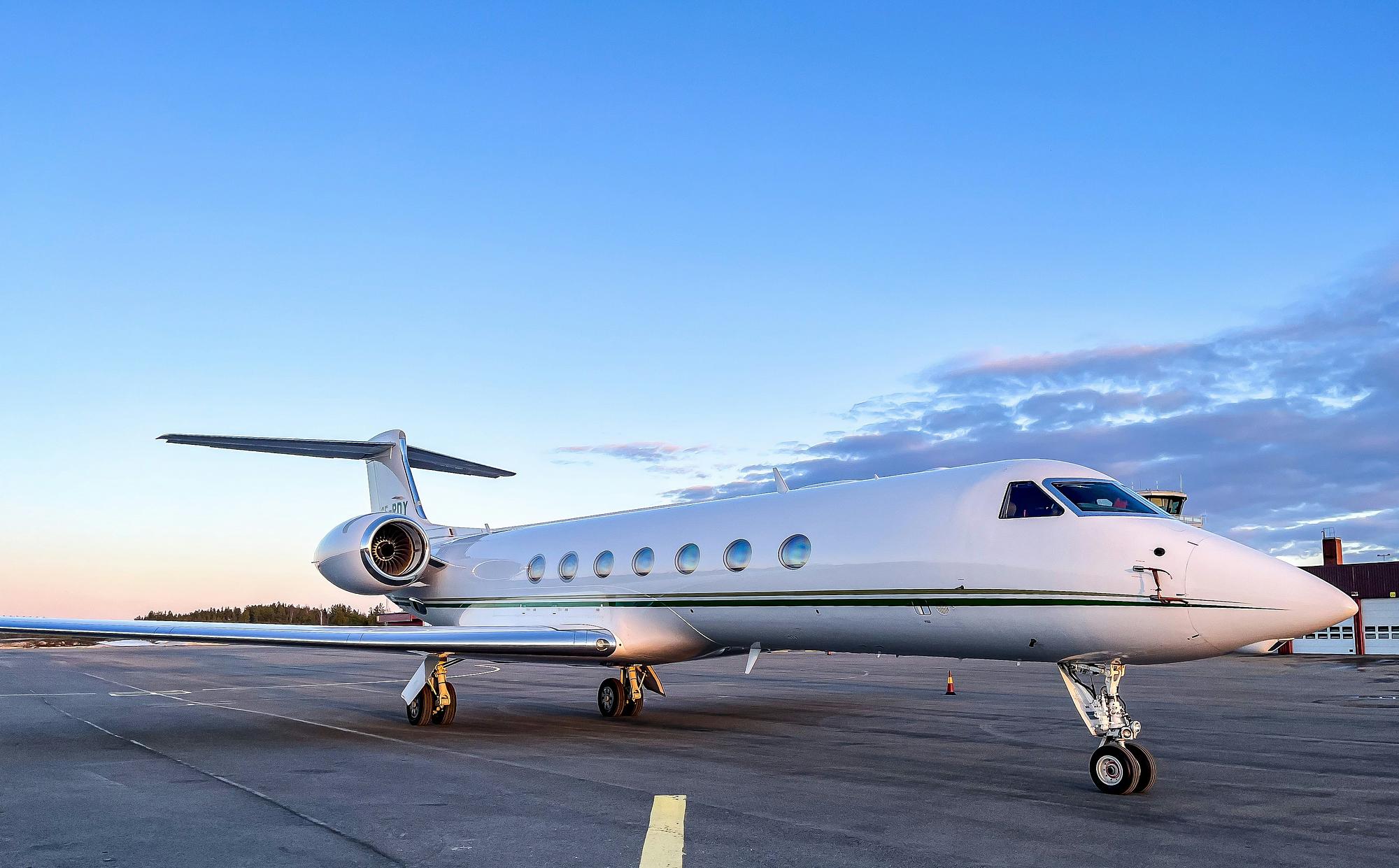
Private aviation spans seven distinct aircraft categories, each suited to different journey profiles. Turboprops excel on short hops and unpaved runways. Very light and light jets handle regional travel with speed and efficiency. Midsize jets introduce stand-up cabins for coast-to-coast comfort. Super-midsize jets stretch transcontinental range further. Heavy jets cross oceans with room for full work or rest. Ultra-long-range jets fly nonstop between continents. VIP airliners turn the sky into a mobile boardroom – or private residence.
Understanding these categories helps you match the aircraft to your mission – whether it’s a 90-minute hop to the islands or a 14-hour crossing to Asia. This guide covers capacity, range, representative aircraft, and estimated hourly rates for each tier.
Turboprops: Versatile Access to Remote Destinations

Turboprop aircraft open doors other jets cannot reach. Their ability to operate on short runways – including grass and gravel strips – makes them ideal for island retreats, mountain resorts, and rural airfields. For Clients traveling to destinations like Nantucket, Aspen’s nearby fields, or Caribbean outposts, a turboprop often offers the most direct routing.
Turboprops seat approximately six to nine passengers in comfort. Range varies by model, but most regional missions fall within two hours of flight time. Representative aircraft in the Magellan Jets On-Demand Charter network include the Pilatus PC-12, King Air 350, and King Air B200.
Estimated hourly charter rates start from about $5,500 per hour. This is an estimated hourly rate inclusive of fuel. It does not include contingencies such as de-icing, positioning, overnight fees, or other trip-specific costs. Final pricing is confirmed at time of quote.
Very Light and Light Jets: Speed for Regional Travel
Light jets deliver jet speed without the footprint of larger aircraft. Climbing quickly to altitudes above commercial traffic, they reach cruising altitude in minutes – ideal for a morning departure that puts you in a meeting two states away before lunch.
Very light jets like the Phenom 100 carry up to five passengers with a range of roughly 1,071 nm (about two hours). Light jets such as the Phenom 300, Learjet 75, and Citation CJ series seat approximately six passengers and extend range to around 1,900–2,019 nm (roughly three hours nonstop). Ceilings reach 41,000 to 45,000 feet, placing you above most weather.
Estimated hourly rates run about $7,500–$8,500. This is an estimated hourly rate inclusive of fuel. It does not include contingencies such as de-icing, positioning, overnight fees, or other trip-specific costs. Final pricing is confirmed at time of quote.
Midsize Jets: Stand-Up Comfort Coast to Coast

The midsize category marks a turning point in cabin experience. Full stand-up headroom, enclosed lavatories, and dedicated luggage space mean arriving refreshed rather than cramped. Business travelers find room to work; families appreciate the extra space for children to move.
Midsize jets seat roughly seven to nine passengers. Ranges span from approximately 2,000 nm to over 3,400 nm – enough for transcontinental U.S. flights of four to six hours nonstop. Models available through the Magellan Jets network include the Citation Latitude (9 passengers, 2,700 nm), Citation XLS (8 passengers, ~2,000 nm), Praetor 500 (9 passengers, 3,412 nm), and Citation Sovereign (8 passengers, ~3,000 nm).
Estimated hourly rates fall between about $8,000 and $9,600. This is an estimated hourly rate inclusive of fuel. It does not include contingencies such as de-icing, positioning, overnight fees, or other trip-specific costs. Final pricing is confirmed at time of quote.
Super-Midsize Jets: Transcontinental Range, Refined Space

Super-midsize jets blend the cabin comfort of a heavy jet with the efficiency of a midsize. Flat floors, wider seats, and enhanced galley service suit travelers who need to host meetings, dine properly, or simply stretch out on longer missions.
Seating ranges from eight to 10 passengers. Transcontinental range reaches approximately 3,269–4,040 nm (roughly five to seven hours nonstop). Notable models include the Challenger 350 (9 passengers, 3,269 nm), Gulfstream G280 (10 passengers, 3,700 nm), Praetor 600 (8 passengers, 4,040 nm), and Citation Longitude.
Estimated hourly rates range from about $9,000 to $10,500. This is an estimated hourly rate inclusive of fuel. It does not include contingencies such as de-icing, positioning, overnight fees, or other trip-specific costs. Final pricing is confirmed at time of quote.
Heavy Jets: Intercontinental Capability and Full Cabin Amenities

Heavy jets bring the cabin space to work, rest, and dine as you would on the ground. Multiple seating zones allow some passengers to sleep while others conduct calls. Large baggage holds accommodate golf clubs, ski equipment, or luggage for extended trips abroad.
Capacity runs from 10 to 14 passengers. Ranges of 4,044–6,415 nm cover intercontinental routes – New York to London, Los Angeles to Hawaii – in a single leg of eight to 12 hours. Aircraft available through the Magellan Jets Jet Card and charter programs include the Challenger 650 (12 passengers, 4,044 nm), Gulfstream G450 (13 passengers, 4,425 nm), Falcon 8X (14 passengers, 6,415 nm), and Legacy 650.
Estimated hourly rates fall between approximately $11,600 and $15,200. This is an estimated hourly rate inclusive of fuel. It does not include contingencies such as de-icing, positioning, overnight fees, or other trip-specific costs. Final pricing is confirmed at time of quote.
Ultra-Long-Range Jets: Nonstop to Anywhere
When the destination is Singapore, Dubai, or Sydney, ultra-long-range jets eliminate the detour of a fuel stop. These aircraft sustain crews and Clients for 14 hours or more with sleeping quarters, full galleys, and cabin pressure optimized for reduced fatigue.
Capacity spans 14 to 19 passengers, with dedicated rest areas and often a private stateroom. Ranges extend from 6,954 nm to 8,070 nm – roughly 13 to 16 hours of nonstop flight. Ceilings reach up to 51,000 feet, and maximum cruise speeds hit 528 knots. Aircraft in this tier include the Gulfstream G650ER (16 passengers, 7,437 nm), Bombardier Global 7500 (17 passengers, 7,800 nm), Global 8000 (19 passengers, 8,070 nm), and Gulfstream G550 (18 passengers, 6,954 nm).
For guidance on chartering ultra-long-range aircraft, speak directly with a Private Aviation Advisor who can confirm availability, routing, and pricing for your specific mission.
VIP Airliners: The Ultimate in Airborne Privacy
VIP airliners convert widebody commercial aircraft into private residences. Multiple rooms – including conference areas, bedrooms, and full-size showers – allow heads of state, corporate delegations, and families traveling with staff to operate independently during flight.
Configured for up to 19 passengers in ultra-luxury layouts, VIP airliners carry ranges from 3,965 nm to 6,750 nm depending on the aircraft and configuration. Models include the Airbus ACJ319neo (19 passengers, 6,750 nm), Boeing BBJ MAX (19 passengers), and Embraer Lineage 1000E (19 passengers, 3,965 nm).
Pricing for VIP airliners varies widely by aircraft, crew requirements, and routing. A Private Aviation Advisor can provide a tailored quote.
Private Jet Category Comparison
Rates are estimates inclusive of fuel and do not include contingencies such as de-icing, positioning, overnight fees, or other trip-specific costs. Final pricing is confirmed at time of quote.

Explore the Magellan Jets Category Jet Card
The right category shifts with every trip. A Light jet suits a quick regional hop, while a Heavy jet carries the full team coast to coast. The Magellan Jets Category Jet Card gives Private Clients the freedom to fly across Light, Midsize, Super-Midsize, and Heavy aircraft, interchanging freely as group size, route, and mission change. This is the guide in practice: the right category for every journey, without owning an aircraft.
Rates stay fixed and transparent, matching the Premium Jet Card’s hourly pricing with no hidden fees and no peak-day surcharges. De-icing and catering are available as add-ons, advanced booking runs as low as 40 days, and standard call-out times are 48 hours. The Premium Jet Card instead locks you to a dedicated aircraft type, such as the Phenom 300, Challenger 350, or Gulfstream G450, with de-icing and catering included and call-out as low as 24 hours.
Every Jet Card includes guaranteed access to the Magellan Jets Preferred Network of fewer than 100 vetted operators, 24/7/365 availability, no blackout dates, fuel price protection, surcharge-free interchange, and WYVERN Wingman-certified safety standards. Cards scale by committed hours, and deeper commitments unlock better rates, Advantage Routes, and short-leg waivers:
- 25 hours: rates starting around $7,800/hr, with a 12-month rate lock.
- 50 hours: rates starting around $7,250/hr, with an 18-month lock, Advantage Route pricing, and short-leg waivers.
- 100 hours: rates starting around $7,000/hr, with a 24-month lock.
Frequently Asked Questions About Types of Private Jets (FAQs):
How much does a two-hour private jet flight cost?
A two-hour charter cost depends on the aircraft category and routing. Light jets, well-suited to flights of this length, run approximately $7,800–$8,500 per hour – placing a two-hour flight in the range of $15,000–$17,000 before contingencies. Midsize jets cost slightly more but offer stand-up cabins for added comfort. These are estimated hourly rates inclusive of fuel; actual pricing varies by aircraft availability, routing, repositioning, taxes, and fees. A Private Aviation Advisor confirms the exact quote for your specific trip.
How many passengers does each private jet size hold?
Capacity rises with aircraft category. Very light and light jets seat four to six passengers. Midsize jets accommodate seven to nine. Super-midsize jets hold eight to 10. Heavy jets carry 10 to 14 passengers. Ultra-long-range jets and VIP airliners seat 14 to 19 in spacious configurations that include sleeping quarters and separate work areas.
What is the difference between a light jet and a midsize jet?
Light jets prioritize efficiency on shorter routes of one to three hours, seating up to six passengers with ranges around 1,900–2,019 nm. Midsize jets add stand-up headroom, enclosed lavatories, and larger luggage holds, seating seven to nine passengers with ranges up to 3,412 nm. Choose a light jet for quick regional hops; choose a midsize jet when cabin comfort and transcontinental range matter.
Which private jets have the longest range?
Ultra-long-range jets fly the farthest. The Bombardier Global 8000 reaches 8,070 nm – enough to connect New York to Hong Kong nonstop. The Global 7500 covers 7,800 nm, and the Gulfstream G650ER reaches 7,437 nm. These aircraft are designed for 13- to 16-hour flights with onboard rest facilities, reduced cabin altitude, and full meal service.
How do I choose the right private jet for my trip?
Start with three questions: How many passengers are traveling? How far is the destination? What cabin amenities do you need? A two-hour regional flight with four passengers suits a light jet. A six-hour transcontinental trip with eight passengers calls for a super-midsize. A nonstop transatlantic crossing requires a heavy or ultra-long-range jet. Your Private Aviation Advisor matches the aircraft to your mission, budget, and preferences – ensuring you pay for exactly the capability you need.


