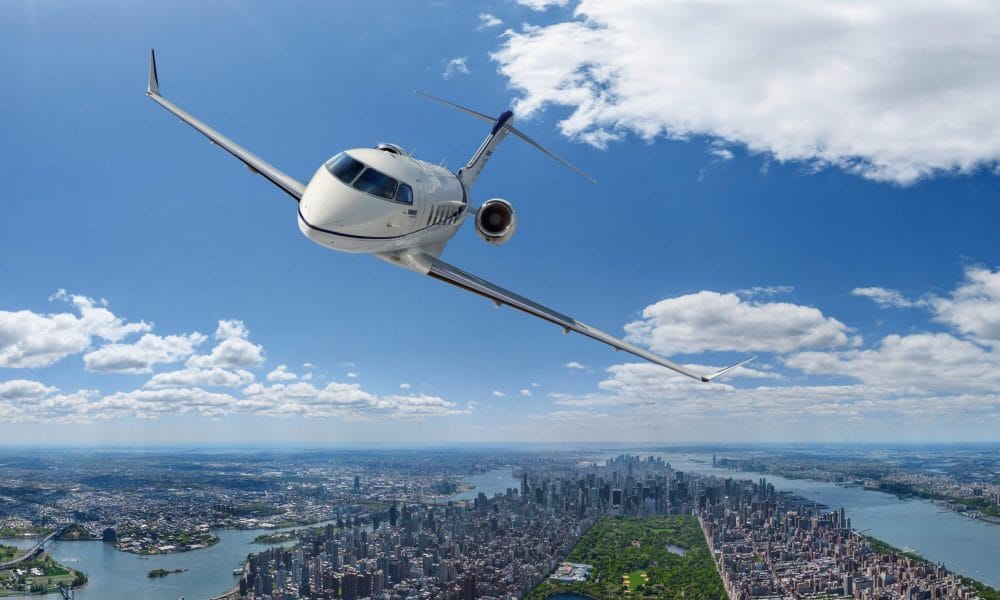
The Challenger 300 vs. Citation Latitude decision comes down to the kind of journey you want to own. The Bombardier Challenger 300 is a super-midsize jet with more range, greater cabin volume, and higher speed. The Cessna Citation Latitude is a midsize jet with a wide, flat-floor cabin and easy access to shorter runways. Choose the Challenger 300 for coast-to-coast reach and pace. Choose the Latitude for a roomy stand-up feel, generous baggage, and the freedom of smaller airports.
The Bombardier Challenger 300, a Super-Midsize Standout
Some jets simply expand what a single day can hold. The Challenger 300 is one of them. It carries you farther, faster, and in a cabin built for the way you actually travel.
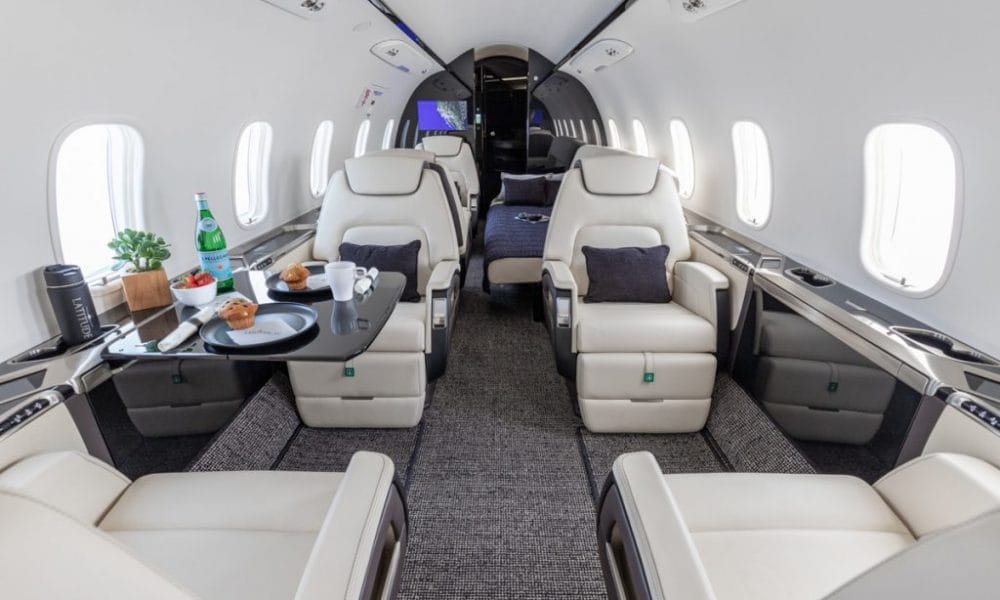
This is one of the most versatile super-midsize jets flying. The wide flat-floor cabin and excellent baggage capacity suit both boardroom trips and long weekends. There is room for skis, golf clubs, and larger pets, with space for a party of six to spread out in real comfort even as the cabin seats up to nine. With 3,340 nautical miles of range, coast-to-coast travel opens up without a fuel stop.
If the Challenger family interests you, explore the full Bombardier Challenger 300 aircraft profile and a few details enthusiasts love in 4 Things You Didn’t Know About the Challenger 300.
The Cessna Citation Latitude, Midsize Comfort Redefined
Space changes how a flight feels. The Citation Latitude leads its midsize category on exactly that promise, with a six-foot flat-floor cabin that lets you stand, stretch, and settle in.
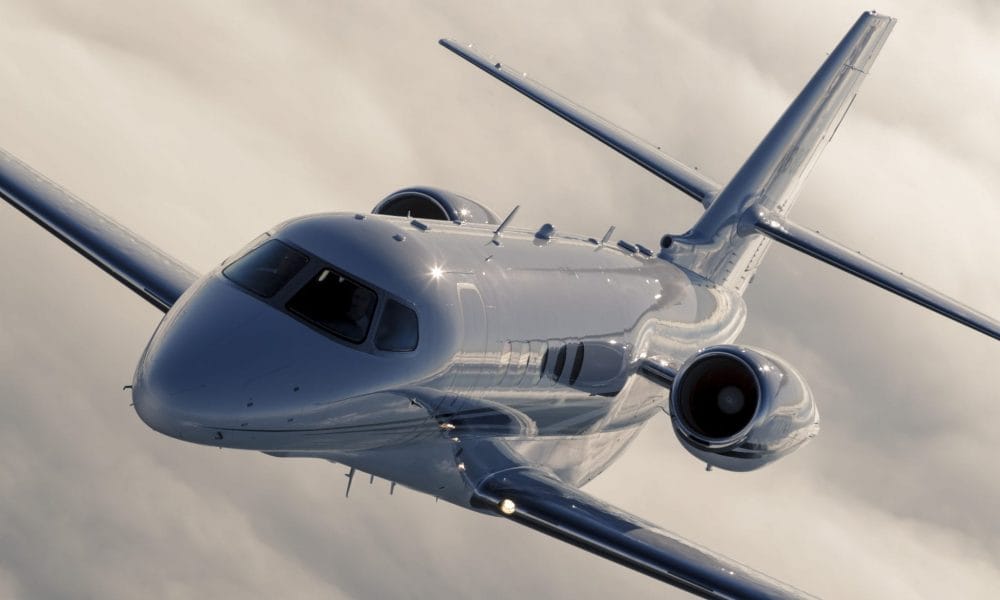
The Latitude favors families, pet-friendly charters, and guests with mobility considerations. It seats up to nine and offers comfort that stands out among midsize jets. Its short-runway performance also opens more airports, so you land closer to where the day really begins. For a pilot’s perspective, read the Citation Latitude pilot review.
Challenger 300 vs. Citation Latitude Specifications at a Glance
Specification | Bombardier Challenger 300 | Cessna Citation Latitude |
|---|---|---|
Category | Super-midsize | Midsize |
Range | 3,340 nm | 2,700 nm |
Cabin length | 23 ft 7 in | 21 ft 8 in |
Cabin width | 7 ft 2 in | 6 ft 4 in |
Cabin height | 6 ft 1 in | 6 ft 0 in |
Cabin volume | 930 cu ft | 587 cu ft |
Baggage | 106 cu ft (internal) | 127 cu ft total |
Passengers | Typically 8, up to 9 | Up to 9 |
Max cruise speed | 459 knots (about 528 mph) | 368 knots (about 423 mph) |
Service ceiling | 45,000 ft | 45,000 ft |
Engines | 2 × Honeywell HTF7000, 7,000 lbs thrust each | 2 × Pratt & Whitney Canada PW306D1, 5,907 lbs thrust each |
Takeoff distance | 4,810 ft | 3,580 ft |
Landing distance | 2,290 ft | 2,085 ft |
Avionics | Rockwell Collins Pro Line 21 (four LCD displays) | Garmin G5000 (touchscreen, Synthetic Vision, autothrottle) |
Cabin and Comfort
The cabin is where a private flight earns its name. Both jets deliver, and each has a signature. The Challenger 300 offers the larger volume at 930 cubic feet, with a cabin 23 ft 7 in long and 7 ft 2 in wide. That extra width invites longer trips and a genuine sense of room.
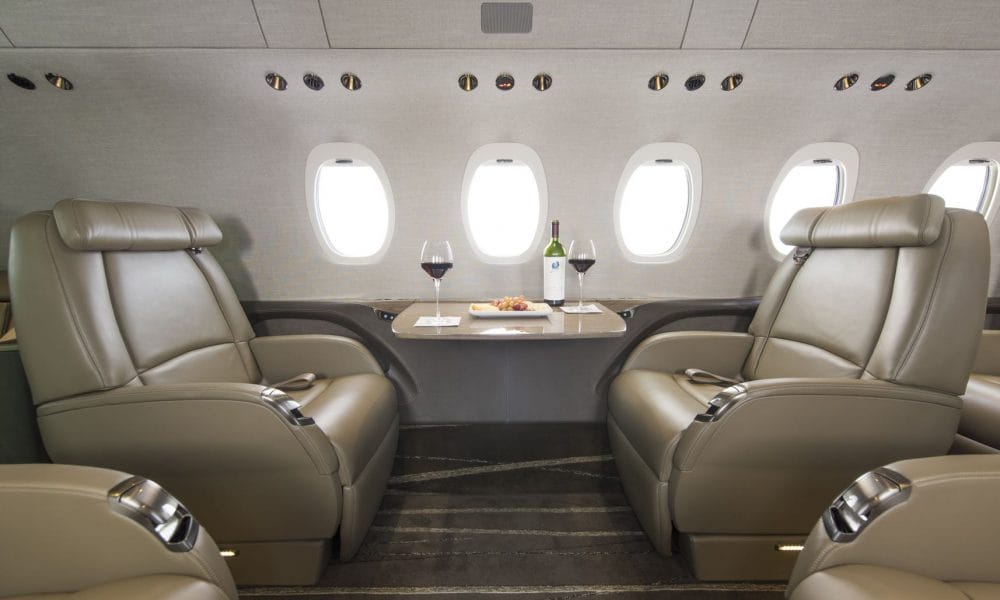
The Latitude answers with a six-foot flat-floor stand-up cabin at 587 cubic feet. Walking upright, cabin to seat, makes shorter hops feel effortless. Its comfort suits seven to nine passengers, families, and guests who value an easy, level entry.
Range and Performance
Range is freedom measured in miles. It decides whether you arrive nonstop or pause along the way. The Challenger 300 reaches 3,340 nm, enough for confident coast-to-coast travel across the U.S. The Citation Latitude covers 2,700 nm, ideal for regional and many transcontinental missions.
Both jets share a 45,000-foot service ceiling, so each climbs above much of the weather and busier traffic. When your itinerary stretches long, the Challenger 300’s extra reach becomes the deciding advantage.
Speed
Time is the one luxury you cannot buy back, and speed protects it. The Challenger 300 cruises at up to 459 knots, about 528 mph. The Citation Latitude cruises at up to 368 knots, about 423 mph. On longer legs, the Challenger’s pace trims meaningful minutes and keeps a packed calendar intact.
Runway Access and Airport Flexibility
The best destinations are not always served by the biggest airports. That is where the Latitude quietly excels. Its 3,580-foot takeoff and 2,085-foot landing distances open smaller fields closer to your final address.
The Challenger 300 needs 4,810 ft for takeoff and 2,290 ft to land. It still reaches thousands of airports, and it trades a little runway flexibility for its greater range and speed. Both aircraft pair naturally with an on-demand charter approach, so the airport suits the trip rather than the other way around.
Passenger Capacity and Baggage
Great travel makes room for everyone and everything you bring. The Challenger 300 typically seats eight, with capacity for up to nine, and offers 106 cubic feet of internal baggage for skis, clubs, and gear. The Latitude also seats up to nine and carries 127 cubic feet of total baggage.
So the Latitude holds more overall luggage volume, while the Challenger pairs strong baggage capacity with a wider cabin. For a larger group with plenty to pack, both jets welcome the full party in comfort.
Avionics
Confidence in the cockpit shapes the calm you feel in the cabin. The Challenger 300 flies behind Rockwell Collins Pro Line 21 with four LCD displays. The Citation Latitude uses the Garmin G5000 with touchscreen controls, Synthetic Vision, and autothrottle. Both suites give crews clear, current information from takeoff to touchdown.
Charter Access and Cost Guidance
Chartering either jet is less a transaction than an invitation to travel on your own terms. As general guidance by category, the Challenger 300 (super-midsize) is estimated at around $9,700 per hour, and the Citation Latitude (midsize) at around $8,600 per hour.
Both figures are estimates only. Rates vary with routing, availability, repositioning, dates, and other factors, and a Magellan advisor confirms exact pricing for your itinerary. If you are weighing other super-midsize options, compare the Citation X vs. Challenger 300 and the Challenger 350 dossier as well.
Frequently Asked Questions About the Challenger 300 vs. Citation Latitude (FAQs):
Can a Challenger 300 cross the Atlantic?
The Challenger 300 offers 3,340 nm of range. That covers confident coast-to-coast U.S. travel and many longer routes, though a full transatlantic crossing sits beyond its nonstop reach. A Magellan advisor can map the right stop or a longer-range aircraft for ocean itineraries.
Which is better for transcontinental flights?
The Challenger 300 is the stronger choice for transcontinental travel. Its 3,340 nm range and 459-knot cruise favor long nonstop legs. The Latitude, at 2,700 nm, handles many transcontinental missions well, especially with a favorable routing.
How do the cabin sizes compare?
The Challenger 300 has the larger cabin volume at 930 cubic feet and a wider 7 ft 2 in cabin. The Latitude offers 587 cubic feet with a six-foot flat-floor stand-up cabin that many guests love for its easy, upright feel.
What is the range difference?
The Challenger 300 reaches 3,340 nm and the Citation Latitude reaches 2,700 nm. That is a 640 nm advantage for the Challenger, which translates into more nonstop options on longer routes.
Which is faster?
The Challenger 300 is faster. It cruises at up to 459 knots, about 528 mph. The Citation Latitude cruises at up to 368 knots, about 423 mph.
How do charter costs compare?
As general category guidance, the Challenger 300 is estimated at around $9,700 per hour and the Citation Latitude at around $8,600 per hour. These are estimates that vary with routing, availability, repositioning, dates, and other factors, and a Magellan advisor confirms exact pricing.
Which is better for a larger group?
Both jets seat up to nine passengers. The Latitude carries more total baggage at 127 cubic feet and offers an easy stand-up cabin, while the Challenger 300 pairs a wider cabin with longer range for bigger, farther-flung trips.
Find the Right Jet for Your Next Journey
Your ideal aircraft is the one that matches the trip you imagine, and the choice is yours to make with confidence. When you are ready to fly, talk to a private aviation advisor and let a Magellan specialist shape the details around you.


