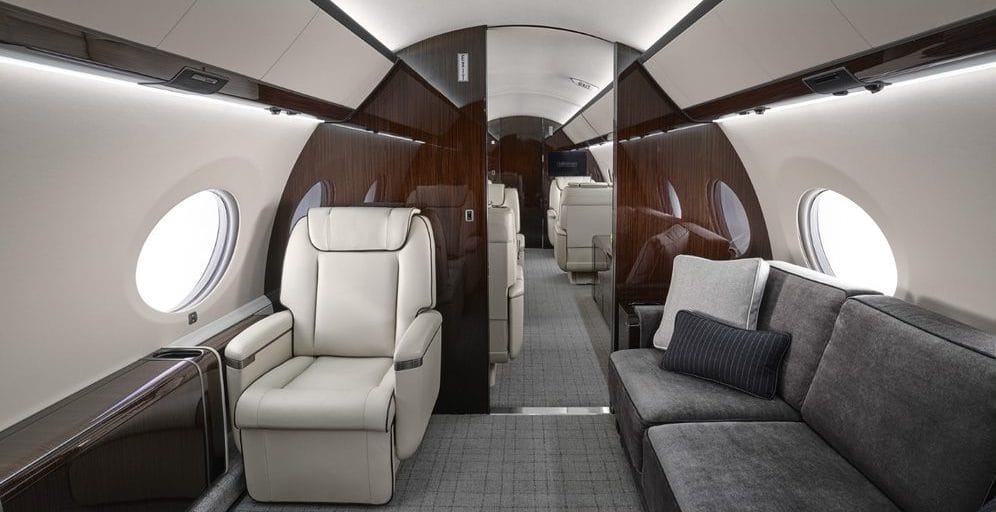
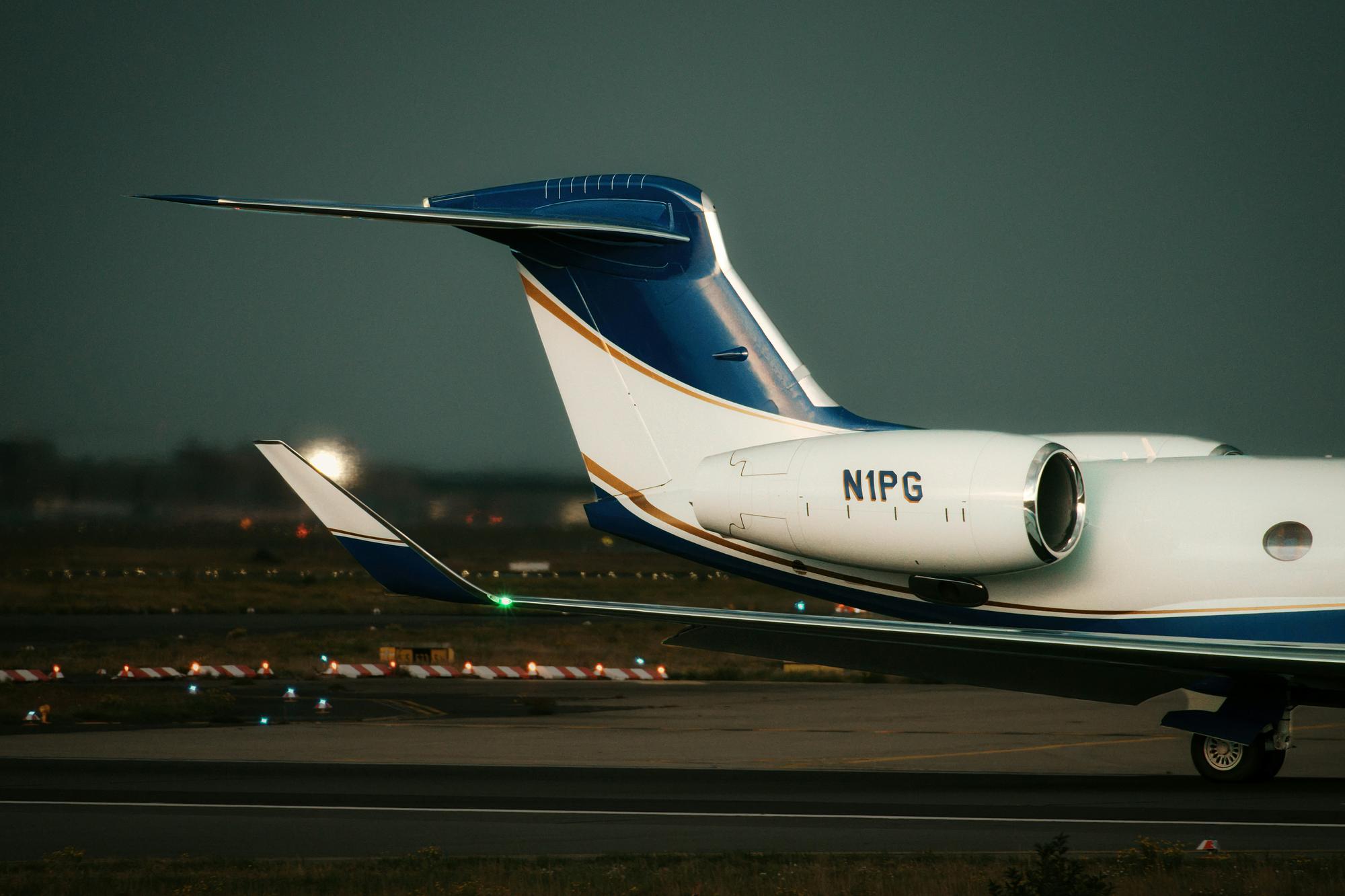
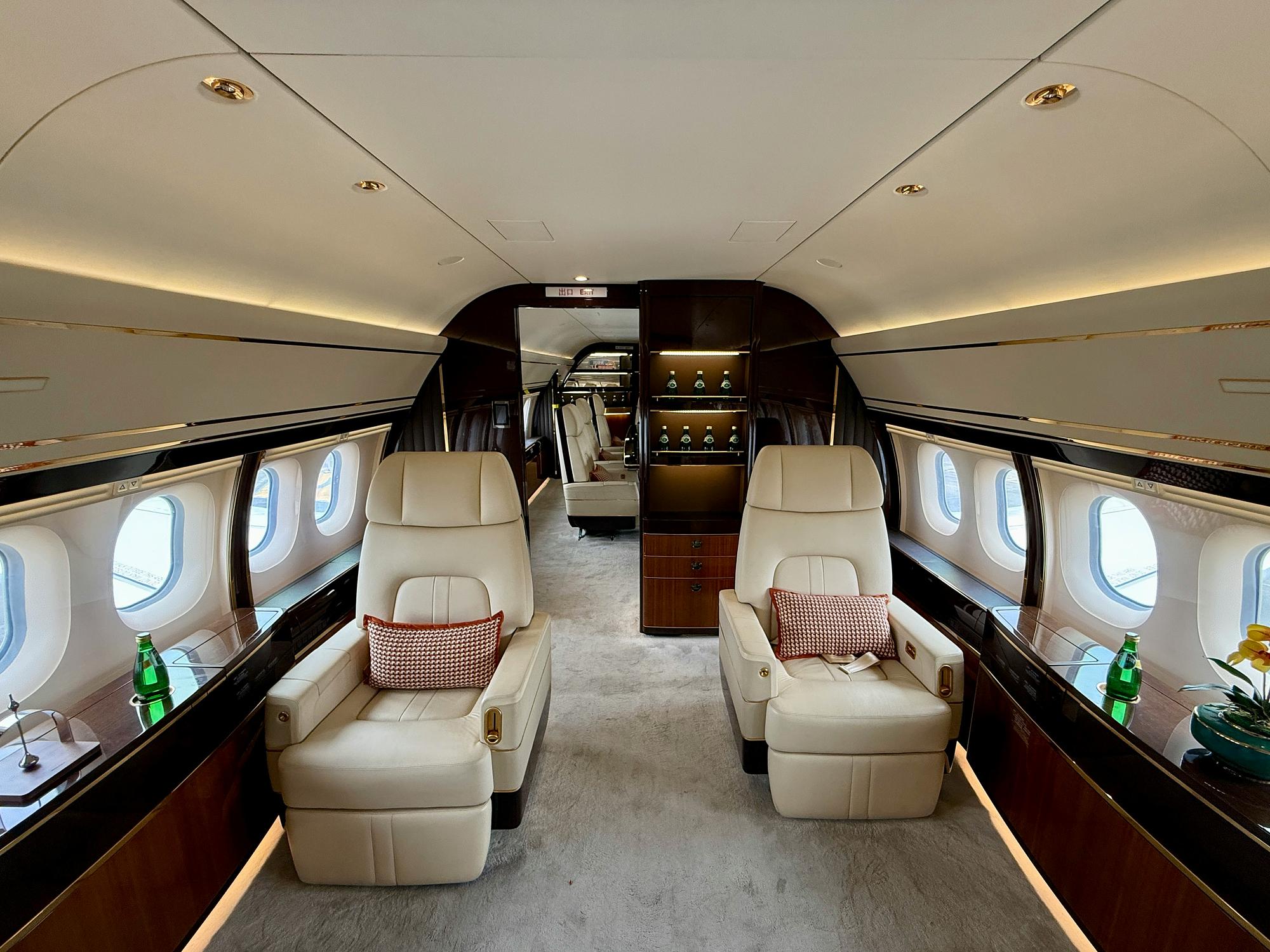
The Bombardier Learjet 60 is a midsize jet seating up to six passengers in comfort, with cabin configurations reaching seven. Powered by two Pratt & Whitney Canada PW305A turbofans, it delivers a range of up to 2,418 nautical miles at a maximum cruise speed of 436 knots, with a certified service ceiling of 51,000 feet. Flown by a crew of two, the Learjet 60 remains a dependable choice for transcontinental U.S. routes and regional business travel, offering the cabin volume and performance that Private Clients expect from a proven midsize platform.
Learjet 60 Specifications
The Learjet 60’s specifications reflect a midsize jet engineered for speed, altitude, and passenger comfort. The table below summarizes the aircraft’s key performance and cabin data.
Cabin Experience and Comfort
Step aboard the Learjet 60 and the cabin’s proportions become immediately apparent. At 17 feet 8 inches long, 5 feet 11 inches wide, and 5 feet 9 inches tall, the interior provides a comfortable environment for up to six passengers on missions lasting several hours. The 447 cubic feet of cabin volume accommodates club seating arrangements, allowing face-to-face meetings or relaxed conversation en route.
The baggage compartment holds 48 cubic feet, enough for golf bags, luggage for a long weekend, or presentation materials for a business trip. While the Learjet 60 does not rival the stand-up cabins of larger aircraft, it offers an efficient midsize interior that balances performance with comfort.
The Learjet 60’s performance credentials are built around speed and altitude. A maximum cruise speed of 436 knots places it among the faster midsize jets of its generation, while a rate of climb of 4,500 feet per minute gets passengers above weather and traffic quickly. The certified service ceiling of 51,000 feet opens access to uncongested airspace and smoother rides.
With a range of up to 2,418 nautical miles, the Learjet 60 connects city pairs across most of the continental United States nonstop. Fly Boston to Miami, New York to Dallas, or Chicago to Los Angeles without a fuel stop. For shorter regional routes, that range translates into reserve fuel and operational flexibility.
Two Pratt & Whitney Canada PW305A turbofans, each producing 4,679 pounds of thrust, provide the power. This engine pairing delivers reliable performance across a wide range of operating conditions, from hot summer departures to high-altitude airports.
Missions and Best Use
The Learjet 60 is best suited to Private Clients and corporate travelers flying parties of up to six on transcontinental or regional routes. Its speed and altitude capabilities make it a strong choice for time-sensitive business travel, while its cabin comfort accommodates longer missions without fatigue.
Typical missions include coast-to-coast business trips, same-day turnarounds to regional hubs, and weekend getaways to resort destinations within range. The aircraft’s availability in the charter market makes it a practical option for travelers who need midsize performance without committing to ownership.
For those exploring international charter flights within the aircraft’s range, the Learjet 60 can reach destinations in the Caribbean, Canada, and northern Mexico from major U.S. gateways.
The Learjet Legacy
The Learjet name carries six decades of aviation history. It was produced from 1993 to 2007, with roughly 318 aircraft built. It represented the evolution of the original Learjet concept into a more spacious, longer-range platform while retaining the brand’s signature speed.
The 60XR variant extended the production run, offering enhanced avionics and performance refinements until 2013. Together, these models established the Learjet 60 series as a workhorse of the midsize charter market.
Accessing a Learjet 60 through Magellan Jets connects you to a Preferred Network of rigorously vetted operators. Whether you fly occasionally or regularly, Magellan’s solutions are designed to match the way you travel.
On-Demand Charter offers access to midsize jets like the Learjet 60 on a trip-by-trip basis, with no long-term commitment. For travelers flying 25 hours or more annually, a Jet Card locks in rates and guarantees availability. Those seeking a deeper stake in private aviation may explore Fractional Ownership, which provides equity in an aircraft alongside managed access.
Midsize charter through Magellan Jets starts from an estimated $8,550 per hour. This is an estimated hourly rate for Midsize charter, inclusive of fuel. It does not include contingencies such as de-icing, positioning, overnight fees, or other trip-specific costs. Final pricing is confirmed at time of quote.
Every journey is supported by a dedicated Private Aviation Advisor who understands your travel patterns and preferences, along with a Client Experience team that coordinates ground transportation, catering, and personalized details from wheels-up to touchdown.
Frequently Asked Questions About the Bombardier Learjet 60 (FAQs):
How many passengers does a Learjet 60 seat?
The Learjet 60 seats up to six passengers comfortably, with some cabin configurations accommodating seven. This capacity makes it well suited to small business teams, families, or couples traveling with additional companions.
What is the range of a Learjet 60?
The Learjet 60 has a range of up to 2,418 nautical miles. This allows nonstop flights across most of the continental United States, such as New York to Miami or Chicago to Los Angeles.
How fast is the Learjet 60?
The Learjet 60 cruises at a maximum speed of 436 knots. Combined with a rate of climb of 4,500 feet per minute and a ceiling of 51,000 feet, it delivers efficient point-to-point travel.
What engines power the Learjet 60?
Two Pratt & Whitney Canada PW305A turbofan engines power the Learjet 60, each producing 4,679 pounds of thrust. This pairing provides reliable performance across diverse operating conditions.
How much does it cost to charter a Learjet 60?
Midsize charter through Magellan Jets starts from an estimated $8,550 per hour. This is an estimated hourly rate for Midsize charter, inclusive of fuel. It does not include contingencies such as de-icing, positioning, overnight fees, or other trip-specific costs. Final pricing is confirmed at time of quote.
When was the Learjet 60 produced, and is it still available?
The Learjet 60 was produced from 1993 to 2007, with the 60XR variant continuing until 2013. While Bombardier ended Learjet production in 2022, well-maintained Learjet 60 aircraft remain available in the charter market through operators in the Magellan Jets Preferred Network.
The Bombardier Challenger 350 is a super-midsize jet that seats up to nine passengers in a wide, flat-floor cabin with 3,269 nautical miles of range. It delivers transcontinental capability, a stand-up interior, and runway versatility that reaches airports inaccessible to larger aircraft. For Private Clients who fly coast-to-coast regularly or require cabin space for working groups, the Challenger 350 remains one of the most capable aircraft in its class.
Why the Challenger 350 Resonates With Private Clients
Since entering service in 2014, the Challenger 350 has become the best-selling super-midsize jet in the world – a position it holds because it balances performance, cabin comfort, and operating economics in ways competitors have struggled to match. The aircraft earned its reputation not through marketing claims but through consistent delivery on transcontinental routes, short-field airports, and demanding schedules.
Bombardier designed the Challenger 350 as an evolution of the Challenger 300 platform, refining aerodynamics and cabin systems while retaining the structural strengths that made the 300 series a fixture in corporate aviation. The result is an aircraft that flies farther, burns less fuel, and provides a quieter cabin than its predecessor – improvements that Private Clients experience on every journey.
What distinguishes the Challenger 350 from other super-midsize jets is its combination of transcon range and short-field performance. Most aircraft make you choose. The Challenger 350 does not.
Cabin and Interior Experience
The Challenger 350’s cabin measures 6 ft 1 in tall, 7 ft 2 in wide, and 23 ft 7 in long – numbers that translate into a fundamentally different travel experience than smaller categories. The flat floor spans the entire cabin, eliminating the stepped surfaces and cramped aisles common in midsize jets. Passengers can stand fully upright throughout the aircraft and move between seats without contortion.
Most Challenger 350 aircraft are configured with eight seats in a double-club arrangement: two facing pairs in the forward cabin and two in the aft. This layout supports productive meetings, allows passengers to recline for rest on longer sectors, and keeps traveling parties together in a single open space rather than segregated compartments.
Total cabin volume reaches 930 cubic feet. That figure matters for long-duration flights where fatigue accumulates and smaller spaces wear on passengers. The Challenger 350’s width – the widest in its category – creates breathing room that compounds over hours.
The aft lavatory is fully enclosed, a detail that matters for transcontinental missions where privacy becomes essential rather than optional. Forward, a galley supports catering for full meals, not just snack service.
Baggage capacity totals 106 cubic feet in the aft compartment. Critically, it remains accessible in flight – a feature that allows passengers to retrieve garment bags, equipment, or documents mid-journey without waiting for landing.
Performance and Range
The Challenger 350’s range of 3,269 nautical miles opens the full contiguous United States to nonstop travel. New York to Los Angeles, Boston to Seattle, Miami to San Francisco – all fall within the aircraft’s fuel load. For Private Clients based on the East Coast, West Coast destinations become single-leg affairs rather than fuel-stop journeys that add hours and complexity.
Two Honeywell HTF7350 engines produce 7,323 pounds of thrust each, pushing the Challenger 350 to a maximum cruise speed of 459 knots – approximately 528 mph. The aircraft climbs directly to its 45,000 ft ceiling, cruising above most weather and commercial traffic.
Where the Challenger 350 separates itself is runway performance. The aircraft requires approximately 4,835 ft for takeoff and just 2,303 ft for landing. More significantly, it holds steep-approach certification, granting access to airports that exclude most jets of comparable size.
This capability has practical consequences. London City Airport, with its short runway and steep approach requirements, welcomes the Challenger 350. Aspen’s mountain environment and restricted approach procedures present no barrier. Private Clients can reach destinations where alternatives would require ground transfers from distant airports, turning five-hour journeys into single flights.
For transatlantic-adjacent routing – Newfoundland to Ireland, or the Caribbean to southern Europe with a fuel stop – the Challenger 350 positions effectively, though it serves primarily as a North American transcontinental aircraft rather than an intercontinental one.
Flight Deck and Avionics
The Challenger 350’s cockpit centers on the Collins Aerospace Pro Line 21 Advanced flight deck. Four large LCD displays present navigation, weather, engine data, and system status in integrated formats that reduce pilot workload and enhance situational awareness.
Synthetic vision creates a three-dimensional terrain view even in low-visibility conditions, presenting obstacles, runways, and terrain contours that would otherwise remain invisible until final approach. MultiScan weather radar looks further ahead and adjusts automatically for altitude, giving pilots detailed storm information on routes where weather diversions cost time and fuel.
These systems are not luxury features. They contribute directly to operational reliability. Flights depart on schedule more consistently when crews have better information earlier. Approaches proceed in conditions that would force less-equipped aircraft to divert.
A crew of two operates the aircraft. The flight deck’s design reduces workload sufficiently that pilot fatigue remains manageable on long-duration transcontinental sectors.
Who the Challenger 350 Serves Best
The Challenger 350 fits Private Clients who travel coast-to-coast regularly and value cabin space over light-jet economics. It suits executives who work in transit and need room for colleagues or clients. It serves families who fly together and want everyone in one cabin rather than stacked in narrow rows.
Specific mission profiles where the Challenger 350 excels:
Transcontinental business travel: New York to Los Angeles, Chicago to San Francisco, Boston to Phoenix – nonstop, with space for a working group and baggage for extended trips.
Resort and mountain destinations: Aspen, Jackson Hole, Telluride, Nantucket – airports where runway constraints exclude larger aircraft but the Challenger 350 operates comfortably.
Multi-city regional circuits: A week of meetings across three or four cities, returning home each night or continuing each morning, where the aircraft serves as a mobile office.
Family travel: Grandparents, parents, children flying together to vacation destinations without the compromises of commercial connections or the cramped quarters of smaller jets.
For Private Clients considering aircraft categories, the Challenger 350 represents the entry point into cabin dimensions and range that fundamentally change what private aviation can accomplish. Light jets offer economy; the Challenger 350 offers capability.
How to Charter a Challenger 350 With Magellan Jets
Magellan Jets provides access to the Challenger 350 through On-Demand Charter for individual journeys, Jet Cards for Private Clients who fly 25 hours or more annually, and Fractional Ownership for those seeking equity positions in managed aircraft.
On-Demand Charter suits Private Clients who fly occasionally or need supplemental lift beyond their existing arrangements. Jet Cards provide locked rates, guaranteed availability 365 days per year, and hours that never expire. Fractional Ownership programs structure ownership shares for Private Clients whose annual flight hours justify dedicated aircraft positions.
Every aircraft sourced through Magellan Jets comes from the Magellan Jets Preferred Network, an exclusive group of operators vetted for safety standards, maintenance records, and crew qualifications. Because Magellan Jets operates an asset-light model – sourcing aircraft rather than owning them – every recommendation reflects the Private Client’s interest rather than fleet-utilization priorities.
Super-midsize charter on a Challenger 350 starts from an estimated $9,816 per hour. This is an estimated hourly rate for super-midsize charter, inclusive of fuel. It does not include contingencies such as de-icing, positioning, overnight fees, catering, ground transportation, or other trip-specific costs. Final pricing is confirmed at time of quote.
Challenger 350 Specifications
Frequently Asked Questions About the Challenger 350 (FAQs):
How far can the Challenger 350 fly nonstop?
The Challenger 350 has a range of 3,269 nautical miles, enabling nonstop transcontinental flights across the United States. Routes like New York to Los Angeles, Boston to Seattle, and Miami to San Francisco all fall within its fuel range under typical conditions.
How many passengers does the Challenger 350 seat?
The Challenger 350 seats up to nine passengers, though most aircraft are configured for eight in a double-club layout. This arrangement places two facing pairs of seats in the forward cabin and two in the aft, supporting both conversation and productive work in transit.
What does it cost to charter a Challenger 350?
Super-midsize charter on a Challenger 350 starts from an estimated $9,816 per hour. This rate is inclusive of fuel but does not include contingencies such as de-icing, positioning, overnight fees, catering, ground transportation, or other trip-specific costs. Final pricing is confirmed at time of quote. For a complete quote tailored to your specific journey, contact a Magellan Jets Private Aviation Advisor.
How does the Challenger 350 differ from the Challenger 300?
The Challenger 350 is an evolution of the Challenger 300 platform with refined aerodynamics, improved fuel efficiency, a quieter cabin, and an updated avionics suite. The cabin structure and dimensions remain similar, but interior appointments and systems reflect more than a decade of advancement. For a detailed comparison, see our Challenger 300 vs Challenger 350 guide.
What avionics does the Challenger 350 use?
The Challenger 350 features the Collins Aerospace Pro Line 21 Advanced flight deck with four LCD displays, synthetic vision for terrain awareness in low-visibility conditions, and MultiScan weather radar for detailed storm detection on longer routes. These systems enhance situational awareness and contribute to operational reliability.
Does the Challenger 350 have a lavatory, and how big is the cabin?
Yes. The Challenger 350 includes one fully enclosed lavatory at the aft of the cabin. The cabin measures 6 ft 1 in tall, 7 ft 2 in wide, and 23 ft 7 in long with a flat floor throughout. Total cabin volume is 930 cubic feet – the widest cabin in the super-midsize category, with full stand-up headroom from cockpit door to lavatory.
The Right Aircraft for the Mission
The Challenger 350 occupies a specific position in private aviation: capable enough to fly transcontinental without compromise, versatile enough to access airports that exclude larger jets, and comfortable enough that the cabin works as a genuine environment rather than a compromise to be endured. It is not the least expensive way to fly privately, nor is it the most capacious. It is, for the missions it serves, precisely calibrated.
Magellan Jets Private Aviation Advisors can match the Challenger 350 to your specific travel profile – or recommend alternatives if another aircraft better fits your needs. The conversation starts with your journey, not ours.
The Nextant 400XTi is a light jet created by remanufacturing the Beechjet 400A and Hawker 400XP with new Williams FJ44-3AP engines, Rockwell Collins Pro Line 21 avionics, and a redesigned cabin interior. It seats up to seven passengers, cruises at 449 knots, and delivers a 1,510 nm range, making it a dependable choice for regional travel where speed, cabin comfort, and operating efficiency matter. Private Clients seeking a right-sized aircraft for short-haul missions will find the 400XTi strikes a balance rarely matched in the light jet category.
What Is the Nextant 400XTi?
Nextant Aerospace approached light jet design from an unconventional angle. Rather than building from scratch, the company took proven Beechjet 400A and Hawker 400XP airframes, aircraft already respected for their sturdy construction and generous cabins, and rebuilt them with new Williams FJ44-3AP engines, a Rockwell Collins Pro Line 21 avionics suite, and a new cabin interior.
The result carries the lineage of a well-understood platform but performs like a contemporary aircraft. The Williams FJ44-3AP turbofans bring lower fuel consumption and strong climb performance, while the updated systems modernize a cabin and flight deck that first entered service decades earlier.
Cabin And Interior
The Nextant 400XTi cabin measures 15 ft 7 in long, 4 ft 11 in wide, and 4 ft 10 in high, spacious proportions for a light jet. Total cabin volume reaches 306 cubic feet, and 53 cubic feet of baggage capacity accommodates luggage without crowding the passenger compartment.
The 400XTi performs with the efficiency expected of its remanufactured engines and refined aerodynamics. Here are the key figures:
The 45,000-foot ceiling lets the aircraft climb above weather and commercial traffic, while the 4,020 ft/min climb rate gets it there quickly.
Avionics: Pro Line 21 And the XTi Upgrade
The 400XTi flight deck centers on the Rockwell Collins Pro Line 21 avionics suite, displayed across four LCD screens. The layout is clean and uncluttered, giving pilots strong situational awareness and a manageable workload.
The 400XTi is built for short-range missions lasting one to two and a half hours. It excels on regional routes where a typical seven-seat layout serves small groups traveling light. Think Boston to Washington, D.C., Chicago to Nashville, or San Francisco to Phoenix, city pairs where commercial connections add time and friction.
The aircraft’s wide availability and efficient operating profile make it a practical choice for Private Clients who value reliability and economy over cabin size. It is not designed for transcontinental hauls or large groups. It is designed to move a handful of passengers quickly and comfortably across familiar corridors.
Magellan Jets sources the Nextant 400XTi through its Preferred Network, an exclusive group of rigorously vetted operators. As an asset-light private aviation solutions provider, Magellan does not own or operate aircraft. That model keeps every recommendation aligned with the Private Client’s interest, without fleet-utilization pressures shaping the aircraft selection.
Charter pricing varies by aircraft category, route distance, and trip-specific factors. For a Light Jet, Magellan Jets quotes an estimated hourly rate of $7,544 per hour. This is an estimated hourly rate for Light Jet charter, inclusive of fuel. It does not include contingencies such as de-icing, positioning, overnight fees, or other trip-specific costs. Final pricing is confirmed at time of quote.
Private Clients who fly 25 hours or more a year may also consider a Jet Card, which locks in rates and guarantees availability. Those with variable schedules often find On-Demand Charter offers the flexibility to fly when needed without a long-term commitment.
Frequently Asked Questions About the Nextant 400XTi (FAQs):
What is the Nextant 400XTi?
The Nextant 400XTi is a light jet produced by remanufacturing the Beechjet 400A or Hawker 400XP. It features new Williams FJ44-3AP engines, Rockwell Collins Pro Line 21 avionics, a redesigned cabin interior, and aerodynamic upgrades including raked winglets. The aircraft pairs a proven airframe with modern systems.
How many passengers does the Nextant 400XTi seat?
The Nextant 400XTi seats up to seven passengers plus two crew members. The most common configuration combines a four-place club section with a three-place divan.
What is the Nextant 400XTi’s range?
The Nextant 400XTi has a range of 1,510 nautical miles. That covers most regional corridors nonstop, such as New York to Miami or Dallas to Denver.
How fast does the Nextant 400XTi fly?
The aircraft has a high-speed cruise of 449 knots. It reaches a maximum operating altitude of 45,000 feet, positioning it above most weather and commercial traffic.
What is the difference between the Nextant 400XT and 400XTi?
The 400XTi builds on the 400XT with several enhancements. These include raked winglets, auto-throttle, LED lighting, an improved bleed-air system, and cabin upgrades. The XTi is the more refined variant.
How much does it cost to charter a Nextant 400XTi?
Charter costs vary by route, availability, and trip-specific factors. Magellan Jets quotes an estimated Light Jet rate of $7,544 per hour, inclusive of fuel. That estimate does not include de-icing, positioning, overnight fees, or other contingencies. Final pricing is confirmed at time of quote by a Private Aviation Advisor.
Is the Nextant 400XTi single pilot?
No. The Nextant 400XTi operates with two crew, a captain and a first officer. Magellan Jets charters are flown by a two-pilot flight deck.
Whether you are ready to fly the Nextant 400XTi or want to find the aircraft that fits your travel profile, Magellan Jets is ready to help. Talk to a Private Aviation Advisor to start the conversation.
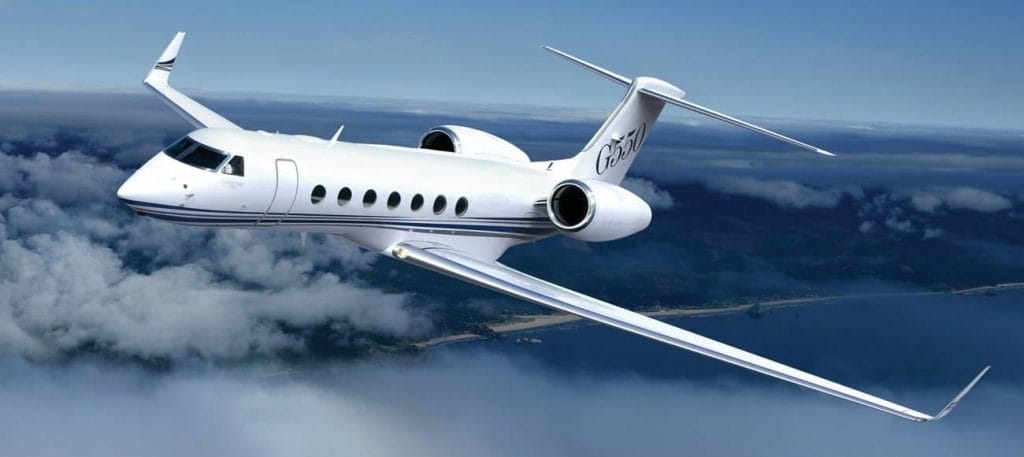
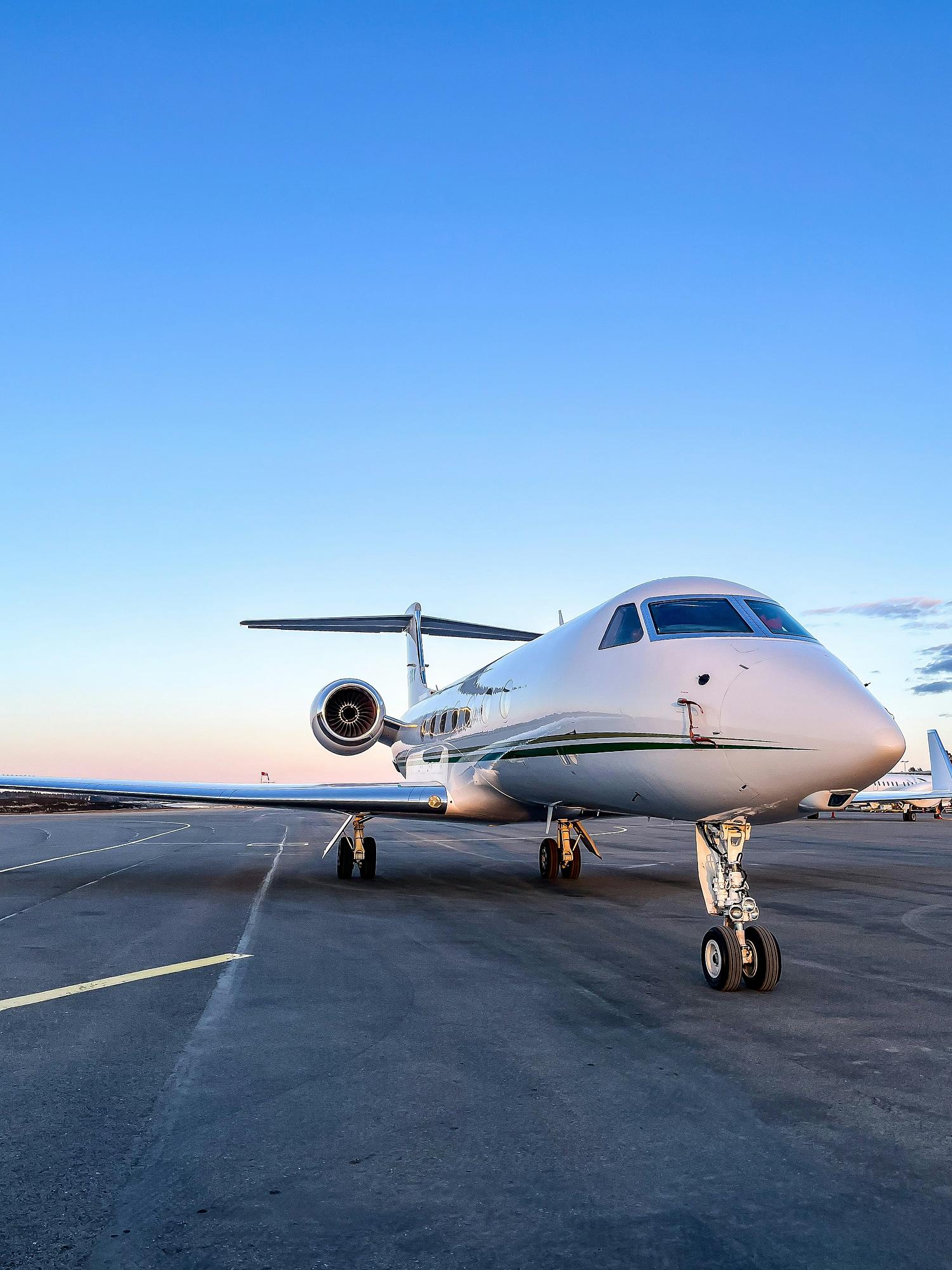
The Gulfstream G550 is Gulfstream’s ultra-long-range flagship. It offers approximately 6,950 nautical miles of range and a four-zone cabin that seats up to 18 passengers. The jet, a clean-sheet 2018 design, is a faster large-cabin jet (Mach 0.925 vs Mach 0.885) with a shorter range of approximately 5,400 nautical miles. The Gulfstream GV – often nicknamed the “G5” – is the 1990s ultra-long-range predecessor from which the G550 evolved; the two share a fuselage and Rolls-Royce BR710 engines.
Meet the Three Gulfstreams: GV, G500, and G550
Few naming conventions cause more confusion in private aviation than Gulfstream’s G-series lineup. Here is the straightforward guide.
The Gulfstream GV (colloquially called the “G5”) entered service in 1997 as Gulfstream’s first purpose-built ultra-long-range jet. Powered by two Rolls-Royce BR710 engines, the GV could connect Los Angeles to London or New York to Tokyo non-stop – a capability that redefined global business travel. Today, the GV remains a cost-effective alternative for Clients who prioritize extended range over the newest avionics.
The Gulfstream G550, introduced in 2003, is a direct evolution of the GV. It retains the same fuselage cross-section and Rolls-Royce BR710 engines but extends range to approximately 6,950 nm and introduces the PlaneView flight deck. The G550 remains one of the most sought-after aircraft in the charter market, offering a proven combination of transcontinental reach and cabin comfort.
The Gulfstream G500 – and this is where the confusion arises – is not simply a smaller G550. The modern G500 is part of Gulfstream’s GVII family, a clean-sheet design that entered service in 2018. It features two Pratt & Whitney engines (not Rolls-Royce), a maximum speed of Mach 0.925, and the Symmetry Flight Deck with active-control sidesticks. The G500’s range of approximately 5,400 nm is shorter than the G550’s. However, its cabin is taller and slightly longer than earlier G-series jets, and its cruise speed is unmatched in the large-cabin class.
In short: the GV and G550 are siblings separated by a decade of refinement. The modern G500 is a different generation entirely – faster, newer, and built from a blank page.
Gulfstream G500 vs G550: The Key Differences
Choosing between the Gulfstream G500 and G550 comes down to mission profile. How far do you need to fly, how fast, and how much cabin space does your travel style require.
Range
The G550’s approximately 6,950 nm range places virtually any destination within non-stop reach. London to Singapore, New York to Dubai, Los Angeles to Melbourne – the G550 handles them all without a fuel stop. The modern G500’s range of approximately 5,400 nm covers most transatlantic and transcontinental routes but may require a stop for the longest ultra-long-haul missions.
Speed
The G500 is the faster aircraft. Its maximum operating speed of Mach 0.925 allows it to shave meaningful time off long flights compared to the G550’s Mach 0.885. For a Client who values time efficiency on heavy domestic schedules or international flights within the G500’s range envelope, this speed advantage is tangible.
Cabin Configuration
Both aircraft offer stand-up cabins and lie-flat seating for overnight travel. The G550’s cabin volume of approximately 1,812 cubic feet accommodates up to four living zones – forward galley, conference area, entertainment lounge, and private stateroom. The G500’s cabin volume of approximately 1,715 cubic feet is slightly smaller, though it features a taller, flat-floor cabin and Gulfstream’s signature oval windows in larger dimensions than earlier models.
Technology Generation
The G550 employs the PlaneView flight deck, introduced in 2003 as an industry first. The modern G500 advances the standard with the Symmetry Flight Deck: touchscreen displays, active-control sidesticks, and fly-by-wire controls adapted from Gulfstream’s G650 development program. For Clients who appreciate the latest in aviation technology and pilot interface, the G500 represents the current state of the art.
Gulfstream GV vs G500 vs G550: Comparison Table
Cabin and Interior
Every Gulfstream in this class delivers a cabin environment built for productive work and restful sleep at altitude. The details differ by generation and design philosophy.
The Gulfstream GV established Gulfstream’s signature oval windows, notably larger than the industry norm, which flood the cabin with natural light. The GV’s cabin volume of approximately 1,812 cubic feet provides space for multiple seating areas, a full galley, and berthing for overnight missions.
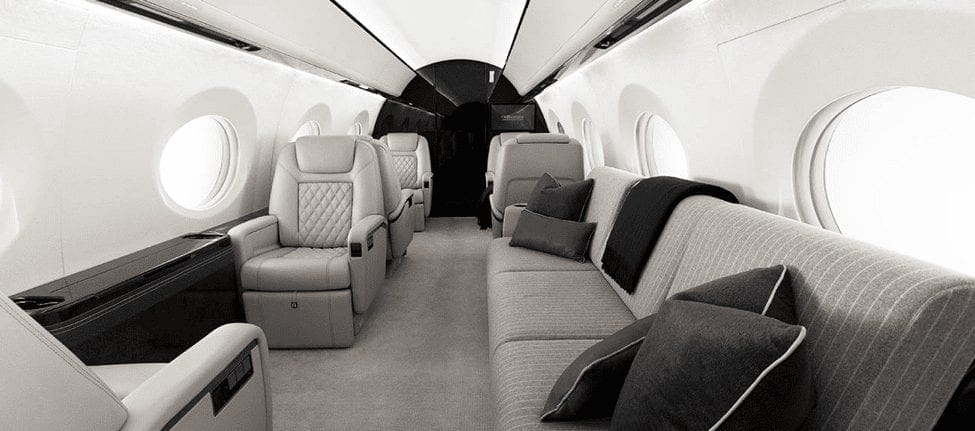
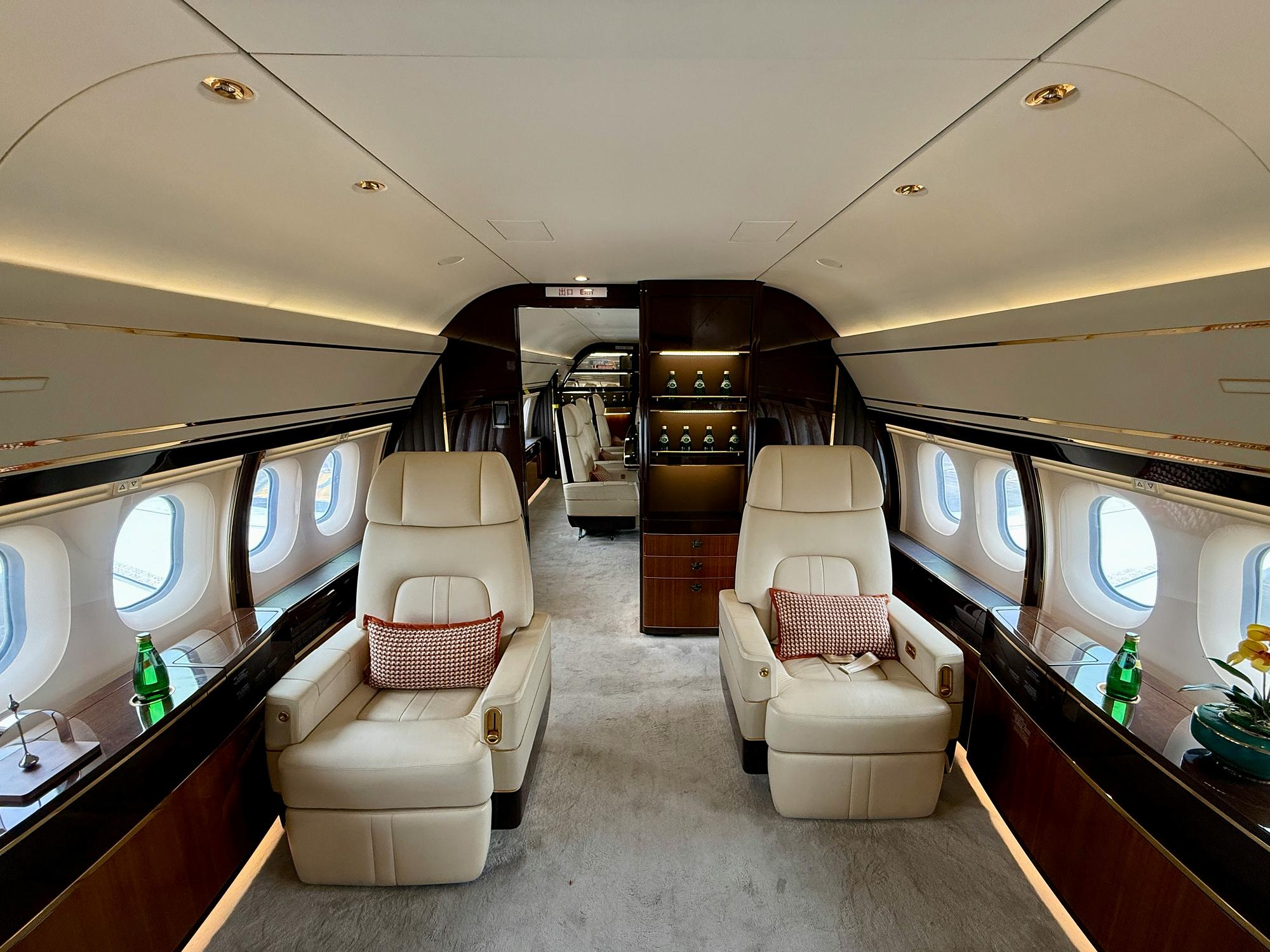
The Gulfstream G550 refines the GV formula with improved environmental systems. Its 100% fresh-air system – no recirculated air – reduces fatigue and jet lag on long-haul flights. The cabin can be configured with up to four distinct zones, accommodating work areas, dining space, and a private stateroom. Typical configurations seat 12–14 passengers in comfort, though the G550 can hold up to 18.
The modern Gulfstream G500 introduces Gulfstream’s next-generation cabin. Oval windows are now the largest ever fitted to a Gulfstream, flooding the interior with even more natural light. The flat floor extends the full length of the cabin, and ceiling height is greater than the GV and G550. The G500’s cabin altitude – approximately 4,850 feet when flying at 51,000 feet – is lower than previous generations, meaning passengers arrive feeling fresher. Whisper-quiet acoustics complete the experience.
For Clients who spend significant hours in the air, these interior differences matter. The G550’s four-zone layout suits large travel parties, corporate groups, or Clients who require a dedicated private suite. The G500’s taller, brighter cabin and lower pressurization appeal to frequent travelers prioritizing physical comfort and reduced fatigue.
Flight Deck and Avionics
Gulfstream has long been an industry leader in cockpit technology, and the aircraft in this comparison represent two distinct generations of that leadership.
The Gulfstream GV and G550 share the PlaneView flight deck, introduced with the G550 in 2003 and retrofitted to many GV aircraft. PlaneView integrates four large-format displays with Honeywell Primus Epic-based avionics, providing pilots with enhanced situational awareness through synthetic vision and graphical weather overlays. The system represented a significant leap from earlier analog-heavy cockpits and remains highly capable today.
The Gulfstream G500 introduces the Symmetry Flight Deck, Gulfstream’s most advanced pilot interface. Symmetry features 10 touchscreen displays, active-control sidesticks (adapted from fly-by-wire technology developed for the Gulfstream G650), and a redesigned layout that reduces pilot workload. The sidesticks free up panel space and provide direct, intuitive aircraft control. For operators and crews, Symmetry represents the current benchmark in business aviation cockpit design.
Which Gulfstream Is Right for Your Journey?
Mission profile determines the right aircraft. Here is how to think about the choice.
Choose the Gulfstream G550 when ultra-long-range capability is essential. If your travel regularly takes you from the U.S. to the Middle East, Asia, or Australia non-stop – or from Europe to Asia without a fuel stop – the G550’s approximately 6,950 nm range is purpose-built for these missions. The G550 also suits Clients who travel with larger groups and value the four-zone cabin configuration.
Choose the Gulfstream G500 when speed and modern technology are the priority. The G500 covers nearly all transatlantic routes and most transcontinental missions, arriving faster thanks to its Mach 0.925 cruise speed. Clients who fly heavy domestic schedules, coast-to-coast routes, or transatlantic missions within the 5,400 nm envelope will appreciate the G500’s efficiency, cabin comfort, and cutting-edge Symmetry Flight Deck.
Consider the Gulfstream GV when extended range matters but a newer aircraft is not essential. The GV offers approximately 6,675 nm of range – just 275 nm less than the G550 – at a more accessible price point in the charter market. For budget-conscious ultra-long-range travel, the GV remains a proven, reliable choice.
Each of these aircraft is available through the Magellan Jets Preferred Network, an exclusive group of rigorously vetted operators. Your Private Aviation Advisor can help match your travel profile to the right aircraft and confirm availability for upcoming missions.
Frequently Asked Questions About Gulfstream G500 vs G550 (FAQs):
What is the difference between the Gulfstream G500 and G550?
The Gulfstream G550 is an ultra-long-range jet with approximately 6,950 nm of range, a four-zone cabin seating up to 18, and Rolls-Royce BR710 engines. The modern Gulfstream G500, a 2018 clean-sheet design, has a shorter range of approximately 5,400 nm but is faster (Mach 0.925 vs Mach 0.885), features the Symmetry Flight Deck, and is powered by Pratt & Whitney engines. The G500 is a different generation of aircraft, not simply a smaller G550.
Is the Gulfstream G5 the same as the G500 or the G550?
The “G5” is a common nickname for the Gulfstream GV, which entered service in 1997. The GV is the direct predecessor to the G550, sharing the same fuselage and Rolls-Royce BR710 engines. The modern Gulfstream G500 is a separate, newer aircraft from the GVII family – it is not related to the GV or G550 generation.
Which has better range, the G500 or the G550?
The Gulfstream G550 has significantly longer range. Its approximately 6,950 nm capability exceeds the G500’s approximately 5,400 nm by more than 1,500 nm. The G550 can reach destinations the G500 cannot serve non-stop, such as New York to Dubai or Los Angeles to Sydney.
Can a Gulfstream G550 fly across the Atlantic non-stop?
Yes. The Gulfstream G550’s range of approximately 6,950 nm easily covers transatlantic routes. New York to London is roughly 3,450 nm, well within the G550’s capability with full fuel and passengers. The G550 is designed for intercontinental missions and can reach Europe, the Middle East, and Asia from U.S. departure points without refueling.
How many passengers does the Gulfstream G550 seat?
The Gulfstream G550’s large cabin can accommodate up to 18 passengers in high-density configurations. Most charter configurations seat 12–14 in comfort, with space divided among four living zones: galley, conference area, entertainment lounge, and private stateroom. The configuration depends on operator and mission requirements.
How much does it cost to charter a Gulfstream G500 or G550?
Charter pricing depends on aircraft category, flight distance, positioning, and seasonal availability. Both the Gulfstream G500 and G550 fall within the heavy jet category. A Private Aviation Advisor will confirm an exact quote based on your specific itinerary and travel dates. Talk to a Private Aviation Advisor to receive a personalized quote.
Fly the Gulfstream That Fits Your Mission
The Gulfstream GV, G500, and G550 each serve distinct travel profiles. Understanding the differences – range, speed, cabin configuration, and technology generation – positions you to select the aircraft that aligns with your journey.
When you are ready to fly, Magellan Jets connects you with any of these aircraft through the Magellan Jets Preferred Network: an exclusive group of operators vetted for safety, service, and reliability. Your dedicated Private Aviation Advisor will confirm aircraft availability, build your itinerary, and ensure every detail is coordinated from departure to arrival.
For Private Clients who think in continents rather than time zones, the Gulfstream G500 delivers. This heavy, long-range business jet seats up to 19 passengers, covers 5,300 nautical miles nonstop, and reaches a top speed of Mach 0.925. With a service ceiling of 51,000 ft and a cabin altitude of just 4,850 ft at cruise, you arrive rested and ready. Certified by the FAA in July 2018, the G500 represents Gulfstream’s commitment to advancing cabin comfort and cockpit technology in equal measure.
Performance and Range
The Gulfstream G500 pairs two Pratt & Whitney PW800-series (PW814GA) engines with one of the most aerodynamically efficient wing designs in its class. The result: a heavy jet that climbs quickly, cruises at 51,000 ft above commercial traffic, and covers serious distance.
The G500 covers up to 5,300 nm at long-range cruise, and it still flies 4,500 nm at high-speed Mach 0.90 cruise, according to Gulfstream’s published specifications. All range figures are NBAA IFR theoretical ranges and vary with routing, operating speed, weather, and outfitting. That opens New York to Tel Aviv, Los Angeles to Tokyo, or London to São Paulo as single-leg journeys. Normal cruise hovers near 488 knots true airspeed, balancing speed with fuel efficiency.
A maximum takeoff weight of 79,600 lb allows full fuel plus a meaningful passenger load for transcontinental and transatlantic missions. For Private Clients who need to be in two places in one day, the math favors the G500.
Inside the Cabin
Step through the door and the G500’s cabin announces itself quietly: 41 ft 6 in long, 7 ft 7 in wide, and 6 ft 2 in tall at its peak. Most passengers walk the aisle upright. The cabin volume spans 1,715 cu ft, configurable into up to three distinct living areas.
Fourteen panoramic oval windows run the length of the fuselage, flooding the interior with natural light. Gulfstream engineered the cabin around a 100% fresh-air system rather than recirculated cabin air, which helps minimize fatigue on long flights. Cabin altitude at cruise measures approximately 4,850 ft, closer to sea level than many competitors, making for a more comfortable arrival.
The G500 offers a taller, longer flat-floor cabin than earlier G-series jets, giving interior designers more latitude for custom configurations. Forward and aft galley placements, lavatory options fore and aft, and 175 cu ft of dedicated baggage space round out the accommodations.
The Flight Deck
Gulfstream introduced its Symmetry Flight Deck on the G500, a clean-sheet cockpit designed around touchscreen avionics and active control sidesticks. The result: reduced pilot workload, enhanced situational awareness, and a flying experience that sets the standard for modern heavy jets.
Ten touchscreen displays replace conventional switches, and active control sidesticks provide tactile feedback linked between pilot and copilot positions. For Clients, this translates to a flight crew that’s less fatigued, more responsive, and equipped with technology that keeps pace with the aircraft’s performance envelope.
How the G500 Compares to the G450 and G550
The Gulfstream G500 sits between the G450 (now out of production) and the larger G550 in Gulfstream’s hierarchy, though the three aircraft serve overlapping but distinct mission profiles.
Compared to the G450, the G500 offers increased range (5,300 nm vs. about 4,350 nm), a larger cabin volume, and the entirely new Symmetry Flight Deck. The G450 remains a proven workhorse in many charter fleets, but the G500 represents a generational leap in cabin environment and cockpit technology.
The G550 stretches range further (approximately 6,750 nm) and offers a slightly longer cabin, making it the choice for ultra-long-haul missions or larger traveling parties. Both the G450 and G550 remain available through Magellan Jets’ Premium Jet Card, which provides guaranteed access to heavy jets at locked hourly rates.
For Private Clients who need transcontinental reach without the footprint of a G550, the G500 hits the mark.
Gulfstream G500 Specifications
What It Costs to Charter a Gulfstream G500
Heavy jet charter, including the Gulfstream G500, starts from an estimated $12,989 per hour through Magellan Jets’ On-Demand Charter service.
This is an estimated hourly rate for Heavy Jet charter, inclusive of fuel. It does not include contingencies such as de-icing, positioning, overnight fees, or other trip-specific costs. Final pricing is confirmed at time of quote.
Magellan Jets sources aircraft exclusively from its Preferred Network, an exclusive group of fewer than 100 rigorously vetted operators. As an asset-light private aviation solutions provider, Magellan Jets matches each mission to the right aircraft without fleet-utilization conflicts.
How to Fly the Gulfstream G500 with Magellan Jets
Private Clients access the Gulfstream G500 and other heavy jets through several pathways. For one-time or occasional travel, On-Demand Charter provides full flexibility with no upfront commitment. For travelers flying 25 hours or more annually, a Jet Card locks in hourly rates and guarantees availability.
Every journey begins with a Private Aviation Advisor who understands your schedule, your preferences, and the mission at hand. Your Advisor coordinates aircraft selection, crew, catering, and ground logistics so you arrive thinking about what matters next, not what just happened.
Frequently Asked Questions About the Gulfstream G500 (FAQs):
How many passengers does the Gulfstream G500 seat?
The Gulfstream G500 seats up to 19 passengers, depending on cabin configuration. Most charter configurations accommodate 13–16 passengers comfortably across up to three living areas, with sleeping arrangements available on overnight flights.
What is the range of the Gulfstream G500?
The G500 flies up to 5,300 nautical miles nonstop at long-range cruise, or 4,500 nm at high-speed Mach 0.90 cruise. That connects city pairs like New York–Tel Aviv, Los Angeles–Tokyo, and London–São Paulo without refueling, making it a true transatlantic and transpacific aircraft.
How fast is the Gulfstream G500?
The G500’s maximum speed reaches Mach 0.925, among the fastest in the heavy jet category. Normal cruise sits around 488 knots true airspeed, balancing speed with range efficiency.
How much does it cost to charter a Gulfstream G500?
Heavy jet charter, including the G500, starts from an estimated $12,989 per hour through Magellan Jets. This rate includes fuel but excludes positioning, de-icing, overnight fees, and other trip-specific costs. Final pricing is confirmed at the time of quote.
How does the G500 compare to the Gulfstream G550?
The G550 offers longer range (approximately 6,750 nm vs. 5,300 nm) and a slightly larger cabin, making it the choice for ultra-long-haul missions or larger groups. The G500 features Gulfstream’s newer Symmetry Flight Deck and a lower cabin altitude at cruise. Both aircraft serve Private Clients well; the choice depends on mission length and passenger count.
Is the Gulfstream G500 available through Magellan Jets?
Yes. Private Clients access the G500 through On-Demand Charter or a Jet Card, both sourced from Magellan Jets’ Preferred Network of vetted operators. Your Private Aviation Advisor matches the right aircraft to your mission and handles all logistics from booking through arrival.
Few light jets inspire the loyalty of the Embraer Phenom 300. It is fast, refined, and built for travelers who expect cabin comfort without stepping up to a larger aircraft category. For golf weekends, family trips, or same-day business missions, the Phenom 300 delivers a compelling blend of speed, range, and polish.
Baggage capacity: 84 cu ft (best-in-class for light jets)
Maximum range: Up to 2,033 nautical miles
Service ceiling: 45,000 ft
Speed: The fastest light jet in production, cruising at up to Mach 0.80
Cabin and Comfort
Step inside, and the Phenom 300 feels larger than its dimensions suggest. At 4 ft 9 in, the cabin height is generous for the light jet category, and most travelers can move about comfortably. Large oval windows flood the interior with natural light, and a flat floor keeps the space open and accessible.
The standard configuration seats four in a club arrangement, with two additional seats available. Fold-out tables support working en route. The 324-cubic-foot cabin volume gives passengers room to stretch, converse, or rest without compromise.
The real standout is baggage capacity. With 84 cu ft of externally accessed storage, the jet accommodates golf clubs, ski equipment, or luggage for an extended trip, space that other light jets simply cannot match.
Performance and Range
The Phenom 300 is the fastest light jet in production, cruising at up to Mach 0.80. That translates to shorter flight times on competitive routes: Teterboro to Miami in under three hours, Los Angeles to Denver in roughly two.
With a maximum range of 2,033 nautical miles, the Phenom 300 connects most U.S. city pairs nonstop. Boston to Miami, New York to Aspen, Chicago to Scottsdale, all well within reach. For Clients booking a Phenom 300 charter, this means fewer fuel stops and more time at the destination.
A 45,000-foot service ceiling lets the aircraft climb above commercial traffic and most weather, delivering a quieter, smoother ride. Shorter runways are also accessible. The Phenom 300 can operate from airports that larger jets cannot, opening destinations closer to your final stop.
Ideal Missions for the Phenom 300
The Phenom 300 excels on a wide range of journeys:
Golf trips: The 84 cu ft baggage hold fits multiple golf bags with room to spare. Fly direct to Scottsdale, Palm Beach, or Pebble Beach without worrying about gear.
Ski weekends: Access mountain airports like Aspen, Jackson Hole, and Telluride. Skis and boots travel in the hold, and you arrive ready for the slopes.
Family travel: The six-seat capacity and spacious cabin make it comfortable for parents and children. Pets fly in-cabin, too, with no cargo hold required.
Business day trips: Depart early, attend meetings, and return the same evening. The jet’s speed and range make single-day missions practical across most of the Eastern Seaboard and beyond.
This combination of speed, efficiency, and operator economics keeps the Phenom 300 at the top of the light jet market.
Ways to Fly the Phenom 300 With Magellan Jets
Magellan Jets offers several paths to access the Phenom 300, each designed for a different travel pattern:
Jet Card: Purchase hours in advance for guaranteed availability, locked-in rates, and the simplicity of one call to book. Ideal for Clients who fly often and value certainty.
On-Demand Charter: Book individual journeys as needed. Ideal for occasional travel, or for experiencing the Phenom 300 before committing to a card or membership.
Frequently Asked Questions About the Phenom 300 (FAQs):
How many passengers can the Phenom 300 carry?
The Phenom 300 seats up to six passengers in a comfortable club configuration. Most charter layouts seat four in forward-facing club seats, with two additional seats available.
What is the range of the Phenom 300?
The Phenom 300 has a maximum range of up to 2,033 nautical miles. That covers most U.S. city pairs nonstop, from Boston to Miami, New York to Denver, or Los Angeles to Dallas without a fuel stop.
How fast is the Phenom 300?
The Phenom 300 is the fastest light jet in production, cruising at up to Mach 0.80. That speed advantage translates to shorter flight times on competitive routes across the country.
Is the Phenom 300 single-pilot certified?
Yes. The Phenom 300 is certified for single-pilot operation, which gives operators flexibility in crew scheduling and can reduce overall operating costs.
How much does it cost to charter a Phenom 300?
For light jet charter, Magellan Jets estimates hourly rates between approximately $7,300 and $8,100 per estimated flight hour. This is an estimated hourly rate for planning purposes only, and it does not include taxes, fees, repositioning, or trip-specific contingencies. Your Magellan Jets Private Aviation Advisor confirms exact pricing for each journey based on aircraft, route, and availability.
Is the Phenom 300 a good choice for golf or ski trips?
Yes. The 84 cu ft baggage compartment is the largest in the light jet category, with room for multiple golf bags or full ski equipment. The jet’s range and short-runway capability also open access to resort destinations like Aspen, Jackson Hole, and Pebble Beach.
Is the Phenom 300 suitable for families or traveling with pets?
Yes. The six-seat capacity and generous cabin volume make the journey comfortable for families. Pets are welcome in the cabin, with no cargo hold travel required.
The Gulfstream G650 redefined what a private jet could deliver when it entered service in December 2012. With a maximum operating speed of Mach 0.925, a range of 6,890 nautical miles (7,437 nm for the ER variant), and a cabin designed for both productivity and rest, it remains one of the most sought-after ultra-long-range aircraft in the world.
What is the Gulfstream G650? The Gulfstream G650 is an ultra-long-range, large-cabin business jet manufactured by Gulfstream Aerospace. It seats up to 16 passengers in a flat-floor cabin measuring 46 ft 8 in long, 8 ft 2 in wide, and 6 ft 3 in tall. The aircraft connects distant city pairs nonstop – New York to Tokyo, Los Angeles to London, São Paulo to Dubai – making it the standard against which all ultra-long-range jets are measured.
The Gulfstream G650 Cabin and Interior Experience
Step aboard the G650 and the cabin geometry speaks immediately. At 8 ft 2 in wide and 6 ft 3 in tall, this is one of the most spacious interiors in the large-cabin class. The flat floor runs the full 46 ft 8 in length, eliminating step-downs and making movement effortless from forward galley to aft stateroom.
Most configurations seat 12–16 passengers across three or four distinct zones: a forward club section, a mid-cabin conference or dining group, and an aft private suite with convertible divan. Owners and charterers frequently configure the G650 with a full crew rest area and an enclosed lavatory forward, plus a second lavatory aft. Baggage capacity of 195 cubic feet means golf bags, skis, and extended-trip luggage travel with you, not on a separate logistics flight.
The cabin environment stands apart from commercial aviation – and from many competitors. Gulfstream’s environmental system circulates 100% fresh air, replaced approximately every two minutes, with no recirculated air mixing into the cabin. Cabin altitude at a typical 41,000-foot cruise sits around 3,000–4,000 feet – well below the cabin altitude of a typical airliner. The result is reduced fatigue and faster recovery after long-haul legs, an advantage Private Clients notice when stepping off a 12-hour flight ready for a meeting instead of a nap.
Large oval windows – the largest in the industry when the G650 launched – flood the cabin with natural light and reinforce the sense of space. Soundproofing, LED lighting that can simulate sunrise or sunset, and intuitive cabin-management touchscreens round out an interior engineered for both work and rest.
Speed and Performance: Among the Fastest Ultra-Long-Range Jets
The G650’s maximum operating speed of Mach 0.925 places it among the fastest ultra-long-range jets in widespread operation. That speed translates to concrete time savings: a Los Angeles–Tokyo leg completed in roughly 11 hours instead of 12, a New York–Dubai nonstop completed before the time-zone math becomes punishing.
With twin Rolls-Royce BR725 engines producing 16,900 pounds of thrust each, the aircraft climbs at 3,570 feet per minute – reaching its maximum operating altitude of 51,000 feet quickly and staying above weather and commercial traffic. That altitude also means less fuel burn in thinner air, extending effective range on long legs.
Takeoff field length of 5,858 feet (6,299 feet for the ER) keeps secondary airports accessible. A G650 can depart Teterboro for London nonstop, lift off from Van Nuys for Hong Kong, or use shorter runways in Sun Valley, Aspen, or St. Barts that would exclude larger jets. This combination of speed, range, and runway flexibility is why the G650 remains the reference aircraft for demanding international charter flights.
Range and the Missions It Unlocks
Range is where the G650 earns its reputation. The standard G650 covers 6,890 nm nonstop. The G650ER extends that to 7,437 nm, connecting virtually any two points on Earth with at most one fuel stop.
Transatlantic and Transpacific Capability
New York to Moscow, Los Angeles to Sydney (with one stop), London to Singapore, São Paulo to Cape Town – the G650ER handles these routes routinely. For Private Clients whose business or family commitments span continents, the aircraft removes the need to calculate fuel stops or overnight layovers. Time zones shift beneath you, but your schedule stays intact.
Domestic Coast-to-Coast Efficiency
On shorter legs like Boston to Los Angeles or Miami to Seattle, the G650’s range becomes reserve rather than requirement. That reserve translates to flexibility: alternate airports remain viable, weather diversions don’t strand passengers, and headwinds don’t force an unplanned fuel stop.
Magellan Jets Clients access the G650 through On-Demand Charter for individual missions, through Jet Cards for predictable annual travel, or through Fractional Ownership for those whose schedules require dedicated availability. The G650’s positioning across all three solutions reflects its versatility: it fits the executive who flies 50 hours annually as well as the family that logs 200.
Technical Specifications
How the Gulfstream G650 Compares to Other Ultra-Long-Range Jets
The G650 set the standard in 2012, and it remains competitive more than a decade later. Two aircraft now bracket it in the ultra-long-range segment: the Gulfstream G700 and the Bombardier Global 7500.
Gulfstream G700
Gulfstream’s current flagship, the G700 received FAA certification in March 2024 and began deliveries in April 2024. Its cabin stretches roughly 56 ft 11 in – approximately 10 feet longer than the G650 – and can be configured with five living areas plus a dedicated crew rest. Range reaches 7,750 nm at Mach 0.85, and top speed increases to Mach 0.935. For Clients who need the largest possible Gulfstream cabin, the G700 represents the next step. For those whose missions fit within the G650’s envelope, the older aircraft offers similar performance at lower acquisition and operating costs.
Bombardier Global 7500
The Bombardier Global 7500 competes directly with the G650ER. Baseline range is 7,700 nm, and top speed matches the G650 at Mach 0.925. Cabin width is slightly narrower, but Bombardier’s four-zone layout offers comparable space. The choice between G650ER and Global 7500 often comes down to cabin configuration preference and availability rather than performance.
Both alternatives highlight a key truth about the G650: it established the benchmarks its successors now refine. Clients who don’t require the G700’s additional cabin length or the Global 7500’s specific layout often find the G650 remains the ideal balance of space, speed, range, and cost.
Flying the Gulfstream G650: Crew, Certification, and Who It Suits
The G650 is certificated for a two-pilot crew – it cannot be operated single-pilot. For charter and Jet Card Clients, this is handled transparently; every mission includes a fully qualified flight crew sourced through the Magellan Jets Preferred Network. For owners considering Aircraft Sales & Management, the two-pilot requirement factors into annual crew costs but also ensures redundancy and safety on long international legs.
The G650 is well-suited to several traveler profiles:
International executives who fly transatlantic or transpacific routinely and need to arrive ready to work.
Families traveling together on multi-leg itineraries, with room for children to move and sleep.
Groups of 10–16 who would otherwise split across two smaller aircraft.
Travelers with mobility considerations, since the flat floor and spacious cabin simplify boarding and movement.
Adventurers whose trips include golf clubs, skis, or other bulky gear that fits in the 195-cubic-foot baggage hold.
For more on how Magellan Jets evaluates operators, crew qualifications, and aircraft maintenance standards, see our approach to safety.
For Clients who prefer access without ownership, the G650 charters at an estimated hourly rate of $12,989 for the Heavy Jet category. This rate is inclusive of fuel but does not include contingencies such as de-icing, positioning, overnight fees, catering, ground transportation, or international fees. Final pricing is confirmed at time of quote.
That hourly rate means a five-hour leg – Boston to Los Angeles, for example – falls in a different economic bracket than a 12-hour transatlantic mission. Magellan Jets Private Aviation Advisors help Clients model true trip costs, identify when a Jet Card offers better per-hour economics than On-Demand Charter, and match the aircraft to the mission rather than defaulting to the largest cabin available.
Frequently Asked Questions About the Gulfstream G650 (FAQs):
How much does a Gulfstream G650 cost?
The G650ER had a new list price of approximately $70.5 million before production ended in February 2025. Pre-owned examples recently averaged about $35 million in asking price, with newer, low-time aircraft listed higher (into the low $50 millions).
How much does it cost to charter a Gulfstream G650?
Charter pricing for a G650 starts at an estimated $12,989 per flight hour (Heavy Jet category). This rate is inclusive of fuel but excludes de-icing, positioning, overnight fees, catering, ground transportation, and international fees. Final pricing is confirmed at time of quote.
Can a Gulfstream G650 be flown by one pilot?
No. The G650 is certificated for a two-pilot crew and cannot be operated single-pilot. All charter and Jet Card missions include a fully qualified two-pilot crew as standard.
What are the key specs and dimensions of the Gulfstream G650?
The G650 cabin measures 46 ft 8 in long, 8 ft 2 in wide, and 6 ft 3 in tall. It seats up to 16 passengers. Range is 6,890 nm (G650) or 7,437 nm (G650ER). Maximum operating speed is Mach 0.925, and maximum operating altitude is 51,000 ft.
Can the Gulfstream G650 fly across the Atlantic nonstop?
Yes. The G650 and G650ER both complete transatlantic routes nonstop – New York to London, Los Angeles to Paris, Boston to Geneva. The G650ER extends range to 7,437 nm, covering nearly any city pair on Earth with at most one fuel stop.
How does the G650 compare to the G700, and is the G700 bigger?
Yes, the Gulfstream G700 is larger. Its cabin stretches approximately 56 ft 11 in – about 10 feet longer than the G650. The G700 also offers greater range (7,750 nm) and slightly higher top speed (Mach 0.935). For Clients whose missions fit within the G650’s envelope, the older aircraft remains an excellent value with comparable performance.
Experience the Gulfstream G650 With Magellan Jets
The G650 continues to define ultra-long-range private aviation more than a decade after its debut. Its cabin remains among the most spacious in its class, its range covers the routes that matter, and its performance record – 500+ deliveries, 120+ speed records – speaks to engineering that has held up over time.
Whether you’re evaluating a G650 for charter, considering a Jet Card for predictable annual travel, or exploring pre-owned acquisition through Aircraft Sales & Management, Magellan Jets can help you find the right fit. Every recommendation is made in your interest, backed by the Magellan Jets Preferred Network and a team that has been coordinating complex international missions since 2008.
Located in the San Fernando Valley, VNY sits roughly 20 miles north of LAX. That distance makes it the natural arrival point for travelers bound for Beverly Hills, Malibu, Santa Monica, the entertainment studios of Burbank, or the tech corridors of Thousand Oaks and Westlake Village. Arriving here means stepping off the aircraft and into a car – not a terminal queue.
Why Private Jet Charter to Van Nuys
Van Nuys exists for one purpose: general aviation. There are no commercial airline gates, no TSA security lines, and no crowds. That singular focus is precisely what draws entertainment executives, venture investors, and Private Clients who value discretion.
LAX is built for commercial aviation at scale – multiple terminals, security checkpoints, and ground transportation queues that can consume an hour before you reach your car. For Private Clients whose time is their scarcest resource, LAX rarely makes sense.
VNY inverts that experience. Private jet arrivals typically move from aircraft to vehicle in under 10 minutes. The San Fernando Valley location also offers faster access to neighborhoods north and west of downtown – including Calabasas, Hidden Hills, and the Conejo Valley – without crossing through LA traffic corridors.
For travelers whose destinations lie in Hollywood, downtown Los Angeles, or the Westside, Van Nuys remains competitive with LAX in ground time, particularly during peak traffic hours when surface streets outperform the freeways.
Popular Private Jet Routes to Van Nuys
Van Nuys is one of the most-connected private jet airports in the country. The Teterboro–Van Nuys corridor (TEB–VNY) is widely regarded as one of the most heavily traveled coast-to-coast private jet corridors – a reflection of the steady traffic between New York and Los Angeles financial, entertainment, and creative industries.
Other high-volume corridors include:
San Francisco / Bay Area to Van Nuys: A short West Coast hop ideal for light jets, often flown by tech executives and investors.
Las Vegas to Van Nuys: Under an hour of flight time, popular for weekend travel and entertainment industry trips.
Aspen / Vail to Van Nuys: Seasonal ski traffic makes this route busy from December through March.
Scottsdale to Van Nuys: Desert retreats and golf escapes drive consistent demand year-round.
Denver to Van Nuys: Business and leisure traffic between the Mountain West and Los Angeles.
For international arrivals, VNY offers U.S. Customs and Border Protection services through its FBOs. Private Clients arriving from Mexico, Canada, or Caribbean destinations can clear customs on the ramp rather than at a commercial terminal.
Choosing the Right Aircraft for Van Nuys
Aircraft selection depends on mission profile: passenger count, baggage requirements, and flight distance. Magellan Jets’ Preferred Network provides access to aircraft across every category, matched to your specific needs.
Light Jets – Regional West Coast Flights
For short hops within the West Coast – Vegas, the Bay Area, Scottsdale, or ski destinations – a light jet delivers speed and efficiency. The Phenom 300 is a preferred choice for its best-in-class baggage capacity, taller cabin, and seating for up to six passengers. It accommodates golf bags, ski equipment, and pets without compromise.
Midsize Jets – Cross-Country Comfort
For coast-to-coast travel or longer West Coast routes, the Citation Latitude and Citation Longitude offer a six-foot flat-floor cabin, seating for up to seven to nine passengers, and transcontinental range on the Longitude. These aircraft balance cabin comfort with operational efficiency.
Super-Midsize Jets – Transcontinental Range
The Challenger 300 and Challenger 350 are built for nonstop coast-to-coast flights. A wide, flat-floor cabin accommodates up to six passengers with excellent baggage capacity – ideal for travelers who require both workspace and rest during a five-hour flight.
Heavy Jets – Long-Haul and Group Travel
For larger groups or international routing, the Challenger 604, 605, and 650 seat up to 10 passengers with full-service galleys and enclosed lavatories. Global and Gulfstream aircraft extend the range to intercontinental destinations. Your Private Aviation Advisor can identify the right aircraft for your mission.
Private Jet Charter Pricing to Van Nuys
Charter pricing to Van Nuys varies by aircraft category, origin, and trip specifics. The following estimated hourly rates apply to West Coast charter:
Light Jet: Starting from an estimated $8,000/hr
Midsize Jet: Starting from an estimated $9,600/hr
Super-Midsize Jet: Starting from an estimated $9,900/hr
Heavy Jet: Starting from an estimated $11,600/hr
Turboprop: Starting from an estimated $7,600/hr
These figures are estimates only. Final pricing depends on aircraft availability, routing, repositioning, date, and applicable fees and taxes, and your Magellan Jets Private Aviation Advisor confirms an exact quote for every trip.
For coast-to-coast travel from the Northeast to Van Nuys, different corridor rates apply. Private Clients flying from Teterboro, White Plains, or other Northeast airports can request a specific quote from a Private Aviation Advisor.
Empty Leg Opportunities to Van Nuys
Empty legs – repositioning flights offered at reduced rates – frequently become available on high-traffic corridors like Teterboro–Van Nuys. These one-way segments can offer significant savings compared to standard charter pricing.
Empty leg availability is inherently variable: routes, dates, and aircraft change as the flight schedule evolves. Private Clients interested in empty leg opportunities can work with their Private Aviation Advisor to monitor relevant corridors and receive alerts when matching flights become available.
Magellan Jets Solutions for Van Nuys Travelers
How you access private aviation depends on how often you fly and what flexibility you need. Magellan Jets offers multiple solutions for Private Clients traveling to and from Van Nuys:
On-Demand Charter delivers aircraft access without a long-term commitment. For travelers flying fewer than 25 hours per year, or those with unpredictable schedules, On-Demand Charter provides full flexibility on a trip-by-trip basis.
Jet Cards offer guaranteed availability, fixed hourly rates, and no blackout dates. For Private Clients flying 25 hours or more annually, a Jet Card locks in pricing and ensures aircraft access – including on peak travel days when demand exceeds supply.
Frequent flyers with more intensive needs may also explore international charter options or aircraft solutions managed through Magellan Jets.
FBO Facilities at Van Nuys
Van Nuys offers four FBOs (Fixed-Base Operators), each providing a full range of services for Private Clients:
Castle & Cooke Aviation: Located on the north side of the airport, Castle & Cooke offers executive lounges, concierge services, aircraft fueling, and hangar space.
Clay Lacy Aviation: One of the oldest and most established FBOs in the Los Angeles area, Clay Lacy provides full-service facilities including maintenance, hangar storage, and customs clearance.
Jet Aviation: A global FBO network with a Van Nuys location offering passenger services, aircraft handling, and ground transportation coordination.
Signature Aviation: A global FBO network, Signature’s Van Nuys facility includes executive lounges, customs services, and crew amenities.
Your Private Aviation Advisor can recommend an FBO based on your aircraft type, ground transportation needs, and any specific service requirements.
Safety and the Magellan Jets Standard
Every charter arranged through Magellan Jets meets rigorous safety standards. As a WYVERN Wingman broker and Air Charter Safety Foundation (ACSF) board member, Magellan Jets maintains audit and vetting protocols that exceed FAA Part 135 minimums.
The Magellan Jets Preferred Network includes only operators who pass independent safety audits, maintain current certifications, and meet ongoing performance standards. Private Clients flying to Van Nuys benefit from the same safety oversight applied to every Magellan Jets mission.
Frequently Asked Questions About Private Jet Charter to Van Nuys (FAQs):
How much does it cost to charter a private jet to Van Nuys?
Charter pricing depends on aircraft category, origin, and trip specifics. Estimated hourly rates for West Coast charter range from approximately $7,600/hr for a turboprop to $11,600/hr for a heavy jet. These are estimates only; final pricing depends on aircraft availability, routing, repositioning, date, and applicable fees and taxes. Contact a Private Aviation Advisor for an exact quote on your specific route.
What is the difference between Van Nuys and LAX for private jets?
Van Nuys (VNY) is dedicated exclusively to general aviation – there is no commercial airline service, no TSA security lines, and no terminal crowds. LAX handled approximately 76.6 million passengers in 2024. For Private Clients, VNY typically offers faster arrivals (aircraft to car in under 10 minutes) and closer access to neighborhoods in the San Fernando Valley, Malibu, and the Westside.
What is the best aircraft for a flight to Van Nuys?
Aircraft selection depends on your passenger count, baggage needs, and flight distance. Light jets like the Phenom 300 are ideal for short West Coast routes. Midsize jets such as the Citation Latitude or Longitude suit cross-country travel. Super-midsize jets like the Challenger 300 or 350 offer coast-to-coast range with a spacious cabin. Your Private Aviation Advisor will recommend the right aircraft for your mission.
Are empty legs available to Van Nuys?
Empty leg flights to and from Van Nuys frequently become available on high-traffic corridors like Teterboro–Van Nuys and Bay Area–Van Nuys. These repositioning flights can offer significant savings compared to standard charter. Contact a Private Aviation Advisor to monitor availability on your preferred routes.
How far is Van Nuys Airport from downtown Los Angeles?
Van Nuys Airport is approximately 20 miles north of LAX. Ground transportation to downtown typically takes 30–45 minutes depending on traffic. The San Fernando Valley location offers faster access to the Westside, Malibu, and neighborhoods north of the city.
Does Magellan Jets offer Jet Cards for Van Nuys travel?
Yes. Magellan Jets Jet Cards provide guaranteed availability, fixed hourly rates, and zero blackout dates – including peak travel periods like holidays and summer Fridays. Jet Cards are ideal for Private Clients flying 25 hours or more per year who want pricing certainty and priority access.
Ready to charter a private jet to Van Nuys?Talk to a Private Aviation Advisor to discuss your travel needs and receive a personalized quote.
Chartering a private jet to Europe is now a well-established option for transatlantic travel, with On-Demand Charter holding more than half the global charter revenue share in 2025. The transatlantic corridor has grown 55% over the past 15 years and remains the fifth-largest international air market in the world. Private Clients fly private to Europe for direct routing, schedule control, and arrivals at business-aviation airports that save hours over crowded commercial terminals.
The cost of a private jet to Europe turns on three variables: the aircraft category your route demands, the hourly rate for that category, and the trip-specific contingencies layered on top. This guide breaks down each factor using current 2026 figures. It also identifies exactly which ultra-long-range jets clear the Atlantic nonstop, and from which U.S. cities.
Private Jet to Europe Costs in 2026
Transatlantic missions to Europe fly on Heavy Jets with ultra-long-range capability. The international Heavy Jet estimated hourly rate in 2026 starts at approximately $14,877/hr. This estimated rate is inclusive of fuel, but it does not include contingencies such as de-icing, positioning, overnight fees, catering, ground transportation, international permits, or other trip-specific costs. Final pricing is confirmed at the time of quote.
A long-range Super-Midsize Jet, such as the Embraer Praetor 600, can reach Western Europe nonstop from the Northeast at an estimated $12,671/hr. That option suits smaller parties of up to 8 passengers departing from KTEB or KBOS. For readers who want the full picture of what actually drives a charter’s hourly rate, the same variables apply across domestic and international missions.
The hourly rate is the anchor, not the whole story. A Teterboro-to-Paris crossing runs roughly 7 hours nonstop, and the estimate shifts with aircraft availability, repositioning distance, and the complexity of European airport slots. Your Private Aviation Advisor builds the full estimate around your specific itinerary.
Which Private Jets Can Fly Nonstop From the US to Europe
Not every Heavy Jet can clear the Atlantic with a full cabin. The mission demands validated ultra-long-range aircraft carrying enough fuel to cross thousands of nautical miles nonstop. Based on Magellan Jets’ aircraft specifications, these jets handle transatlantic nonstop routing:
Gulfstream G650ER: 7,437 nm range, up to 16 passengers, cruise speed 528 knots, ceiling 51,000 feet.
Bombardier Global 7500: 7,800 nm range, up to 17 passengers, with a four-zone cabin and dedicated master suite.
Gulfstream G550: 6,954 nm range, up to 18 passengers.
Bombardier Global 6500: 6,990 nm range, supporting most U.S.-to-Europe nonstop pairings.
Gulfstream G650: 6,890 nm range, up to 16 passengers, a proven ultra-long-range performer.
Dassault Falcon 8X: a long-range Heavy Jet well suited to transatlantic missions from the East Coast.
The Gulfstream G-IV and G-IVSP remain among the most popular long-standing choices for East-Coast-to-Europe missions. For Northeast departures with smaller parties, the Embraer Praetor 600 (Super-Midsize, 4,040 nm range, up to 8 passengers) offers a right-sized alternative that still reaches Paris or London nonstop (Magellan Jets Aircraft Specifications). These heavy jets built for transatlantic travel give Private Clients real range headroom over the ocean.
Matching Your Departure City to a Nonstop European Arrival
Range determines which U.S. departure cities reach which European destinations without a fuel stop. The farther west your origin, the more decisive aircraft selection becomes. Your starting point shapes both your aircraft options and your positioning costs.
Northeast U.S. (KTEB, KBOS): the shortest Atlantic crossing. Teterboro or Boston to Western Europe sits comfortably within the nonstop capability of every ultra-long-range Heavy Jet, and even the Praetor 600. This corridor supports the widest aircraft field and the lowest positioning costs for East Coast Private Clients.
Southeast U.S. (KMIA, KATL): a longer southern crossing to Europe. The added distance rules out shorter-range Heavy Jets and calls for a Gulfstream G650, Global 7500, or Global 6500 for nonstop service. Clients departing KMIA should plan for ultra-long-range aircraft and somewhat tighter availability than in the Northeast.
West Coast (KLAX, KSFO): the longest transatlantic mission. Los Angeles to Paris or London exceeds the comfortable nonstop range of most jets, so only the longest-range aircraft, the G650ER and Global 7500, make the crossing with a full load. Many West Coast travelers plan a fuel stop in Gander (CYQX) or Reykjavik (BIRK) to open a broader aircraft field.
Top US-to-Europe Private Jet Routes and Airports for 2026
The most-flown transatlantic private corridors track where finance, business, and leisure demand concentrates. Europe’s business jet market reached USD 10.23 billion in 2025, and the arrival points below anchor much of that activity. For Private Clients flying private to Paris and the French Riviera, the route structure stays remarkably consistent year to year.
KTEB to LFPB (Teterboro to Le Bourget, Paris): Paris rewards Private Clients with its dining, fashion houses, and privileged business access. Le Bourget sits minutes from the city center.
KTEB to EGLF (Teterboro to Farnborough, London): London remains a magnet for finance, culture, and commerce. Farnborough offers direct helicopter transfers toward the city.
KBOS to LSGG (Boston to Geneva): Geneva opens alpine access and ski-season travel, with ground transfers reaching the resorts within a comfortable drive.
KMIA to LEMD (Miami to Madrid): Madrid is a cultural and culinary gateway to Spain, with onward hops to Palma or the Costa del Sol.
Each of these airports offers dedicated fixed-base operator (FBO) services, the private terminals that handle arrivals, along with customs coordination and ground handling built for private aviation. Beyond France, Magellan Jets Journeys curates Private-Client-only experiences such as Journey to Paris and Journey to Norway. For the full picture of permits, crew visas, and customs, the international charter flights guide covers what each border requires.
Positioning, Contingencies, and What Cost Guides Miss
The hourly rate is the starting point, not the final price. Transatlantic charters carry cost layers that many pricing guides quietly skip, and understanding them is part of the discipline of planning a crossing well. Business jet flight hours rose about 3% year over year in 2025, keeping long-range aircraft in steady demand (Honeywell, 2025).
Positioning (ferry flights): if the aircraft must reposition, meaning fly empty to your departure airport, that leg adds flight hours at the hourly rate.
Overnight and crew rest: international missions require crew-rest compliance, so overnight accommodations for two or more pilots may apply depending on routing.
International permits and landing fees: European slots, especially at congested hubs like LFPB, carry fees and require advance coordination.
Return repositioning: unless you book round-trip or the operator secures a return charter, the aircraft may ferry back empty, and that cost factors into the quote.
This is where working with a luxury private aviation solutions provider that owns no aircraft matters most. Magellan Jets’ asset-light model sources the right aircraft from the Magellan Jets Preferred Network, fewer than 100 rigorously vetted operators out of roughly 3,000 licensed in the U.S. Because there is no fleet to fill, every recommendation serves the Private Client’s interest, never a utilization target that could reshape your route or your quote.
How to Book Your Private Jet to Europe: On-Demand Charter or Jet Card
For most travelers crossing to Europe once or twice a year, On-Demand Charter is the right structure: trip-by-trip pricing, no membership commitment, and the specific aircraft your mission requires. Magellan Jets’ Private Aviation Advisors handle permits, FBO coordination, customs, ground transportation, and catering as a single point of contact.
Private Clients who fly to and within Europe repeatedly often find more value in a Jet Card. The program offers fixed, all-inclusive hourly rates that apply within Europe, fuel price protection, and guaranteed 24/7/365 availability with no blackout dates. The 50-hour flagship tier adds an 18-month rate lock, short-leg waivers, and access to up to 6 aircraft per day.
Travel frequency is the deciding factor. On-Demand Charter rewards flexibility, while a Jet Card rewards predictability, and both draw on the same Preferred Network, the same safety standards, and the same advisory relationship. Those standards include WYVERN Wingman Broker Certification and Preferred Network captains averaging 9,700+ flight hours. To weigh the options against your own itinerary, Contact a Private Aviation Advisor.
Planning Your Transatlantic Crossing With Confidence
Flying private to Europe is less a question of a single price than of fit: the right ultra-long-range aircraft, matched to your departure city and party, quoted honestly as an hourly estimate plus defined contingencies. Get those three right, and the Atlantic becomes a night’s rest rather than a logistics problem. That is the difference an asset-light advisor makes, because the aircraft is chosen for your mission and never to fill a seat. When you are ready to map aircraft, routing, and pricing to your itinerary, Contact a Private Aviation Advisor.
Frequently Asked Questions About Flying Private to Europe (FAQs):
How much does it cost to charter a private jet to Europe?
The international Heavy Jet estimated hourly rate is approximately $14,877/hr in 2026, inclusive of fuel. That estimate does not include contingencies such as de-icing, positioning, overnight fees, catering, or other trip-specific costs. A crossing from Teterboro to Paris runs roughly 7 hours nonstop. Final pricing is confirmed at the time of quote.
Which private jets can fly nonstop from the US to Europe?
Ultra-long-range Heavy Jets such as the Gulfstream G650ER (7,437 nm range), Bombardier Global 7500 (7,800 nm), and Gulfstream G550 (6,954 nm) handle transatlantic nonstop routing. From the Northeast, the Embraer Praetor 600 Super-Midsize Jet (4,040 nm) can also reach Paris or London nonstop for smaller parties.
Can I fly private to Europe from Los Angeles nonstop?
Yes, but only on the longest-range aircraft. Los Angeles to London or Paris pushes the limits of most jets, so a Gulfstream G650ER or Bombardier Global 7500 is the realistic nonstop choice with a full load. Many West Coast travelers instead plan a fuel stop in Gander or Reykjavik to access a broader aircraft field.
What are the best private jet airports in Europe?
Le Bourget (LFPB) serves Paris, Farnborough (EGLF) serves London, Geneva (LSGG) opens Switzerland and the Alps, and Nice (LFMN) serves the French Riviera. Each offers dedicated FBO services, customs handling, and ground transport built for private aviation arrivals.
Is a private jet to Europe worth it in 2026?
Private Travel to Europe is absolutely worth it for travelers who value direct routing, privacy, and schedule control. The time saved over commercial connections is significant, especially on long transatlantic days. The right answer depends on how often you fly and how much flexibility matters to you. A Private Aviation Advisor can model both On-Demand Charter and Jet Card options against your travel pattern.
The Gulfstream G650 is the aircraft that redefined what’s possible in private aviation. With a range of 6,890 nautical miles, a cruise speed of 528 knots, and a cabin configured for up to 16 passengers, this ultra-long-range heavy jet can carry you nonstop from New York to Dubai, Los Angeles to London, or nearly any two points on Earth. For executives, families, and travelers who measure time as their scarcest resource, the G650 offers something rare: the ability to reach virtually anywhere without compromise.
Performance and Range: Reach Any Destination Nonstop
The Gulfstream G650’s performance begins with reach. At 6,890 nautical miles, the range opens routes that other aircraft simply cannot cover in a single leg. New York to Tokyo. London to Buenos Aires. San Francisco to Sydney with one stop. The G650 transforms global travel into direct travel.
Speed amplifies that advantage. A cruise of 528 knots – roughly 608 miles per hour – compresses transcontinental and transoceanic flights into hours rather than the better part of a day. And at a maximum altitude of 51,000 feet, the G650 flies above commercial traffic and most weather, delivering a smoother ride while optimizing fuel efficiency on long sectors.
These numbers translate into something simpler: you leave when you’re ready, arrive on your schedule, and spend less time in transit than any other option allows. For business travel where the meeting is in Singapore tomorrow, or for family travel where you’d rather wake up in Cape Town than connect through two hubs, the G650 delivers.
Inside the Gulfstream G650: A Cabin Built for the Journey
The G650 private jet cabin is where range and speed become experience. At 46 feet 8 inches long, 8 feet 2 inches wide, and 6 feet 3 inches tall, the interior offers more than 2,400 cubic feet of pressurized volume. Most passengers can stand fully upright. The flat floor – a defining feature of the G650 – allows unobstructed movement throughout the cabin, whether you’re walking to a meeting area or allowing children to stretch between time zones.
The multi-zone layout typically includes forward and aft seating areas, a dedicated workspace or dining section, and a private stateroom. Configurations vary by aircraft, but the design philosophy is consistent: distinct zones for work, rest, and conversation, all within a single cabin. Baggage capacity of 195 cubic feet means ski equipment, golf clubs, or luggage for extended travel fits without the compromises commercial travel demands.
For Clients traveling with dogs, those with limited mobility, or families with young children, the flat-floor cabin and generous dimensions make the G650 notably accommodating. The interior is designed for how people actually travel – not for a brochure.
Gulfstream G650 vs. G650ER: Understanding the Extended-Range Variant
The Gulfstream G650ER extends the G650’s already considerable range to 7,437 nautical miles. That additional 547 nautical miles opens a handful of city pairs that fall just outside the G650’s envelope – Hong Kong to New York nonstop, or São Paulo to Moscow without a fuel stop.
Cabin dimensions, passenger capacity (up to 16), and cruise performance remain identical. The G650ER achieves its additional range through fuel system modifications and slightly higher maximum takeoff weight. For most Clients, the decision between G650 and G650ER comes down to specific routing needs. A Private Aviation Advisor can help determine whether those additional miles matter for the destinations on your calendar.
Chartering the Gulfstream G650 With Magellan Jets
Magellan Jets coordinates Gulfstream G650 charter through On-Demand Charter, matching each mission to the right aircraft from the Magellan Jets Preferred Network – a group of fewer than 100 rigorously vetted Part 135 operators out of roughly 3,000 licensed in the United States. This asset-light model means recommendations are made in the Client’s interest, not to fill a company-owned fleet.
The G650 falls within the Heavy Jet category in Magellan Jets’ aircraft classification. Chartering typically begins with a conversation with a Private Aviation Advisor who reviews itinerary requirements, passenger count, baggage needs, and timing. From there, the Magellan Jets team sources available G650 aircraft, confirms operator credentials, and coordinates every detail – ground transportation, catering, customs clearance for international travel, and any specific requests.
For Clients who fly frequently, the Jet Card program offers guaranteed availability with preferred rates locked at purchase. For those acquiring or already owning a G650, Aircraft Sales & Management provides operational oversight and placement into the Preferred Network when the aircraft isn’t in personal use.
Gulfstream G650 Specifications
Frequently Asked Questions About the Gulfstream G650 (FAQs)
How much does it cost to charter a Gulfstream G650?
Chartering a Gulfstream G650 through Magellan Jets starts at an estimated $13,000 to $15,000 per hour for Heavy Jet category aircraft. This hourly estimate is inclusive of fuel but does not include contingencies such as de-icing, positioning, overnight fees, catering, ground transportation, international fees, or other trip-specific costs. Final pricing is confirmed at time of quote by a Magellan Jets Private Aviation Advisor based on route, dates, aircraft availability, and specific trip requirements.
How far can the Gulfstream G650 fly?
The Gulfstream G650 has a range of 6,890 nautical miles, enabling nonstop flights between city pairs such as New York to Dubai, Los Angeles to London, and London to Buenos Aires. The extended-range G650ER increases that figure to 7,437 nautical miles, adding a handful of ultra-long routes to the nonstop envelope.
How many passengers does the Gulfstream G650 seat?
The Gulfstream G650 accommodates up to 16 passengers, though most charter configurations seat 12 to 14 with optimal comfort and workspace. The flat-floor cabin allows flexible zone arrangements for meetings, dining, rest, or mixed-use layouts depending on how your group travels.
How fast is the Gulfstream G650?
The G650 cruises at 528 knots, equivalent to approximately 608 miles per hour. Combined with a maximum cruise altitude of 51,000 feet, the G650 operates above most commercial traffic and weather, reducing turbulence and transit time on long-haul routes.
What is the difference between the G650 and G650ER?
The Gulfstream G650ER adds 547 nautical miles of range over the standard G650, extending total range from 6,890 to 7,437 nautical miles. Cabin dimensions, passenger capacity, cruise speed, and altitude capability are identical. The G650ER is suited to Clients whose regular routes require that additional reach – certain Asia–North America and South America–Europe nonstops, for example.
Ready to Charter a Gulfstream G650?
Whether you’re considering your first charter or evaluating how the G650 fits a demanding international schedule, a Magellan Jets Private Aviation Advisor can walk you through aircraft options, availability, and pricing for your specific itinerary.