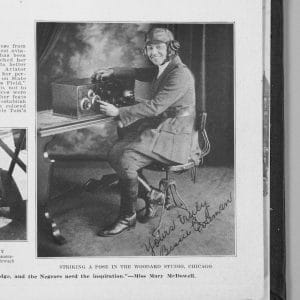
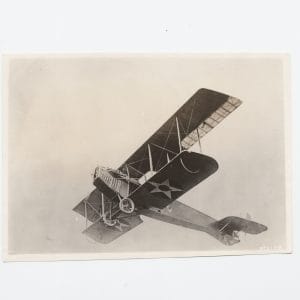
Willa Brown led a life of firsts, breaking several color barriers in aviation and politics. She was the first African American woman to earn her pilot’s license in the United States, and later became the first African American woman to run for Congressional office. In honor of Black History Month, read on to learn about this remarkable pilot, flight instructor, aircraft mechanic, and civil rights pioneer and her impact on aviation history.
Above photo: A young Willa Brown poses with aircraft in Chicago in the 30s (Public Domain Photo).
Willa Brown, Pioneering Aviator
EARLY LIFE AND AVIATION IN CHICAGO
Willa Beatrice Brown was born in Glasgow, Kentucky in 1906. Her parents moved the family to Indiana, where Willa excelled in school. She went on to graduate from what would later become Indiana State University and become the youngest teacher in the Gary, Indiana school system at age 21. Her love for teaching followed her throughout her entire life, but during the difficult years of the Great Depression, Brown also worked as a postal clerk, secretary, and lab assistant to support herself. In 1932, a position as a social worker with the Works Progress Administration would bring her to a city that was fast becoming the hub for black aviation in America—Chicago.
Brown was fascinated by aviation and by the legacy of another Chicagoan, Bessie Coleman, the first black woman to fly a plane. Though Coleman died tragically in an air accident in 1926, she had inspired the next generation of black aviators—among them John C. Robinson and Cornelius Coffey, who founded the Challenger Air Pilots Association for black pilots barred from other flying clubs as well as a flight instruction and ground school program at Harlem Field on Chicago’s southwest side.
Brown met Robinson in 1934 and joined the Challenger group shortly after, beginning her flight instruction with Robinson and Coffey as her teachers. It was a busy time for Brown, who was simultaneously studying to become a pilot, getting a Masters Mechanic Certificate from Curtiss-Wright Aeronautical University, and earning an MBA from Northwestern University.
When Brown earned her pilot’s license in 1937—airman’s certificate No. 43814—she became the first African-American woman to earn a U.S.-issued pilot’s license (her hero Bessie Coleman had been forced to get her license in France because American flight schools had not accepted women or African-Americans at the time).
AVIATRIX EXTRAORDINAIRE
Now equipped with a pilot’s license, the lifelong teacher set out to instruct more black fliers and mechanics and solidify a place for African Americans in the growing field of aviation. She would go on to teach about 2,000 students over the course of her instructor career. Along with Coffey (who she would later marry), Brown co-founded the Coffey School of Aeronautics in 1937 in the Chicago suburb of Oak Lawn. It was the first black-owned flight training school in the country, and unlike other flight schools of the era, it accepted students regardless of race or gender.
In addition to teaching flying and mechanical lessons, Brown also ran the business side of the school as well as the airfield’s luncheonette. In the words of her former student Chauncey Spencer, “Willa was persistent and dedicated. She was the foundation, framework, and builder of people’s souls. She did it not for herself, but for all of us.”
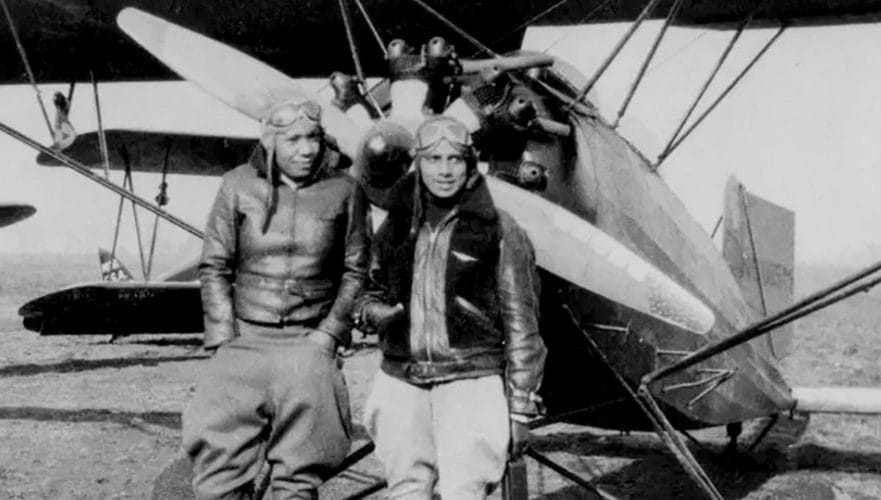
Lola Albright (left) and Willa Brown (right) pose in front of an airplane (Public Domain Photo).
The charismatic Brown worked to raise the Coffey School’s profile. To gain publicity for an airshow put on by the school, she visited the office of black-owned newspaper The Chicago Defender, where her confident manner and pilot’s uniform made quite an impact on editor Enoch Waters. “All the typewriters, which had been clacking noisily, suddenly went silent” when she entered, Waters claimed. Brown introduced herself as an “aviatrix” and told Waters all about the school’s work.
“Fascinated by both her and the idea of Negro aviators, I decided to follow up the story myself,” Waters later wrote. “So happy was Willa over our appearance that she offered to take me up for a free ride. She was piloting a Piper Cub, which seemed to me, accustomed as I was to commercial planes, to be a rather frail craft. It was a thrilling experience, and the maneuvers—figure eights, flip-overs, and stalls—were exhilarating, though momentarily frightening. I wasn’t convinced of her competence until we landed smoothly.”
With the press—and crowds of thousands of airshow spectators—thrilled by her and her students’ aerial abilities, Brown and her fellow aviators next set out to change the U.S. government’s attitude toward African American pilots.
FIGHTING FOR BLACK PILOTS IN THE MILITARY
The fight for African-American inclusion in the armed forces was an uphill battle, with black pilots still barred from serving in the 20s and 30s. A 1925 Army War College Report had called African-Americans “inferior” to their white counterparts when it came to serving in the military, and the discriminatory “findings” therein would go on to dictate Army leaders’ prevailing attitudes through the beginning of the Second World War.
While continuing to teach pilots in Chicago, Brown and Coffey co-founded the National Airmen’s Association of America in 1939 to help get more African-Americans involved in aviation and aeronautics on a national level; the group would eventually grow to over 2,000 members, with chapters across the Midwest and East Coast. Through both the NAAA and the Coffey School, Brown sought to convince the government to allow black aviation cadets to join and serve. Thanks to Brown’s growing profile and vocal support—and with the nation facing a pilot shortage on the brink of WWII—the Coffey School was chosen to train black pilots for a war-preparedness effort called the Civilian Pilot Training Program, with Brown serving as director and training coordinator.
As civil rights leaders continued to push for African American inclusion in the military, Brown wrote to none other than First Lady Eleanor Roosevelt for help. “During the past three years I have devoted full time to aviation, and for the most part marked progress has been made,” reads Brown’s letter, which you can read in its entirety here. “I have, however, encountered several difficulties—several of them I have handled very well, and some have been far too great for me to master.” The First Lady would go on to help remove some of the difficulties for black pilots that Brown alluded to, lobbying President Franklin Roosevelt to end restrictions on African-Americans serving in the military.
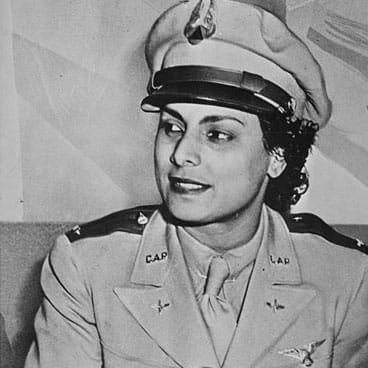
Lieutenant Willa Brown in her Civil Air Patrol uniform (Public Domain Photo).
When the Army Air Corps set up a training program for black pilots at the Tuskegee Institute in Alabama, the Coffey School was selected to provide trainees. Some 200 of Brown’s students would join that program and go on to become Tuskegee Airmen, the first African-American military pilots to take on the Nazis in Europe. Despite this amazing progress, black pilots were still only allowed to serve in segregated units, which disappointed Brown and Coffey.
During World War Two, Brown sought to serve more directly. She attempted to join the Women’s Airforce Service Pilots, but was rejected due to her race. Undeterred, she joined the Civil Air Patrol, which helped organize civilian aviation resources for the war effort. According to the National World War Two Museum, the group “flew missions in anti-submarine and border patrols and fulfilled much-needed courier services.” Brown was commissioned as a Lieutenant, becoming the Civil Air Patrol’s first African American officer.
Finally, in 1948, the dream of Brown, Coffey, and their fellow aviators was realized: President Harry Truman ordered all branches of the military to desegregate. It wouldn’t have been possible without the tireless and persistent advocacy of Willa Brown.
MORE FIRSTS
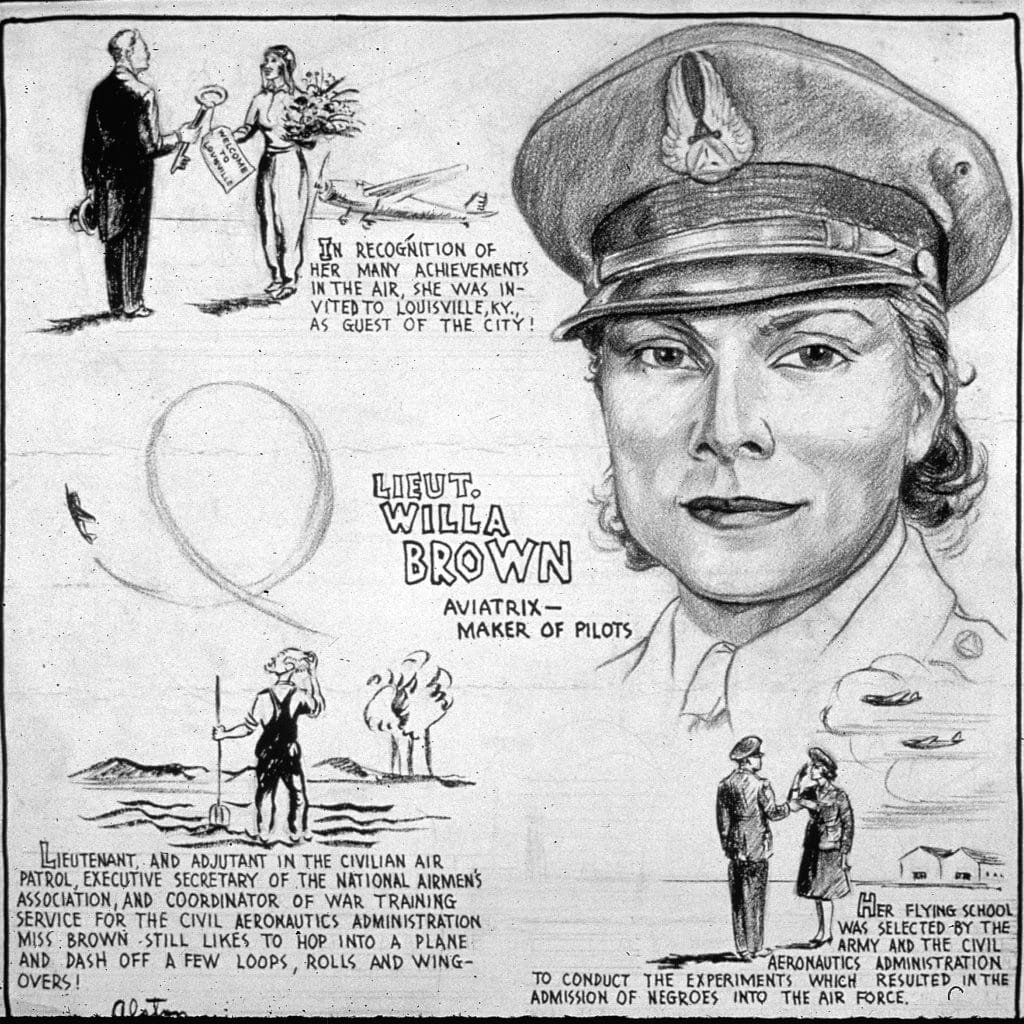
A drawing of Lt. Willa Brown by Harlem Renaissance artist Charles Henry Alston (Public Domain Photo).
Coffey and Brown would close their school and divorce shortly after the end of the war in 1945, but Brown wasn’t yet finished breaking barriers. In 1946, she became the first African American woman to run for Congressional office, running in the primary for the Illinois 1st Congressional District. She ran again unsuccessfully in 1948 and 1950, with part of her platform including the creation of a black-owned and operated airport in Chicago and improving opportunities for African Americans in general.
She continued to teach business and aeronautics in Chicago Public Schools until her retirement in 1971. In recognition of her pioneering work in aviation, the Federal Aviation Administration appointed her to their Women’s Advisory Board in 1972 as the first black woman to serve on that committee.
Brown continued to be a leading voice in the struggle for civil rights up until her death in 1992. She’s buried in Lincoln Cemetery, sharing a final resting place with her hero and fellow aviation pioneer Bessie Coleman.
READ MORE ABOUT BLACK HISTORY AND AVIATIOn
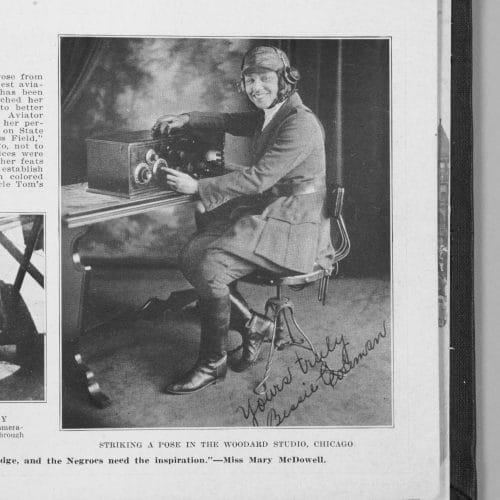
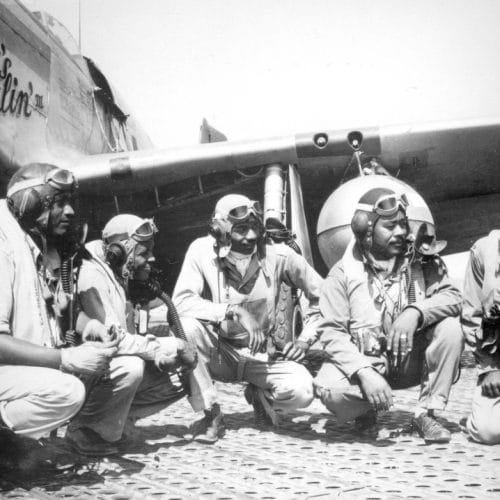
The Tuskegee Airmen were the United States’ first African-American military pilots. They flew missions against the Axis powers during WWII while simultaneously battling racism, bigotry, and intolerance from their own side. In honor of Black History Month, read on to learn about this highly decorated group of black combat aviation pioneers.
The Tuskegee Airmen: America’s First Black Combat Pilots
Origin and training
As war in Europe loomed on the horizon, the U.S. faced a pilot shortage. Black pilots were ready and willing to serve, but still faced barriers to admittance and training because the U.S. military was still a segregated force. When the government announced an experimental program to train civilian pilots for the military, prominent black newspapers, civil rights leaders, and the NAACP advocated for African American pilots to be included, but they ran into resistance.
Finally, in 1941, a Howard University student named Yancey Williams sued the War Department because the Army Air Corps had refused to admit him due to his race. This lawsuit opened up military aviation to African Americans to the first time-however, even though figures like Cornelius Coffey pushed for full integration and said they would “rather be excluded than to be segregated,” the Corps would only accept black pilots into all-black units. Now, black pilots came from all over the country for military training.
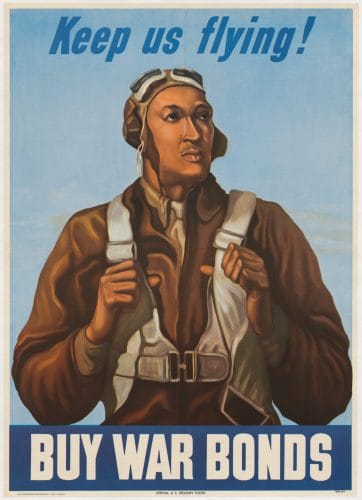
A 1943 poster created by the US Treasury Department during WWII depicting Robert W. Diez, an African American Tuskegee Airman, pleading for Americans to buy war bonds. (Collection of the Smithsonian National Museum of African American History and Culture)
The Army Air Corps soon established a training center for the black pilots at the Tuskegee Army Air Field in Tuskegee, Alabama. It was near the Tuskegee Institute (now Tuskegee University), the historic black school founded by Booker T. Washington, which had become one of the country’s centers for training black aviators. The Institute provided the facilities for the pilots and aircraft, while the Air Corps provided planes, uniforms, and educational material in addition to ground and flight training.
Five men graduated from the first class out of an original 13, including Captain Benjamin O. Davis, Jr., who was then one of the only two black officers in the entire military. Davis would go on to become the first black man to hold the rank of General in the U.S. Army-but before that, he was given command of the first all-black Air Corps unit, the 99th Pursuit Squadron.
The ‘Red Tails’ Go To Europe
The 99th shipped out to North Africa in 1943. The Allies had just pushed the Germans and Italians out of the continent and were preparing to invade Sicily and later mainland Europe. The Tuskegee Airmen’s first mission would be to bomb and strafe the small island of Pantelleria in between Sicily and Tunisia. Their missions over the enemy-held island would contribute to a historic feat-as Air Force Magazine notes, “the aerial offensive marked the first time in history that an enemy land force was compelled to surrender in the absence of an accompanying ground invasion.” Not long after, Tuskegee Airman Lt. Charles B. Hall became the first member of the squadron to down an enemy aircraft.
At this time, the squadron came under political pressure after its partnered white units complained about the 99th’s performance. Soon, publications like Time Magazine would publicly question their effectiveness. Davis traveled back to Washington, D.C., where he held a news conference at the Pentagon to speak up in defense of his unit. As the website We Are The Mighty writes, there was a lot the complainers had left out-like how the squadron was based further from the front lines than their white peers, excluded from mission briefings, and made to fly older P-40 Warhawk fighters that were slower than German planes. This episode was indicative of the prejudice the unit would regularly face.
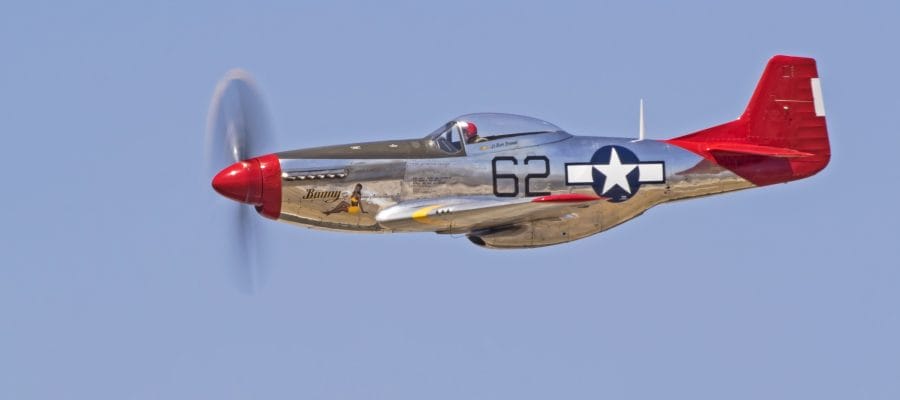
A P-51 Mustang featuring the Tuskegee Airmen’s famed “Red Tails” livery, at an air show in California in 2017. (iStockphoto)
When the 99th was sent back to Italy, they became part of the all-black 332nd Fighter Group. The 332nd was made up of three more squadrons of Tuskegee graduates, the 100th, 301st, and 302nd. These units began flying the famed P-51 fighter, painting the tails and nose cones red-leading to the unit’s nickname, the “Red Tails.” While fighting in Italy, the Tuskegee Airmen helped provide air cover for the Allied landings at Anzio, Italy, and provided safe escort for the lumbering bomber aircraft of the 15th Air Force. The 99th would receive two Presidential Unit Citations for their distinguished performance in the Italian theater. Among their incredible accomplishments was the sinking of a German naval destroyer in the harbor at Trieste, Italy; According to the National Museum of the Tuskegee Airmen, 302nd Fighter Squadron Lt. Gynne Pierson sank the large ship using only his plane’s machine guns.
Late in the war, in March of 1945, the 332nd was flying a bomber escort when they encountered German fighters utilizing brand-new jet engines. Despite being outmatched by the new technology, the Tuskegee Airmen managed to down three of the jets and damage five more without losing any aircraft of their own. Incredibly, the Tuskegee Airmen units flew 200 of 205 of these types of escort missions without the loss of a single bomber.
‘Fighting Two Wars’
As the Tuskegee Airmen National Historical Museum states on its website, “These airmen fought two wars-one against a military force overseas and the other against racism at home and abroad.” They fought for what many called “The Double V Victory,” victory against both fascism and racism. At the time, the racism they faced was institutionalized; much of the military establishment, for example, still believed the results of a 1920s War Department report stating “that blacks weren’t intelligent or disciplined enough to fly a plane.” The Tuskegee pilots underwent training in areas of the country plagued by deeply rooted racism. Tuskegee Airman Connie Nappier told Connecticut Explored that, while attending basic training in Biloxi, Mississippi, one fellow cadet was found killed after he went into town alone and didn’t come back.
When the War Department ordered recreational facilities on military bases to be desegregated, Tuskegee Airmen tested the new policy via nonviolent action. In an incident known as the Freeman Field Mutiny, over 100 black officers were arrested for trying to enter the all-white officers’ club at Freeman Field in Indiana after they had been ordered to stay out. Future Supreme Court Justice Thurgood Marshall defended some of the officers charged. It took fifty years for the government to officially clear several of the Tuskegee Airmen’s military records of this incident.
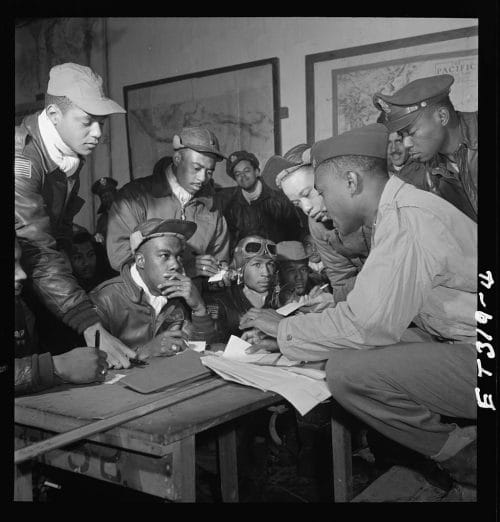
Several Tuskegee Airmen attend a mission briefing in Ramitelli, Italy in March 1945. (Wikimedia Commons/Toni Frissell collection at the Library of Congress)
Chief Master Sgt. of the Air Force George Porter, who served in WWII as a Tuskegee Airman aircraft mechanic, told NPR that racial prejudice made it harder to do his job-“because when we would order parts, they wouldn’t send us the parts, but we learned how to repair our own parts.” Another Tuskegee Airman, Walter Suggs, said many commanders expected the program to fail, saying “they kind of put them in that situation, the Afro-Americans, so they would fail.”
After the war, the pilots who had served in Tuskegee Airmen units still fought for acknowledgement. In 1949, the Tuskegee Airmen of the 332nd Fighter Group won the newly formed U.S. Air Force’s inaugural “Top Gun” gunnery competition, a feat for which Military.com notes they weren’t recognized for decades.
Legacy
According to the Tuskegee Museum, a total of 992 pilots graduated from the program at Tuskegee Army Air Field between 1942 and 1946, while History.com notes the program also trained “nearly 14,000 navigators, bombardiers, instructors, aircraft and engine mechanics, control tower operators and other maintenance and support staff.”
During the war, Tuskegee Airmen flew a total of 1,578 missions and 15,553 combat sorties, downed 112 enemy aircraft, and knocked out nearly 1,000 rail cars, significantly damaging the German war effort. They lost 66 pilots killed in action or in accidents and 84 pilots killed in training and non-combat missions. During the war, 32 Tuskegee Airmen were taken prisoner. The unit was highly decorated with 744 air medals, including 150 Distinguished Flying Crosses, one Silver Star, fourteen Bronze Stars, and eight Purple Hearts.
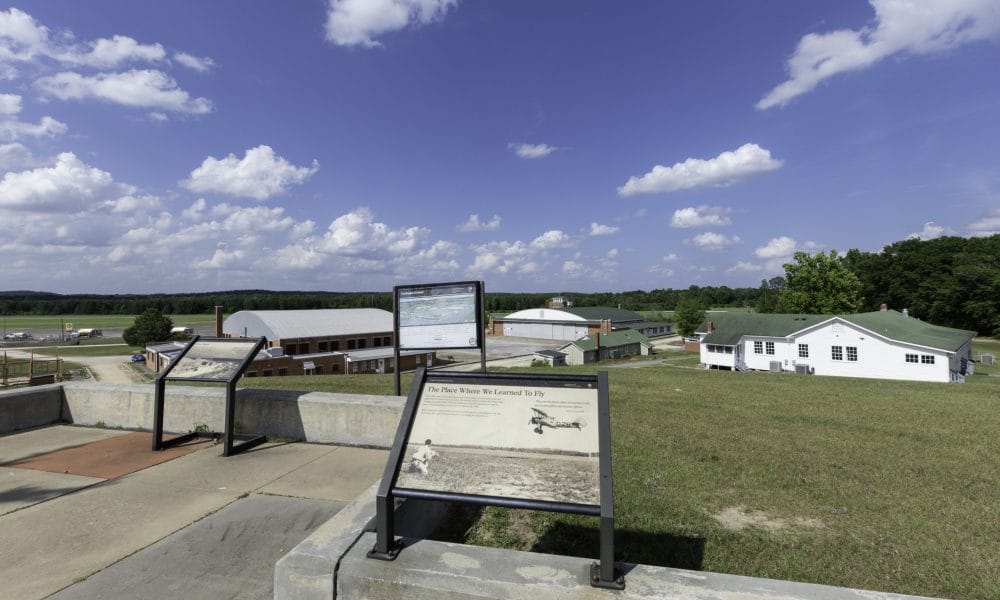
Historic story markers placed at the observation deck on the hill overlooking Morton Field at the Tuskegee Airmen National Historic Site in eastern Alabama. (iStockphoto)
The combat record and civil rights advancements made by the Tuskegee Airmen had an impact on President Truman’s 1948 order to desegregate the military. Lt. Roger Terry, one of the officer charged in the “Freeman Field Mutiny,” said the Tuskegee Airmen’s struggle helped pave the way for those who came after. “We feel-and I think I speak for most of the guys-that it was our advantage that we gave to the Negro people, that there would be no discrimination in the Army Air Force from that time on-at least officially.”
After the war, four Tuskegee Airmen became generals, and many went on to become leaders in business and aviation. When the Army Air Corps became the U.S. Air Force, a new branch of the military, the veteran fliers of the Tuskegee Airmen units were in high demand.
The Tuskegee Airmen’s former training center at Moton Field in Tuskegee, Alabama is now a National Historic Site. In 2008, surviving Tuskegee Airmen attended the Inauguration of President Barack Obama, who has written that “My career in public service was made possible by the path heroes like the Tuskegee Airmen trail-blazed.”
READ MORE ABOUT BLACK HISTORY AND AVIATION
BESSIE COLEMAN, THE FIRST BLACK WOMAN TO EARN A PILOT’S LICENSE