The Monaco Yacht Show gathers roughly 120 of the world’s largest superyachts stern-to in a single harbor, in a principality that has no airport of its own. The 35th edition runs 23–26 September 2026 at Port Hercule, drawing owners, buyers, brokers, and shipyard principals found nowhere else on the calendar.
For a US-based Private Client, the show presents unique travel considerations. Every serious attendee wants the same September days, Riviera airspace, and list of aircraft capable of crossing the Atlantic. The people who land on time and on schedule secured their aircraft, airport slots, and transfers months ago.
What is the Monaco Yacht Show and Who Attends?
Port Hercule in Monaco hosts the Monaco Yacht Show, a superyacht exhibition, every September. Founded in 1991, the show presents around 120 large yachts in the water each year. The 2025 edition drew 29,956 visitors and 564 exhibitors over four days. The on-water fleet numbered 116 yachts, averaging roughly 155 feet in length.
The 2025 show presented around 120 superyachts — close to half of them world premieres — alongside 60 tenders. The audience is narrow and serious. Current owners weighing their next build, buyers touring the market in an afternoon, and the brokers, designers, and shipyards who close business here. Attendance is a working trip for most of them. That is exactly why the arrival cannot be left to chance.
Why Getting to Monaco Is a Planning Problem, Not a Travel Problem
Monaco has no airport. The nearest terminal for private jets is Nice Côte d’Azur (LFMN), under 20 miles up the coast. This means that every attendee funnels through the same regional airspace during the same week. A helicopter covers that distance into Monaco in about seven minutes. The distance is trivial. The competition for slots, handling, and the right aircraft is not.
Show week compresses demand across the entire French Riviera. Aircraft that could be repositioned casually in July become scarce in late September. The transatlantic-capable jets most US Clients need are the first to book out. Treating the trip as a same-week errand is the mistake.
Where You Land: Nice, Cannes, and the Transfer Into Monaco
Nice Côte d’Azur (LFMN) is the practical gateway. The FBO capacity and customs infrastructure is equipped to clear an international arrival efficiently. An FBO, or fixed-base operator, is the private terminal that handles your aircraft, crew, and ground logistics away from the commercial concourse. From LFMN, a helicopter transfer covers the coast into Monaco in about seven minutes, the fastest way to reach Port Hercule without touching Riviera traffic.
Cannes-Mandelieu (LFMD) is the secondary option, closer to the western Riviera and useful when Nice slots tighten during peak week. It handles smaller cabins well but has runway and aircraft-size limits that matter for heavy jets arriving from the US. The choice between them is an operational one, made against the specific aircraft, slot availability, and your onward transfer. For a deeper look at the routing and ground options, our guide to flying private to Monaco covers the airports and transfers in detail.
Choosing the Right Aircraft for a Transatlantic Mission
A Monaco arrival from the US is a long-range mission first and a Riviera trip second. From the Northeast, a nonstop from Teterboro (KTEB) or Boston Logan (KBOS) to Nice (LFMN) calls for a heavy or ultra-long-range jet with the legs to cross the Atlantic in a single hop. Cabin size, range, and crew planning are decided by the ocean, not by the short helicopter leg at the end.
Magellan Jets is an asset-light private aviation solutions provider. Because Magellan does not own aircraft, it sources each mission from the Magellan Jets Preferred Network. This means that you always have the proper aircraft for the trip, vetted from the safest and strictest network in the industry. Magellan Jets is the only private aviation solutions provider seated on the Air Charter Safety Foundation (ACSF) Board, and it holds WYVERN Wingman certification. These are safety standards that exceed federal requirements for Part 135 charter operations. Part 135 is the FAA rule set governing on-demand charter flights.
The Mistake First-Time Attendees Make: Booking Too Late
First-time attendees treat the trip to Monaco like a domestic hop they can arrange a few weeks out. Show week does not work that way. Slot controls and handling constraints at Nice (LFMN) and Cannes (LFMD) tighten as September approaches. Aircraft availability compresses across the region, and the transatlantic jets in demand are committed early. The later you decide, the shorter your list of real options becomes.
The reframing worth making is that scarcity is the point. A week this concentrated rewards the Private Client who commits early with the exact aircraft and timing they want, and quietly closes the door on everyone else. For Private Clients who return to Europe each year, a Jet Card answers the timing problem directly. It guarantees availability 365 days a year, with zero blackout dates, no peak-day surcharges, and coverage within Europe. Corporate groups traveling to Monaco for deal-making can coordinate multi-aircraft, same-day arrivals through Magellan Jets for Business.
Whether you fly once for the show or several times a year across the continent, the aircraft you secure is set by the calendar. Contact a Private Aviation Advisor to hold the right option before the September window closes.
What to Know Before You Fly to Europe
US travelers to the Schengen Area should confirm their entry requirements well ahead of departure. ETIAS, the European Travel Information and Authorization System, is a pre-travel authorization being introduced for visa-exempt visitors. Its rollout timing and specifics continue to be finalized. Treat it as a live item on your pre-trip checklist rather than a settled formality, and consult official EU guidance for current requirements before you travel.
Practical entry details matter as much as the flight. Your passport validity, the customs and immigration clearance handled at your FBO on arrival at Nice (LFMN), and your onward helicopter or ground transfer into Monaco all belong in the same plan. Coordinated end to end, these become quiet logistics rather than show-week surprises.
The Trip Is Won in the Calendar, Not the Cabin
The show concentrates a year of superyacht business into four September days, and the arrival that feels effortless was engineered long before wheels-up. The variable that decides your trip is not the aircraft type or the seven-minute helicopter leg. It is how early you commit, and whether the provider behind you can reach the right jet when every other attendee wants the same one.
That is the case for planning it with someone who does this for a living. Contact a Private Aviation Advisor to plan your Monaco Yacht Show arrival.
Frequently Asked Questions About the Monaco Yacht Show (FAQs):
When and where is the Monaco Yacht Show 2026?
The 35th edition of the Monaco Yacht Show runs 23–26 September 2026 at Port Hercule in Monaco. The event has been held every September since it was founded in 1991. Its 2025 edition drew 29,956 visitors and 564 exhibitors (SuperYacht Times, 2025).
Is there an airport in Monaco?
No. Monaco has no airport of its own. The nearest terminal for private jets is Nice Côte d’Azur (LFMN), under 20 miles away. Most attendees continue into Monaco by helicopter in roughly seven minutes.
How do you get from Nice to the Monaco Yacht Show?
A helicopter transfer from Nice Côte d’Azur (LFMN) reaches Monaco in about seven minutes. This is the fastest option during show week. Ground transfers by car are also available but take longer and depend on Riviera traffic. Your arrival terminal can coordinate the onward transfer.
How far in advance should you plan a private flight to the Monaco Yacht Show?
Plan months ahead rather than weeks. Show week compresses demand across the French Riviera, tightening airport slots and reducing the availability of transatlantic-capable aircraft. The earlier you commit, the more control you have over aircraft type and timing.
What aircraft do you need to fly from the US to Monaco?
A nonstop from the Northeast US to Nice (LFMN) requires a heavy or ultra-long-range jet with the range to cross the Atlantic in a single hop. The right choice depends on your departure point, passenger count, and schedule. A Private Aviation Advisor can match the aircraft to the mission.
Luxury travel experiences are curated itineraries built around privacy, access, and time. They open doors that money alone cannot. Private aviation makes them possible with discretion and precision. Magellan Jets has designed these journeys for Private Clients since 2008. The best luxury travel experiences start where commercial travel ends. This guide shows what defines them and how to book them.
What Defines a Luxury Travel Experience?
A luxury travel experience is defined by four qualities. Privacy comes first, with space that belongs only to you. Personalization shapes every detail around your preferences. Access unlocks places and moments that most travelers never reach. Time is the final measure, since it is the rarest asset of all. A true luxury travel experience protects all four at once.
Ordinary trips optimize for cost or convenience. These journeys optimize for outcome. Every choice reflects your priorities, not a fixed itinerary. That distinction is the foundation of everything that follows.
How Private Jet Travel Elevates a Luxury Trip
Private jet travel changes the entire arc of a journey. You reach smaller airports closer to your destination. That can save hours of ground transfer time. There are no commercial security lines to endure. You depart on your schedule, not an airline’s.
Multi-stop days become simple to arrange. Visit three cities before dinner if the plan calls for it. A dedicated Private Aviation Advisor designs each mission around your goals. A Client Experience team then coordinates every ground detail. Flying private differs from first class in kind, not degree.
Magellan Jets Journeys are curated points of inspiration, not fixed packages. Each one is fully customizable to your interests and schedule. The following journeys show what private aviation makes possible.
Wine Country (Napa Valley)
This Journey centers on an exclusive stay at the Howard Backen Estate. You gain private vineyard access rarely offered to visitors. Sommelier-led tastings guide you through the region’s finest labels. Private aviation places you near Napa without long connections. You arrive rested and ready for the first pour.
Above the Vines is a wine tasting conducted at altitude. Magellan Jets Sommelier Jesse Rodriguez leads the experience personally. He served as Head Sommelier at The French Laundry. He is also a two-time James Beard Semifinalist. The tasting begins on the tarmac and continues as you climb. Rodriguez shows how elevation shifts aroma, texture, and flavor. Only a private cabin makes this possible.
This Journey spans the Tetons, Yellowstone, and Big Sky. Private excursions take you deep into open wilderness. Refined lodges await you at the end of each day. Private aviation reaches regional airfields near these remote parks. You spend your time in the landscape, not in transit.
Chile stretches from Easter Island to Santiago to the Atacama Desert. Few destinations combine such distinct worlds in one country. The Atacama Desert is prized for its exceptionally clear night skies. Private aviation links these far-flung points without commercial layovers. Your itinerary flows as one continuous journey.
Paris opens through private fashion access and early-entry museum visits. Michelin-starred dining anchors each evening. Iconic accommodations place you at the center of the city. Private aviation lets you arrive on your own terms. You skip the crowds and step straight into the moment.
This fjord journey moves through Bergen, Flåm, and Oslo. Private cruises carry you along dramatic coastal waters. Scenic railways reveal Norway from a different vantage. Private aviation connects each stage on your schedule. The fjords unfold at your pace, not a timetable’s.
The Masters is golf’s most iconic tournament. This journey pairs private aviation with guaranteed access. Curated hospitality surrounds every round you attend. Demand around Augusta strains commercial options each spring. Private aviation removes that friction entirely.
Bandon Dunes offers every championship course on the Oregon coast. A luxury villa stay grounds the trip. Chef-curated dining completes each day. The resort sits far from major commercial hubs. Private aviation reaches its nearby airfield with ease.
This journey is a private-jet tour of legendary U.S. Ryder Cup courses. You play where history was made. Private aviation moves you between venues efficiently. Each course becomes a destination in its own right. The itinerary bends to your ambitions.
Luxury travel experiences fall into several distinct types. Experiential and bespoke trips build everything around your interests. Culinary and wine journeys center on rare tastings and chefs. Golf journeys grant access to iconic courses and tournaments. Adventure and wilderness trips reach remote, protected landscapes. Cultural journeys open museums, fashion, and heritage sites. Each type rewards travelers who value depth over checklists.
Why Private Clients Choose Magellan Jets
Magellan Jets is an asset-light private aviation solutions provider. The company owns no aircraft. Instead it sources each mission from the Magellan Jets Preferred Network. That network holds fewer than 100 rigorously vetted operators. This model keeps every recommendation aligned with the Client’s interest.
Safety leads the culture. Magellan Jets is the sole private aviation solutions provider on the ACSF Board. The company also holds WYVERN Wingman certification. Private Clients report a 4.9-out-of-5 satisfaction rating. Magellan Jets has flown Private Clients to over 100 countries.
Every Private Client works with a dedicated Private Aviation Advisor. A Client Experience team coordinates each journey with care. Availability is guaranteed 365 days a year. There are zero blackout dates and no peak-day surcharges. Explore the Jet Card for frequent travelers. Consider On-Demand Charter for occasional missions.
Frequently Asked Questions About Luxury Travel Experiences (FAQs):
What defines a luxury travel experience?
A luxury travel experience is defined by privacy, personalization, and access. It reaches places and moments most travelers cannot. It also protects your time at every stage. The measure is outcome, not cost or convenience.
What are the best luxury travel experiences to book with a private jet?
The best options pair rare access with efficient travel. Wine journeys in Napa Valley are a strong example. Golf journeys to The Masters or Bandon Dunes rank highly. Remote trips through Chile or the American West also stand out. Private aviation makes each one smoother to arrange.
What are the 5 C’s of luxury travel?
The 5 C’s are culture, cuisine, community, content, and customization. Culture and cuisine ground the destination in place. Community connects travelers to people and shared moments. Content and curation shape a considered itinerary. Customization tailors the entire journey to the individual.
Where do wealthy travelers vacation?
Wealthy travelers favor destinations with privacy and access. Napa Valley, Paris, and Norway are frequent choices. Remote regions like Chile and the American West draw many. Signature events such as The Masters attract others. The common thread is exclusivity and time well spent.
How does private jet travel enhance a luxury vacation?
Private jet travel reaches smaller airports near your destination. It removes commercial security lines and rigid schedules. Multi-stop days become simple to plan. A dedicated Private Aviation Advisor and Client Experience team handle the details. You spend more time on the experience itself.
What are the different types of luxury travel experiences?
The main types include experiential and bespoke journeys. Culinary and wine trips form another category. Golf journeys and adventure or wilderness travel are popular. Cultural journeys round out the list. Each type suits a different traveler’s priorities.
The right journey depends on your goals, your calendar, and your curiosity. Matching them takes a conversation, not a catalog. That is where a dedicated advisor earns their place. Talk to a Private Aviation Advisor to design your next journey.
There’s a reason people who fly private rarely go back to commercial travel. It’s not just about avoiding the airport. It’s about reclaiming something most travelers have accepted as lost: genuine control over every detail of their journey and an experience actually centered around you.
Private jet amenities are what make that possible: and they span far more than what you’ll find in a cabin. At Magellan Jets, the experience starts before you leave your driveway and extends well past wheels-down. Here’s what private aviation actually looks like when it’s done right.
Private Jet Amenities Begin Before You Board
The private jet experience doesn’t begin at the aircraft door: it begins the moment you reach out to your Private Aviation Advisor. Your Advisor takes the time to understand your trip: who’s traveling, what you need on board, how you prefer to work or rest in the air, and what would make the journey exceptional rather than merely comfortable.
That conversation shapes everything. The right aircraft, the right catering, and the right setup. The more detail you share, the more precisely your experience can be tailored.
Magellan Jets Private Clients also have access to the Private Client App, which centralizes bookings, passenger information, and in-flight requests in one secure place. It puts the full picture of your travel arrangements at your fingertips, without requiring back-and-forth calls or emails to confirm the basics.
Private Terminal Access
Flying private means bypassing commercial airports entirely. No security lines or crowded gates.
Instead, you arrive at a private terminal where access is controlled, foot traffic is minimal, and the environment is built around discretion. In many cases, you can drive directly to the aircraft, step out of your vehicle, and board. Magellan Jets designs every touchpoint so your time between leaving and arriving stays frictionless.
Magellan Jets clients departing from the Northeast have access to the company’s own private terminal in Bedford, Massachusetts, a purpose-built space that reflects the standard clients expect from the moment they arrive.
Ground Transportation
Getting to and from the aircraft shouldn’t add stress to a carefully planned trip. Magellan Jets can arrange ground transportation directly to your aircraft, coordinating the timing so your schedule stays intact. The logistics are handled, whether you’re heading to a critical meeting or starting a family vacation,
In-Flight Catering
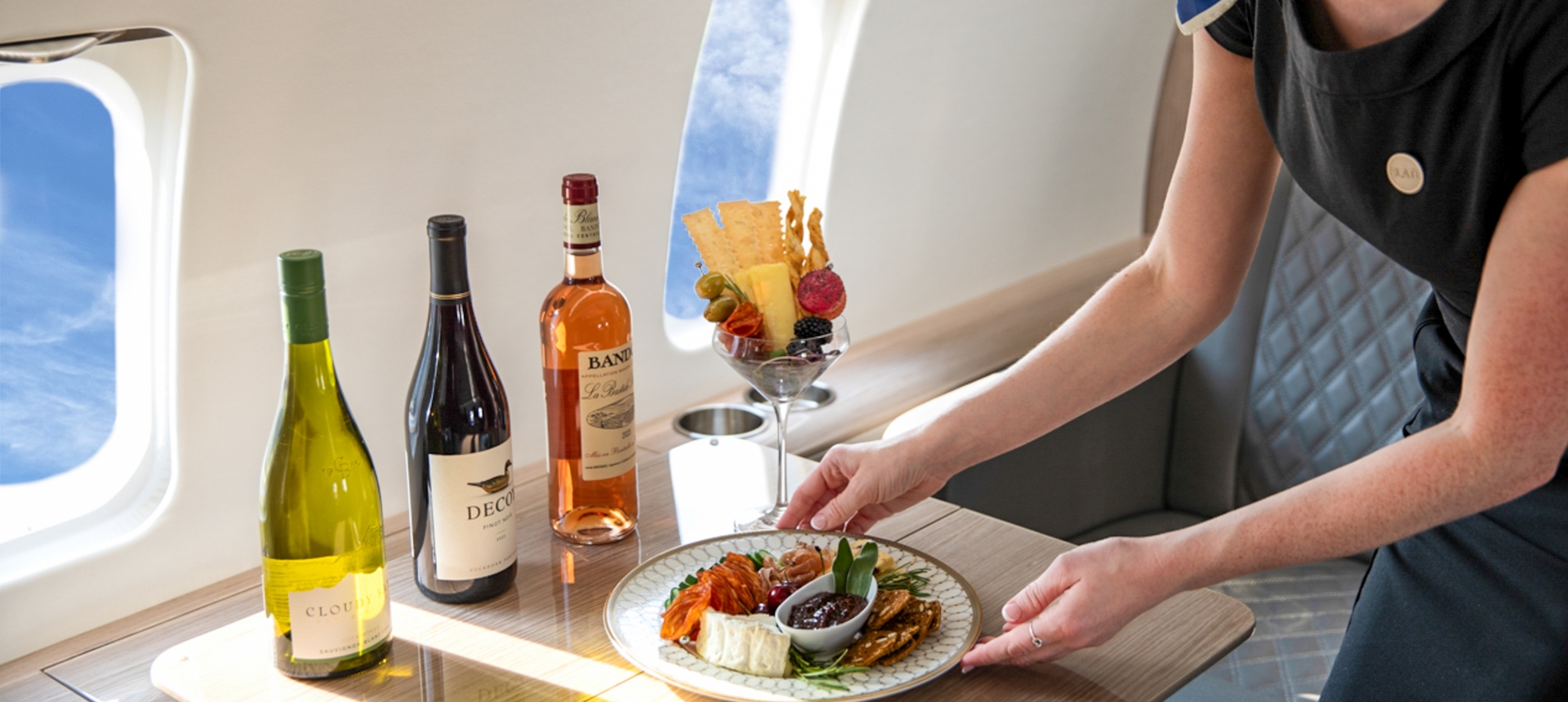
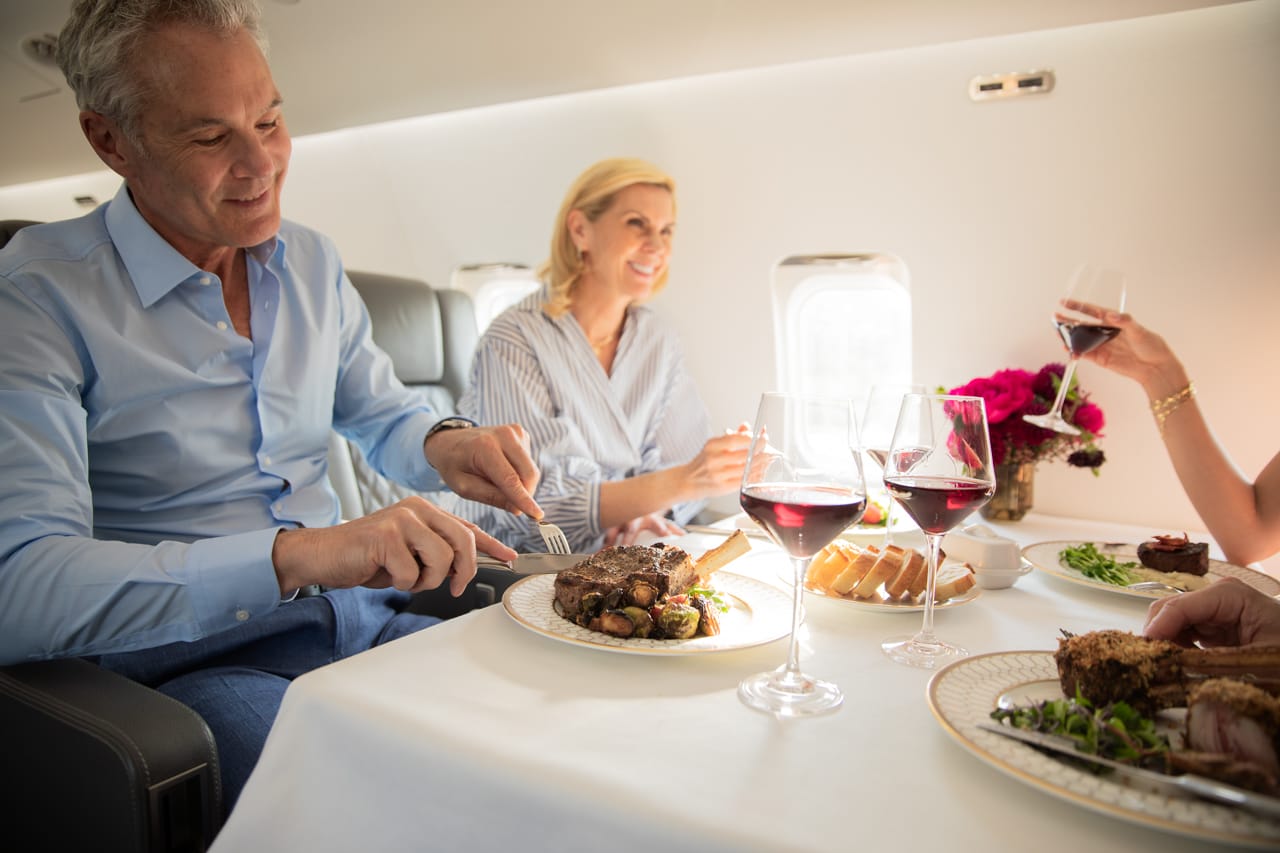
Food and beverage service on a Magellan Jets flight is built around your preferences, not a fixed menu. Your cabin can be stocked with exactly what you want: a light meal, a full multi-course spread, specific wines or spirits, or cuisine from a favorite restaurant near your departure city. The Client Experience team handles the details in advance, so everything is ready when you board.
Whether the trip calls for a working lunch or a celebratory dinner at altitude, the approach is the same: ask, and it’s handled. Learn more about Private Jet Catering.
Comfort and Cabin Configuration
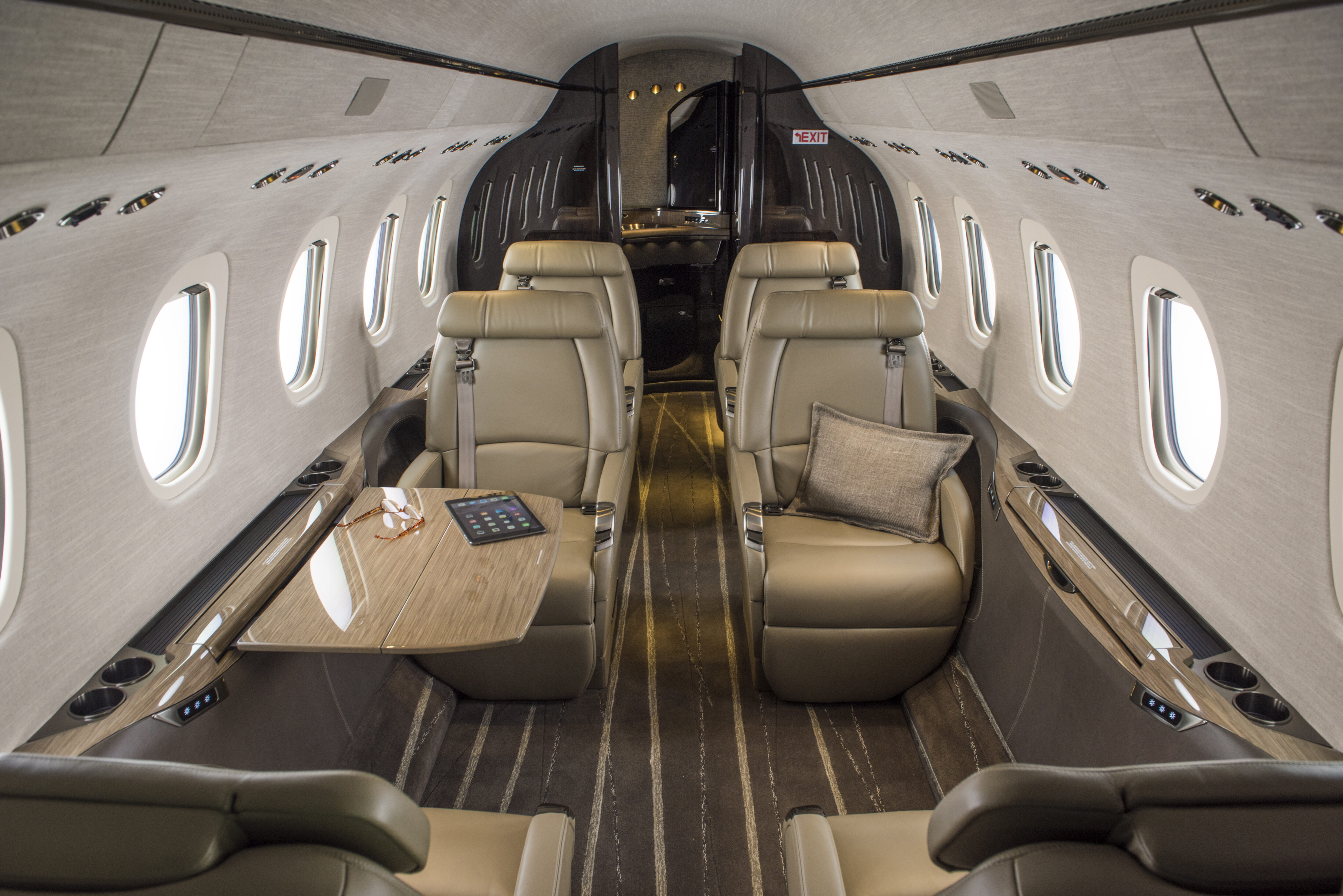
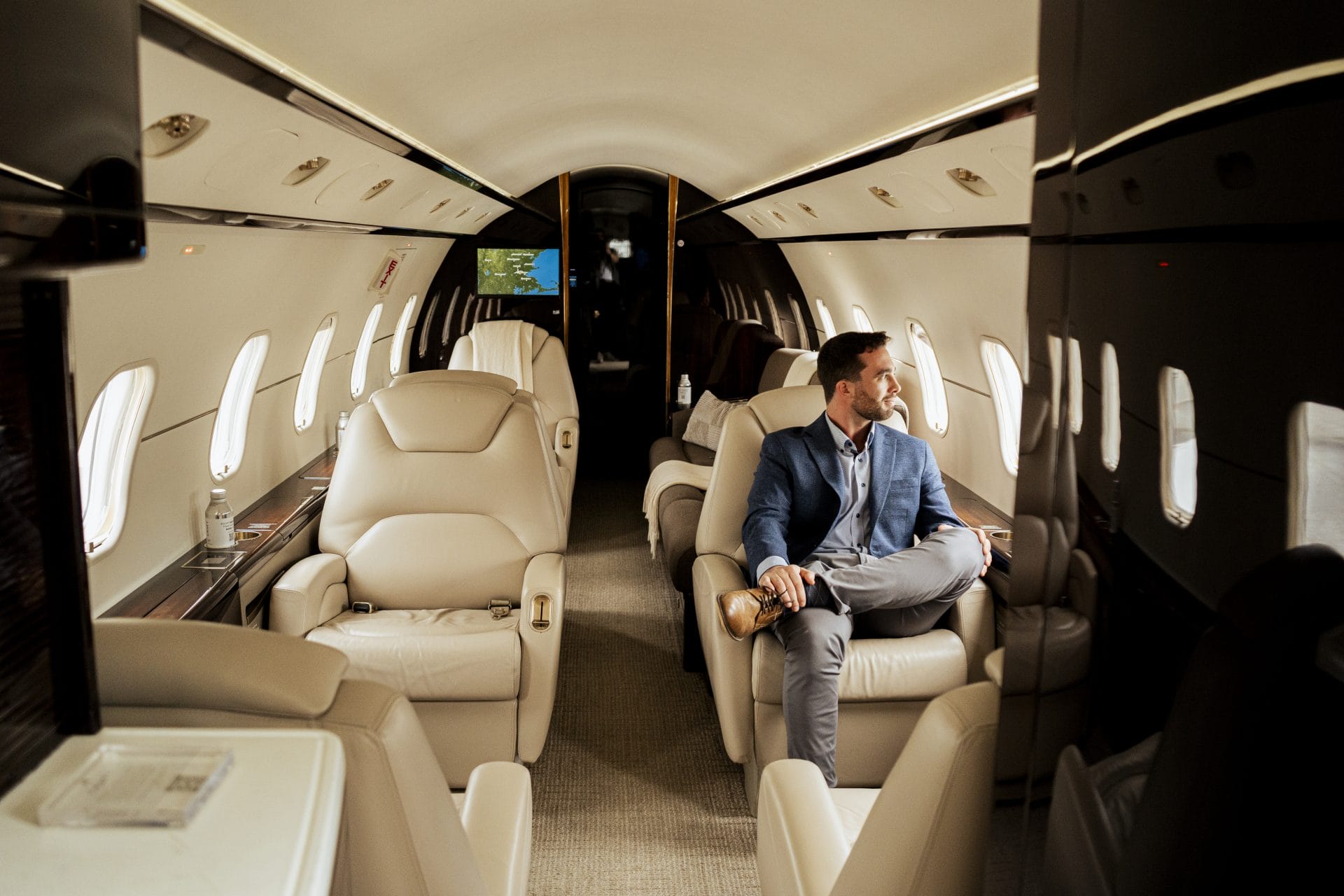
Private jet seating offers a fundamentally different experience than commercial aircraft. Seats are spacious, often adjustable in multiple directions, and designed for extended comfort on longer flights. Depending on the aircraft, you may be traveling in a configuration that feels closer to a well-appointed lounge than any airline cabin.
For longer-range flights, larger aircraft can include full lie-flat beds with quality linens, private suites, onboard showers, and dedicated business or lounge areas. Magellan Jets matches every aircraft to the journey. A short domestic hop calls for a different configuration than a transatlantic crossing, and your Private Aviation Advisor makes sure the right aircraft pairs to the right trip.
Cabin pressure and noise levels on private aircraft are also meaningfully different from commercial jets. Lower cabin altitude and quieter environments reduce fatigue on long flights, making it easier to arrive rested and ready.
Connectivity and Onboard Technology
Many private aircraft offer high-speed Wi-Fi, satellite phone capability, and telecommunications setups that support real working conditions in the air. Pull-out work tables, large displays, and quiet cabins make it possible to hold meetings, review documents, or close deals mid-flight without the compromises of a commercial business class seat.
Many aircraft support streaming entertainment, and larger jets let you adjust temperature by zone; handy when your group has different preferences.
Onboard Experiences
Travel often runs up against the occasions that matter most. Magellan Jets can arrange onboard experiences that mark those moments (anniversary dinners, birthday celebrations, milestone trips) so the journey itself becomes part of the memory. Your Advisor can coordinate flowers, specific champagnes, personalized setups, or whatever the occasion calls for.
How to Access These Amenities
Magellan Jets offers several ways to fly, each designed around a different set of travel needs:
Jet Cards offer prepaid access to private aviation with guaranteed availability, fixed hourly rates, and no exposure to peak-day surcharges or repositioning fees. Jet Card owners receive a dedicated Private Aviation Advisor, consistent aircraft standards, and access to the full range of in-flight amenities.
On-Demand Charter is available for individual trips with no long-term commitment. It’s the right entry point for clients who want to experience private aviation for a specific journey or who travel privately on an occasional basis.
Your Private Aviation Advisor can walk through which structure fits your travel frequency, destinations, and preferences and can adjust as your needs evolve.
The Magellan Jets Standard
Magellan Jets holds every flight detail to a consistent standard. The ethos of our company since 2008 has been that Every Journey is Personal. We purposefully select aircraft to match the specific needs of each trip. Cabins are configured and stocked before you arrive. The Client Experience team handles requests proactively, so nothing falls through the cracks between booking and boarding.
A Different Kind of Travel
Private aviation isn’t simply a faster or more comfortable version of commercial travel. It’s a different model entirely where the journey is built around you rather than the other way around.
At Magellan Jets, that principle runs through everything: how trips are planned, how aircraft are selected, how cabins are configured, and how every detail between departure and arrival is managed. The goal is simple: your time is valuable, your preferences matter, and your experience should reflect both. When you’re ready to explore what private aviation looks like for your specific needs, your Magellan Jets Advisor is the right place to start.
Frequently Asked Questions About Private Jet Amenities
What amenities do private jets have?
Private jet amenities include FBO (private terminal) access, personalized catering, high-speed Wi-Fi, lie-flat seating or full beds and showers on larger aircraft, onboard entertainment, and a dedicated crew focused entirely on your group.
How is private jet catering different from commercial airline food?
You specify everything in advance. The exact meals, beverages, and table setup you want and the cabin is stocked and ready when you board. There’s no menu, no cart, and no running out of options.
Do private jets have Wi-Fi?
Most modern private jets offer high-speed Wi-Fi via Gogo or Starlink, though quality varies by aircraft. Your Magellan Jets Advisor can confirm connectivity specs before you book. Compare aircraft wifi here.
What’s the difference between private jet amenities on different aircraft sizes?
Light jets cover the basics: comfortable seating and catering. They do not always have wifi. Large-cabin and ultra-long-range jets add full lie-flat beds, onboard showers, private suites, and multi-zone climate control.
Do private jets have bedrooms?
Large-cabin and ultra-long-range private jets often include dedicated sleeping areas, ranging from fully flat beds with linens to private suites with queen-size beds and privacy doors. Some configured aircraft also include separate bedroom compartments with their own temperature controls and entertainment systems.
Are private jet amenities included in the cost of the flight?
It depends on how you fly. Your Magellan Jets Jet Card tier determines which amenities are included. The Premium Card covers fuel, de-icing, catering, Wi-Fi, and repositioning fees, while the Category Card prices most of these as add-ons. Our Premium Card bundles more than the Category Card. On charter flights, amenities are not guaranteed and are typically priced as add-ons. Your Private Aviation Advisor walks you through exactly what’s included before you book.
How do private jet amenities compare to first-class commercial travel?
First class is still a shared aircraft with fixed menus and scheduled departures. Flying private means your schedule, your cabin configuration, your catering, and a crew focused solely on your party.
What should I ask about amenities when booking a private jet?
Ask about catering capabilities, Wi-Fi setup, galley size, and sleeping arrangements. A Magellan Jets Advisor will raise these proactively, but knowing your priorities makes it easier to get the right aircraft quicker.
Air travel can be tough on the body. Even short flights can disrupt sleep, strain hydration, and elevate stress hormones. Over time, these effects compound and impact energy, cognition, and recovery.
Private aviation gives you control over the variables that matter most to long-term health: timing, environment, nutrition, and stress. With Magellan Jets’ premium private aviation solutions, that control becomes precise and personalized, allowing you to travel in a way that supports performance and longevity.
Why Private Aviation Aligns with Modern Longevity Science
Longevity research continues to highlight a few core principles: protect sleep, reduce chronic stress, maintain metabolic stability, and support cellular recovery. Traditional air travel often works against each of these.
Private aviation allows you to reverse that dynamic.
Lower cabin altitude and higher oxygen saturation help reduce fatigue and oxidative stress, which researchers link to aging at the cellular level.
Flexible scheduling allows you to stay aligned with your circadian rhythm, a critical driver of hormone balance, immune function, and cognitive clarity.
Reduced environmental stressors, including noise, crowd density, and unpredictability, help regulate cortisol levels.
Customized cabin conditions give you control over lighting, temperature, and nutrition, all of which influence recovery and performance.
Magellan Jets enhances this experience through a highly controlled and personalized travel environment, allowing you to move seamlessly from arrival to takeoff without the typical congestion of commercial travel. This streamlined process reduces one of the most overlooked factors in health: cumulative stress exposure.
1. Hydration as a Cellular Priority
At altitude, low humidity accelerates fluid loss. Even mild dehydration can reduce focus, impair circulation, and increase fatigue.
Research shows that proper hydration supports mitochondrial function and helps regulate inflammation: two key pillars of longevity.
How to optimize hydration in-flight:
Drink electrolyte-balanced water before and during your flight
Choose mineral-rich beverages to support cellular hydration
Eat water-dense foods like citrus, cucumber, and berries
Limit alcohol and caffeine, which increase fluid loss
With private aviation, you can pre-select hydration protocols that match your physiology and preferences.
2. Nutrition That Supports Metabolic Health
Food choices during travel directly impact blood sugar, inflammation, and energy levels. Heavy or processed meals often lead to sluggishness and disrupted sleep.
Magellan Jets allows you to fully customize in-flight dining, making it easy to align meals with performance goals.
Best practices for in-flight nutrition:
Prioritize lean protein and healthy fats for sustained energy
Include polyphenol-rich foods like berries, leafy greens, and nuts to combat oxidative stress
Avoid highly processed or high-sodium meals
Consider anti-inflammatory or plant-forward menus to support digestion
These choices help stabilize glucose levels and maintain steady energy throughout your journey.
3. Protecting Your Circadian Rhythm
Circadian rhythm governs sleep, metabolism, hormone release, and cognitive function. Disruption, especially from travel, has been linked to accelerated aging and reduced resilience.
Private aviation allows you to stay aligned.
Strategies to maintain circadian balance:
Schedule departures that match your natural sleep-wake cycle
Adjust cabin lighting to mimic daylight progression
Use blue light strategically to stay alert or wind down
Build a consistent pre-sleep routine, even in-flight
By controlling timing and light exposure, you support deeper sleep and faster recovery.
4. Movement and Circulation
Long periods of inactivity can impair circulation and reduce oxygen delivery throughout the body. Even subtle movement can significantly improve how you feel during and after a flight.
Incorporate light resistance tools to activate muscles
Private cabins provide the space to move comfortably, which supports vascular health and reduces stiffness.
5. Optimizing Your Environment
Your surroundings influence everything from respiratory comfort to mental clarity. Small adjustments can have a measurable impact.
Enhance your cabin environment:
Maintain balanced humidity levels when possible
Use subtle aromatherapy like lavender for relaxation or peppermint for focus
Wear breathable natural fabrics to regulate temperature
Minimize artificial stimuli to reduce sensory fatigue
These details create a more restorative travel environment.
6. Managing Stress for Long-Term Health
Chronic stress contributes to inflammation, immune suppression, and accelerated aging. Travel often amplifies these effects through unpredictability and time pressure.
Private aviation removes many of these stressors.
Simple ways to stay centered while flying:
Practice breathing techniques during takeoff and landing
Listen to curated audio that supports relaxation or focus
Use the quiet environment to think, reflect, or disconnect
Limit digital overload to reduce cognitive fatigue
Magellan Jets’ frictionless experience helps maintain a calm, controlled mindset from start to finish.
7. Build a Personalized Travel Wellness Kit
Preparation enhances consistency. A well-designed kit ensures you maintain your routine wherever you go.
Essentials to include:
Hydration support (electrolytes, reusable bottle)
Targeted supplements such as magnesium or adaptogens
Blue light-blocking glasses
Skincare for hydration and barrier protection
Nutrient-dense snacks for steady energy
Consistency across environments is one of the most powerful drivers of long-term health.
8. Recovery After Landing
What you do after you land matters just as much as the flight itself. Recovery habits help reset your system and prepare you for what’s next.
Post-flight recovery strategies:
Rehydrate immediately with mineral-rich fluids
Get natural light exposure to reinforce circadian alignment
Engage in light movement, such as walking or stretching
Prioritize high-quality sleep within the first 24 hours
These steps help reduce jet lag and restore equilibrium quickly.
Travel With Intention. Arrive Performing at Your Best.
Private aviation is no longer just about efficiency. It’s about control, precision, and performance. When you remove unnecessary stress and align travel with how the body actually functions, you create a better experience: one that supports both immediate performance and long-term health.
Frequently Asked Questions About Private Travel and Longevity (FAQs):
Is flying private healthier than flying commercial?
Private aviation offers more control over factors that impact health. These include cabin conditions, scheduling, and environmental stress. Together, these reduce fatigue, support hydration, and help maintain circadian rhythm.
Does cabin altitude really affect how you feel?
Yes. Lower cabin altitude improves oxygen availability in the blood. This can reduce fatigue, headaches, and cognitive decline during and after a flight.
How does private aviation help with jet lag?
Flexible scheduling allows you to align flights with your natural sleep cycle. Combined with controlled lighting and reduced stress, this helps maintain circadian rhythm and minimizes jet lag.
What should I eat when flying to maintain energy?
Focus on lean proteins, healthy fats, and antioxidant-rich foods. Avoid heavy, processed meals that can disrupt digestion and energy levels.
How can I stay hydrated during a flight?
Drink electrolyte-enhanced water consistently throughout the journey. Pair fluids with water-rich foods and limit dehydrating beverages like alcohol.
Can private aviation support long-term health goals?
Yes. By aligning travel with key health principles (sleep, hydration, nutrition, and stress management) private aviation helps maintain consistency, which is essential for long-term well-being.
Which exercises can help me stay active during a private flight?
Performing gentle stretches and short walks in the aisle promotes healthy circulation for prolonged flights. Additionally, simple seated exercises like ankle rolls and shoulder rolls help reduce stiffness and maintain comfort.
Flying at 40,000 feet transforms more than the view; it changes how you experience every sip. As Magellan Jets Sommelier Jesse Rodriguez explains, “when you taste at elevation, your sense of smell and your sense of taste augments.”
This shift is precisely why curating the right wine for your journey matters. At altitude, lower cabin humidity and air pressure can mute certain aromas while intensifying others. A wine that tastes perfectly balanced on the ground may feel overly tannic or fall flat above the clouds.
To ensure every moment of your journey is exceptional, Jesse has curated three personal recommendations. These wines will truly elevate your experience above the clouds.
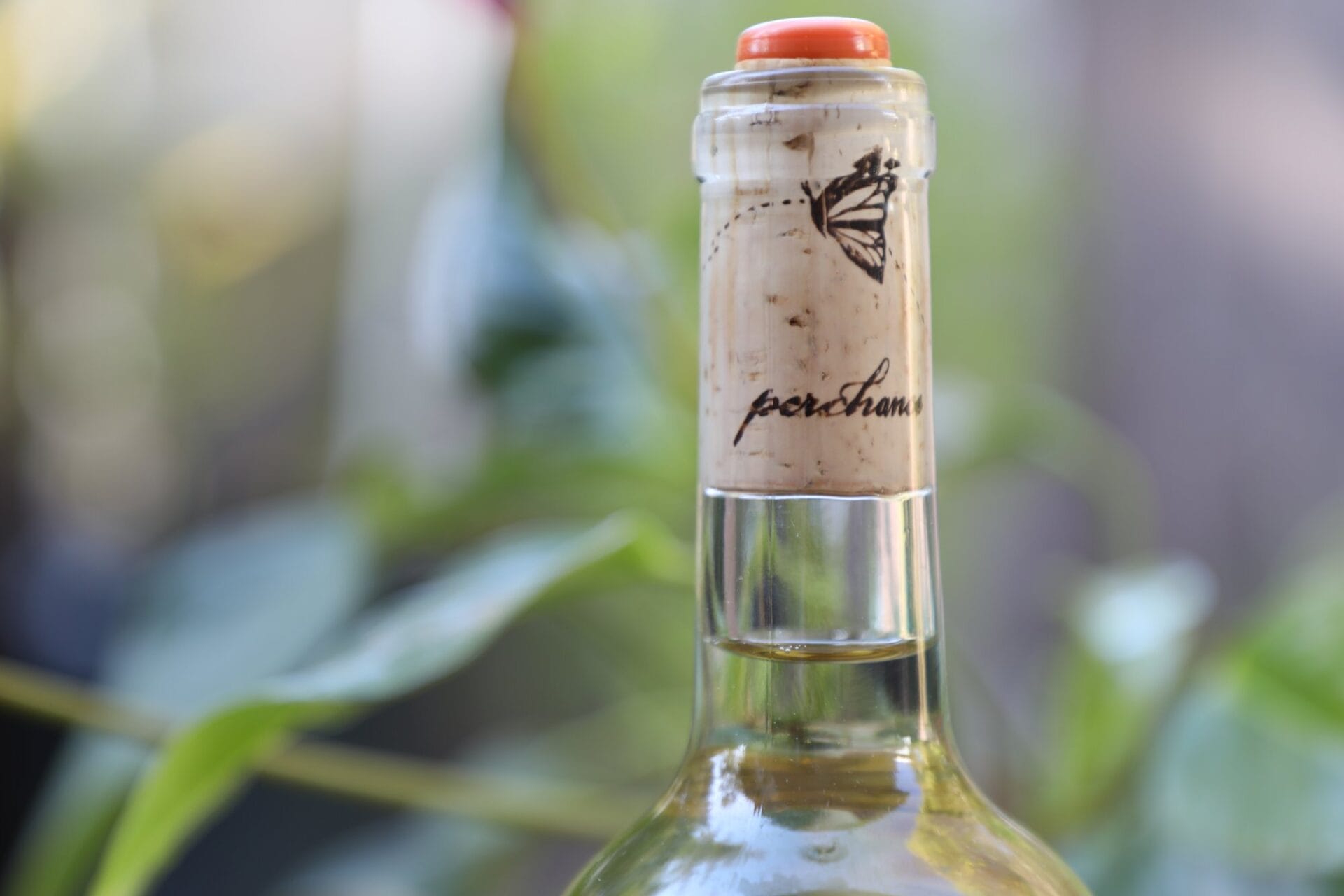
1. Perchance Chardonnay — Beckstoffer Lake Vineyard
“I always think of creamsicle, lemon meringue pie. Really beautiful. Just nostalgic. Childhood memories.” — Jesse Rodriguez
This Napa Valley Chardonnay from Perchance captures comfort and elegance in equal measure. From the famed Beckstoffer Lake Vineyard, the wine delivers bright citrus and soft vanilla tones that come alive in the pressurized cabin environment. The creamy texture and balanced acidity make it a perfect first pour once you reach cruising altitude at 40,000 feet, where these characteristics perform exceptionally well against dulled taste perception. Familiar yet refined, like a taste of California sunshine in the sky.
2. Marcel Lapierre Morgon — Côte du Py
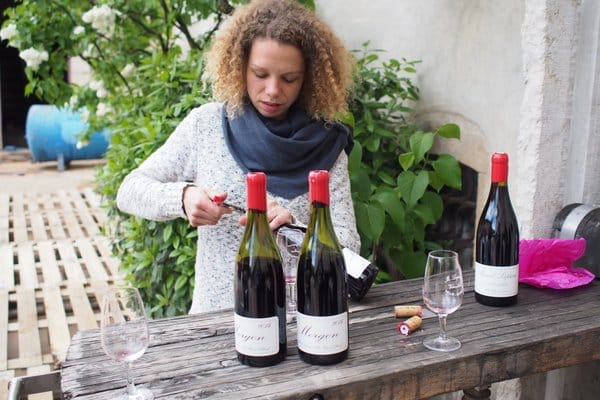
Photo from wineanorak.com
For red wine lovers, Jesse recommends Marcel Lapierre’s Morgon, a benchmark Beaujolais made from Gamay grapes grown in the revered lieu-dit Côte du Py. This high-elevation vineyard produces wines that are simultaneously playful and complex. At 40,000 feet, its bright fruit and soft tannins remain expressive despite the cabin’s lower humidity and pressure, offering a joyful, sensory reminder of simpler times.
It’s an ideal choice for afternoon cruising or pairing with lighter in-flight fare like roasted chicken, charcuterie, or artisanal cheeses that complement its vibrant fruit profile.
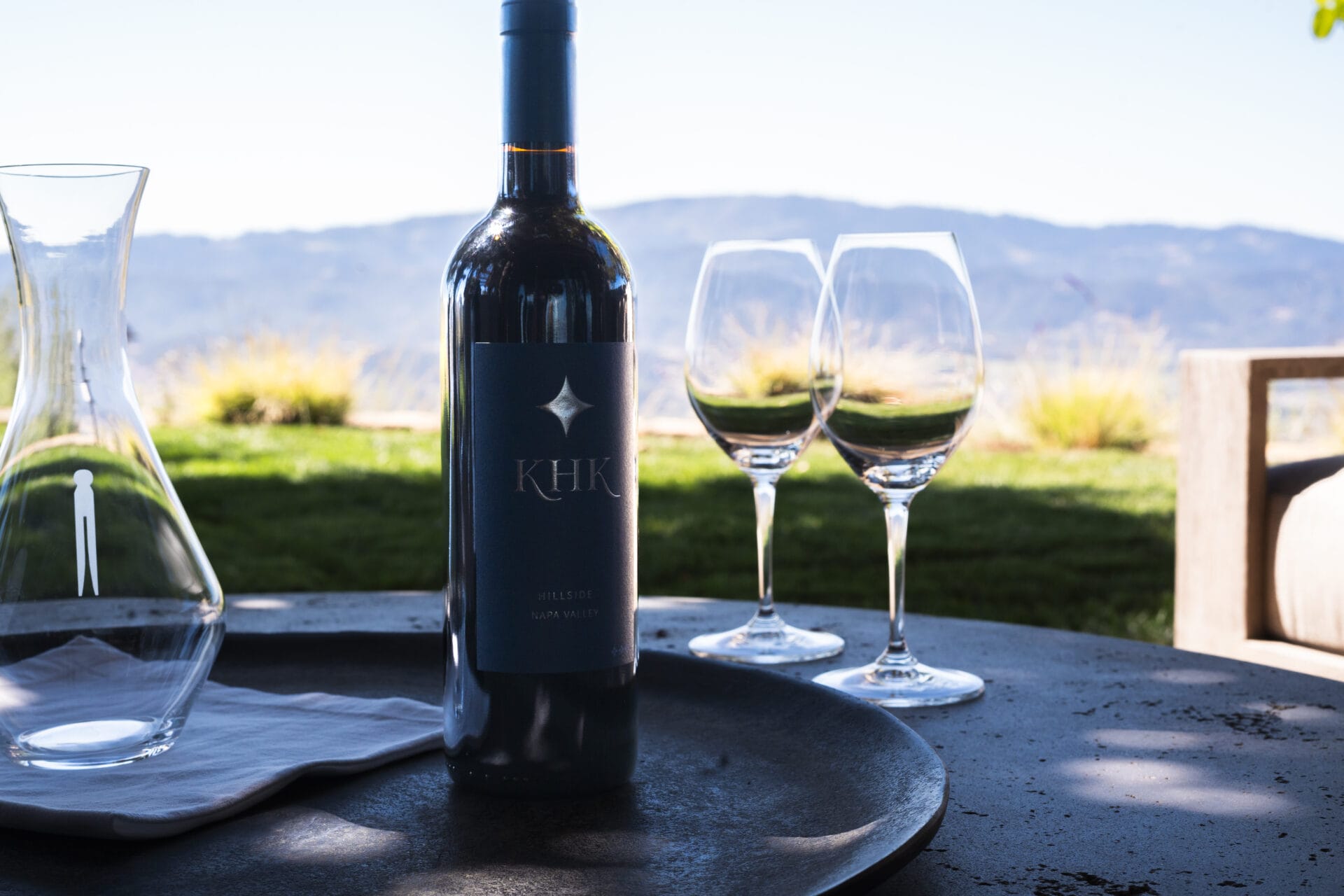
3. 2023 KHK Hillside Red — Napa Valley
“I always think of this wine as mocha, chocolate, espresso, coffee tones to it. At 300 cases, the production is very limited.” — Jesse Rodriguez
To round out the collection, Jesse points to a limited-production KHK Hillside Cabernet Sauvignon, a wine built for collectors and connoisseurs. Its deep, mocha-driven profile makes it an exceptional companion for evening flights or dessert service, where its rich characteristics shine even as cabin conditions naturally mute sweeter flavor notes.
Through Magellan Jets, clients can even secure their own bottles or cases of this exclusive release.
Best Practices for Serving Wines at 40,000 Feet
When serving wines at 40,000 feet, start by chilling whites to around 45–55°F and reds to about 55–65°F, which counters the cabin’s dryness and muffled flavors. Hydration is also critical, as the low humidity can reduce our ability to perceive flavors, so encourage Private Clients to sip water before indulging in a pour. In a pressurized cabin, letting wine breathe for at least 10 minutes maximizes aromatics that might otherwise be flattened due to lower atmospheric pressure. Whenever possible, use proper glassware instead of plastic cups to maintain the integrity of each wine’s bouquet and texture.
How Wine Tastes at 40,000 Feet
Tasting wines at 40,000 feet is a sensory adventure shaped by science. Cabin pressure reduces taste bud sensitivity by approximately 30%, while humidity drops to desert-like levels, affecting aroma perception. Sweet and salty flavors become dulled more than bitter and sour notes, which is precisely why well-balanced wines with bright acidity and fruit-forward profiles reveal unexpected layers in the air.
This philosophy is at the heart of Journey Above the Vines, an elevated experience designed for those who appreciate how terroir, altitude, and intention transform every sip. From vineyard to cabin, each selection is curated to shine at cruising altitude, turning air travel into a tasting journey of its own.
When carefully chosen, these wines do more than pair with a meal. They become part of the experience, enhancing your personal journey above the clouds. Connect with a Private Aviation Advisor to plan your bespoke wine experience.
Optimizing Food Pairings for Wines at 40,000 Feet
Creating thoughtful food pairings at 40,000 feet means harnessing bold, savory flavors that complement the muted sweetness and aromatics of inflight wines. Salty items like artisanal cheeses or cured meats retain much of their character, making them perfect for highlighting a red’s fruit profile. Meanwhile, slightly spicy or acidic dishes bring life to suppressed flavor receptors, balancing out tannins and dryness often perceived in the cabin. Coordinate with a Private Aviation Advisor to curate your menu, ensuring every mealtime on your journey aligns seamlessly with a chosen bottle. These strategic pairings provide a bespoke dining relationship, weaving each sip and bite into an exclusive experience.
Frequently Asked Questions About Tasting at Elevation (FAQ):
Why does wine taste different at 40,000 feet?
At 40,000 feet, lower cabin pressure and humidity can reduce taste bud and aroma sensitivity by nearly 30%, causing subtle flavors to flatten. This environment also intensifies bitterness and tannins, which is why certain wines taste sharper in-flight.
What foods should I serve with wines on a private jet?
In general, salty or umami-rich items like artisanal cheeses and cured meats help amplify flavors when taste buds are dulled. Slightly spicy or acidic dishes can also brighten the palate and complement a variety of in-flight wines.
About Jesse Rodriguez
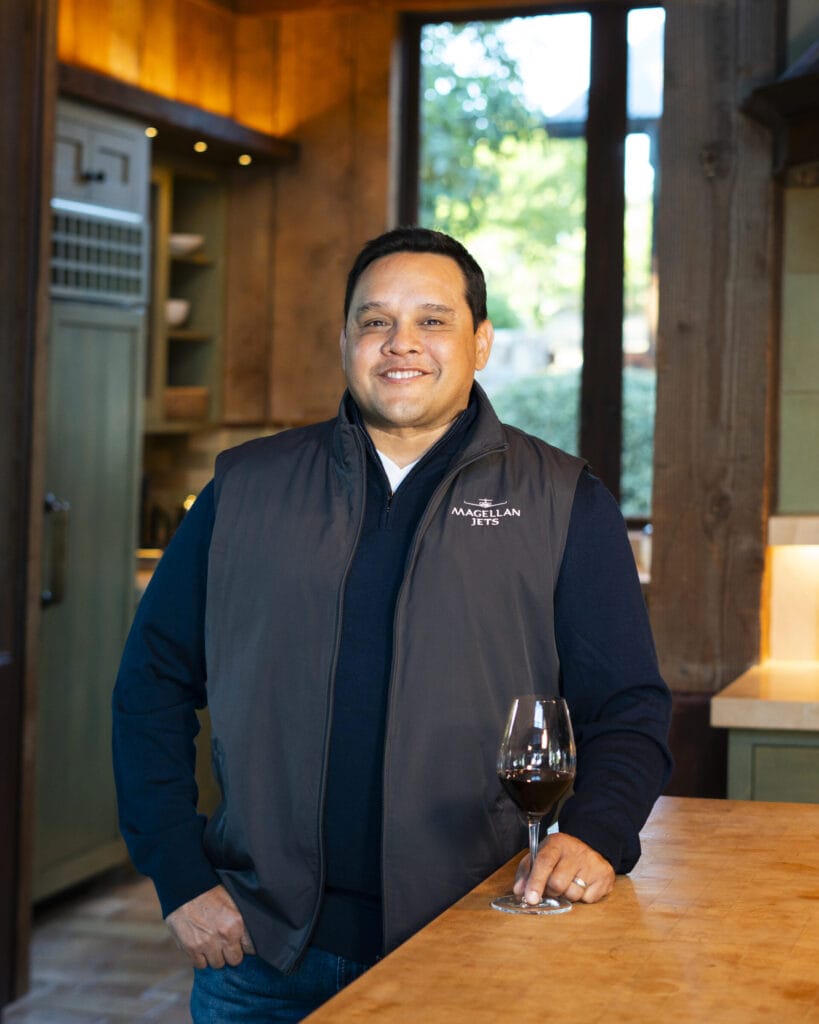
Jesse Rodriguez is the Resident Sommelier for Magellan Jets, bringing Michelin-level expertise to the skies. A two-time James Beard Semifinalist, Rodriguez previously served as Head Sommelier at The French Laundry in Napa Valley, California, where he helped the restaurant earn its inaugural Michelin three-star award. At Magellan Jets, Rodriguez leads bespoke wine experiences, from in-flight tastings and vineyard access to personalized at-home cellar consultations.
How Magellan Jets Supports Life in the NFL and Beyond
In professional sports, time, privacy, and flexibility are essential. For coaches and professional athletes, travel plans shift constantly, downtime is limited, and performance depends on minimizing distractions off the field.
Few people understand this better than Mike Vrabel, Super Bowl champion, former head coach of the Tennessee Titans, and current head coach of the New England Patriots. As a Magellan Jets Ambassador, Vrabel shares how private aviation for athletes and coaches supports his demanding lifestyle, and why Magellan Jets remains his trusted travel partner.
From Player to Coach
How did your career in football begin?
“I was a caddy, I carried golf bags, I was a football player and a football coach. Never really had a plan B. It was plan A — I was going to play football.”
From Ohio State to the Pittsburgh Steelers, New England Patriots, and Kansas City Chiefs, Vrabel built a long NFL playing career before transitioning to coaching at Ohio State, the Houston Texans, and eventually six seasons as head coach of the Tennessee Titans.
As his responsibilities evolved, so did the importance of managing time efficiently. For coaches and athletes, private aviation eliminates wasted hours, reduces physical strain, and allows them to stay focused on preparation, performance, and leadership, rather than travel logistics.
Returning to New England: A Full-Circle Moment for Family, Football, and Community
What made your return to New England special?
“My career took off here in 2001. This chapter is a little different because I spent eight years here. My kids grew up here. We had eight great years, so coming back and there’s a lot of familiar faces with the organization, in the community, around town.”
For Mike Vrabel, returning to New England isn’t just another coaching opportunity. It’s a true homecoming. Boston is where he established himself as a player, built lifelong relationships, and raised his family during some of the most meaningful years of his career.
Coming back now, as a head coach, carries added perspective. It’s about reconnecting with a city, an organization, and a community that helped shape him, both professionally and personally.
In a profession defined by constant movement, that sense of familiarity matters. For Boston-based athletes and coaches like Vrabel, having efficient access to private aviation close to home helps preserve balance, making it easier to manage professional demands while staying connected to family and community.
This is where Magellan Jets’ private terminal in Bedford, Massachusetts becomes especially valuable.
Private Aviation for Athletes and Coaches: Access Where It Matters Most
Magellan Jets provides access to private terminals worldwide, allowing athletes and coaches to depart and arrive discreetly, efficiently, and comfortably, no matter where their schedules take them.
In Boston, Magellan goes a step further.
The Magellan Jets private terminal in Bedford offers New England–based clients a true home-base experience, designed for speed, privacy, and comfort. For someone like Mike Vrabel, that means less time navigating crowded airports and more time focused on football, family, and leadership.
How Private Aviation Supports Family Life and Schedule Changes
How has private aviation impacted your family’s ability to travel?
“The thing that you have to realize is sometimes the schedule changes. And when you can have the opportunity to book private travel in just a few short hours, it’s made it something that’s been very, very beneficial to me and my family.”
For athletes and coaches, flexibility is essential. Private aviation allows travel plans to adapt in real time, supporting last-minute changes, quick turnarounds, and family commitments throughout the season.
Why Magellan Jets Is the Right Partner
Why are you excited to partner with Magellan Jets?
“The thing that I’m most excited about by partnering with Magellan is I feel like there’s a family atmosphere… The customer service is something that I struggled with at other companies but is always top-level at Magellan.”
Magellan Jets stands apart through hands-on service, rapid response, and a relationship-driven approach. Whether booking through the Magellan Jets app or directly with a Private Aviation Advisor, Vrabel and his family know they can schedule travel quickly, often within hours.
Trust, Privacy, and Reliability in Private Aviation
Why do you trust Magellan Jets with your travel needs?
“First and foremost, I trust that they’re going to protect me, my family, and our personal information… Magellan has consistently handled any challenges first class.”
For high-profile athletes and coaches, privacy and security are non-negotiable. Magellan Jets prioritizes discretion, data protection, and operational reliability, ensuring every trip meets the highest safety standards, even when plans change.
Who Benefits Most from Flying with Magellan Jets?
Who do you think benefits most from flying with Magellan Jets?
“Magellan is the right choice for business professionals and athletes and people with families… Really, anyone who’s looking to take this step. There’s a trust factor there.”
Private aviation with Magellan Jets is designed for people whose time is valuable and whose schedules are unpredictable, especially professional athletes and coaches who need flexibility without sacrificing peace of mind.
A Closer Look at the Magellan Jets Private Terminal in Bedford
What stands out to you about the Magellan Jets terminal in Bedford?
“The thing that stood out to me here at the terminal is the appearance of it. Everything is new, clean, well-stocked; any beverages, any refreshments, any snacks. And so you’re comfortable here and you’re only a few steps away from the plane.”
While Magellan Jets provides access to private terminals globally, the Bedford terminal is uniquely Magellan, offering Boston-area clients a refined, efficient experience just minutes from takeoff.
Private Aviation for Athletes and Coaches, Powered by Magellan Jets
For Mike Vrabel, private aviation isn’t about luxury. It’s about control, efficiency, and trust. With global access to private terminals and a dedicated home terminal in Bedford, Magellan Jets delivers private aviation designed around the needs of athletes and coaches.
Ready to experience private aviation built for high-performance lifestyles?
By Joshua Marc Hebert, Founder & CEO, Magellan Jets
After flying from Boston to Sarasota, Florida, I took a scenic drive to TerraNova Equestrian Center on a Saturday morning with modest expectations. I had heard great things, but I’m not an equestrian person — or at least, I didn’t think I was. What unfolded that day in the countryside of Sarasota changed my view entirely, not just of the sport, but of what a destination community could be.
TerraNova feels like slipping through a portal into a different version of Florida — one that most people never see. Instead of palms and resorts, the road is lined for miles with towering oak trees draped in character. The sense of arrival is subtle yet powerful: this is a place shaped by nature.
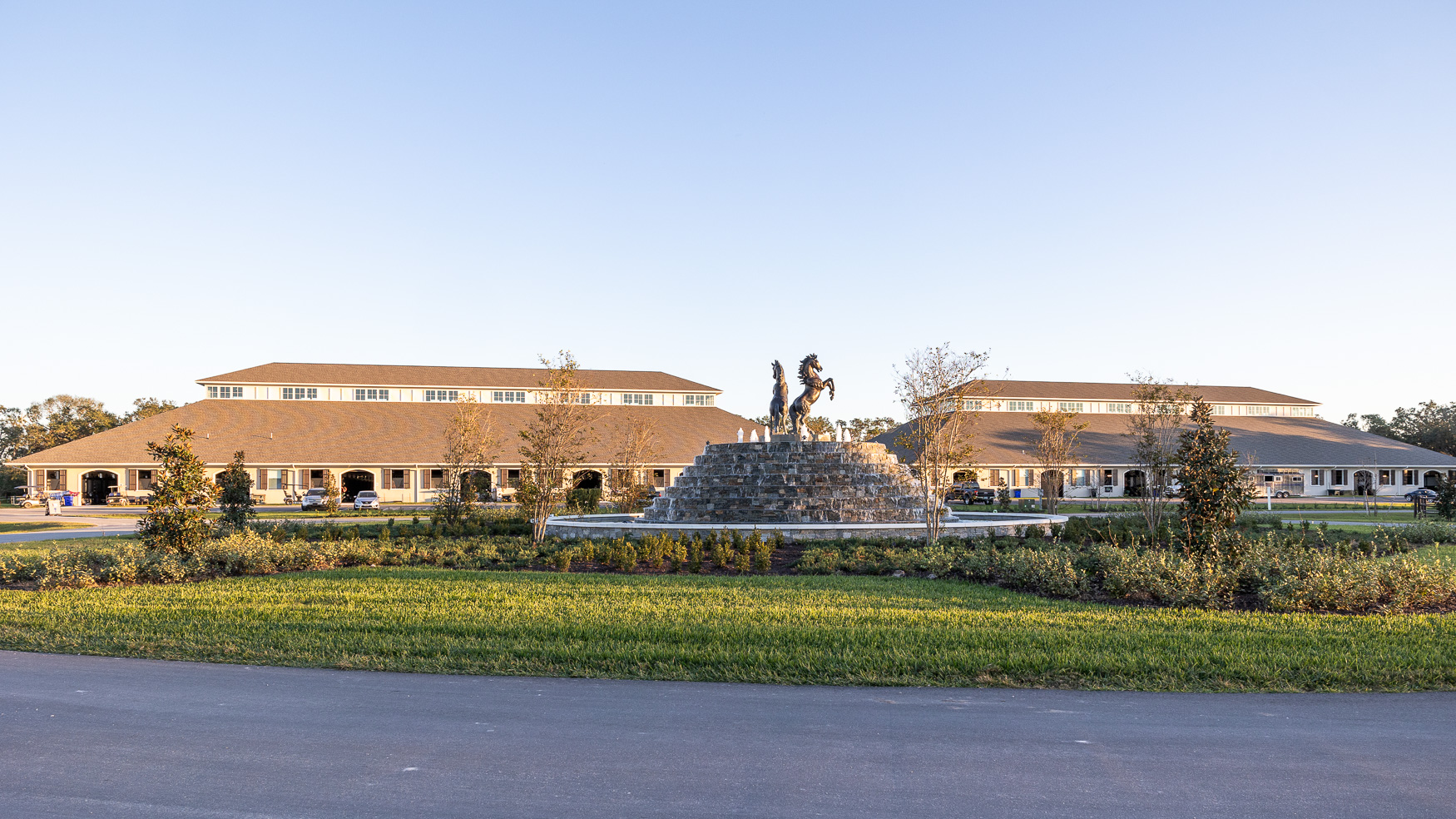
TerraNova Equestrian Center in Myakka City, Florida
The moment I arrived, alongside my father, my wife, my five-year-old son, and a colleague from Magellan Jets, I was in awe of the movement and energy everywhere. Thousands of acres alive with activity: spectators, competitors, families, and staff flowing across the property on bikes, scooters, golf carts, and side-by-sides. It felt like an equestrian city, one with its own rhythm and heartbeat. The scale is staggering. Jumping arenas. Cross-country fields. Stables that seem to stretch on forever. And among the competitors were Olympic-caliber riders, treating this place as both serious sport and joyful gathering.
My son, Lincoln, in the Owner’s Barn
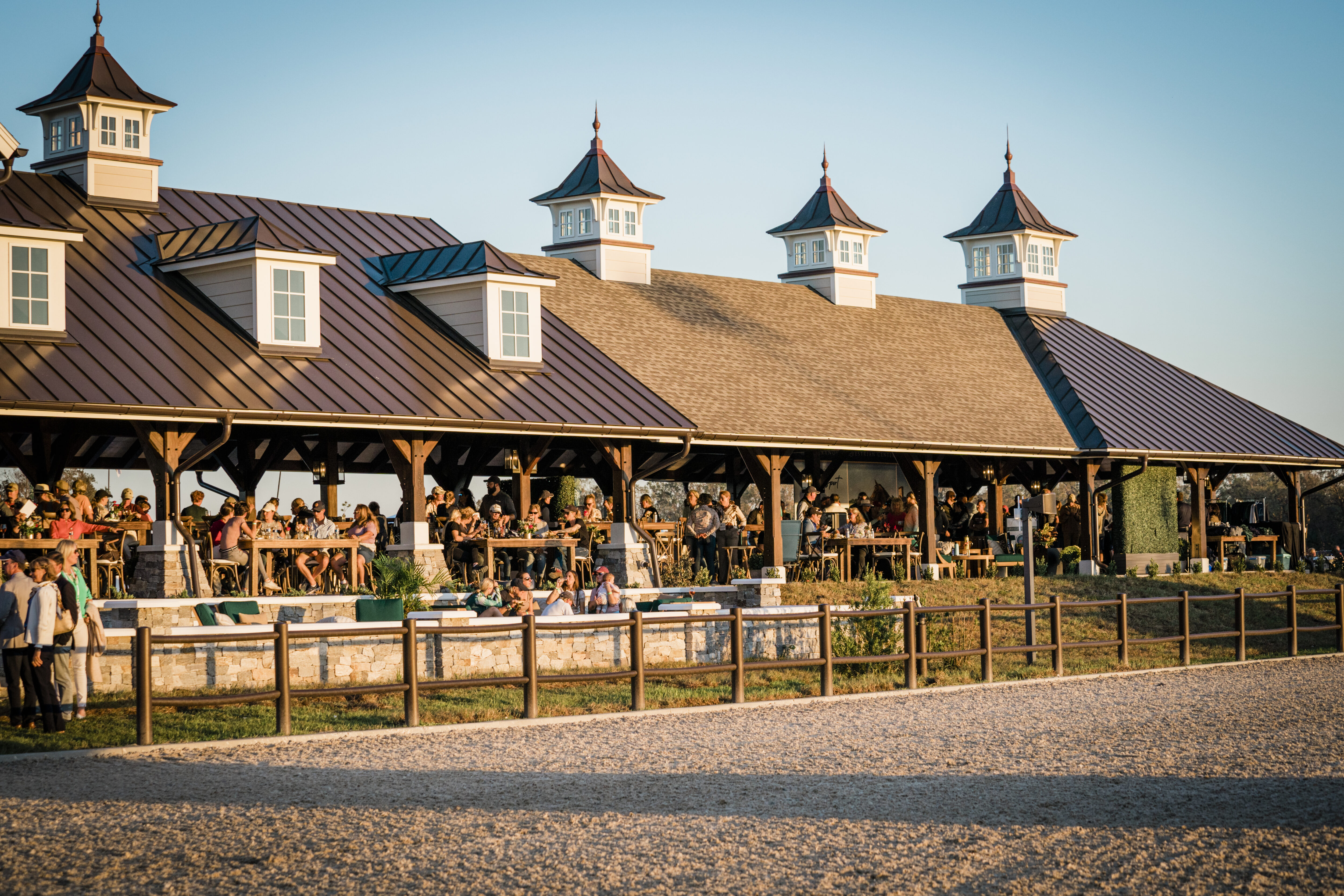
Our day began in the VIP grandstand overlooking the primary jumper ring. It struck the perfect balance between refinement and comfort — an open-air club atmosphere, but without the pretension. Great cocktails, attentive service, friendly conversation, and the best seats in the house. Our table sat right on what felt like the “50-yard line” of the action. It was the kind of hospitality that makes you feel instantly cared for.
And then we had the privilege of visiting The Miakka Golf Club, directly adjacent to the equestrian center. This is where the story takes another turn, because what they’re building is exceptional. The course is being designed by Fry/Straka Global Golf Design, in partnership with golf champion Paul Azinger — a name synonymous with strategic, championship-level thinking. Even with nine holes complete and the remaining nine underway, the vision is unmistakable: this is going to be a world-class course.
They’re not cutting corners. They’re literally breeding their own grass — hundreds of acres of it — developing a hardy, premium, aesthetically stunning turf specifically engineered for the course. They’re even supplying this grass to other Florida clubs because of its quality.
It’s a detail most guests would never think about, but once you see it, you understand the level of intention behind every decision here.
A place like this doesn’t happen by accident. And everything clicked the moment I met Steve Herrig. Steve is the Florida entrepreneur behind TerraNova Preserves LLC and the developer of the entire project, including the Miakka Golf Club, the clubhouse, the equestrian center, and the new residential community. He spoke openly about his previous businesses, his long-term vision for this land, the families he hopes will eventually call it home, and the legacy he wants TerraNova to hold decades from now.
When we reached the golf course, Steve was out there playing the nine by himself — not for leisure, but to test, evaluate, critique, and make sure every contour, every fairway, every bunker lived up to his standard. Visionaries who physically participate in their own projects are rare. Visionaries who enjoy doing it are even rarer. And that’s Steve.
As if equestrian excellence and a championship-level golf course weren’t enough, Steve and his team are developing a residential community of 5- to 10-acre estate homesites, with plans for around 250 lots. We toured one of the newly completed homes — beautifully built, with the kind of quiet luxury that blends seamlessly into the natural landscape.
It wasn’t hard to see why my father, who lives downtown in Sarasota, said, “Imagine living here.” And honestly? It’s not a stretch. The serenity, the beauty, the amenities — it’s the kind of place that feels like its own world.
I’ve been in private aviation for 25 years. I’ve seen exclusive clubs, elite resorts, and iconic destinations. But TerraNova is different.
It’s not just a horse facility. It’s not just a golf course. It’s a vision being built in real time — with craftsmanship, clarity, passion, and soul.
If I recommended TerraNova to someone, there’s simply no chance they’d return and say I exaggerated. If anything, they might tell me I undersold it.
Because some places you can describe. But TerraNova? You have to feel it.
And once you do, you don’t forget it.
TerraNova VIP Pavilion
Thanksgiving is a holiday defined by abundance of flavors, aromas, textures, and, ideally, unforgettable moments shared with the people who matter most. To elevate every stage of the day, from the first aromas in the kitchen to the final bite of dessert, Magellan Jets’ in-house sommelier Jesse Rodriguez shares his expertly curated selections for the best Thanksgiving wines.
With decades of experience in Michelin-starred dining rooms, elite wine programs, and luxury hospitality, Jesse brings a world-class perspective to holiday pairings, balancing sophistication, versatility, and a sense of celebration.
Wines to Start the Day: Elegant, Low-Alcohol Sippers for Cooking & Gathering
Before the turkey hits the oven and the guests settle in, Jesse recommends beginning the experience with something refreshing, crisp, and low in alcohol—wines that engage the palate without overwhelming it.
“As we’re cooking sauces, preparing the meal, and connecting with family, I like to start with something low in alcohol. An Albariño from Spain, a Champagne from Épernay, or a sparkling wine from California like Schramsberg or Domaine Carneros are all great options” —Jesse Rodriguez
Jesse’s Top Picks for Early-Day Sipping
Albariño (Rías Baixas, Spain) Bright, saline, citrus-driven—the perfect wine to sip while cooking.
Champagne from Épernay (Champagne, France) A refined way to begin the celebration; its chalky minerality and finesse pair beautifully with light bites.
Schramsberg or Domaine Carneros (California Sparkling Wine) American classics with balance, elegance, and a festive sparkle.
These selections awaken the palate and set a luxurious yet effortless tone for the holiday ahead.
Main Course Pairings: Versatile Wines for Turkey, Ham & Beef Wellington
Thanksgiving’s main course is a symphony of flavors: roasted turkey, glazed ham, indulgent beef Wellington, stuffing, root vegetables, and a dozen side dishes ranging from herbaceous to sweet to savory. Jesse selects wines that have the breadth and nuance to complement this entire spectrum.
“For the main course, I look for wines that cover a broad gamut of flavors, from savory stuffing to cranberry sauce. A Carneros Chardonnay or a Pinot Noir from Bien Nacido Vineyard are exceptional choices.” —Jesse Rodriguez
White Wine: Carneros Chardonnay (Hudson Vineyards, California)
Hudson Vineyards is one of California’s most revered Chardonnay producers, offering a refined balance of richness and acidity—making it ideal for turkey, gravy, and buttery side dishes.
Red Wine: Pinot Noir (Royal Prince, Bien Nacido Vineyard, Santa Maria Valley)
Bien Nacido is a legendary site known for producing ethereal, complex Pinot Noir.
Expect:
Cherry
Cranberry
Red currant
Those cranberry notes, Jesse emphasizes, tie beautifully into the flavors already present on the Thanksgiving table.
Dessert Pairings: World-Class Sweet Wines for an Elevated Finish
As the meal transitions into pie season, Jesse turns to the great sweet wine regions of the world, Germany, Tuscany, and Bordeaux, to amplify each dessert’s defining flavors.
For Apple Pie: German Riesling (Mosel, Kabinett or Spätlese)
“For apple pie with candied ginger and lime, I love Riesling from Germany’s Mosel Valley—Kabinett to Spätlese levels are exceptional.” —Jesse Rodriguez
Riesling’s acidity and orchard-fruit sweetness are a natural match for spiced apple desserts.
For Pecan Pie: Vin Santo (Tuscany, Italy)
Jesse recommends Vin Santo, a traditional Tuscan dessert wine known for notes of caramel, dried fruit, and toasted nuts.
Producer Spotlight:Boscarelli — renowned for balanced, artisanal Vin Santo crafted in small quantities.
The wine’s molasses, brown sugar, and roasted nut elements echo pecan pie’s deepest flavors.
For Pumpkin Pie & Golden-Fruit Desserts: Sauternes or Barsac (Bordeaux, France)
“When I think of golden fruits—sultanas, raisins, apricots, peaches—I think of Sauternes and its surrounding communes like Barsac.” —Jesse Rodriguez
These noble-rot wines create harmony with pumpkin pie’s warm spices and creamy texture while enhancing fruit-driven dessert components.
Create a Holiday to Remember
Whether you’re hosting a curated celebration or a lively family gathering, the right wines bring balance, joy, and elevated sensory experience to Thanksgiving. Jesse’s world-class selections are crafted to pair with the full sweep of flavors—from the first simmering sauce to the final bite of dessert.
With thoughtful pairings like these, your Thanksgiving becomes more than a holiday—it becomes a culinary journey.
About Jesse Rodriguez
Jesse Rodriguez is the Resident Sommelier for Magellan Jets, bringing Michelin-level expertise to the skies. A two-time James Beard Semifinalist, Rodriguez previously served as Head Sommelier at The French Laundry in Napa Valley, California, where he helped the restaurant earn its inaugural Michelin three-star award. At Magellan Jets, Rodriguez leads bespoke wine experiences, from in-flight tastings and vineyard access to personalized at-home cellar consultations.
Fall is golf’s sweet spot.
Courses are pristine, crowds thin and the weather hits that just-right balance of crisp mornings and golden afternoons. It’s the perfect time to sneak in a luxury golf getaway before holiday chaos takes over.
Here are seven can’t-miss resort destinations: when to go, what to expect, and the shots you’ll remember long after Thanksgiving dinner.
CordeValle (San Martin, California)
Photo from Golf.com
The Robert Trent Jones Jr. design winds through 1,700 acres of oak-dotted wine country, blending vineyard serenity with tournament pedigree. This course hosted both the PGA Tour’s Frys.com Open and the U.S. Women’s Open.
The Par-4 9th tempts players to challenge a ravine that guards the green, in turn rewarding nerve and precision. The back nine climbs into the Santa Cruz Mountains, offering panoramic valley views and tricky elevation changes.
Fast, firm greens demand touch while wide fairways give you options: bomb it or shape it. Post-round, unwind at the resort’s Michelin-star dining or retreat to a private villa with a glass of Santa Clara Pinot Noir.
Four Seasons Resort Lanai (Manele Golf Course, Hawaii)
Perched on lava cliffs 150 feet above the Pacific, Jack Nicklaus’ Manele Course offers some of the most dramatic seaside golf on earth.
The Par-3 12th steals the show. A full carry over crashing surf to a green carved into volcanic rock. Trade winds can add or subtract two clubs, forcing pure commitment. The closing holes tumble toward the ocean, their emerald fairways bordered by cobalt waves and red cliffs.
Bill Gates was famously married here, and pros flock to Manele to reset between busy schedules. The Four Seasons pairs five-star seclusion with breezy, barefoot luxury, perfect for decompressing before holiday madness.
Omni PGA Frisco Resort (Frisco, Texas)
Photo from Texas Monthly
America’s newest golf capital and home to the PGA of America sits just north of Dallas, featuring two championship layouts: Fields Ranch East by Gil Hanse and Fields Ranch West by Beau Welling. It’s where modern design meets cutting-edge technology.
On the East course, the Par-5 14th rewards those who hug a risk-reward creek to set up a short wedge into a massive infinity green. The West course plays more forgiving but surprises with undulating, linksy fairways that firm up in fall.
Practice under lights on The Swing, a 10-hole short course, or hit the putting paradise called The Dance Floor. After sunset, Topgolf Lounge and craft dining turn Frisco into a full golf-and-lifestyle hub.
Pelican Hill Resort (Newport Coast, California)
Tom Fazio’s Ocean North and South courses deliver West Coast drama at its finest. Each hole tumbles along bluffs above the Pacific with terraced greens and canyon carries adding to the theater.
Ocean South’s Par-3 12th requires a mid-iron over a canyon framed by bougainvillea and distant surf. The 18th on Ocean North sweeps downhill toward the resort’s iconic rotunda, a finish made for sunsets.
Golfers rave about immaculate conditioning and ocean breezes that keep things interesting. Off the course, private Italian-inspired villas and Forbes Five-Star spa treatments make Pelican Hill a luxury escape that still feels laid-back.
Sea Island Resort (St. Simons Island, Georgia)
Photo from Sea Island Resort
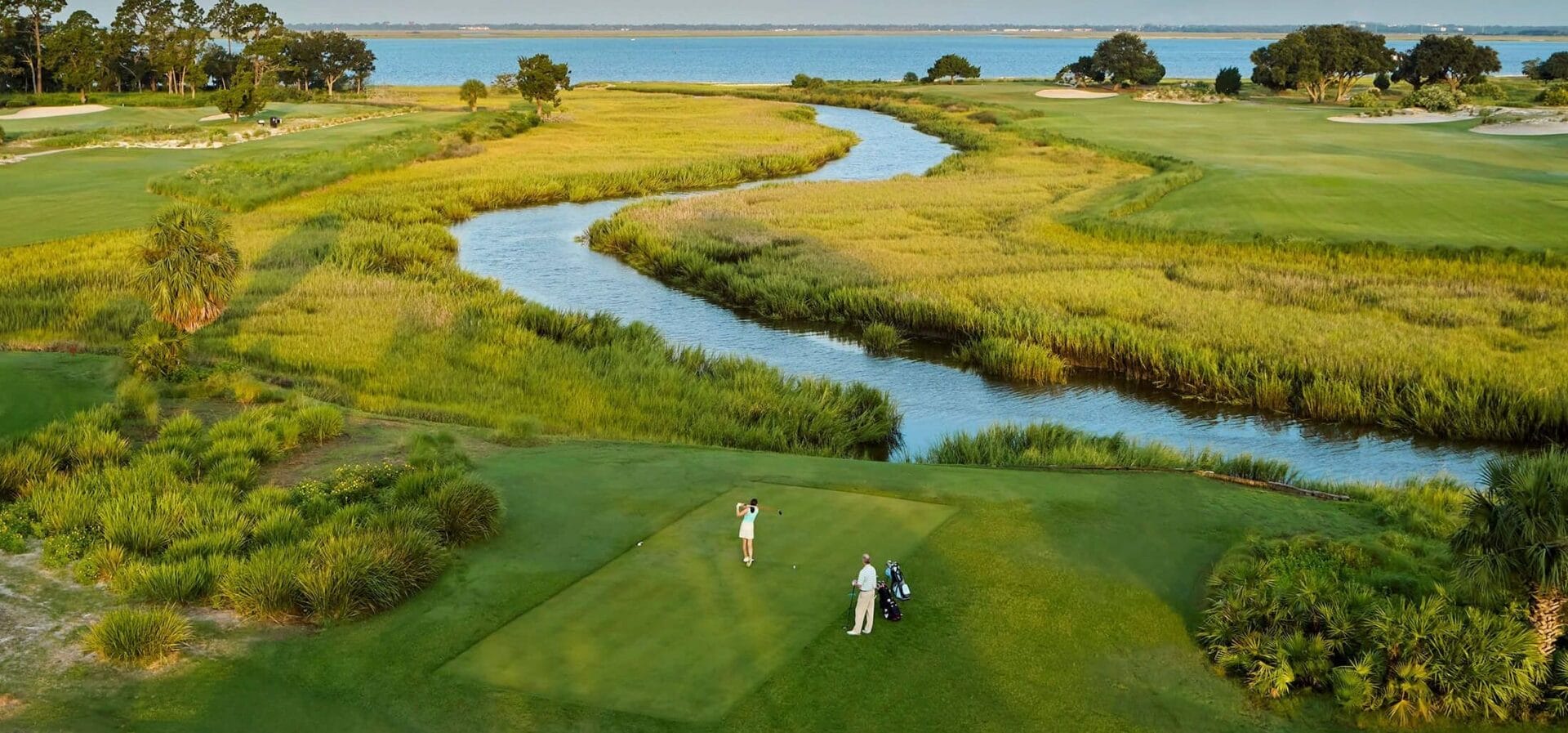
For decades, Sea Island hosted the game’s elite, from Bobby Jones to modern PGA Tour stars. Its Seaside Course, home to the RSM Classic, channels Scottish links with salt marshes and shifting Atlantic winds.
Seaside’s Par-4 13th hugs tidal wetlands and plays longer than the card suggests when the sea breeze picks up. The Plantation course offers a more parkland-style test with towering live oaks and wide landing zones, while the Retreat course mixes forgiving fairways with strategic bunkering.
Luxury here extends beyond golf: a world-class spa, iconic Cloister hotel and Southern hospitality make Sea Island the definition of refined fall golf.
Sea Pines Resort (Hilton Head, South Carolina)
Pete Dye’s Harbour Town Golf Links remains a shot-maker’s paradise and host of the RBC Heritage. Forget bomb-and-gouge; here it’s about threading narrow fairways under moss-draped oaks and hitting precise approaches to tiny, elevated greens.
The Par-4 18th is pure drama: a long, wind-whipped closer framed by Calibogue Sound and the iconic red-and-white lighthouse. One swing can make or break your scorecard –and your Instagram feed.
Complement Harbour Town with Heron Point (also a Dye design) and Atlantic Dunes by Davis Love III for a complete Lowcountry experience. Bike trails and waterfront dining round out a family-friendly but golf-first getaway.
Streamsong Resort (Bowling Green, Florida)
Photo from Streamsong Resort
If you crave minimalist, modern golf in perfect November weather, Streamsong delivers three bucket-list courses: Red (Coore and Crenshaw), Blue (Tom Doak) and Black (Gil Hanse).
On Red, the Par-4 7th dares the bold to carry a scrub-covered ridge for a short iron in while the safer route adds distance but peace of mind. Blue’s Par-5 5th twists around dunes to a punchbowl green you can feed from slopes. Black serves up wild contours, mammoth greens and the photogenic Par-3 3rd framed by towering dunes.
Created on reclaimed phosphate mines, the landscape feels like Scotland dropped into Central Florida: firm fairways, wild winds and endless creativity.
The Sweet Spot: Two Weeks Before and After Thanksgiving
Mid-to-late November is golf’s golden hour. Courses are in peak condition, weather is ideal coast-to-coast and travel crowds haven’t yet swelled. Whether you’re seeking warm Hawaiian breezes, Georgia’s golden marshlands or crisp California wine country, this is the moment to go.
Fly Private, Play More, Stress Less
Magellan Jets gets you closer to these fairways with tailored private travel solutions – no airport delays, no holiday rush. Speak with a Private Aviation Advisor to design your fall golf escape and optimize your time where it matters most: on the tee.
When golf meets nature’s grandeur, there’s no spectacle quite like a waterfall cascading beside a fairway or green. Beyond their jaw-dropping beauty, these courses blend drama with world-class design, elevating the game into experiences you’ll never forget.
What follows are seven (plus a bonus!) waterfall courses, each bucket-list worthy and each offering a unique test of skill surrounded by awe-inspiring visuals. Whether tucked in tropical paradise, etched into desert canyons or nestled into lush forests, these destinations promise a lifetime of memories.
Huge oaks, rolling limestone hills dramatic drops to fairways and greens, and natural waterfalls. This sets the stage for this Texas Hill Country course that’s hosted Tour and PGA of America tournaments. The 7,125-yard Fazio Foothills is the signature track, a rollercoaster ride of sorts, where creeks tumble through canyon walls and greens protected by cliffs perched near water’s edge. Precision is critical and nature itself becomes the course’s greatest defense. Its companion Palmer Lakeside course is well known for its signature hole No. 11 highlighted by a torrential waterfall and native flora.
Big Cedar Lodge – Ridgedale, MO
Johnny Morris’ Ozark resort blends rugged wilderness with theatrical waterfalls carved into limestone bluffs. Tiger Woods’ first public design, Payne’s Valley, is indescribably cool. The waterfall starts on the par-3 No. 2, aptly named “Cascades,” where water on golfers’ left must be avoided. No. 3, Lion’s Den, is unlike any golf hole on earth as tee shots are hit from inside a cave behind a breathtaking waterfall to a downhill green. No. 8 could represent a watery grave with a long green from front to back protected by a bunker short right and a large waterfall with rapids on the backside. Yet another waterfall is on No. 15; however, the closing hole with a gargantuan 200-foot waterfall, natural rock formations and a drive-through cave steals the show. Add Buffalo Ridge and Ozarks National exceptional layouts, and this lodge is full of golf escapades .
Cascata Golf Club – Boulder City, NV
Photo from TripAdvisor
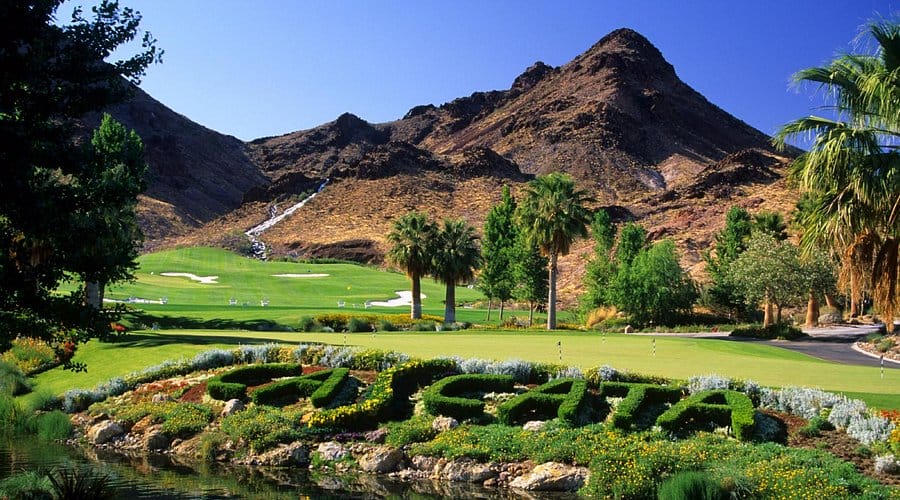
“Cascata” literally means waterfall in Italian. At this Rees Jones, par-72 design soaring to 3,200 feet above the Las Vegas desert valley amid the foothills of the River Mountain Range, you’ll hear it before you see it. A 418-foot man-made waterfall flows from the steep mountainside, over boulders and through the clubhouse while also weaving into fairways and ravines. Combined with gigantic mountain peaks contrasting lush fairways and accented by lakes, streams and wildlife, Cascata Golf Club is breathtaking thanks to a mix of lavishness, drama and tranquility at every turn.
Horseshoe Bay Resort – Horseshoe Bay, TX
Perched on Lake LBJ in the Texas Hill Country northwest of Austin, Horseshoe Bay features four championship courses. Ram Rock is known for narrow fairways and its stunning waterfall holes. No. 14 on the Slick Rock course boasts a bi-level waterfall that sends approximately 8,000 gallons rushing down every minute, creating an intense visual as golfers tee off. The aquatic feature costs nearly $1 million to construct in 1990; hence the nickname “Million Dollar Hole.” It embodies the shot-value philosophy of designer Robert Trent Jones, Sr. with a “hard par, easy bogey” layout.
Ko Olina Golf Club – Oahu, HI
Photo from the Four Seasons
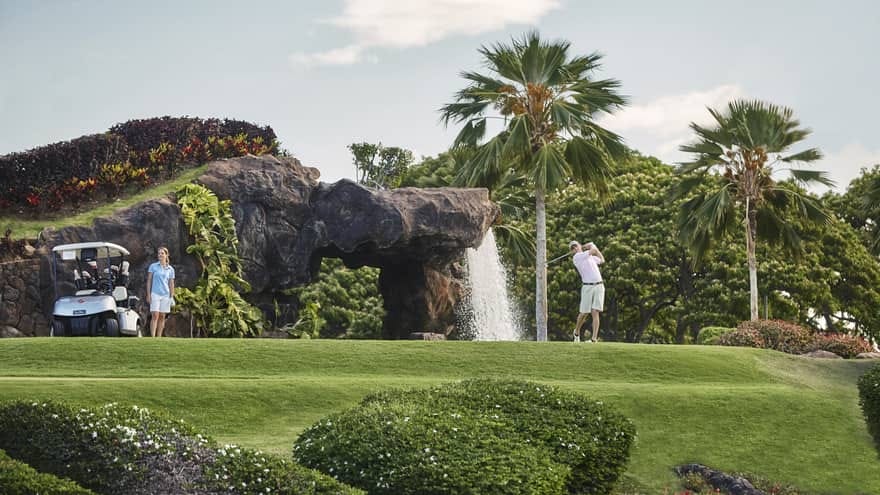
Hawaii is synonymous with waterfalls, and Ko Olina captures that magic with lush tropical landscaping and water features framing eight holes. Designed by Ted Robinson, waterfalls on Nos. 12 and 18 are especially memorable. That’s what Tour players faced at Ko Olina, where not only water hazards but multi-tiered greens often drove them batty. And that’s partly why Golf Digest lauds this course annually. Don’t’ forget, LPGA star Michelle Wie, who grew up in Honolulu, developed her championship game here; lest we forget her countless golf cart drives through a cascading waterfall en route to the No. 12 tee box.
The Golf Club at Black Rock – Coeur d’Alene, ID
Since its opening in 2003, Black Rock has remained in Golf Digest’s “Top 100 Golf Courses” rankings. Cut into wooded mountains overlooking Lake Coeur d’Alene, the private Black Rock is the poster child for alpine wilderness golf, traversing through wooded forests, across prairies and wetlands, up and down elevations, and around enormous outcroppings of basalt from which Black Rock gets its name. Naturally, there’s much-talked-about No. 11, a par 4, 413-yard gem with an approach shot that involves splitting a pair of waterfalls to reach the unique, V-shaped, two-tiered green that’s located within a rock amphitheater.
Wynn Golf Club – Las Vegas, NV
Photo from the Wynn Las Vegas
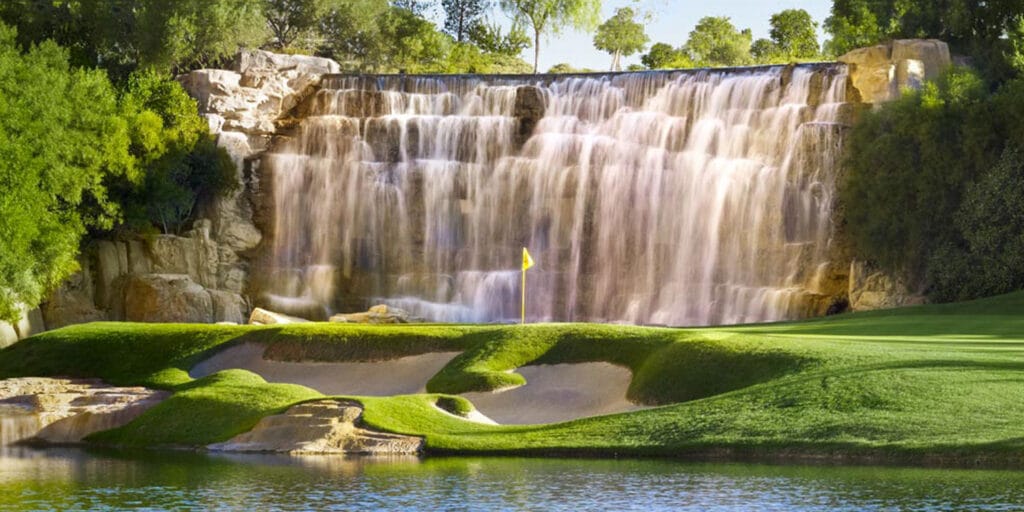
Las Vegas’ only Strip-side course delivers luxury golf at its peak. All class and in always immaculate condition, golfers revel in the par-70 masterpiece with six par 3s for birdie opportunities. Surprisingly, despite views of resort towers, Wynn Golf Club often feels more like Pinehurst than Sin City with towering trees, pine straw and secluded feel. The finishing hole showcases a 35-foot, 100-foot-wide waterfall tumbling into a shimmering lagoon and other parts of the course. Visually stunning is a complete and utter understatement. Overall, Tom Fazio’s blend of modern design and theatrical water features makes every round feel like an event. Yes, you can see The Sphere from the course.
Bonus No. 8: Highland Falls Country Club – Highlands, NC
Perched on a rock ledge at the base of a 100-foot waterfall created by the headwaters of the Cullasaja River is the private Highland Fall’s signature par 3, No. 15, that Ron Whitten, longtime Golf Digest Senior Editor of Architecture, described as “the most memorable par three in golf.” Only 130 yards from the tips, it requires a dead-aim-at-the-pin flop shot away from the massive flow down a steep, rocky cliff. And, yes, you’ll get sprayed with water coming off the rocks while standing by the rail along the green’s backside. The other 17 holes are outstanding with panoramic views and amid a quietly charming, mountain-style layout.
Planning your next golf trip? We’ve got you covered.
Play these roaring courses and return home to deliver stories worth telling.
Magellan Jets helps you reach these iconic destinations with ease. Our Private Aviation Advisors are well versed in golf and will tailor your journey to experience these breathtaking waterfall backdrops. Contact a member of the team here.