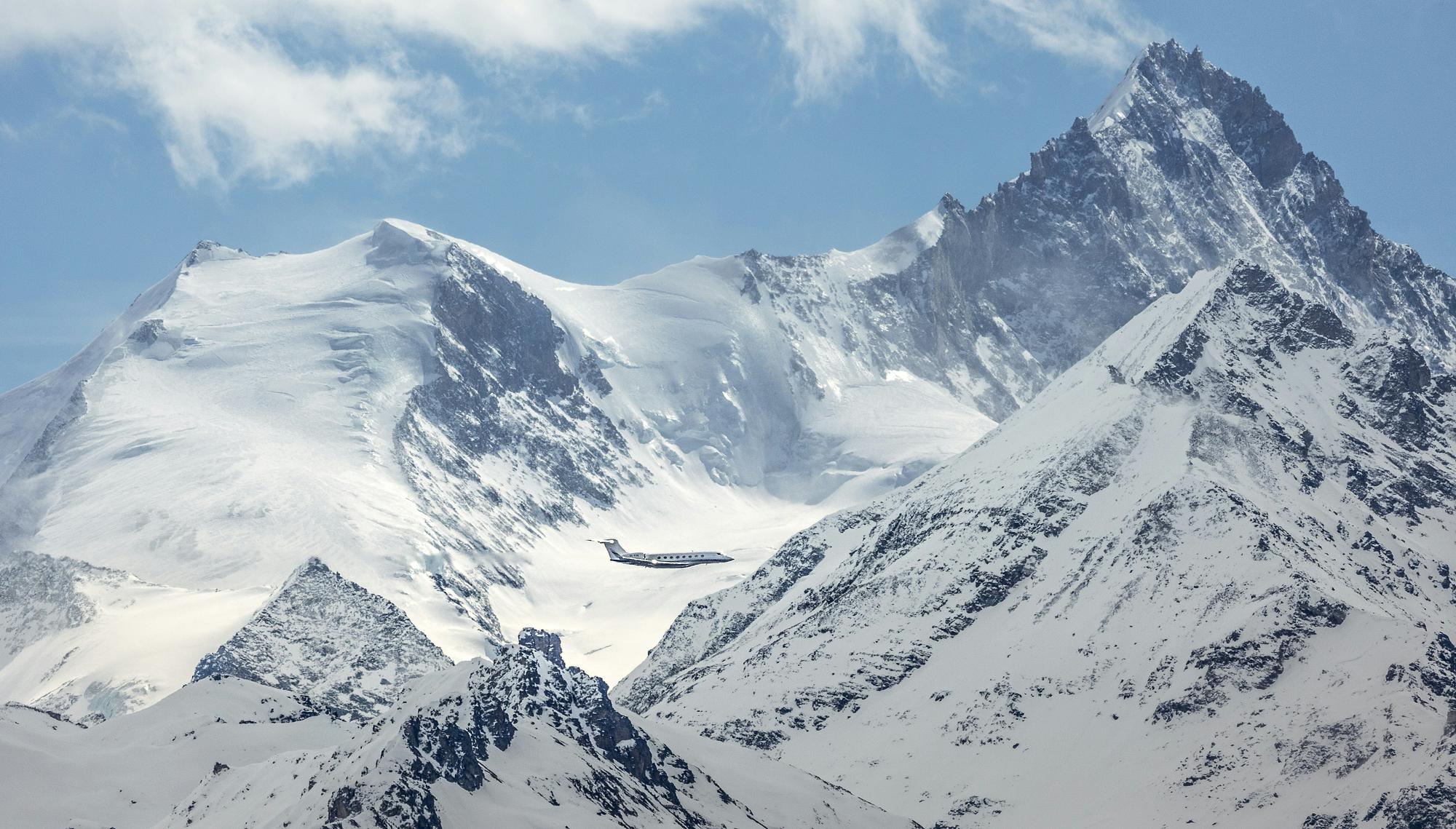
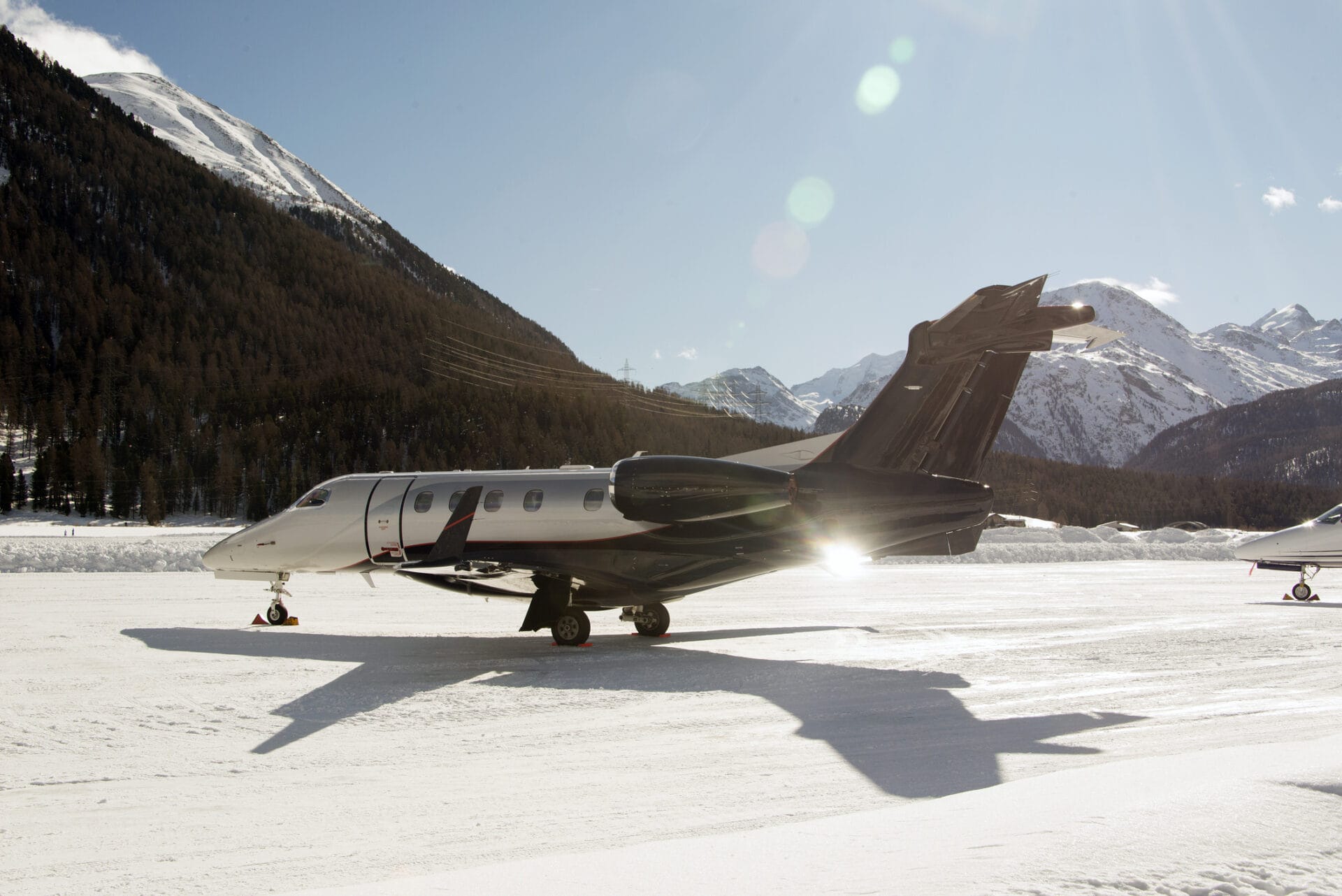
Seven mountain airports anchor private travel to the West’s great ski towns: Aspen/Pitkin County, Eagle County Regional, Rifle Garfield County, Jackson Hole, Telluride Regional, Friedman Memorial, and Bozeman Yellowstone International. All seven appear on the Federal Aviation Administration’s (FAA) Cold Temperature Airports list. High elevation, close terrain, and quick-moving storms shape every winter arrival, so crews plan alternates before departure.
The storms that bury the Rockies in powder also decide which runway a jet uses that morning. That is part of the appeal. These airports put you minutes from the lifts, and a well-planned arrival makes the first run of the week feel close.
This guide covers each airport’s winter character, the alternates crews commonly consider, and what the FAA’s cold-temperature program means for your journey. It also flags a date every Aspen regular should know. The airport closes for a full runway rebuild on April 4, 2027.
Mountain Airports at a Glance: Elevation, Runways, and Alternates
Elevations below are FAA-surveyed figures. ICAO (International Civil Aviation Organization) codes are the four-letter identifiers crews use for flight planning.
Airport
ICAO
Elevation
Runway
Winter Character
Commonly considered alternates
Aspen/Pitkin County Airport
KASE
About 7,838 ft
8,006 × 100 ft (15/33)
Narrow valley, upslope landings, 95-ft wingspan limit
Rifle, Grand Junction
Eagle County Regional Airport
KEGE
About 6,547 ft
9,000 × 150 ft (7/25)
Long, wide runway serving Vail and Beaver Creek
Rifle, Grand Junction
Rifle Garfield County Airport
KRIL
About 5,537 ft
7,000 × 100 ft (8/26)
Lower field, staffed around the clock
Grand Junction
Jackson Hole Airport
KJAC
6,451 ft
6,300 × 150 ft (1/19)
Inside Grand Teton National Park
Idaho Falls
Telluride Regional Airport
KTEX
About 9,070 ft
7,111 × 100 ft (9/27)
Highest in this guide, mesa-top runway
Montrose
Friedman Memorial Airport
KSUN
About 5,320 ft
7,550 × 100 ft (13/31)
Wood River Valley gateway to Sun Valley
Twin Falls
Bozeman Yellowstone International Airport
KBZN
About 4,473 ft
Multiple runways
Lowest in this guide, Montana’s busiest
Butte, Helena
Aspen/Pitkin County Airport (KASE): The Final Season on Today’s Runway
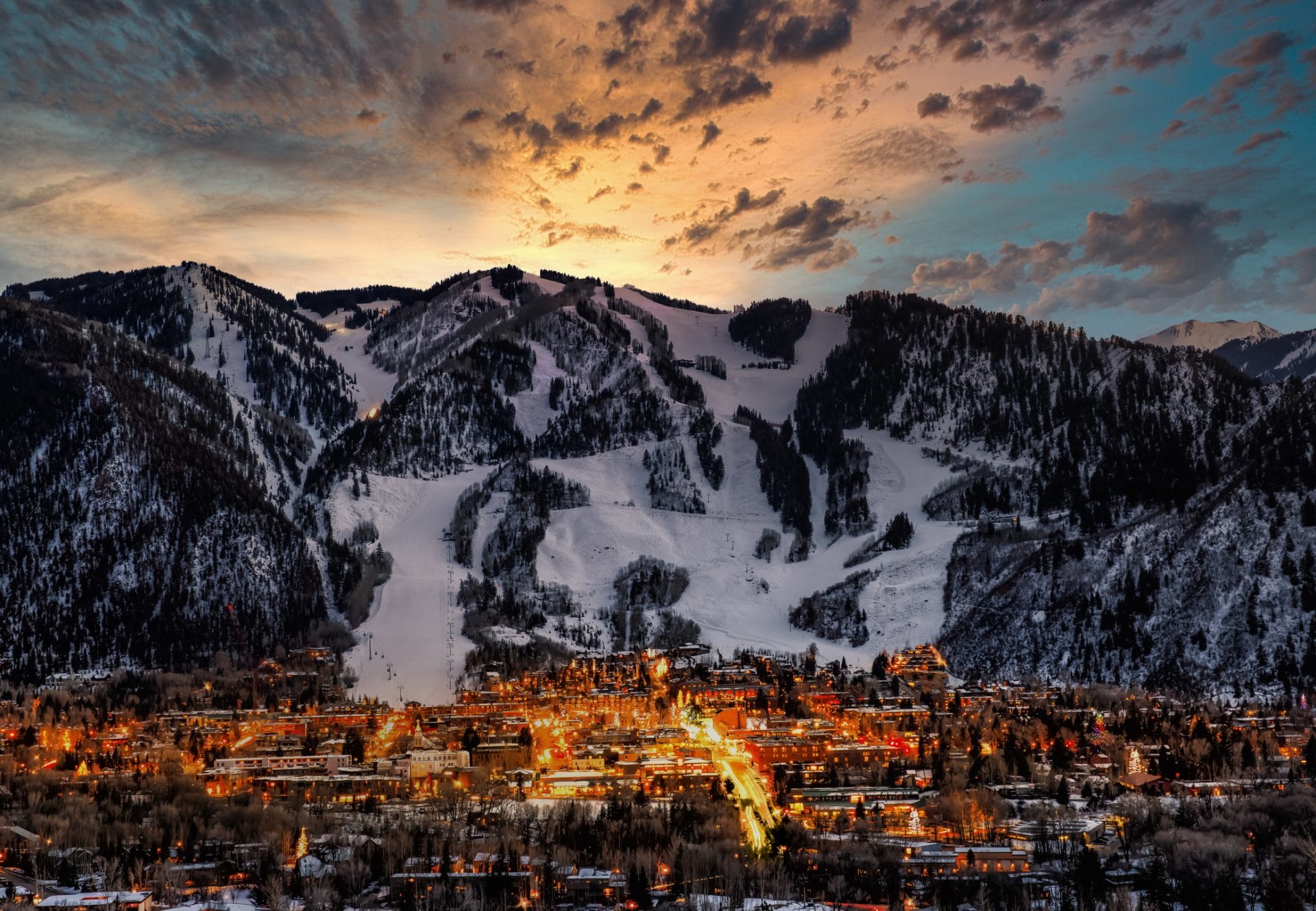
Aspen Mountain rises straight from a Victorian downtown, and the holiday weeks bring a social calendar that fills every evening. Landing a few minutes from the lifts is the reason so many Private Clients fly here.
The airport sits at about 7,838 feet. Its single runway measures 8,006 by 100 feet. The runway slopes uphill about 2% to the southeast, so most pilots land on Runway 15. Pilots can request Runway 33 when brisk winds blow from the northwest.
Thin air affects every departure. The same airport page describes a calm, cool spring morning at 10 a.m. with a density altitude of 9,555 feet. Density altitude is the altitude the aircraft “feels” based on temperature and pressure, and it governs takeoff performance.
Aspen also enforces a 95-foot wingspan limit. Your Private Aviation Advisor confirms that the aircraft fits this limit before anything else is booked.
What the 2027 Runway Closure Means for the 2026–27 Ski Season
The airport will close to all flights from April 4 through November 19, 2027, per the Aspen Airport construction update. Crews will rebuild and shift the runway to meet current FAA design standards. A new terminal is targeted for 2029, per the Aspen Airport modernization program.
That makes the 2026–27 winter the last full season on the current runway. Trips planned for April 2027 should route through Eagle or Rifle. The FAA has indicated the 95-foot limit is expected to lift once the runway-taxiway separation is increased. Your Advisor will confirm the final limits.
Eagle County Regional Airport (KEGE): The Private Gateway to Vail and Beaver Creek
Vail’s Back Bowls and Beaver Creek’s ski-in villages draw families back season after season. Eagle County Regional Airport puts both resorts within an easy drive.
The field sits at about 6,547 feet, four miles west of the town of Eagle. Its runway runs 9,000 by 150 feet. Runway 25 offers 8,000 feet for landing because of a 1,000-foot displaced threshold. That section is available for takeoff but not for touchdown.
Eagle sits in the same mountain weather pattern as Aspen. When a storm settles over the valley, crews often look west to Rifle or Grand Junction rather than to a neighboring ski airport.
Rifle Garfield County Airport (KRIL): The Insider’s Alternate for Aspen and Eagle
Rifle is the quiet option seasoned mountain travelers keep in reserve. The airport sits 27 miles from Glenwood Springs and its hot springs pools, a fine first stop on any ski week.
The field lies three miles east of Rifle at about 5,537 feet lists it as attended continuously. The airport puts Aspen 61 miles away and Vail 88 miles away. It also calls itself “the preferred alternate for Eagle and Aspen.”
Its lower elevation and 7,000-foot runway give crews useful room on cold, busy days. For Private Clients, a diversion here usually means a longer drive, with the ski week still intact.
Jackson Hole Airport (KJAC): Landing Inside a National Park
Jackson Hole’s approach is one Private Clients remember. The Teton Range fills the windows on final approach, and the valley floor stretches white below. Teton Village’s steep terrain and the town’s Western character keep Private Clients returning.
The setting is singular. It is the only airport in the United States located completely within a national park.
The runway elevation is 6,451 feet, and the runway measures 6,300 by 150 feet. Idaho Falls is an airport crews commonly consider as an alternate when weather closes in over the valley.
Telluride Regional Airport (KTEX): The Highest Runway in This Guide
Telluride sits in a box canyon, with a free gondola linking the historic town to Mountain Village. It feels remote in the best sense, and arriving by private jet preserves that feeling.
The airport sits on a mesa at about 9,070 feet. Its runway runs 7,111 by 100 feet. FAA remarks recommend landing on Runway 9 and departing on Runway 27 to avoid populated areas.
One end of the mesa has a drop of roughly 1,000 feet. Montrose is an airport crews commonly consider as an alternate when clouds settle over the San Juans.
Friedman Memorial Airport (KSUN): Arriving in Sun Valley Style
Sun Valley carries a glamour few resorts can claim. Bald Mountain’s long runs, Ketchum’s restaurants, and its long Hollywood history make it a favorite for unhurried ski weeks.
Friedman Memorial Airport sits one mile southeast of Hailey at about 5,320 feet. Its runway measures 7,550 by 100 feet. The airport sits a short drive from Sun Valley and Ketchum.
Your Advisor confirms aircraft suitability against the airport’s current published restrictions before booking. Twin Falls is an airport crews commonly consider as an alternate when the Wood River Valley fills with weather.
Bozeman Yellowstone International Airport (KBZN): Big Sky and Yellowstone Country
Big Sky offers the wide-open version of a ski trip, with Yellowstone country on the horizon. Bozeman adds a lively downtown for the evenings.
The airport sits seven miles northwest of Bozeman at about 4,473 feet. It is the lowest airport in this guide. Big Sky is a scenic drive south, and winter roads can add time.
Bozeman is also Montana’s busiest airport. It welcomed a record 2,809,419 passengers in 2025, a 6.3% increase over 2024. During holiday weeks, Butte and Helena are airports crews commonly consider as alternates.
How Alternates Are Chosen for Mountain Airports
For a mountain journey, crews plan an alternate airport before the wheels leave the ground. The best alternate is the one most likely to have clear skies when the destination does not.
That is why distance alone is a poor guide. Eagle and Rifle sit in the same mountain weather system as Aspen, so crews weigh lower-elevation options too. Grand Junction, in the Grand Valley, is a frequent lower-elevation option for Aspen and Eagle flights. Crews commonly consider Montrose for Telluride.
Crews weigh several factors when they choose:
Forecast weather at arrival time, compared with the destination’s storm track
Runway length and condition reports for the expected aircraft weight
FBO (fixed-base operator, the private terminal) hours, fuel, and de-icing capacity
Drive time and road conditions to the Client’s final destination
FAA Cold Temperature Restricted Airports and Winter Flight Cancellations
The FAA publishes a list of Cold Temperature Airports, where very cold air can make an altimeter read higher than the aircraft’s true altitude. When the airport temperature is at or below the listed limit, pilots correct altitudes on specified instrument approach segments. The limit appears next to a snowflake symbol on the approach chart, per the FAA list effective September 4, 2026.
All seven airports in this guide are on that list. Their limits are:
Aspen (KASE): -21°C (about -6°F)
Eagle (KEGE): -19°C (about -2°F)
Rifle (KRIL): -13°C (about 9°F)
Jackson Hole (KJAC): -21°C (about -6°F)
Telluride (KTEX): -17°C (about 1°F)
Friedman Memorial (KSUN): -13°C (about 9°F)
Bozeman (KBZN): -21°C (about -6°F)
The designation is a procedure for flight crews. It applies to instrument approach altitudes, and it does not close the airport or limit the runway.
Do Flights Get Cancelled for Cold Weather? How De-Icing Keeps Departures Moving
Cold air on its own is routine at these airports. Departures shift when snow, ice, or low visibility arrive, or when frost forms on the aircraft overnight.
Frost matters more than most travelers expect. FAA Advisory Circular 20-117 says frost, ice, or snow with the roughness of medium or coarse sandpaper can reduce lift by as much as 30%. It can also increase drag by 40%. The aircraft must be clean before takeoff.
That is the job of de-icing. Ground crews spray heated fluid to clear frost, snow, and ice. A second fluid often follows to hold off new buildup for a limited time. Our De-Icing 101 guide walks through the process step by step.
How Magellan Jets Plans Winter Trips to Mountain Airports
A ski week should begin on the slopes, with the logistics already handled. Magellan Jets’ Flight Support team watches each mountain journey from booking through landing.
The team tracks forecasts, runway condition reports, and NOTAMs (Notices to Air Missions, the FAA’s official operational alerts). If weather points toward an alternate, your Private Aviation Advisor shares the plan early. Your Client Experience team then arranges ground transportation from the alternate to your door.
Peak weeks call for earlier planning. Around Christmas, New Year’s, and Presidents’ Day, the team secures FBO and parking arrangements at Aspen and Eagle well in advance. Holiday travelers can find more ideas in our holiday travel destinations guide.
Clients who return to the mountains each season often choose a Jet Card, with guaranteed availability 365 days a year and zero blackout dates. For a single ski trip, On-Demand Charter matches the right aircraft to the mission.
Frequently Asked Questions About Flying Into Mountain Airports in Winter (FAQs):
What Are the Hardest Airports to Land at in the US?
The most demanding US airports often lead to the most coveted destinations. Ski airports such as Aspen and Telluride are frequently named because of high elevation, nearby terrain, and fast-changing mountain weather. Aspen sits at about 7,838 feet in a narrow valley, and Telluride sits on a mesa at about 9,070 feet.
What Is the Highest Airport in the US?
Among the ski airports in this guide, Telluride Regional Airport is the highest at about 9,070 feet, according to FAA data. That puts it more than 1,200 feet above Aspen. Its mesa-top runway is part of what makes arriving in Telluride so memorable.
Do Flights Get Cancelled for Cold Weather?
Cold temperatures alone rarely keep an aircraft on the ground at mountain airports, where winter is the busy season. Delays usually come from snowfall, low visibility, runway conditions, or frost that must be cleared. Per FAA Advisory Circular 20-117, frost, ice, or snow as rough as medium or coarse sandpaper can reduce lift by as much as 30%. It can also increase drag by 40%, so crews de-ice before takeoff.
Can Any Private Jet Land at Aspen?
Aspen welcomes a wide range of private aircraft, within its rules. The airport enforces a 95-foot wingspan limit, and high elevation affects takeoff performance. Your Private Aviation Advisor matches the aircraft to Aspen’s limits, or plans an arrival through Eagle or Rifle when another aircraft suits the trip better.
Where Do Flights to Aspen Divert?
Crews commonly consider Rifle Garfield County Airport or Grand Junction as alternates for Aspen flights. Eagle sits in the same mountain weather system as Aspen, so crews often weigh lower-elevation options as well. Rifle calls itself the preferred alternate for Eagle and Aspen and is staffed around the clock.
What Does “Cold Temperature Restricted Airport” Mean?
It refers to an airport on the FAA’s Cold Temperature Airports list. At or below the published temperature limit, pilots correct certain instrument approach altitudes because cold air makes altimeters read high. All seven airports in this guide are on the list, and the procedure does not close the airport.
What Should I Know Before Flying Into a Mountain Airport in Winter?
Mountain airports put you minutes from the lifts, and a little flexibility keeps the trip on track. Expect your crew to plan an alternate, allow time for de-icing, and confirm aircraft suitability for elevation and runway length. If you plan an Aspen trip for spring 2027, note the airport closes for its runway rebuild from April 4 through November 19, 2027.
The best mountain arrivals are planned well before the first snowfall, with the alternate and the ground transfer settled ahead of time. Planning this fall lets the 2026–27 season, Aspen’s last on its current runway, unfold on your schedule.
The finest private jet vacation destinations for the 2026–27 holidays split into two moods. For sun, choose St Barths, the British Virgin Islands, Harbour Island, or Turks and Caicos; for snow, choose Aspen, Vail, Telluride, or Jackson Hole. Miami during Art Basel and Napa Valley under its holiday lights complete the list.
Each entry below opens with what makes December there worth the flight. Then come the airport, the aircraft that suits it, and an estimated hourly rate, whether you fly On-Demand Charter or a Jet Card.
Warm-Weather Escapes: The Best Warm Christmas Vacation Destinations
December in the islands means bare feet at breakfast and a swim before lunch. These are the best Christmas vacation destinations for families who would rather trade wool for linen. Each one arrives with its own approach, and that approach is part of the allure.
St Barths: Your Private Jet to St. Barts via Sint Maarten
St Barths brings French polish to the Caribbean, from Gustavia’s harbor to long villa dinners over the water. Holiday weeks here feel like a private house party, unhurried and well dressed.
The arrival is famously intimate. At Gustaf III Airport (SBH), the runway measures just over 2,100 feet, which is too short for any jet. A private jet to St. Barts therefore flies to Sint Maarten (SXM), and a short-field turboprop completes the final hop.
The Pilatus PC-12 as exceptionally capable on short runways and ideal for island-hopping. Only pilots holding a specific St Barts certification fly the approach. The airport opens at 7:00 a.m. and closes 15 minutes after sunset, so every arrival lands in daylight.
Tortola and Virgin Gorda: Sailing Country in the British Virgin Islands
The British Virgin Islands move at the pace of a sailboat. Days unfold between quiet coves, beach bars, and anchorages you reach by tender.
On Virgin Gorda, The Baths National Park holds granite boulders as large as 40 feet in diameter. The BVI National Parks Trust notes that winter swells can prevent use of the mooring buoys. It lists park hours of 8:30 a.m. to 4:30 p.m., so check before you go.
On Tortola, Smuggler’s Cove sits on the west end. Private flights arrive at Terrance B. Lettsome International Airport (EIS). Published operating hours vary by source, so your handler confirms the arrival window.
Eleuthera and Harbour Island: Pink Sand and Open Atlantic
Harbour Island is the Bahamas at its most relaxed, made for long lunches and barefoot evenings. Its Pink Sand Beach runs more than three miles along the eastern Atlantic side. The Bahamas tourism board credits the color to tiny marine organisms called foraminifera.
On Eleuthera, the Glass Window Bridge divides the deep blue Atlantic from the calmer Bight of Eleuthera. North Eleuthera Airport (ELH) serves Harbour Island and Spanish Wells. you will go through customs at ELH, and Harbour Island is a short boat ride away.
Turks and Caicos: An Easy Island Arrival for Families
Turks and Caicos suits multigenerational trips: long beach days, calm water, and villas with room for everyone. Nearly all international flights land at Providenciales (PLS). PLS, South Caicos, and Grand Turk are the ports of entry for private aircraft.
For larger families, a Super-Midsize jet such as the Challenger 350 seats nine passengers with 106 cubic feet of baggage space. Its range reaches 3,269 nautical miles.
Miami for Art Basel: December 4–6, 2026
Miami is one of the liveliest Christmas vacation destinations in the USA, and early December is its brightest week. Art Basel Miami Beach runs December 4–6, 2026, at the Miami Beach Convention Center.
Private flights favor Miami-Opa Locka Executive Airport (OPF), a business aviation airport. Miami-Dade Aviation places it roughly 30 minutes from Miami Beach.
Snow-Season Retreats: Christmas Vacation Destinations in the USA
Fresh corduroy at first chair, a fire after the last run, a village lit for the season: the Rockies deliver the classic holiday. For deeper planning on the slopes, see our guide to top winter ski destinations.
Aspen: Four Mountains and a Private Jet to Aspen
Aspen pairs serious skiing with a downtown that dresses up for December. One ticket covers four mountains: Aspen Mountain, Aspen Highlands, Buttermilk, and Snowmass, with more than 5,700 acres. For 2026–27, Aspen Mountain and Snowmass open November 26, and Highlands and Buttermilk follow on December 12.
A private jet to Aspen lands at Aspen/Pitkin County Airport (ASE), about three miles from downtown. That is roughly a 10-minute drive, compared with about four hours or more by road from Denver International. ASE currently limits wingspans to 95 feet.
Magellan Jets aircraft guidance highlights the Falcon 50EX for exceptional high-altitude airport performance. It also notes the Falcon 900LX for superior mountainous airport performance. Plan ahead for 2027: ASE closes April 4–November 19, 2027, for runway reconstruction, with no effect on the 2026–27 holiday season.
Vail: Expansive Terrain and a Village Built for Après
Vail is the choice for skiers who want vast terrain by day and a lively village by night. Private flights use Eagle County Regional Airport (EGE) in Gypsum, about 30 miles from Vail.
For ski groups, the Phenom 300 suits golf and ski trips with 85 cubic feet of baggage space. The Challenger 350 adds room for skis, golf clubs, and larger pets.
Telluride: High-Altitude Seclusion
Telluride feels remote in the most appealing way: a small town, deep snow, and a runway close at hand. Telluride Regional Airport (TEX) sits at 9,070 feet. It lies about six miles from town, roughly a 15-minute drive, and operates daily from 6:00 a.m. to 9:00 p.m.
The Pilatus PC-24 combines turboprop-style short-field capability with room for skis, and our guidance recommends it for remote mountain destinations. Turboprops such as the PC-12 also suit the approach, though they are not listed as ski-friendly.
Jackson Hole: Skiing Beneath the Tetons
Jackson Hole offers steep skiing, Western character, and the Tetons on the horizon. Jackson Hole Airport (JAC) is the only commercial airport in the U.S. located entirely inside a national park, Grand Teton. The Challenger 350 and Phenom 300 both suit the ski luggage that comes with a week here.
Wine Country: Napa Valley for the Holidays
Napa in December is softer and quieter, with candlelit tasting rooms and towns wrapped in lights. Holidays in Yountville runs November 22, 2026 through January 1, 2027.
Calistoga’s Lighted Tractor Parade is set for Saturday, December 5, 2026. The Napa Valley Wine Train runs its Santa Train with Jolly Journeys on select holiday dates. Event dates can shift, so confirm dates before travel.
The private aviation gateways are Napa County Airport (APC), the closest to the valley, and Charles M. Schulz–Sonoma County Airport (STS).
Martha’s Vineyard, featured in earlier editions of this guide, shines in summer, so we have saved it for warmer months.
Pairing Ski and Sun on One Private Jet Vacation
One of the season’s most indulgent itineraries spans both: Christmas morning in Aspen, New Year’s Eve on a Caribbean beach. A private aircraft makes the pairing feel natural, with no airline connections between mountain and sea.
A Super-Midsize jet such as the Challenger 350 brings range and ski space for the mountain-to-island leg. For St Barths, the jet lands at Sint Maarten and a turboprop completes the journey. Because the PC-12 is not listed for skis, your Private Aviation Advisor plans where equipment travels before you leave the mountains.
Planning the Holiday Season by Private Jet
Graceful holiday journeys begin weeks before the first suitcase closes. A few insider details make the difference, and the sections below cover them.
Reserve Early for Peak Holiday Weeks
The weeks around Christmas and New Year’s are the most requested of the year. Booking early gives you the widest choice of aircraft, crews, and departure times. Mountain departures may also call for de-icing; our de-icing guide for winter private jet travel explains what to expect.
Daylight Arrivals and Island Airport Hours
St Barths closes 15 minutes after sunset, and Tortola’s published hours vary by source. At North Eleuthera, FAA data lists customs from 1400 to 2200 UTC, about 9:00 a.m. to 5:00 p.m. in winter. Your Private Aviation Advisor confirms each window.
Customs and Passports for the Caribbean
Each island sets its own entry rules. For St Barths, the U.S. State Department requires six months of passport validity beyond arrival and one blank page. For the British Virgin Islands, the State Department requires a passport valid at entry and a return or onward ticket.
For the Bahamas, the State Department requires validity through departure and two blank pages. The Bahamas tourism site cites six months, so renew if you are close.
The Bahamas Travel Health Visa ended in 2022. Turks and Caicos asks for a valid passport and an onward ticket.
Fitting Luggage and Skis to the Aircraft
Holiday trips carry gifts, formalwear, and often skis. The Phenom 300 offers 85 cubic feet of baggage space, and the Gulfstream G280 offers 154.
Pricing follows aircraft category and destination region. Caribbean destinations use international estimates, and Colorado and Wyoming use Central region estimates.
Estimated Hourly Rates for Charter to the Caribbean and Bahamas
Aircraft Category
Estimated Hourly Rate
Turboprop
$8,119/hr
Light Jet
$9,269/hr
Midsize Jet
$10,894/hr
Super-Midsize Jet
$12,671/hr
Heavy Jet
$14,877/hr
This is an estimated hourly rate for Turboprop, Light Jet, Midsize Jet, Super-Midsize Jet, and Heavy Jet charter, inclusive of fuel. It does not include contingencies such as de-icing, positioning, overnight fees, or other trip-specific costs. Final pricing is confirmed at time of quote.
Estimated Hourly Rates for Charter to Aspen, Vail, Telluride, and Jackson Hole
Aircraft Category
Estimated Hourly Rate
Turboprop
$6,499/hr
Light Jet
$7,649/hr
Midsize Jet
$8,775/hr
Super-Midsize Jet
$10,120/hr
Heavy Jet
$14,748/hr
This is an estimated hourly rate for Turboprop, Light Jet, Midsize Jet, Super-Midsize Jet, and Heavy Jet charter, inclusive of fuel. It does not include contingencies such as de-icing, positioning, overnight fees, or other trip-specific costs. Final pricing is confirmed at time of quote.
Miami and Napa follow their own regional estimates, which your advisor provides with every quote. If you fly 25 hours or more a year, a Jet Card brings fixed, all-inclusive pricing.
Why Jet Card Clients Fly the Holidays Differently
For Jet Card Clients, a luxury Christmas vacation begins with certainty. A Jet Card carries guaranteed availability 365 days a year, with zero blackout dates, from the 25-hour entry level. Christmas Eve and New Year’s Day are as available as any Tuesday in March.
Coverage includes 49 states (excluding Alaska), the Caribbean, Mexico, Canada, and destinations within Europe. Peak holiday dates may be advanced booking days (ABD), when discounts and Advantage Routes do not apply. Availability remains guaranteed, and Client funds never expire.
Frequently Asked Questions About Private Jet Vacations (FAQs):
How Much Does a Private Jet Vacation Cost?
Cost depends on aircraft category and destination region. A Light Jet to Aspen, Vail, Telluride, or Jackson Hole starts from an estimated $7,649/hr. This is an estimated hourly rate for Light Jet charter, inclusive of fuel. It does not include contingencies such as de-icing, positioning, overnight fees, or other trip-specific costs. Final pricing is confirmed at time of quote.
How Far Ahead Should I Book a Private Jet for the Holidays?
Book as early as possible, since Christmas and New Year’s weeks are the most requested of the year. Early booking widens your choice of aircraft and departure times. Jet Card Clients have guaranteed availability 365 days a year, with zero blackout dates.
Which Airports Do Private Jets Use for Holiday Destinations?
Popular choices include ASE for Aspen, EGE for Vail, TEX for Telluride, JAC for Jackson Hole, and OPF for Miami. In the islands, they include PLS, EIS, and ELH. St Barths (SBH) accepts no jets, so travelers fly to Sint Maarten and continue by short-field turboprop.
Can I Visit Several Destinations on One Private Jet Vacation?
Yes. A private itinerary can link the mountains and the Caribbean, such as Christmas in Aspen and New Year’s in St Barths. Your Private Aviation Advisor matches the aircraft to every leg, including any turboprop connection.
What Documents Do I Need for a Caribbean Private Jet Trip?
St Barths requires six months of passport validity beyond arrival, per the U.S. State Department. The British Virgin Islands require a passport valid at entry and an onward ticket. The Bahamas requires validity through departure, though its tourism site cites six months, so renew if close.
Do I Go Through TSA When I Fly Private?
Private flights depart from an FBO (fixed-base operator), a private terminal separate from the airline concourse. You skip the commercial checkpoint lines, but bring government-issued photo ID. International trips also require a valid passport and customs clearance.
Should I Tip the Crew on a Private Jet?
Gratuity for the crew is at your discretion. Your Private Aviation Advisor can share customary practice for your operator and trip length.
Which Is Better for the Holidays, a Warm or Snowy Destination?
Choose warm destinations such as St Barths or Turks and Caicos for beach time and calm water. Choose Aspen, Vail, Telluride, or Jackson Hole for skiing and a classic Christmas. You can also pair both on one itinerary.
Plan Your Holiday Journey With a Private Aviation Advisor
Every Magellan Jets Client works with a dedicated Private Aviation Advisor and a Client Experience team that arranges ground transportation and catering. Share where you want to wake up on Christmas morning, and your advisor shapes the journey around it.
Winter is when private aviation shows its full advantage. The mountain towns, the quiet northern runways, the early departures before a storm settles in: each of these flights favors preparation and access. Private jet de-icing is a quiet part of that access, and understanding it separates the seasoned traveler from the anxious one.
Here is the plain answer. Private jet de-icing is the process of removing and preventing frost, ice, and snow on an aircraft before departure. It is a federal safety requirement, not an optional service, and on private flights the cost is typically billed to the Client. Knowing how it works, and how a good provider manages it, keeps your winter travel calm and on schedule.
“De-icing is essential to maintaining lift, stability, and control in cold conditions,” says Christian Schaible, Senior Director, Safety & Joint Operations at Magellan Jets.
Understanding Private Jet De-Icing
De-icing matters because a clean wing is the difference between a routine departure and one that never should happen. Ground crews spray heated fluids across the wings, nose, tail, and other critical surfaces to strip away contamination and hold new ice at bay. The work is precise, and it follows the crew’s read of the weather that morning.
This is the heart of what pilots call the clean aircraft concept, a principle that current international guidance continues to underscore. Federal regulations, including 14 CFR 91.527 and the FAA guidance in Advisory Circular AC 135-17, prohibit takeoff with frost, ice, or snow adhering to critical surfaces. The rule applies across private, charter, and commercial operations. The final go decision always rests with the pilot in command.
The reason is aerodynamic, and it is unforgiving. FAA test data show that contamination as thin and rough as medium or coarse sandpaper can cut a wing’s lift by up to 30% and raise drag by up to 40%. That effect appears on the leading edge and upper surfaces, and heavier buildup is far worse. The figures are documented in AC 135-17 and AC 20-117, and current international safety guidance echoes the same aerodynamic risk. A surface that looks nearly clean to the eye can still carry enough roughness to matter.
Several factors shape how long the process takes:
The size of the aircraft and the surface area to be treated.
The type and severity of contamination, from light frost to wet snow.
Outside air temperature and active precipitation.
The de-icing queue and coordination with air traffic control.
Whether a second application is needed before takeoff.
The spray itself usually runs 10 to 30 minutes. Total time on the ground grows with the queue and with any re-application. Passengers often remain aboard, though Clients may wait in the private terminal until the aircraft is ready.
“Even if your aircraft starts the day in a warm hangar, exposure time is critical,” Schaible explains. “If you’re the fifth or sixth jet in line waiting to take off, you can ice up again while taxiing and sometimes have to repeat the process.”
Type I and Type IV De-Icing Fluids
Not all de-icing fluid does the same job, and the distinction is worth knowing before your next winter departure. Two fluids do most of the work, and they are applied in sequence for different reasons.
Type I fluid is thin, glycol-based, and sprayed hot. Dyed orange for visibility, it removes existing frost, ice, and snow, which is de-icing in the strict sense. It flows off the aircraft quickly and offers only brief protection against new accumulation.
Type IV fluid is the anti-icing step. It is thickened and non-Newtonian, dyed green, and applied after the aircraft is clean. It clings to the wing at rest to prevent new ice from forming, then shears off during the takeoff roll as airflow builds. The FAA describes these characteristics in its ground de-icing guidance, and its standardized color guidance assigns orange to Type I and green to Type IV.
This is where holdover time, or HOT, comes in. Holdover time is the estimated window during which anti-icing fluid keeps preventing ice and snow. It begins at the final fluid application and depends on temperature, precipitation type, and intensity. As FAA guidance notes, Type I gives considerably less holdover than thickened Type IV, which is why crews plan the two together. Because holdover cannot be paused, a long taxi can outlast the protection and send the aircraft back for another round.
Why Private Jet De-Icing Can Be So Expensive
De-icing carries a real cost because the fluid and the infrastructure behind it are substantial. The glycol-based fluids are expensive, used in volume, and applied under pressure. Airports also capture and treat the runoff to meet environmental standards, which is why de-icing often happens on dedicated pads built for containment.
“The fluid itself is extremely expensive,” notes Schaible. “And every airport must capture and manage the chemical runoff safely, which adds to the cost.”
As an estimate, private jet de-icing can range from about $2,000 to $10,000 or more per occurrence. The figure varies with aircraft size, the number of applications, the airport, and how busy the winter window is. Treat any single number as a guide rather than a quote.
Who Pays for De-Icing: On-Demand Charter vs. Jet Card
How de-icing lands on your invoice depends on how you fly, and the difference is one of the clearest advantages of a structured program. Commercial airline passengers, as a matter of industry practice, pay one bundled fare that quietly absorbs de-icing along with every other operational cost. Private travel is more transparent, which means the line item is visible.
On On-Demand Charter, de-icing is a weather-contingent, pass-through cost. It is not included in the base quote, because no one can know at booking whether the weather will call for it. If the crew treats the aircraft, the actual cost is billed afterward based on usage.
Jet Card Owners can handle it differently. A Jet Card lets you plan for winter with fixed, known terms, and it opens the door to protecting against de-icing charges entirely. That protection is where De-Icing Insurance comes in, covered further below.
How Magellan Jets Minimizes De-Icing Delays and Costs
The best way to manage de-icing is to plan around it long before the aircraft reaches the pad. Our Private Aviation Advisors and safety team treat winter as a season to prepare for, and that preparation shows up as fewer delays and fewer surprises for our Clients.
Warm Hangar Storage
When conditions allow, keeping an aircraft in a heated hangar overnight prevents ice from forming in the first place. An aircraft that rolls out clean and warm may need little or no treatment, which saves both time and cost on a cold morning departure.
“Keeping a jet warm overnight saves money and reduces taxi delays,” Schaible says. “It’s a small investment that pays off in both safety and schedule reliability.”
Pre-Positioning and Flight Planning
Winter destinations are part of the appeal, and they favor travelers who plan ahead. A ski week in Aspen or an escape to the Caribbean each carry their own weather rhythm, and pre-positioning the aircraft lets the crew work with the forecast rather than against it.
“In ski country and the Caribbean, everyone wants to arrive at the same time,” Schaible explains. “If you file your flight plan early, you might only see a 4–6 hour delay. File the same day, and it could become a 20-hour delay.”
Choosing the right aircraft for the mission is part of this too. Our guide to the most popular private jets to charter shows how cabin and range shape a winter itinerary.
Monitoring Wind and Jet Stream Conditions
Winter weather moves fast, and so does our planning. Tracking wind and jet stream conditions helps the team anticipate where storms will build and how they will affect a route. That foresight lets us adjust timing before a delay ever reaches the Client.
Selecting the Right Airports
Airport choice quietly shapes the whole experience. A nearby FBO, or fixed-base operator, the private terminal that services private aircraft, can mean shorter queues and faster turnarounds than a congested primary field. Smaller airports are often the insider’s route into a busy region.
“Some small airports don’t have full snowplow fleets,” Schaible notes. “Sometimes it’s literally one guy with a pickup truck clearing the runway, and that can delay departures.”
Protecting Your Flight with De-Icing Insurance
Certainty is the whole point of flying privately, and De-Icing Insurance extends that certainty into winter. On On-Demand Charter, de-icing is billed to the Client as it occurs. Jet Card Owners have another option built for peace of mind.
Magellan Jets Jet Card Owners can add De-Icing Insurance for zero out-of-pocket de-icing costs across the Jet Card term. Pricing starts at $2,500 per 25-hour block and is set by jet category. You can add it when you build your Jet Card or by speaking with your Private Aviation Advisor.
For travelers weighing how they want to fly all year, our comparison of fractional versus full ownership puts these choices in context.
Winter Flying Tips From Magellan Jets’ Safety Experts
A little foresight turns winter into one of the best seasons to fly private. These habits keep the experience calm from the first phone call to wheels-up.
Plan Ahead for Delays
Build a little margin into your winter schedule. When your timing allows for de-icing and a possible queue, a short wait never becomes a missed obligation.
Share Your Travel Details
Tell your Private Aviation Advisor about tight connections, ground transport, and events on the far end. The more the team knows, the better they can sequence your departure around the weather.
Book Early
Winter demand climbs around holidays and ski weekends. Booking early secures the right aircraft and the right departure window before availability tightens.
Arrive Early
Reaching the FBO with time to spare lets the crew handle de-icing without pressure. An unhurried departure is a safer one, and a more pleasant one.
Stay Connected
Keep your phone close in the hours before departure. Real-time contact with your Advisor means any weather adjustment reaches you at once, with a plan already in motion.
“You can’t eliminate every weather issue,” Schaible says, “but your Private Aviation Advisor can help you anticipate and mitigate them for a smoother experience.”
Frequently Asked Questions About Private Jet De-Icing (FAQs):
What is private jet de-icing?
Private jet de-icing is the process of removing frost, ice, and snow from an aircraft and preventing new accumulation before takeoff. Heated fluids are sprayed on the wings, tail, and other critical surfaces. It is a federal safety requirement, and the pilot in command makes the final call.
What is the difference between de-icing and anti-icing?
De-icing removes contamination that is already on the aircraft. Anti-icing then protects the clean surfaces from new ice and snow. Crews often do both in sequence, using a thin Type I fluid to de-ice and a thicker Type IV fluid to anti-ice.
What fluid is used to de-ice a private jet?
Two fluids are common. Type I is thin, heated, and dyed orange, and it removes existing contamination. Type IV is thickened, dyed green, and applied afterward to prevent new ice, then it sheds during the takeoff roll.
Why does de-icing take so long?
The spray itself is often 10 to 30 minutes, but the total wait can be longer. Aircraft queue for the de-icing pad, crews coordinate with air traffic control, and a second application may be needed if the first one’s protection expires during a long taxi.
How long does de-icing protection last?
That window is called holdover time, and it is an estimate rather than a fixed number. It begins at the final fluid application and depends on temperature, precipitation type, and intensity. Type I offers considerably less holdover than thickened Type IV.
How much does private jet de-icing cost?
As an estimate, private jet de-icing can range from about $2,000 to $10,000 or more per occurrence. The cost varies with aircraft size, the number of applications, the airport, and winter demand. It is best treated as a guide, not a fixed quote.
How does private jet de-icing cost compare to a commercial airliner?
Large commercial aircraft such as a Boeing 737 use far more fluid and often cost more per treatment than a smaller private jet, since fluid volume scales with surface area. The difference for travelers is who sees the bill. Airline passengers pay a bundled fare that already absorbs de-icing, while private jet de-icing appears as a separate, weather-contingent line item unless it is covered by a program like De-Icing Insurance.
Who pays for de-icing on a private jet?
On On-Demand Charter, de-icing is billed to the Client as a weather-contingent, pass-through cost, separate from the base quote. Jet Card Owners can protect against it with De-Icing Insurance. Commercial airline passengers, by industry practice, pay one bundled fare that already absorbs it.
Can de-icing be avoided?
Sometimes, with planning. Heated hangar storage, careful departure timing, and airport selection can reduce or occasionally eliminate the need to treat the aircraft. When conditions call for de-icing, though, it is a safety requirement and cannot be skipped.
Which airports experience the most de-icing delays?
Busy winter destinations tend to see the longest queues. Aspen (KASE), Vail’s Eagle County (KEGE), and Teterboro (KTEB) are common examples during storms and peak weekends. Choosing a nearby alternate FBO can shorten the wait considerably.
What does Magellan’s De-Icing Insurance cover?
De-Icing Insurance covers de-icing costs for Jet Card Owners with zero out-of-pocket for the Jet Card term. Pricing starts at $2,500 per 25-hour block and is set by jet category. You can add it when you build your Jet Card or through your Private Aviation Advisor.
Fly Confidently This Winter
Winter travel belongs to those who plan for it, and de-icing is simply one more detail handled well. With the right preparation, the right airports, and a team watching the weather for you, the cold season becomes one of the finest times to fly private.
Christian Schaible is the Senior Director, Safety & Joint Operations at Magellan Jets. A former military helicopter pilot and drone operator, Christian brings extensive expertise in program management, risk analysis, and mission execution to his role. At Magellan Jets, he applies his operational insight and disciplined approach to deliver secure, safety-first travel experiences for Private Clients across every season.
Updated September 2026
Private flight is the rare luxury that gives you back your most finite asset: time. So what is a Jet Card, and why has it become the entry point of choice for people who value that time? In short, a Jet Card turns private aviation into something you can hold in your hand, buy in advance, and use on your own terms.
What Is a Jet Card?
A Jet Card is a prepaid private aviation program that lets you buy blocks of flight hours, or deposit funds, to access private jets at fixed or capped hourly rates. Think of it as a prepaid account for private flights: you purchase hours based on how you actually fly, and those hours become your currency in the air.
The appeal is control without ownership. There is no aircraft to buy, no fleet to manage, and no long-term commitment to negotiate flight by flight. Instead, you gain consistent, predictable access to private aircraft with defined rates and clear program terms.
How a Jet Card Works
The model is refreshingly simple. Once you fund your card, a few core mechanics govern every trip you take.
Prepaid Flight Hours: You purchase hours upfront, starting at a 25-hour minimum, and draw them down as you fly.
Fixed Hourly Rates: Your rate is locked, so next quarter’s flying costs stay predictable even when fuel prices or demand move.
Guaranteed Availability: Premium programs confirm an aircraft with as little as 24 hours’ notice, so the calendar bends to you, not the other way around.
Service Recovery: If an aircraft goes out of service, a leading provider sources a replacement rather than leaving you to chase one.
Behind those mechanics sits a team. At Magellan Jets, a 24/7 Client Experience group of aviation professionals stands ready to adjust an itinerary, arrange ground transportation, or coordinate with FBOs in real time.
Jet Cards Compared to Other Private Aviation Options
A Jet Card occupies the confident middle of private aviation, and understanding the alternatives makes its appeal clearer.
On-Demand Charter means selecting a specific aircraft, often a specific tail number, for each trip. Pricing moves with real-time demand, availability follows that aircraft’s schedule, and a disruption often leaves you reliant on the operator to resolve it.
Fractional Ownership asks you to purchase an ownership share in an aircraft. It is a true asset acquisition, best suited to consistent annual flying and the ability to plan over a three to seven year term, alongside management fees and long-term commitments.
A Jet Card sits between the two. You skip the asset purchase and the ownership obligation, yet you keep predictable access and defined rates. The market has matured toward this balance, with more providers, better technology, and refined service models giving you more choice than ever in 2026, including the first fully customizable Jet Card program, built around how individual Clients actually fly.
Important Features Private Clients Expect
Not all Jet Cards are created equal. The details below separate a genuine program from a glossy brochure.
Guaranteed Availability
Premium Jet Card programs like Magellan Jets’ guarantee aircraft with notice windows as short as 24 hours. That guarantee is what keeps a destination within reach when everyone wants to be there at once.
During Art Basel, Super Bowl weekend, or a string of summer Fridays, aircraft are claimed quickly. Guaranteed availability means you secure lift during the busiest windows while others wait, which is precisely the kind of access that makes the program worth holding.
Fixed Hourly Rates
Budgeting becomes effortless when rates hold steady. Business aviation Jet Card Clients value knowing that next quarter’s costs will not spike because fuel jumped or demand surged.
Some programs add extras: fuel surcharges that float monthly, international fees for flights beyond the primary service area, or premiums on select dates. Always ask in advance which charges apply. The best providers spell out every possible fee in plain terms before you sign.
Preferred Pricing on Your Most-Flown Routes
The most sophisticated programs go beyond flat hourly rates and price the specific corridors their Clients fly most. Magellan Jets’ Advantage Routes do exactly that, delivering discounted rates on high-demand regional corridors. The program launched with two eastern-region corridors and continues expanding across additional high-demand corridors, guided by seasonal travel patterns, holiday demand, and the destinations Clients favor.
Tailored Aircraft Choices
A two-hour hop from New York to Miami calls for a very different aircraft than an eight-hour crossing to London. Smart programs let you match the aircraft to the mission. Full and fractional ownership typically locks you into a single jet type, so Clients with varied travel value the flexibility a Jet Card provides. Many owners even use Jet Cards for supplemental lift when their aircraft is in maintenance or simply not the right fit for a trip.
Light jets are made for short regional runs. Super-midsize jets suit coast-to-coast travel with room to work in comfort. Heavy jets are built for transoceanic missions, with beds, dedicated cabin zones, and flight attendants.
True flexibility across categories is rarer than it looks. Fleet-owning providers such as NetJets, Flexjet, and VistaJet may charge a premium if you fly outside the category you originally purchased. Magellan Jets allows fee-free interchanging across aircraft categories, so you never overpay for unused capacity or compromise comfort to stay within program terms. Explore our Aircraft Advisor tool here.
Safety Commitments Behind Every Jet Card
Jet Card Clients benefit from the same safety standards as every other private flyer. ARGUS, Wyvern, and IS-BAO certifications are third-party audits that examine everything from pilot training records to maintenance logs.
Leading providers go further. Magellan Jets applies proprietary vetting that exceeds certification requirements, monitors operator performance, and continuously audits every partner relationship.
Choosing a Jet Card Provider
A handful of qualities separate exceptional providers from the rest.
Track Record: Companies that have weathered multiple economic cycles demonstrate proven staying power.
Safety History: A verifiable safety record and rigorous operator standards should be non-negotiable.
Financial Transparency: Your funds should be segregated, protected, and refundable under clear terms.
Cancellation Terms: Plans change, and your provider should accommodate that reality.
Service Beyond the Flight: From ground transportation to dining reservations, the best programs handle every detail.
Comparing Hourly Packages and Flight Options
The industry standard has long been fixed 25-, 50-, and 100-hour blocks. Magellan Jets now lets Clients purchase any number of hours at or above the 25-hour minimum, calibrating the commitment to real flying patterns rather than a predetermined tier. The three thresholds still matter, because each unlocks a distinct set of enhanced benefits.
25-Hour Cards
25 Hour Jet Cards start at $7,800 per hour. This entry point suits Clients testing the experience or supplementing existing aircraft ownership. If you fly four to six trips a year, or need backup lift during maintenance, it offers flexibility without overcommitment.
At the 25-hour threshold, Magellan Jets Clients receive:
12-month rate lock
10% long-leg and round-trip rate advantage
Access to up to four aircraft per day
50-Hour Cards
50 Hour Jet Cards start at $7,250 per hour. Regular business travelers and active families gravitate here. At roughly one flight a month, it is enough to build a rhythm with your flight teams and unlock meaningful benefits.
At the 50-hour threshold, Magellan Jets Clients receive:
Access to up to six aircraft per day
7% Advantage Routes rate reduction
18-month rate lock
15% long-leg and round-trip rate advantage
Four short-leg waivers (for example, Boston to Nantucket, saving up to $10,000 per trip)
100-Hour Cards and Beyond
100 Hour Jet Cards start at $7,000 per hour. For Clients with significant or evolving needs, the 100-hour commitment unlocks the full suite of benefits. Cross-country flyers, bi-coastal residents, frequent international travelers, and Hawaii-bound families often find higher-hour programs the right fit.
At the 100-hour threshold, Magellan Jets Clients receive all 25- and 50-hour benefits, plus:
24-month rate lock
20% long-leg and round-trip rate advantage
Eight short-leg waivers
Access to up to eight aircraft per day
Many providers do not offer 100-hour cards at all, so availability itself becomes a mark of exclusivity. For Clients with longer-range missions or substantial annual usage, yet without a fixed flight profile, larger Jet Cards offer a smart alternative to ownership.
Choosing Your Aircraft Category
Within each commitment level, Magellan Jets Clients choose between Category Jet Cards (Light, Midsize, Super-Midsize, or Heavy jets) and Premium Jet Cards (Phenom 300, Challenger 350, or Gulfstream G450/550). Pairing your hourly commitment with the right aircraft type calibrates the program around how you actually fly. Use our Jet Card recommender tool to find the card that fits you.
Business Jet Cards
Business Jet Cards are built for organizations that want predictable, on-demand access to private aviation without the weight of ownership. By pre-purchasing flight hours, companies gain priority lift, consistent service, and simplified budgeting across aircraft categories. These programs scale to support multiple travelers, overlapping itineraries, and time-sensitive missions while easing the load on internal teams.
Magellan Jets for Business offers purpose-built solutions for enterprise travel, offering guaranteed lift, scalable access across aircraft categories, and integration with existing flight departments or internal travel teams. Companies can schedule multiple aircraft simultaneously from different departure points, a capability very few providers deliver consistently. Dedicated flight coordinators learn your preferences, catering profiles are saved, and specific tail numbers can be requested for continuity. Backed by real-time reporting dashboards and a dedicated advisor, it is private aviation that molds around your organization.
Charter Compared to a Jet Card
On-Demand Charter offers maximum flexibility, letting companies book as needed with no upfront commitment, though pricing, availability, and service can vary trip to trip. A Jet Card brings structure to the charter model by pre-purchasing hours, locking in consistent access, predictable costs, and standardized service. That makes it a strong fit for organizations that fly frequently but prefer not to take on ownership. Read our full comparison guide here.
Fractional Ownership Compared to a Jet Card
Fractional Ownership provides partial aircraft ownership with long-term contracts, fixed monthly costs, and access to a managed fleet. The model offers consistency, yet it requires substantial capital. A Jet Card delivers many of the same access benefits, including priority lift, service continuity, and fleet flexibility, without ownership obligations. Read our full comparison guide here.
Full Ownership Compared to a Jet Card
Full aircraft ownership offers maximum control, customization, and availability, but it carries significant capital outlay, operational responsibility, and exposure to maintenance downtime. A Jet Card removes those operational burdens by guaranteeing access to a fleet without asset risk, which suits organizations that want private aviation performance without managing an aircraft.
Membership Compared to a Jet Card
Private aviation memberships charge an upfront cost and ongoing monthly fees to access aircraft with lower barriers to entry, often prioritizing flexibility over consistency. Memberships work well for occasional travelers. A Jet Card is designed for higher-frequency use, offering priority availability, fixed pricing, and service standards that scale across multiple users and simultaneous trips.
What Makes Magellan Jets Different
Magellan Jets’ Jet Cards have become a favorite among discerning private flyers, including Sam Kennedy, President and CEO of the Boston Red Sox. That reputation rests on a few genuine differences.
Magellan Jets was the first in the industry to offer a fully customizable Jet Card, built around individual Client travel patterns, aircraft preferences, and hourly commitment levels rather than a single product sold to everyone. Advantage Routes deliver preferred pricing on the corridors Clients fly most, made possible by an asset-light model that prices around demand instead of fleet logistics.
Magellan Jets carries no peak-day surcharges, blackout dates, holiday premiums, or hidden fees. That transparency extends to your money: Jet Card funds are fully segregated from operational expenses. Many providers co-mingle Client deposits with company operating budgets, which creates risk if the company faces financial pressure. Magellan Jets never touches your funds for anything except your flights.
The Magellan Jets Preferred Network is another real difference. We source from the top percentage of operators nationwide through one of the industry’s most rigorous approval processes, selecting aircraft purely on mission fit rather than utilization quotas.
Plans shift at 2 AM, and when they do, our 24/7 Client Experience team answers, staffed by aviation professionals who can adjust your itinerary, arrange ground transportation, or coordinate with FBOs in real time.
Our Private Clients maintain a 4.9 out of 5 satisfaction rating across thousands of flights. That rating reflects a simple discipline: we treat every journey as if our own family were aboard.
Frequently Asked Questions About Jet Cards (FAQs):
How Does a Jet Card Work?
You prepay for a block of flight hours, starting at a 25-hour minimum, then draw them down as you fly at a fixed hourly rate. With a premium provider, availability is guaranteed on as little as 24 hours’ notice, and a replacement aircraft is sourced if yours goes out of service. Your hours function like a private account you spend on your own schedule.
Is a Jet Card Worth It?
A Jet Card is worth it when you value predictable costs and guaranteed access more than the flexibility of booking each trip separately. It suits travelers who fly often enough to want consistency yet do not want the capital and responsibility of ownership. If you fly only once or twice a year, On-Demand Charter may fit better. For most frequent flyers, the fixed rates, priority availability, and single point of service justify the commitment.
What Is the Difference Between a Jet Card and Fractional Ownership?
A Jet Card is prepaid access with no asset to own, while Fractional Ownership is a true share in a specific aircraft with long-term contracts and monthly costs. A Jet Card offers agility and category flexibility for variable or growing needs. Fractional Ownership offers deep consistency for those with steady, high-volume annual flying and a multi-year horizon.
Can I Share My Jet Card With Family or Team Members?
Yes. Some companies require that the Jet Card owner be on every flight, but Magellan Jet Cards carry no such restriction. Magellan’s corporate programs typically allow unlimited employee usage, so your entire C-suite can book at the same time. Personal Jet Cards do not require the owner to be aboard.
How Much Does a Jet Card Cost?
Magellan Jet Cards can be purchased at any hour amount above 25, with tiered benefits at the 25-, 50-, and 100-hour benchmarks. 25 Hour Cards start at $7,500 per hour, 50 Hour Cards start at $7,250 per hour, and 100 Hour Cards start at $7,000 per hour.
What if I Need Multiple Aircraft on the Same Day?
Your hours function like a checking account, so you can deploy them however your schedule demands. Send three teams to different cities at once, or book a light jet and a heavy jet on the same day for separate missions. This flexibility is not standard across the industry, because many providers are limited by their owned fleets. Magellan Jets’ asset-light model allows far greater scalability, giving you multiple aircraft at once without a fixed-fleet constraint.
Do Unused Hours Roll Over to the Next Year?
That depends entirely on the provider. Some hours vanish after 12 months, while others roll forward as long as you maintain membership. Magellan Jet Cards never expire.
Are There Extra Fees for Holidays or Peak Days?
Here programs diverge sharply. Many charge 10 to 40% more for Thanksgiving week or Super Bowl weekend. Magellan Jets does not charge extra fees for holidays or peak travel days.
Is There a Refund or Exit Option for Jet Cards?
Read the fine print carefully. Policies range from all sales final to full refund minus flights taken, so know your exit strategy before you enter. Magellan Jet Cards are refundable, which is uncommon for this industry.
What Are Short-Leg Waivers?
Short-leg waivers are a benefit of Magellan’s redesigned Jet Card program. On short regional routes, such as Boston to Nantucket, minimum flight charges can add meaningful cost. Short-leg waivers eliminate those charges, saving up to $10,000 per trip. They unlock at the 50-hour threshold (four waivers) and the 100-hour threshold (eight waivers).
Best Practices for Maximizing Your Jet Card
A few habits make your program work harder for you.
Reserve peak dates the moment your calendar firms up.
Review monthly statements to spot usage patterns.
Gather competing quotes, since pricing and terms vary.
Build a relationship with your Private Aviation Advisor.
Take advantage of every included service.
Explore Your Jet Card Options With Magellan Jets
A Jet Card distills private flying to its best form: fixed costs, guaranteed aircraft, and none of the burdens of ownership. It is private aviation at its most direct.
Start by mapping your typical routes and passenger counts. Calculate your annual flight hours, consider how much flexibility you need, then match those requirements to specific program features.
Want help finding the Jet Card structure that fits your travel patterns? Talk to a Private Aviation Advisor for a personalized assessment.
The Most Popular Private Jets to Charter in 2027
Updated September 2026
The most popular private jets to charter in 2027 are the aircraft that quietly earn their reputations: the Cessna Citation Excel, the fast Cessna Citation X, the coast-to-coast Bombardier Challenger 350, the wide-cabin Bombardier Challenger 650, and the intercontinental Bombardier Global 7500. Each has become a favorite for a specific reason, whether speed, range, cabin comfort, or the ability to reach a short mountain runway. This year the list gains a new flagship, the newly certified Bombardier Global 8000, now the longest-range business jet in production.
At Magellan Jets, an asset-light private aviation solutions provider, we match each Client to the right aircraft for the mission at hand. Our Private Aviation Advisors break down the jets Clients request most, what makes each resonate, and the validated specifications that matter.
Popularity in private aviation is earned in the details. The right aircraft lands close to where you need to be, carries the whole party in comfort, and arrives on time.
What Are the Most Popular Private Jets to Charter in 2027?
The most popular private jets to charter in 2027 span five categories, and the right choice follows the mission rather than the badge on the tail. A short hop to a resort airport calls for a light jet. A transcontinental board meeting favors a super-midsize or heavy cabin. A nonstop to Europe or Asia belongs to the ultra-long-range flagships.
Here is the shortlist Clients request most, grouped by category:
Light jets: Embraer Phenom 300, Cessna Citation CJ3 and CJ3+ for regional trips and short runways.
Midsize jets: Cessna Citation Excel and XLS, Cessna Citation X, Cessna Citation Latitude, and Embraer Praetor 500 for coast-to-coast reach with a stand-up cabin.
Super-midsize jets: Bombardier Challenger 350 and Gulfstream G280 for transcontinental range and a wide cabin.
Heavy jets: Bombardier Challenger 650 for a large cabin and long domestic legs.
Ultra-long-range jets: Bombardier Global 7500 and the new Bombardier Global 8000 for nonstop intercontinental travel.
The names below repeat across charter requests because each one solves a real travel goal with precision. What follows is the insider read on why.
Two shifts define this year’s list. The Bombardier Global 8000 enters as the new long-range benchmark, and demand continues to concentrate around versatile midsize and super-midsize cabins that handle the widest range of missions. Popularity, in other words, still tracks usefulness more than novelty.
Private Jet Categories, Explained
Category is the fastest way to narrow the field. Each tier is defined by cabin size, range, and the kind of journey it flies best. Understanding the trade-offs is what separates a good charter from the right one.
There is no single best category, only the best fit for a given day. The same traveler might charter a light jet midweek and an ultra-long-range flagship the following month. Knowing how the tiers differ lets you spend on capability you will actually use.
Light Jets
Light jets are the specialists of the regional trip. They seat up to six or seven, cruise comfortably for two to three hours, and slip into shorter runways that larger aircraft cannot use. That runway access is the quiet advantage. A light jet opens up mountain, island, and secondary airports that put you minutes from your destination rather than a long drive away.
Midsize Jets
Midsize jets add a stand-up cabin, a larger baggage hold, and the range to cross the country with one stop, or nonstop in the right conditions. They are the natural step up for travelers who want to work, stretch, and arrive rested. The trade-off is favorable: near-transcontinental capability without the cost profile of a heavy jet.
Super-Midsize Jets
Super-midsize jets are the coast-to-coast workhorses. They pair genuine transcontinental range with a wide, quiet cabin and a flat floor. For a Los Angeles to New York board meeting with a full party and luggage, this is often the most balanced aircraft in the sky.
Heavy Jets
Heavy jets are built for the long domestic leg with a large group. Think open cabins, full galleys, and the space to hold a working session at altitude. Their appeal is presence and comfort over distance, and many will reach across an ocean when the winds cooperate.
Ultra-Long-Range Jets
Ultra-long-range jets are the flagships. They fly nonstop between continents, carry multiple living zones, and let you sleep across time zones in a bedroom-grade suite. Availability is deliberately limited, and that scarcity is part of the appeal. Chartering one is less about getting somewhere and more about arriving ready.
1. Cessna Citation Excel and XLS
The Citation Excel and its XLS successor are the reason so many first-time charter Clients become repeat ones. This midsize jet seats up to eight, offers a comfortable stand-up cabin, and carries a range of roughly 1,840 to 2,020 nautical miles at a ceiling of 45,000 feet. Max cruise sits near 500 mph.
Its popularity comes from balance. The Excel is quick to board, easy to position, and versatile enough for a weekend escape or a two-city business day. For travelers who want capability without excess, it remains a favorite year after year.
Advisors often suggest the Excel for a first charter, precisely because it rarely disappoints. It reaches secondary airports near major metros, which puts you closer to the meeting or the house than a larger jet would.
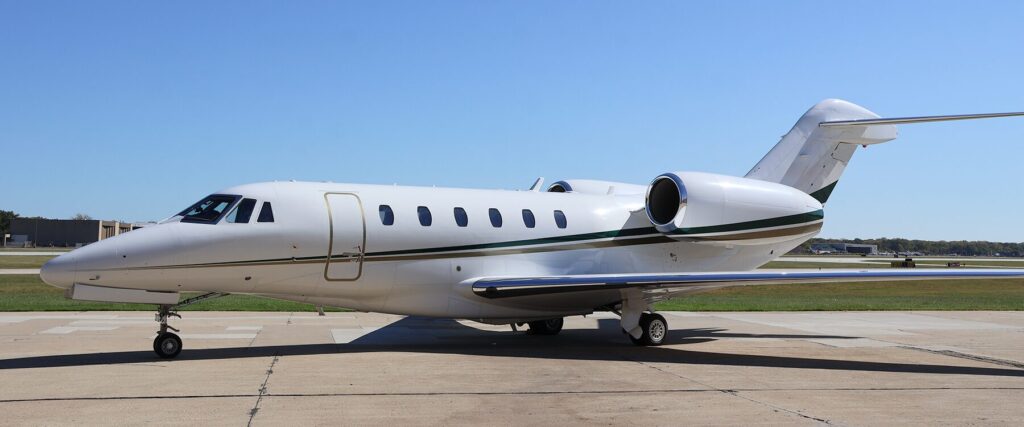
2. Cessna Citation X
The Citation X is one of the fastest business jets ever built, and speed is exactly why Clients request it. This midsize jet cruises at about 600 mph, near Mach 0.9, with a range of roughly 3,125 to 3,380 nautical miles and a ceiling of 51,000 feet. It seats up to eight.
The payoff is time. On a long domestic leg, the Citation X can shave meaningful minutes off the block, which matters when the schedule is tight and the day is long. It flies high, fast, and above much of the weather.
Executives on demanding schedules gravitate to it for the Los Angeles to New York run. Fewer minutes aloft means more time on the ground where it counts.
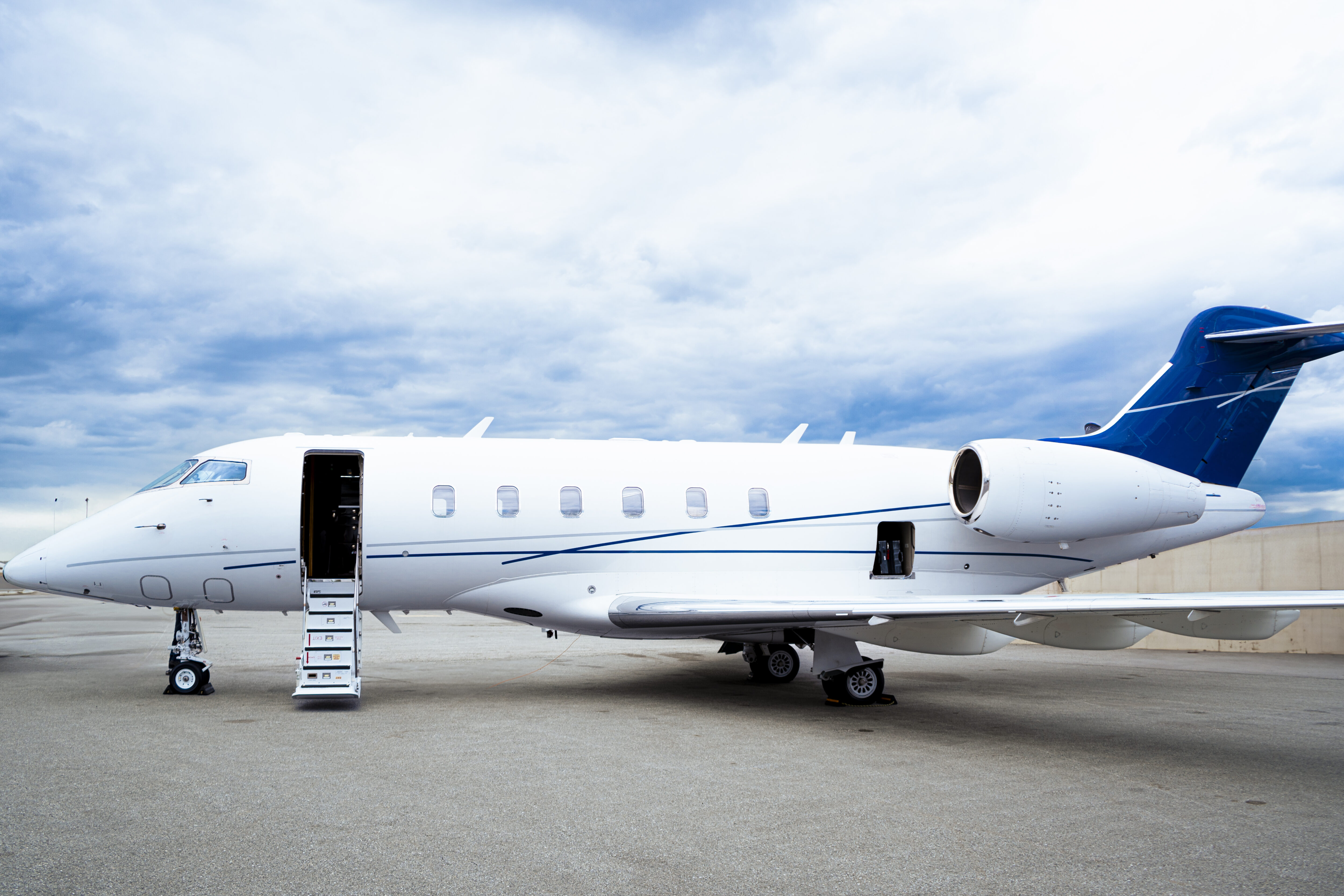
3. Bombardier Challenger 300 and 350
The Bombardier Challenger 300 and its refined 350 variant define the super-midsize category. The cabin seats eight to nine, and about six travel comfortably with full luggage on a longer leg. Range runs roughly 3,270 to 3,340 nautical miles, with a max cruise near 459 knots, about 528 mph.
This is the coast-to-coast aircraft Clients name first. The flat floor, the wide seats, and the genuine transcontinental reach make it the balanced choice for a demanding travel day. It carries the whole party without asking anyone to compromise.
For a full board flying west to east, the cabin holds a working session without the fatigue of a connection. Its reliability and ramp presence have made it a fixture of corporate flight departments and charter alike.
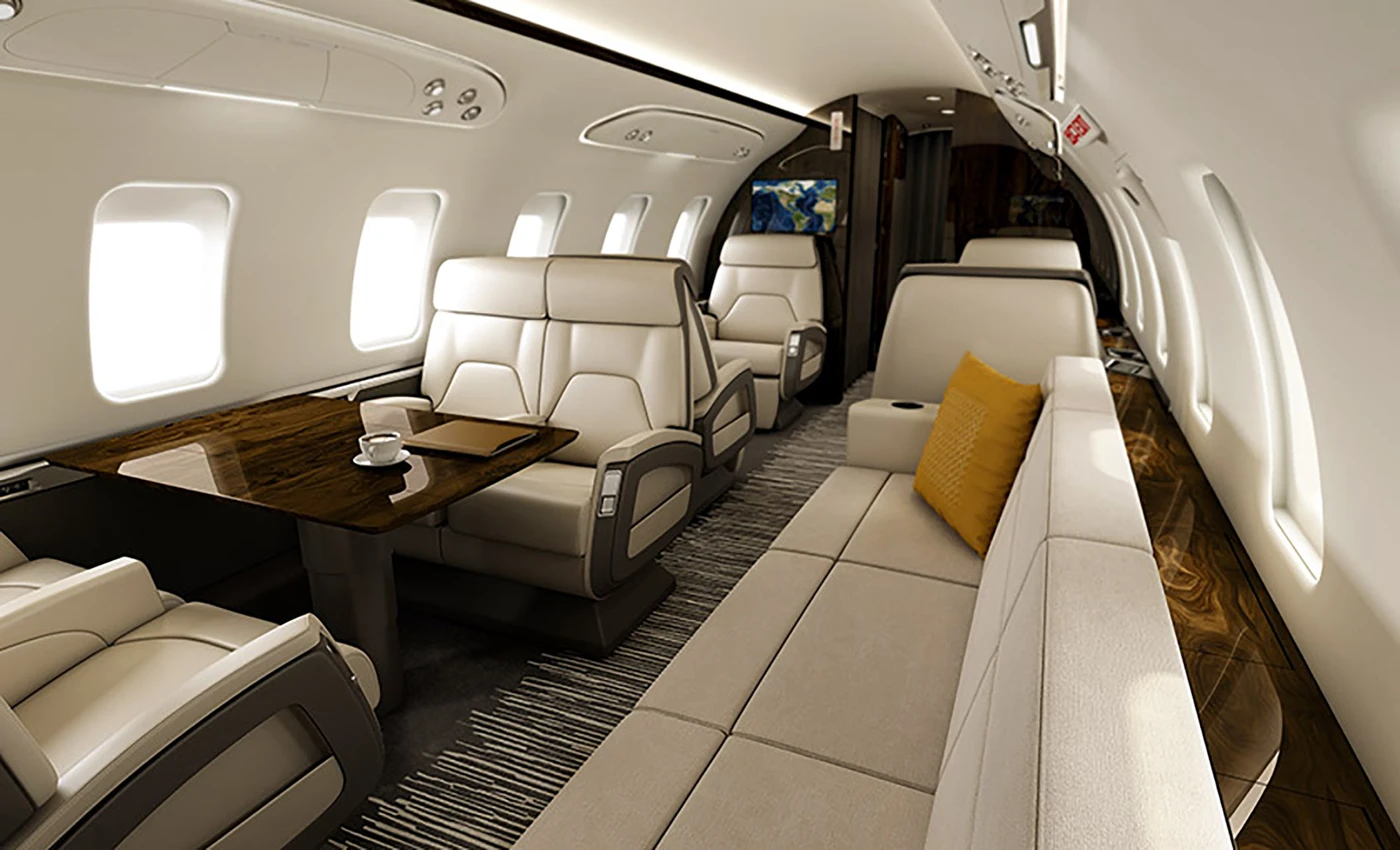
4. Bombardier Challenger 650
The Challenger 650 brings the heavy-jet cabin to the long domestic leg. It seats up to 10, carries a range beyond 4,000 nautical miles, and cruises at about 459 knots. The cabin is the story: one of the widest in its class, with room to hold a real meeting or spread out and rest.
Clients choose the 650 when the group is larger and the trip is longer. It is presence and comfort in equal measure, and it will reach far when the mission calls for it.
The 650 belongs to the executive team that travels together and works en route. With a full galley and a cabin wide enough to sit face to face, it turns a long leg into productive time.
5. Cessna Citation Latitude
The Citation Latitude has climbed the popularity charts on cabin comfort. This midsize jet seats up to nine, carries a range near 2,700 nautical miles, and reaches a ceiling of 45,000 feet. The cabin features a flat floor and a six-foot stand-up height that feels larger than the category suggests.
For travelers who value walking the aisle without stooping, the Latitude delivers. It is a comfortable, quiet choice for regional and near-transcontinental journeys alike.
It has become a favorite for growing families and small teams who want space without stepping up to a heavier cabin. The wide oval fuselage sets the tone the moment you step aboard.
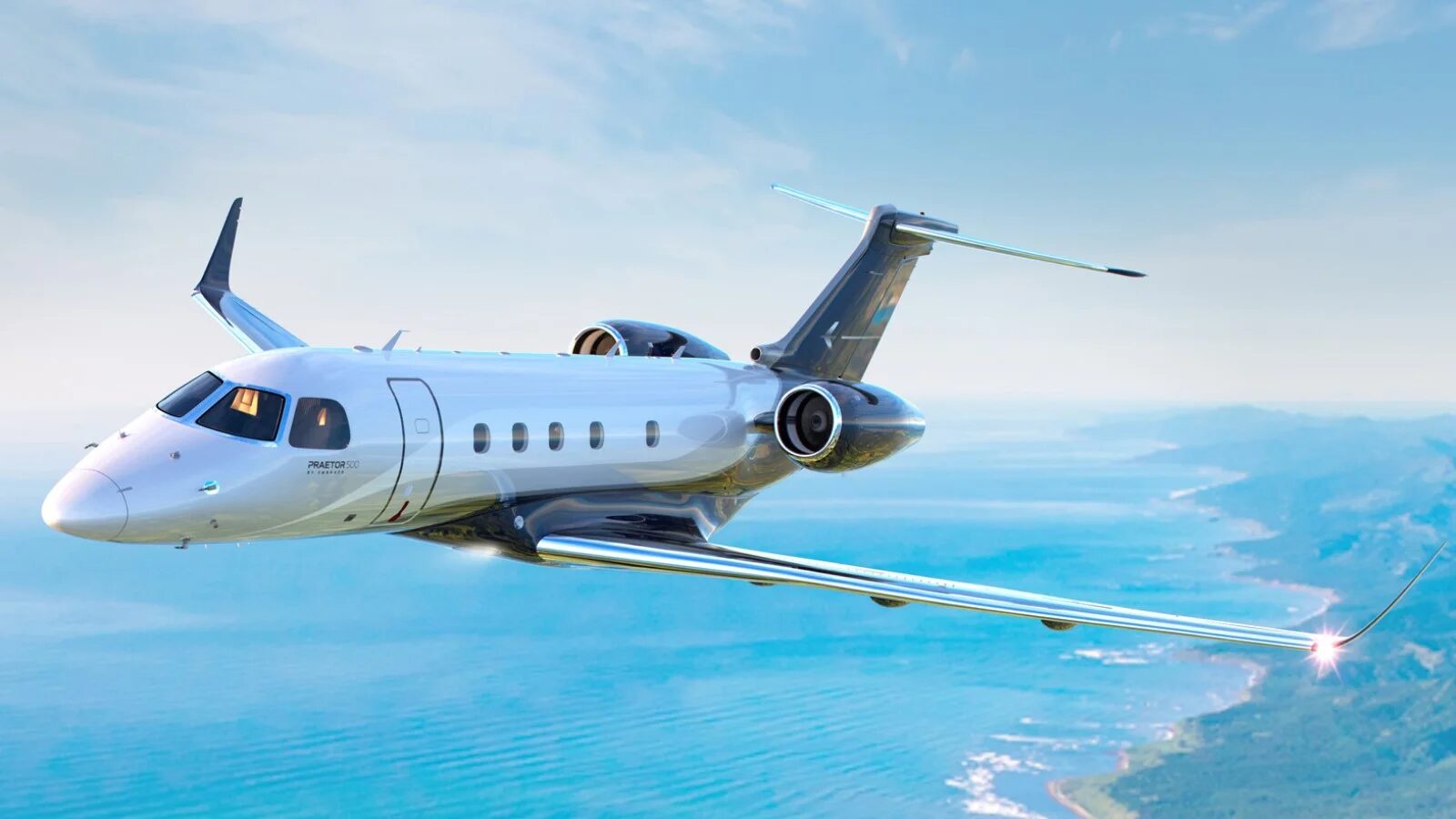
6. Embraer Praetor 500
The Praetor 500 is the technologist’s midsize jet. It seats up to nine, carries a range of roughly 3,340 to 3,412 nautical miles, and flies with full fly-by-wire controls that deliver a smooth, precise ride. That range is unusually generous for the category.
Clients favor the Praetor 500 when they want midsize economics with heavier-jet reach. It quietly outperforms expectations, which is exactly why it keeps appearing on charter requests.
Travelers who cross the country on a midsize budget find it punches above its class. The fly-by-wire system also smooths turbulence, which regular flyers notice on longer legs.
7. Bombardier Global 7500
The Global 7500 is a flagship in every sense. This heavy, ultra-long-range jet seats up to 17 to 19, carries a range of roughly 7,700 to 7,800 nautical miles, and reaches a ceiling of 51,000 feet. The cabin divides into four living zones, with an available master suite.
This is the aircraft for the nonstop intercontinental journey. Boston to Dubai, New York to Tokyo, the 7500 makes the world feel closer, and it lets you arrive rested rather than recovered. At this range, comfort is precisely what you are chartering for.
It anchors the travel of those who cross oceans on their own schedule. The master suite and dedicated crew rest make an overnight flight feel closer to a private residence than a cabin.
8. Bombardier Global 8000
The Global 8000 is the new benchmark, and the reason this year’s list looks different. Certified and entered into service at the end of 2025, it is now the longest-range business jet in production. It seats up to 19, carries a range of about 8,000 nautical miles and up to 8,070, and reaches a ceiling of 51,000 feet. Its max speed approaches Mach 0.94 to 0.95.
Availability is limited, and that exclusivity is part of what makes it coveted. When a Client asks for the farthest, fastest cabin in the sky, the Global 8000 is the answer. Reaching it takes an Advisor with the right network, which is exactly how the most sought-after aircraft stay special.
Because it entered service so recently, only a small number are flying, and access depends on relationships rather than open availability. For the Client who values being among the first, that scarcity is the appeal. An Advisor who knows where these aircraft sit can turn a hard-to-source cabin into a confirmed journey.
9. Embraer Phenom 300
The Phenom 300 is the most-delivered light jet, and its popularity is well earned. It seats up to six, carries a range near 2,000 nautical miles, and reaches a ceiling of 45,000 feet. For regional trips and short-runway airports, few aircraft match its blend of speed, comfort, and efficiency.
Clients love the Phenom 300 for the weekend getaway and the quick business hop. It is the light jet that feels a class above, which is why it remains the category’s benchmark.
It has introduced a generation of travelers to private aviation, and many stay with it for years. Owners and charter Clients alike praise its ride quality and the confidence of its avionics.
10. Cessna Citation CJ3 and CJ3+
The Citation CJ3 and its CJ3+ update are the dependable light jets Clients return to. Seating up to six, with a range of roughly 1,875 to 1,918 nautical miles and a ceiling of 45,000 feet, the CJ3 is efficient, quiet, and easy to position.
Its appeal is simple confidence. For regional travel and access to smaller fields, the CJ3 does exactly what a light jet should, without fuss and without excess.
For a family flying to a mountain retreat or a quick intrastate meeting, the CJ3 is a natural fit. Its efficiency also tends to keep it accessible when demand tightens.
11. Gulfstream G280
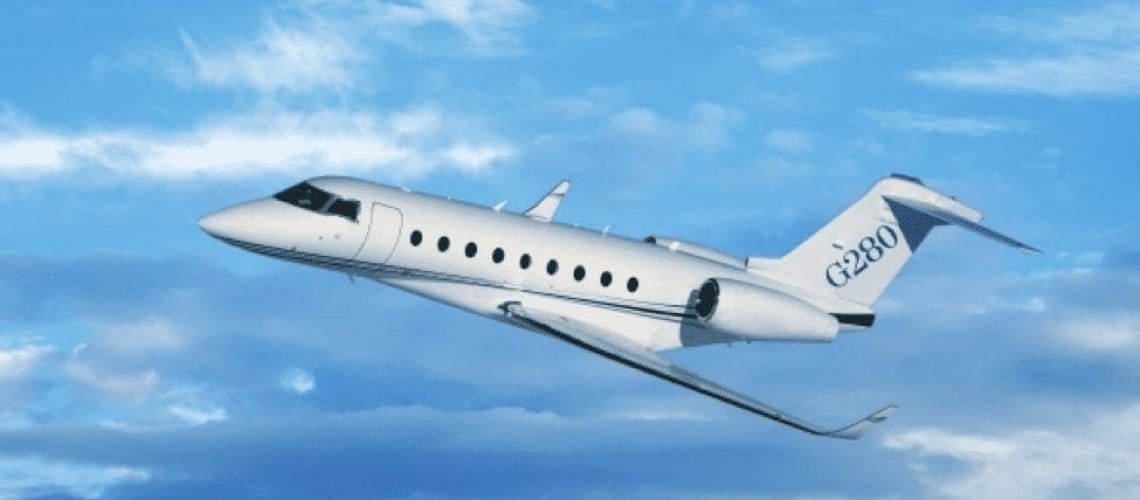
The Gulfstream G280 rounds out the list as a super-midsize favorite. It seats up to 10, carries a range of roughly 3,600 to 3,700 nautical miles, and cruises at about 459 knots. That range gives it a genuine coast-to-coast profile with room to spare.
Clients choose the G280 for its combination of range, cabin, and the Gulfstream pedigree. It is a confident choice for the traveler who wants transcontinental capability in a well-appointed cabin. It suits those who want that refinement without stepping into an ultra-long-range flagship, and on a coast-to-coast leg its range leaves a comfortable margin. For a deeper look at that pedigree, our retrospective on the Gulfstream IV traces where the family’s reputation began.
What Determines the Cost of Chartering a Popular Private Jet?
The cost of chartering a popular private jet is shaped by the mission, not by a fixed sticker price. Four factors do most of the work, and understanding them puts you in a stronger position before you ever request a quote.
Aircraft category and size: a light jet and an ultra-long-range flagship serve different missions and sit at very different points on the cost scale.
Flight time: longer legs and higher cruise speeds change the equation, since most charter is priced around time in the air.
Positioning and repositioning: where the aircraft starts and where it must go next affects the trip, especially for one-way journeys.
Demand and timing: peak travel windows and popular routes tighten availability, which shapes what the right aircraft costs to secure.
Positioning deserves a closer look, because it is the driver travelers see least. When an aircraft has to fly empty to reach your departure airport, or continue elsewhere after dropping you, that movement factors into the trip. One-way journeys often carry more of this than round trips, which is one reason two similar routes can price differently.
Timing works the same way. Popular corridors and peak travel weekends draw more demand, and the most requested cabins are secured first. Magellan Jets does not add peak-day surcharges, so the value of planning early is access to the right aircraft rather than avoidance of a premium.
Because these variables move together, a precise number only means something once the route, dates, and aircraft are known. That is where a Private Aviation Advisor earns their place, confirming the exact quote for your specific mission rather than a range that may not fit. Our guide to private jet charter costs walks through how these drivers interact in more detail.
Safety, Technology, and Comfort on the Most Popular Private Jets
The aircraft is only half of the charter. The other half is how the trip is sourced, vetted, and cared for, and this is where an asset-light model becomes a genuine advantage.
Magellan Jets does not own or operate aircraft. Every journey is sourced from the Magellan Jets Preferred Network, an exclusive group of fewer than 100 rigorously vetted operators. That selectivity is deliberate. It means the aircraft that reaches you has cleared a standard most of the market never sees.
Safety leadership here is measurable. Magellan Jets holds the WYVERN Authorized Broker Certification, which assures adherence to the highest safety intelligence and standards on every charter flight. Our Advisors ask about safety before anything else on a trip.
Independence is part of that standard. Because Magellan Jets is asset-light and tied to no single fleet, every recommendation stays in the Client’s interest, matched to the safest available aircraft for the route rather than to whatever happens to be on the ramp.
The technology on these popular jets matches the standard. Modern avionics, synthetic vision, and terrain awareness are common across the category, and cabin technology keeps you connected and productive from wheels-up to touchdown. Comfort follows the same logic: quiet cabins, flat floors, and thoughtful layouts designed around how you actually travel. You can read more about how we lead with safety on every journey.
Popular Private Jets to Charter in 2027: Comparison Table
Jet
Category
Passengers
Approx. Range (nm)
Cessna Citation Excel / XLS
Midsize
Up to 8
1,840–2,020
Cessna Citation X
Midsize
Up to 8
3,125–3,380
Bombardier Challenger 300 / 350
Super-Midsize
8–9
3,270–3,340
Bombardier Challenger 650
Heavy
Up to 10
4,000+
Cessna Citation Latitude
Midsize
Up to 9
~2,700
Embraer Praetor 500
Midsize
Up to 9
3,340–3,412
Bombardier Global 7500
Heavy / Ultra-Long-Range
17–19
7,700–7,800
Bombardier Global 8000
Heavy / Ultra-Long-Range
Up to 19
~8,000+ (up to 8,070)
Embraer Phenom 300
Light
Up to 6
~2,000
Cessna Citation CJ3 / CJ3+
Light
Up to 6
1,875–1,918
Gulfstream G280
Super-Midsize
Up to 10
3,600–3,700
How to Choose the Right Private Jet
The most popular jet is not automatically the right one for you. The right aircraft is the one that fits your mission, and four questions bring it into focus.
Work through them in order. Each answer narrows the field, and by the fourth you usually have a category and one or two aircraft in view. An Advisor then refines the choice against live availability and the specifics of your route.
Range
Start with the distance. A nonstop from New York to London belongs to an ultra-long-range flagship, while a Boston to Nantucket hop is a light-jet mission. Matching range to route keeps you from paying for capability you will not use, or landing short of where you meant to be.
Passengers and Luggage
Count the party and the bags honestly. A cabin rated for nine seats may carry six in comfort once full luggage is aboard. The right cabin holds everyone and everything without asking anyone to travel light.
Golf clubs, ski gear, and a full week of luggage change the math quickly. It is worth telling your Advisor what you are bringing, since baggage volume often decides the aircraft as much as seat count does.
Runway Access
Consider where you actually want to land. Shorter runways at resort, mountain, and island airports favor light and midsize jets, and reaching the closest field can save an hour on the ground. Access, not just distance, defines the best aircraft for many trips.
Mission Type
Finally, match the aircraft to the day. A quick regional meeting, a family holiday, and a transcontinental deal each call for a different cabin. This is where the portfolio matters: for occasional trips, On-Demand Charter gives you the right aircraft on request, and for those approaching 25 hours a year, a Jet Card or the Premium Jet Card brings guaranteed availability and fixed rates. Clients whose flying is heavier still can weigh Fractional Ownership against charter or step further into fractional versus full ownership. Because Magellan Jets owns no fleet, every recommendation is made in your best interest, and a Private Aviation Advisor sources the right match from the Preferred Network.
One relationship carries you across all of it. A Client who starts with On-Demand Charter and begins flying more often can move to a Jet Card without changing partners, and a Jet Card holder who decides to acquire an aircraft has the same team for that step. Needs change over time, and the portfolio is built to change with them.
Frequently Asked Questions About the Most Popular Private Jets to Charter (FAQs):
What Is the Most Popular Private Jet to Charter?
The Embraer Phenom 300 is the most-delivered light jet and one of the most requested aircraft in charter, prized for regional reach and short-runway access. Among midsize jets, the Cessna Citation Excel and XLS are perennial favorites. The right answer depends on your mission, and a Private Aviation Advisor can match one to your specific route.
What Are the Most Popular Private Jet Charter Companies?
Well-known names in the category include NetJets, Flexjet, Wheels Up, and Magellan Jets. Magellan Jets is distinct as an asset-light private aviation solutions provider that owns no fleet and sources every trip from the Magellan Jets Preferred Network of fewer than 100 vetted operators. That independence means each recommendation is made in the Client’s best interest rather than to fill a specific aircraft.
What Is the Fastest Private Jet You Can Charter?
The Cessna Citation X is one of the fastest business jets ever built, cruising at about 600 mph, near Mach 0.9. The newer Bombardier Global 8000 edges past it, with a max speed approaching Mach 0.94 to 0.95. For most travelers, either aircraft turns a long day into a manageable one.
What Is the Best Private Jet for a Coast-to-Coast Flight?
Super-midsize and heavy jets suit coast-to-coast travel best. The Bombardier Challenger 350 and Gulfstream G280 offer genuine transcontinental range with a wide, quiet cabin, and the Cessna Citation X adds speed for a faster block time. Each carries a full party and luggage across the country in comfort.
What Is the Best Private Jet for International Travel?
For nonstop intercontinental journeys, the ultra-long-range flagships lead. The Bombardier Global 7500 flies roughly 7,700 to 7,800 nautical miles with four living zones, and the new Global 8000 extends that to about 8,000 nautical miles and beyond. Both let you sleep across time zones and arrive ready.
How Many Passengers Can the Most Popular Private Jets Carry?
Capacity ranges widely by category. Light jets such as the Phenom 300 and Citation CJ3 seat up to six, midsize and super-midsize jets seat eight to 10, and ultra-long-range flagships like the Global 7500 seat up to 17 to 19. Comfortable capacity is often lower than the maximum once full luggage is aboard, which an Advisor will factor into the recommendation.
How Does the Bombardier Global 8000 Compare to the Global 7500?
The Global 8000 is the newer and longer-range of the two, carrying about 8,000 nautical miles and up to 8,070 versus roughly 7,700 to 7,800 for the 7500. It is also faster, approaching Mach 0.94 to 0.95, and seats up to 19. The 7500 remains widely available with four living zones and an available master suite, while the 8000’s availability is more limited.
What Is the Best-Value Light Jet to Charter?
The Embraer Phenom 300 and the Cessna Citation CJ3 and CJ3+ are the standout light jets for value. Both handle regional trips and short runways with efficiency, and the Phenom 300’s popularity keeps it widely available. An Advisor can weigh availability and routing to find the better fit for your dates.
What Is the Best Private Jet for Family Travel?
Families tend to favor midsize and super-midsize cabins for the stand-up room and generous baggage space. The Cessna Citation Latitude offers a flat floor and six-foot stand-up height, and the Bombardier Challenger 350 adds transcontinental range for longer holidays. The right choice balances the size of the party against the length of the trip.
How Far in Advance Should I Book a Popular Private Jet?
Same-day and next-day charter is often feasible, which is part of the appeal of private travel. That said, peak dates and specific in-demand aircraft favor earlier planning, since the most requested cabins are secured first. A Private Aviation Advisor can lock in the right aircraft as soon as your plans take shape.
Can I Charter an Ultra-Long-Range Jet for a Short Regional Flight?
Yes, and there is no rule against it. For a short regional hop, though, a lighter category is usually the better-value match and can reach smaller airports an ultra-long-range flagship cannot. An Advisor will recommend the aircraft that fits the mission rather than defaulting to the largest cabin available.
Are Light Jets Safe for Night Flights and Poor Weather?
Yes. Light jets are certified for instrument flight rules and are equipped with modern avionics, synthetic vision, and terrain awareness that support night and low-visibility operations. Every aircraft Magellan Jets sources is flown by an operator vetted through the Preferred Network, so the standard holds regardless of the hour or the forecast.
What Determines the Cost of Chartering a Popular Private Jet?
Cost is driven by aircraft category and size, flight time, positioning and repositioning, and demand around your dates and route. Because these move together, a precise figure only holds once the mission is defined. A Private Aviation Advisor confirms the exact quote for your specific trip rather than quoting a range that may not apply.
What Is the Difference Between a Light, Midsize, Super-Midsize, and Heavy Jet?
Light jets seat up to six or seven and specialize in short regional trips and small runways. Midsize jets add a stand-up cabin and near-transcontinental range, while super-midsize jets deliver genuine coast-to-coast reach in a wider cabin. Heavy jets carry larger groups over long legs with the most cabin space, and each step up trades runway flexibility for range and room.
Talk to a Private Aviation Advisor
The most popular private jets earn their reputations one journey at a time, and the right one for you is the aircraft that fits your mission exactly. That match is what a Private Aviation Advisor delivers, sourced from a Preferred Network built on safety and confirmed with a precise quote for your route. When you are ready to fly, one conversation puts the whole portfolio to work for you.
Few decisions shape a journey more than the aircraft beneath you. The Cessna Citation Latitude and the Cessna Citation Longitude are two of the most requested jets in their classes, and each answers a different ambition. In the citation latitude vs longitude decision, the Latitude is the graceful choice for regional and coast-to-coast flying, while the Longitude is the jet you call on when the mission asks for true transcontinental reach, a larger cabin, and more cruise speed.
The short version: the Citation Longitude range reaches 3,500 nm at a 449 kn cruise, and the Citation Latitude range covers 2,700 nm at a 368 kn cruise. The Longitude is a super-midsize jet with a 755 cu ft cabin. The Latitude is a midsize jet with a 587 cu ft cabin and slightly more baggage room. Both seat up to nine passengers, both fly the Garmin G5000 flight deck, and both are available through Magellan Jets by the hour.
Both aircraft carry the quiet confidence that has made the Citation name familiar in private aviation for decades. They share a six-foot flat-floor cabin, the same avionics, and a reputation for reliability that operators trust. Where they part ways is in scale and stamina, and understanding that difference is what separates a jet that merely fits your calendar from one that expands what your calendar can include.
Citation Latitude Overview (Midsize)
The Cessna Citation Latitude earned its following by making the midsize cabin feel generous. When it entered service in 2015, it introduced a flat floor and a stand-up cabin at a sensible operating cost. That combination put a genuinely comfortable jet within reach of more Private Clients. It is why the Latitude remains a staple across the On-Demand Charter fleet today.
Step aboard and the cabin measures 21 ft 8 in long, 6 ft 4 in wide, and 6 ft 0 in tall, with 587 cu ft of interior volume. It seats up to nine passengers with two crew, and its 127 cu ft baggage hold swallows golf bags, ski gear, and full-length garment bags without negotiation. The Citation Latitude range of 2,700 nm links most major domestic city pairs nonstop, from New York to Los Angeles or Miami to Seattle in favorable conditions.
Under the wing sit two Pratt & Whitney Canada PW306D1 engines producing 5,907 lb of thrust each, pushing a normal cruise of 368 kn up to a ceiling of 45,000 ft. The Citation Latitude wingspan of 72.3 ft gives the aircraft stable, unhurried manners in the air. For a fuller look at the specification sheet, our Citation Latitude aircraft page lays out the details.
What draws Private Clients back to the Latitude is how relaxed the cabin feels for its class. Large oval windows fill the space with natural light, and the seats recline into a genuinely restful position for a midday flight. Picture a design team flying New York to Aspen, or a family repositioning from Boston to Palm Beach. On those missions the aircraft delivers comfort and range in equal measure, without the higher hourly cost of a larger cabin.
Citation Longitude Overview (Super-Midsize)
If the Latitude is about comfortable efficiency, the Citation Longitude is about range and presence. This is the aircraft that stretches the Citation identity into the super-midsize class. It entered service in 2019 as Textron Aviation’s largest Citation, built for the traveler whose meetings are separated by continents rather than states.
The headline figure is the Citation Longitude range of 3,500 nm, roughly 800 nm more than the Latitude. That additional reach changes the map. City pairs that force a fuel stop in a smaller jet open up nonstop, and the cabin that carries you there is larger in every dimension that matters. The Longitude cabin measures 25 ft 2 in long, 6 ft 4 in wide, and 6 ft 0 in tall, with 755 cu ft of volume, and its 112 cu ft baggage compartment stays accessible in flight.
Two Honeywell HTF7700L engines deliver 7,665 lb of thrust each, lifting the aircraft to a 45,000 ft ceiling at a 449 kn normal cruise. The Citation Longitude wingspan of 68.9 ft is slightly tighter than the Latitude’s, yet the aircraft carries more, flies farther, and moves faster. You can review the full Citation Longitude specs on our Citation Longitude aircraft page.
Presence is the word travelers reach for after their first Longitude flight. The extra cabin length shows in the aisle, the seating, and the sense of space over a five-hour leg. Picture an executive team crossing the country for a morning board meeting, or a family heading west for the holidays. The Longitude turns a long travel day into productive, comfortable time in the air. That is the quiet luxury of the super-midsize class.
Citation Latitude vs. Longitude: Full Specs Comparison Table
The clearest way to read the citation latitude vs longitude question is side by side. The figures below reflect validated specifications for each aircraft.
Specification
Citation Latitude (Midsize)
Citation Longitude (Super-Midsize)
Category
Midsize
Super-midsize
Range
2,700 nm
3,500 nm
Normal cruise speed
368 kn
449 kn
Passenger capacity
Up to 9
Up to 9
Crew
2
2
Cabin length
21 ft 8 in
25 ft 2 in
Cabin width
6 ft 4 in
6 ft 4 in
Cabin height
6 ft 0 in
6 ft 0 in
Cabin volume
587 cu ft
755 cu ft
Baggage capacity
127 cu ft
112 cu ft
Service ceiling
45,000 ft
45,000 ft
Wingspan
72.3 ft
68.9 ft
Engines
Two Pratt & Whitney Canada PW306D1, 5,907 lb thrust each
Two Honeywell HTF7700L, 7,665 lb thrust each
Avionics
Garmin G5000
Garmin G5000
Entered service
2015
2019
Citation Longitude Range and Performance in the Real World
Range is where the two aircraft separate most decisively, and it deserves an honest read. The Citation Longitude range of 3,500 nm is real, and it unlocks nonstop city pairs the Latitude simply cannot reach. New York to London sits close to the edge of that book value in still air, which is precisely why nuance matters here. Published range assumes ideal conditions, a light payload, and cooperative winds.
In practice, a headwind across the North Atlantic, a full cabin, or a warm day at altitude will trim usable range. So the candid answer is this. The Longitude is an outstanding transcontinental jet for the mainland United States and comfortable regional international flying, and it can cross the Atlantic on favorable eastbound routings from the Northeast. It is not a jet that reaches London from anywhere in the country in any weather, and it is not a mainland-to-Hawaii aircraft. Those missions belong to long-range and ultra-long-range cabins.
The Citation Latitude range of 2,700 nm is best understood as a domestic and near-international tool. It connects the coasts, reaches the Caribbean, and handles most business city pairs without a fuel stop. On speed, the Longitude’s 449 kn normal cruise trims meaningful time off longer legs against the Latitude’s 368 kn, so the farther you fly, the more that difference compounds in hours saved.
Translating those numbers into routes helps. The Latitude comfortably links Chicago to Los Angeles, New York to Denver, or Dallas to the Bahamas nonstop in typical conditions. The Longitude extends that map to legs like Los Angeles to New York against winter headwinds, Seattle to the Northeast, or Teterboro to select European destinations on the right day. When a route sits near the limit of a midsize jet, the Longitude is usually the aircraft that keeps it nonstop.
Cabin, Comfort, and Baggage
Comfort is the quiet reason travelers return to these two jets. Both aircraft carry the same six-foot flat-floor cabin, and that single design decision does more for a long day of travel than any brochure feature. A flat floor means you walk the aisle without stooping or stepping over a dropped center section. That matters as much for a parent with a toddler as it does for an executive stretching between meetings.
That geometry also makes both cabins genuinely accommodating. Families spread out, pet-friendly charters travel easily, and passengers with mobility considerations board and move with dignity. The Latitude’s 587 cu ft feels open for a midsize jet. The Longitude’s 755 cu ft adds real elbow room, wider seating arrangements, and a longer cabin for stand-up movement over multi-hour legs.
Baggage tells its own story. The Latitude offers 127 cu ft of hold, which is generous for its class and ideal for gear-heavy trips. The Longitude carries 112 cu ft, and it keeps that compartment accessible in flight, so a laptop bag or a change of clothes stays within reach at altitude. If you are still weighing which cabin size suits your travel pattern, our guide to choosing the right jet category walks through the trade-offs in plain terms.
The details add up over a full travel day. Both cabins pair natural light from generous windows with quiet acoustics that let a conversation carry without effort. On the Longitude, the added length gives the galley and lavatory more breathing room, which is precisely what you want on the transcontinental legs the aircraft was built to fly. Small margins in space become large margins in comfort the longer you are aboard.
Avionics and Flight Deck
Confidence in a private jet starts in the cockpit, and here the two aircraft speak the same language. Both the Citation Latitude and the Citation Longitude fly behind the Garmin G5000 flight deck, an integrated avionics suite built around large high-resolution touchscreen controllers.
For Private Clients, the practical benefit is consistency. Crews trained across the Citation family work within a familiar interface, which supports precise flight planning, clear situational awareness, and smooth handling in busy airspace. The shared platform is one reason both aircraft hold such a steady reputation among the vetted operators in the Magellan Jets Preferred Network.
That reliability carries real weight for a traveler. A modern, integrated flight deck supports smoother descents into weather, more accurate arrival timing, and fewer surprises on the days when airspace is crowded. The technology stays in the background where it belongs, and the result is a calm, predictable flight from taxi to touchdown. For anyone comparing the citation latitude vs longitude on merit, the shared avionics remove one variable from the decision entirely.
Operating Cost and Efficiency
Efficiency is part of the appeal on both tails, and it shows up differently on each. The Latitude flies a lighter airframe behind two 5,907 lb Pratt & Whitney engines, so its fuel burn and hourly cost sit below the Longitude’s on comparable legs. For Private Clients whose flying is mostly regional and coast-to-coast, that thrift is the whole point of the midsize class.
The Longitude asks for more fuel to move a larger cabin at a faster 449 kn cruise, yet it earns that back on the routes it was built for. On a long leg, its speed shortens time in the air, and its range removes the fuel stop a midsize jet would need. Fewer stops mean less repositioning, less crew duty pressure, and a cleaner schedule, which is its own kind of efficiency.
The honest way to read cost is by mission, not by sticker. A short regional hop rarely justifies the Longitude’s larger cabin and higher hourly rate, and a demanding transcontinental day rarely excuses the false economy of a jet that has to stop for fuel. Match the aircraft to the route, and each one becomes the efficient choice on the flying it does best.
Chartering a Citation Latitude or Longitude
Access to these aircraft does not require ownership, and that is the point. Magellan Jets is a private aviation solutions provider. We do not own or operate aircraft. Instead, we source each flight through the Magellan Jets Preferred Network of fewer than 100 vetted operators. This asset-light model matches the right tail to your mission rather than pushing you toward a single fleet.
Charter pricing is quoted by category. As an estimate, a Citation Latitude in the Mid Jet category runs about $8,600/hr, while a Citation Longitude in the Super-Midsize category runs about $9,700/hr. These are estimated hourly rates for Mid Jet and Super-Midsize charter, inclusive of fuel. They do not include contingencies such as de-icing, positioning, overnight fees, or other trip-specific costs. Final pricing is confirmed at time of quote.
How you access those hours is a separate and worthwhile question. On-Demand Charter suits travelers with variable schedules who want to select the aircraft trip by trip. A Jet Card suits those who fly often enough to value fixed rates and guaranteed availability. An advisor can map your flying pattern to the option that fits, whether that means the Latitude, the Longitude, or a mix across the year.
The asset-light model matters more than it first appears. Because Magellan does not own or operate aircraft, an advisor has no incentive to steer you toward a fleet that must be kept flying. Every recommendation follows your mission, and every operator in the Preferred Network is vetted before a Client ever steps aboard. That independence is the difference between being sold an aircraft and being matched to the right one. Magellan Jets coordinates travel using approved FAA 14 CFR Part 135 vendors for charter and Jet Card programs.
Which Citation Fits Your Mission
The right aircraft follows the way you actually travel. Start with your typical routes, your usual party size, and how much of your flying crosses the country versus staying regional. From there, the choice tends to make itself.
Choose the Citation Latitude if most of your flying is regional or coast-to-coast, your group runs small to medium, and efficiency drives the decision. It carries up to nine passengers in a comfortable midsize cabin, holds the most baggage of the pair, and covers 2,700 nm nonstop. For a golf foursome heading to Scottsdale or a family run to the Caribbean, the Latitude is an elegant, sensible answer.
Choose the Citation Longitude when reach and cabin size lead. The 3,500 nm range, the larger 755 cu ft cabin, and the faster 449 kn cruise make it the stronger companion for coast-to-coast red-eyes, transcontinental business travel, and select international legs. Executives running full cross-country schedules, or groups that want room to work and rest on longer flights, will feel the Longitude’s advantages most on the routes that stretch a smaller jet.
Many Private Clients ultimately use both, and there is wisdom in that. The Latitude handles the frequent regional trips where its efficiency shines, and the Longitude steps in for the long-haul days that demand more range and room. An advisor can build a travel plan that draws on each aircraft as the calendar requires, so you always fly the jet the mission actually calls for, rather than the one you happen to own.
Frequently Asked Questions About the Citation Latitude and Longitude (FAQs):
What Is the Difference Between the Citation Latitude and Longitude?
The Latitude is a midsize jet, and the Longitude is a super-midsize jet. The Longitude flies farther at 3,500 nm versus 2,700 nm, and it cruises faster at 449 kn versus 368 kn. It also offers a larger 755 cu ft cabin against the Latitude’s 587 cu ft. The Latitude counters with a slightly larger 127 cu ft baggage hold and lower operating cost.
What Is the Range of the Citation Longitude, and How Does It Compare to the Latitude?
The Citation Longitude range is 3,500 nm, while the Citation Latitude range is 2,700 nm. That is roughly 800 nm of additional reach, which translates to more nonstop city pairs and fewer fuel stops on long legs. Both figures assume favorable conditions, so real-world range varies with payload and winds.
Can a Citation Longitude Fly Across the Atlantic?
In the right conditions, yes. The Citation Longitude’s 3,500 nm range supports transatlantic flying on favorable eastbound routings, such as the Northeast United States to parts of Western Europe. It is not a jet that guarantees a nonstop from any U.S. city to London in any weather, so route planning and winds shape each trip.
Can a Citation Longitude Fly to Hawaii?
Not reliably from the mainland. The overwater distance from the West Coast to Hawaii pushes past the practical limit of a 3,500 nm jet once winds and reserves are factored in. That mission suits a long-range or ultra-long-range aircraft, which an advisor can source for you.
How Many Passengers Do the Citation Latitude and Longitude Seat?
Both the Citation Latitude and the Citation Longitude seat up to nine passengers with two crew. Typical charter configurations arrange those seats differently, and the Longitude’s longer cabin gives its layout more room, but the certified capacity is the same on both aircraft.
How Do the Citation Latitude and Longitude Compare on Cabin Size?
Both share a six-foot flat-floor cabin that is 6 ft 4 in wide. The Longitude is the larger of the two, measuring 25 ft 2 in long with 755 cu ft of volume, while the Latitude measures 21 ft 8 in long with 587 cu ft. The extra length gives the Longitude wider seating groups and more stand-up space on long legs.
Which Citation Is More Fuel-Efficient and Cheaper to Operate?
The Latitude is the lighter, lower-cost aircraft to run, which makes it the efficient pick for regional and coast-to-coast flying. The Longitude burns more to move a bigger cabin faster and farther, yet it recovers that on long routes by flying nonstop where a midsize jet would stop for fuel. Efficiency ultimately depends on the mission.
Which Is Better for Cross-Country vs. Transcontinental Business Travel?
For coast-to-coast domestic flying, both aircraft perform well, and the Latitude is the efficient pick. For demanding transcontinental schedules, especially red-eyes and legs near the edge of range, the Longitude’s added speed, range, and cabin size make it the stronger choice.
Is the Citation Latitude a Good Private Jet?
Yes. The Latitude is one of the most requested midsize jets in private aviation, prized for a spacious flat-floor cabin, generous baggage, and sensible operating cost. It links most domestic city pairs nonstop with its 2,700 nm range, which is why it stays in steady demand across the charter market.
Do Both Use the Same Cockpit Technology?
Yes. Both aircraft fly behind the Garmin G5000 integrated avionics suite, with touchscreen controllers and modern flight-planning tools. That shared platform supports crew familiarity and consistent handling across the Citation family.
Your Next Flight Starts With a Conversation
The Latitude and the Longitude are both exceptional private jets. The better one depends entirely on your routes, your people, and your ambitions. That is a conversation worth having with someone who flies these decisions every day. Talk to a Private Aviation Advisor and let us match the right Citation to your next mission.
The best U.S. cities to visit in fall include Salt Lake City, Utah; Anchorage, Alaska; Traverse City, Michigan; Providence, Rhode Island; Nashville, Tennessee; Portsmouth, New Hampshire; Salem, Massachusetts; and Louisville, Kentucky. Each offers a distinct seasonal draw, from high-country color against granite peaks to candlelit art installations floating on urban rivers.
Autumn moves slowly across the United States, from north to south and from high ground to sea level. This gives travelers weeks of opportunity to catch peak foliage. These eight fall foliage destinations span the country’s geographic range, and the season arrives on a different schedule in each. For Private Clients who value flexibility and direct airport access, reaching any of these autumn towns takes a single flight on your own timeline. That direct access is part of what makes fall travel by private jet so appealing.
Salt Lake City, Utah
Salt Lake City sits at the base of the Wasatch Range, where autumn transforms alpine canyons into corridors of red and gold. Big Cottonwood and Little Cottonwood canyons are the most popular routes, their walls lined with aspens that peak in late September and hold color into mid-October. Farther south, the maples of Millcreek Canyon glow a deeper crimson.
The city itself offers urban polish within minutes of wild terrain. Temple Square anchors downtown, while the surrounding neighborhoods blend historic architecture with contemporary galleries and restaurants. For hikers, Utah’s trail network stretches from gentle canyon walks to full-day ridge scrambles with views stretching into Nevada.
Early mornings carry a chill at this elevation, but afternoons remain mild through October. Pack layers and expect the unexpected. A dusting of snow on the peaks only sharpens the contrast with the foliage below.
Anchorage, Alaska
Anchorage is not a place most travelers associate with autumn, but that is part of its appeal. By early September, fireweed and birch begin shifting to gold and copper. The crowds thin. The air sharpens. And on clear days, Denali appears over the northern horizon in the kind of full relief that summer haze rarely allows.
Moose sightings increase as bulls move through their rut, wandering suburban parks and backyard trails with surprising regularity. The Chugach Mountains, accessible from trailheads within the city limits, offer alpine hiking with views of glaciers and tidal flats.
Remoteness is the whole point here, a form of exclusivity for travelers who prize it. The days are shorter but still long enough for meaningful exploration, and the season brings a quiet that summer rarely provides. From most of the Lower 48, a Super-Midsize or Heavy Jet makes the run to Anchorage nonstop, turning a connection-heavy commercial route into a single, direct flight. A Midsize Jet can handle the trip from Pacific Northwest departures.
Traverse City, Michigan
Traverse City anchors Michigan’s Grand Traverse Bay, and autumn is when this stretch of the Lower Peninsula shows off. The Old Mission Peninsula, a narrow strip of land dividing the bay’s east and west arms, threads together orchards, vineyards, and roadside fruit stands along a drive that peaks in reds and golds by mid-October. Farther west, the Leelanau Peninsula’s 100-mile M-22 route winds past vineyards and small towns with the same lakeside backdrop.
Fall here carries an urgency of its own. Cider mills and pumpkin patches open across the region, corn mazes fill weekends, and the wineries along the Old Mission and Leelanau trails stay busy with visitors sipping between rows of turning leaves. Sleeping Bear Dunes National Lakeshore, a short drive from downtown, pairs dramatic dune overlooks with panoramic views of Lake Michigan and the surrounding forest color, and the Pierce Stocking Scenic Drive offers a seven-mile route through the heart of it.
This is a destination built for travelers who want lake views, wine country, and outdoor scenery without the density of a major metro. Downtown Traverse City’s restaurants, breweries, and the Village at Grand Traverse Commons all sit within an easy, walkable core, minutes from the bay itself.
Providence, Rhode Island
Providence is a city designed to be discovered on foot, and autumn is its most flattering season. The historic East Side climbs College Hill in layers of brick and clapboard, shaded by oaks and maples that turn amber and rust by late October. Roger Williams Park, 435 acres of lakes, gardens, and woodlands, offers a more immersive experience of the season.
The city’s defining fall event is WaterFire, an installation created by artist Barnaby Evans in 1994 that has grown into a civic ritual. Bonfires float on the three rivers that converge downtown, drawing crowds to the banks as performers, musicians, and food vendors line the walkways. WaterFire lightings continue through the fall season, typically including dates in September, October, and early November.
Providence sits close enough to Boston for a half-day drive but offers a calmer pace, better parking, and a dining scene that punches well above its size. For a quiet long weekend in New England, it deserves consideration before the more obvious choices.
Nashville, Tennessee
Nashville offers a version of fall that the Deep South rarely delivers: mild days, cooler evenings, and a city still fully in motion. The honky-tonks of Lower Broadway remain open year-round, but autumn strips away some of the summer humidity and bachelorette crowds, leaving a city more comfortable to navigate.
The neighborhoods beyond downtown reveal the depth of the city’s appeal. East Nashville’s restaurants and coffee shops attract a creative class that arrived over the past decade and never left. The Gulch and 12 South offer boutique shopping and dining in walkable settings. Centennial Park, home to a full-scale replica of the Parthenon, provides green space within the urban core.
Music remains the throughline. Music City’s fall calendar fills with concerts, festivals, and listening rooms that range from stadium-scale touring acts to songwriter rounds in hundred-seat venues. The city’s culinary scene, now recognized nationally, offers hot chicken, upscale Southern, and everything in between.
Portsmouth, New Hampshire
Portsmouth occupies a narrow strip of New Hampshire’s coastline, where the Piscataqua River meets the Atlantic. The town’s compact downtown is dense with 18th-century architecture, independent shops, and restaurants that draw from the waters just offshore. In autumn, the brick sidewalks reflect golden light, and the pace slows from summer’s bustle to something more considered.
The anchor attraction for history-minded visitors is Strawbery Banke Museum, a 10-acre outdoor museum that preserves four centuries of New England life through original buildings, period gardens, and living history demonstrations. In fall, the museum hosts seasonal programming that draws on the traditions of the region.
Portsmouth benefits from New England’s foliage without the crowds that descend on Vermont and Maine’s more famous routes. Peak color in coastal areas typically arrives in mid- to late October, after the northern highlands have already turned. A short flight into Pease International or a neighboring field puts travelers on the ground with minimal layover, ready to explore within the hour.
Salem, Massachusetts
Salem leans into its history more than any city in America, and October is when that history comes fully alive. The Salem Witch Trials of 1692 left a mark that the city has spent centuries interpreting, memorializing, and, in recent decades, marketing. The Witch House, the only structure with direct ties to the trials, anchors a walking tour that winds through the historic core.
Haunted Happenings, the city’s month-long October festival, has grown since its founding in 1982 into one of the country’s largest Halloween celebrations, drawing enormous crowds each October. The programming ranges from ghost tours and costume parades to theatrical performances and psychic fairs. Reservations for dining and lodging fill months in advance.
Beyond the Halloween spectacle, Salem offers a legitimate maritime heritage, a walkable downtown, and proximity to the North Shore’s beaches and marshes. The Peabody Essex Museum holds one of the country’s finest collections of Asian export art and American decorative objects. For travelers who can tolerate crowds, October in Salem is unlike anywhere else. For those who prefer quiet, consider a visit in early November, when the foliage lingers but the festival crowds have gone.
Louisville, Kentucky
Louisville straddles the Ohio River at the edge of the South, blending Midwestern practicality with Southern hospitality. In autumn, the city’s parks turn gold and orange, the bourbon industry ramps up its visitor programming, and the pace of life settles into something slower than the frenzy of Derby season.
Louisville’s signature pumpkin tradition now unfolds in two forms. The long-running Jack O’Lantern Spectacular, with its 5,000-plus hand-carved pumpkins, has moved to Kentucky Kingdom for 2026. The wooded walking trail at Iroquois Park continues as Jack’s Lantern Trail: Follow the Pumpkin’s Glow, running Oct 1–Nov 1, 2026 to benefit the Parks Alliance of Louisville. Both draw families and photographers alike, and reservations are recommended. Elsewhere, the Urban Bourbon Trail offers a self-guided tour of the city’s best bourbon bars and restaurants, a fitting pursuit as the weather turns cool.
Louisville’s culinary scene has matured considerably in recent years, with restaurants that take Southern ingredients seriously without descending into cliché. The 21c Museum Hotel combines contemporary art with downtown lodging. And the surrounding countryside, from horse farms to distillery tours, offers day-trip potential that extends well beyond the city limits.
Planning Your Fall Getaway
Fall travel by private jet offers a flexibility that commercial schedules rarely allow. Foliage peaks on its own timeline, and the ability to adjust departure dates by a few days, to chase peak color north or south, is one of the clearest advantages of flying privately. Your Private Aviation Advisor can match the right aircraft to your route, often a Light or Midsize Jet for the shorter contiguous hops, and coordinate ground logistics on either end. Longer or non-contiguous routes, like the run to Anchorage, call for a Super-Midsize or Heavy Jet.
For travelers considering multiple destinations in a single trip, On-Demand Charter offers the freedom to build an itinerary without the constraints of fixed schedules. Those who fly frequently may find that a Jet Card simplifies the booking process while locking in preferred rates across multiple trips.
The destinations in this guide range from the remote (Anchorage) to the accessible (Nashville, Louisville). All are reachable from major metropolitan areas in a single flight, and all offer the kind of experience that autumn was made for: crisp air, changing light, and landscapes at their most photogenic.
Frequently Asked Questions About the Best U.S. Cities to Visit in Fall (FAQs):
What Are the Best U.S. Cities to Visit in Fall?
The best U.S. cities to visit in fall include Salt Lake City, Anchorage, Traverse City, Providence, Nashville, Portsmouth, Salem, and Louisville. Each offers a distinct autumn experience, from alpine foliage in Utah to historic festivals in Massachusetts. The variety of climates and geographic settings means travelers can find peak conditions somewhere in the country from early September through late November.
When Is Peak Fall Foliage in the United States?
Peak fall foliage in the United States generally runs from late September through late October, though timing varies significantly by latitude and elevation. Higher elevations and northern regions turn first, with color progressing southward and toward sea level as the season advances. Coastal and southern New England typically peak in mid- to late October. For most fall foliage destinations, planning your trip around these windows is the surest way to land at peak fall foliage.
Which U.S. City Is Best to Visit in October?
Salem, Massachusetts, is one of the most distinctive U.S. cities to visit in October, thanks to its Haunted Happenings festival and historic ties to the Salem Witch Trials. Nashville, Tennessee, also excels in October, offering mild weather, a packed music calendar, and fall color in its urban parks. Both cities are at their most vibrant during this month.
Where Is It Warm in the U.S. in Fall?
Nashville, Tennessee, and Louisville, Kentucky, offer warmer fall weather than northern destinations, with mild days extending well into October. These cities provide fall color without the chill of New England or the Upper Midwest. For travelers seeking warmth alongside autumn atmosphere, the Upper South strikes a comfortable balance.
How Much Does It Cost to Fly Private to a Fall Destination?
Private jet charter to domestic fall destinations typically starts from an estimated $7,544 per hour for a Light Jet or $8,550 per hour for a Midsize Jet. These are estimated hourly rates, inclusive of fuel. They do not include contingencies such as de-icing, positioning, overnight fees, catering, or other trip-specific costs. Final pricing is confirmed at time of quote. Your Private Aviation Advisor can provide a detailed estimate based on your specific itinerary.
How Do I Plan a Fall Foliage Trip by Private Jet?
Start by identifying your target destinations and preferred travel dates, keeping in mind that foliage timing varies by region and elevation. Contact a Private Aviation Advisor, who can match the right aircraft to your route, coordinate ground transportation and accommodations, and adjust your itinerary as conditions change. Booking two to four weeks in advance allows flexibility while securing your preferred aircraft category.
Autumn travel is best experienced without the constraints of commercial schedules. Whether you are chasing peak foliage across New England, exploring a single city in depth, or building a multi-stop itinerary that spans the country, the flexibility of private aviation transforms fall from a season to pursue into one you can truly inhabit. When you are ready to plan your next journey, Talk to a Private Aviation Advisor.
Updated September 2026
In late July 2026, NetJets limited new NetJets Jet Card and lease sales, redirecting prospective buyers toward Fractional Ownership. Existing cardholders can still renew. If you fly 25–100 hours a year and were considering a NetJets Jet Card, you need a plan now, and a well-structured Jet Card program is the most direct way to keep guaranteed access on your terms.
What Changed With NetJets Jet Card Sales in 2026
NetJets curtailed, rather than fully halted, new card and lease sales. The company pointed to a renewed focus on its core shared-ownership business as the reason. Reporting from Forbes and Private Jet Card Comparisons confirmed the shift and its timing.
This is the second such move in five years. As Private Jet Card Comparisons reported, NetJets fully suspended Jet Card sales in August 2021, then, as SherpaReport documented, restarted card sales toward the end of 2022 with more peak-day restrictions attached. A pattern of limiting and reopening tells buyers one thing clearly: availability is not guaranteed to be there when you decide you want it.
One caveat matters. This status reflects reporting as of publication. Confirm current availability with NetJets directly before you make any decision, since programs can reopen or adjust terms without much notice.
How Much Does A NetJets Jet Card Cost?
The NetJets Card was formerly branded the Marquis Jet Card, a name NetJets retired in May 2021 to align the product with its NetJets Share and NetJets Lease offerings. In January 2025, the product split into two tiers, Card275 and Card320, each named for its committed occupied-hour count.
As of January 2025, the last publicly reported rates before the July 2026 curtailment, the Card275 on the Phenom 300 ran about $8,600 per hour including the 7.5% Federal Excise Tax (FET), the federal tax applied to domestic commercial flight time. That worked out to roughly $215,000 for a 25-hour block. The Card320 on the same aircraft ran about $11,200 per hour. These figures come from Private Jet Card Comparisons.
Two qualifications are important. These are the last published rates before sales were curtailed, and they are not currently available to new buyers. Treat them as a historical reference point for what a NetJets Jet Card cost, not a quote you can act on today.
Why The Timing Matters
Demand for private aviation is running well above historical norms. Worldwide private jet flights in the first half of 2026 ran about 35% above pre-pandemic 2019 levels, according to WingX data reported by Private Jet Card Comparisons. In North America specifically, activity was 15.4% above the first half of 2019, and fractional flying grew 11.7% year over year.
On this mid-2026 trajectory, the industry is tracking toward another high-volume year. That combination, strong demand plus a major provider limiting card sales, is exactly when access certainty becomes valuable. A Jet Card with guaranteed availability holds its value most when the market is full.
What To Look For In A Jet Card Program Right Now
The right questions cut through marketing language quickly. Here are the six that matter most for anyone evaluating a Jet Card program this year.
Does The Hour Commitment Match How You Actually Fly?
Fixed blocks assume everyone flies the same way. The Magellan Jets Jet Card starts at a 25-hour minimum and accepts any hour count at or above it, with benefits that step up at the 25, 50, and 100-hour tiers. You commit to how you fly, not to a preset block.
Are There Blackout Dates Or Peak-Day Surcharges?
Historical NetJets cards carried peak-day restrictions on the busiest travel days. Magellan Jets has zero blackout dates and no peak-day surcharges, with guaranteed availability 365 days a year. The busiest weekends of the year carry the same terms as any other day.
Is Pricing Built Around Where You Fly?
Rates should reflect your actual corridors. Magellan Jets uses fixed all-inclusive pricing and layers Advantage Routes discounts on the corridors Clients fly most. As an asset-light private aviation solutions provider, Magellan Jets sources the right aircraft for each mission rather than steering you into a fleet it owns.
Are Short-Leg Waivers Available?
Short hops are where hourly minimums quietly add cost. Magellan Jets Jet Card tiers include short-leg waivers, and a Boston–Nantucket waiver alone can save up to $10,000 per trip. For Clients who fly regional legs often, that adds up across a year.
Where Does Your Deposit Sit?
Ask any provider where your money lives. Magellan Jets holds Client funds in segregated accounts that are never commingled. Your capital stays yours until you fly.
Can You Interchange Aircraft, Or Are You Locked In?
One aircraft type rarely fits every trip. Magellan Jets Jet Cards let Clients interchange across categories, so a light jet for a short business hop and a heavy jet for a transcontinental family trip both live under one program. You match the aircraft to the mission, not the other way around.
How Magellan Jets Prices Its Jet Card
Magellan Jets structures its Jet Card in three commitment tiers, each with a fixed hourly rate and a rate lock.
The 25-hour tier starts from $7,800 per hour, with a 12-month rate lock and 10% round-trip and long-leg savings.
The 50-hour flagship tier starts from $7,250 per hour, with an 18-month rate lock, 15% savings, a 7% Advantage Routes discount, and four short-leg waivers.
The 100-hour tier starts from $7,000 per hour, with a 24-month rate lock, 20% savings, a 7% Advantage Routes discount, and eight short-leg waivers.
Discounts are not stacked. Clients receive the better of the eligible discounts on a given trip. Advantage Routes pricing does not apply on advanced booking days (ABD), the limited set of high-demand dates that require earlier notice.
There are two card types. The Category Jet Card interchanges across Light, Midsize, Super-Midsize, and Heavy aircraft. The Premium Jet Card selects a premier type, including the Phenom 300, Challenger 350, and Gulfstream G450 or G550, with the option to interchange as needed. The Jet Card recommender can match a tier and card type to how you fly.
NetJets Jet Card Vs. Magellan Jets Jet Card: How The Structures Compare
The two programs are built differently. This table sets the structural differences side by side, factually.
Feature
NetJets Jet Card
Magellan Jets Jet Card
New card sales in 2026
Limited and curtailed as of late July 2026; renewals for existing holders only
Open and accepting new Clients
Hour commitment
Fixed 25-hour blocks
Any hours at or above a 25-hour minimum; benefits step up at 25, 50, and 100 hours
Blackout dates and peak-day surcharges
Historical cards carried peak-day restrictions
Zero blackout dates, no peak-day surcharges, 365-day availability
Pricing model
Rate set by aircraft and card tier
Fixed all-inclusive rates plus Advantage Routes on the corridors you fly most
Client funds
Held per program terms
Fully segregated Client funds, never commingled
Comparing Your Options Honestly
The real comparison is not brand against brand. It is program structure against your actual flying pattern. Someone who flies 30 predictable round trips a year weighs different factors than someone with unpredictable last-minute legs. Match the structure to the flying, and the right answer becomes clear.
Magellan Jets was founded in 2008, with headquarters in Quincy, Massachusetts, and a private terminal in Bedford, Massachusetts. As an asset-light private aviation solutions provider, it works with fewer than 100 vetted operators out of roughly 3,000 licensed in the United States, through the Magellan Jets Preferred Network. Because Magellan Jets owns no fleet, its Private Aviation Advisors are not incentivized to fill aircraft; they are free to source the right one for each trip.
Frequently Asked Questions About Jet Cards (FAQs):
How Much Does A NetJets Jet Card Cost?
As of January 2025, the last publicly reported rates before the July 2026 curtailment, the Card275 on the Phenom 300 ran about $8,600 per hour including the 7.5% Federal Excise Tax, roughly $215,000 for a 25-hour block. The Card320 on the same aircraft ran about $11,200 per hour. These are historical reference rates and are not currently available to new buyers.
How Does A NetJets Jet Card Work?
A NetJets Jet Card is a prepaid block of occupied hours at a fixed hourly rate on a chosen aircraft category. You draw down hours as you fly. Access rules, blackout dates, and peak-day terms vary by card tier, so the fine print matters as much as the headline rate.
Is A NetJets Jet Card Worth It?
It depends on how many hours you fly, where you fly, and how much certainty you need on price and access. With new sales limited in 2026, the practical step is to compare program structure against your own flying pattern. The best value comes from the program whose terms match how you actually travel.
Is NetJets Still Selling Jet Cards At All?
NetJets is limiting, not fully halting, new card and lease sales as of late July 2026, with its focus shifted toward Fractional Ownership. Existing cardholders can renew. Because availability can change, confirm the current status with NetJets directly.
Has This Happened Before?
Yes. NetJets fully suspended Jet Card sales in August 2021, then reintroduced the product in late 2022 with peak-day restrictions. The 2026 curtailment is the second such move in five years.
If I Already Fly Fewer Than 25 Hours A Year, Does This Affect Me?
Not directly. For occasional flyers, On-Demand Charter is usually the better fit, since you pay per trip without a block commitment. A Jet Card becomes relevant as your flying approaches or passes 25 hours a year.
Does A Jet Card Lock Me Into One Aircraft Type?
Magellan Jets Jet Cards do not. Category Jet Cards interchange across Light, Midsize, Super-Midsize, and Heavy aircraft. Premium Jet Cards select a premier type with the option to interchange as needed at no fee.
Next Steps For Finding Your Jet Card
The market is busy, and one major provider has stepped back from new card sales. That makes this a good moment to lock in guaranteed access on terms that fit how you fly. Review the tiers, weigh the structure against your flying pattern, and move before the next high-demand stretch. When you are ready, Talk to a Private Aviation Advisor to map the right Jet Card to your year ahead.
Updated September 2026
Your dog is family, and family should travel together. Dog flights on a private jet make that simple. Yes, you can fly private with your dog. Your dog rides in the cabin beside you, never in a cargo hold and never in a carrier unless you prefer one. Magellan Jets arranges pet friendly private jet travel across the country and around the world, with a dedicated Private Aviation Advisor handling every detail.
For families who count a dog as one of their own, this is how travel day becomes part of the journey rather than the toll you pay for it. Some travelers search for canine jets or private jets for dogs. The premise is the same in every case: a cabin built around your dog’s comfort, and a schedule built around yours. What follows is how these journeys actually work, how to prepare, and how your advisor arranges the trip from the first call to touchdown.
Flying private with a dog is less about a single feature and more about the whole day changing shape. The waiting, the crowds, and the separation that define commercial pet travel simply fall away. In their place is a private terminal, a short walk to the aircraft, and a cabin where your dog rides at your feet.
Why Private Aviation Has Become the Preferred Way to Fly With Dogs
Commercial air travel has grown far stricter for dogs over the past several years. Cargo-hold policies, breed limits, seasonal heat embargoes, and crowded terminals have narrowed the options for anyone traveling with a larger dog. Private aviation opens a different door. Your dog stays with you the entire time, from the private terminal to the cabin to the car waiting on the ramp.
The change is real, and our advisors see it every week. Families who once flew commercial with their dogs now plan around a cabin their dog can actually stand up in.
“A major reason pet travel has surged is because commercial flying used to be easier for pets. Today, it’s become increasingly strict. We’ve seen many clients who never considered private aviation before, pre-COVID they would have flown commercial with their pets, but now they’re exploring private travel because the paperwork, restrictions, and overall difficulty have grown dramatically.”
– Shehnaz Vollmuth, Senior Manager, Development and Success at Magellan Jets
That access rests on more than comfort. Magellan Jets sources every journey from the Magellan Jets Preferred Network, an exclusive group of fewer than 100 rigorously vetted operators, and safety leads every decision the team makes. For a family traveling with a dog, that means the aircraft, the crew, and the cabin are all confirmed before the itinerary ever reaches you.
Can My Dog Fly on a Private Jet?
Yes. Many private aviation companies welcome dogs, and Magellan Jets treats them as true VIPs, Very Important Pets. Your dog is a named guest on the itinerary, with the cabin prepared before you step aboard. From the first phone call, your Private Aviation Advisor plans around your dog’s size, breed, and temperament, so nothing about the day feels improvised.
Your dog boards through a private terminal, avoids the noise and crowds of a commercial gate, and steps into a cabin that already has water, treats, and a comfortable spot waiting. There is no cargo check-in and no anxious wait at baggage claim. The whole arrival is built to keep a dog calm from the first minute.
Magellan Jets’ Pet-Friendly Promise
When you fly private with Magellan Jets, your dog travels as a guest rather than as luggage. Here is what that includes on every journey:
Your dog is never required to fly in a carrier.
Your dog relaxes in the cabin, on a blanket, on the floor, or near your seat.
We provide treats, including dietary-specific options, along with fresh water and bowls.
Your Client Experience team adds your dog to the flight itinerary by name.
We manage the paperwork for both domestic and international journeys.
What Dog Flights on a Private Jet Cost
Cost is a fair question, and the honest answer is that it depends on the journey rather than on the dog. No single figure fits every trip, so your Private Aviation Advisor confirms the exact quote for your itinerary and your pet. A few factors shape it, and knowing them ahead of time puts you in control of the conversation.
The aircraft category matters most, because a larger dog over 50 lbs may call for a bigger cabin and counts toward the aircraft’s weight-and-balance payload.
Distance shapes the quote, since longer routes may need a larger aircraft or a fuel stop that doubles as an outdoor break for your dog.
Operator pet cleaning fees vary, and Magellan Jets confirms any such fee up front so it is part of the quote, never a surprise at the end.
If you expect to travel with your dog only a few times a year, an On-Demand Charter arranges each trip as a standalone journey. If your dog joins you often, a Jet Card gives you consistent access with hours that never expire, and your advisor can help you compare the two against how you actually fly.
Can Large Dogs Fly Private?
Absolutely. Large breeds often travel more comfortably on a private jet than anywhere else. There is no cargo hold, no carrier, and no separation from the people your dog trusts. A quieter cabin lowers the stress that busy terminals and loud jet bridges create, and your dog can settle in the moment it boards.
Size shapes the recommendation more than breed does. A dog over 50 lbs counts toward the aircraft’s weight-and-balance payload. A dog over 70 lbs adds enough weight that your advisor will match you to a cabin with the right payload and floor space. The goal in either case is a flat-floor cabin, where a large dog can stand, turn, and lie down naturally. Tell your advisor your dog’s size, breed, and temperament, and the right aircraft follows from there.
Temperament matters as much as measurements. A dog that paces when it is nervous benefits from open floor space, while a dog that likes to den may settle happily near a seat. Your advisor factors both into the recommendation, so the cabin fits the dog you actually have rather than a size on a form.
Extra Perks of Flying Private With Your Dog
The comfort of a private cabin is only the beginning. The day around the flight changes just as much as the flight itself.
You skip the TSA lines that unsettle a nervous dog before takeoff.
Your dog never travels in cargo, on any flight, for any reason.
Private aviation carries none of the breed restrictions common to commercial cabins.
Multiple pets are welcome, so the whole household can travel together.
The quiet cabin keeps anxious animals calmer from wheels-up to touchdown.
Important Things to Keep in Mind When Flying Private With Your Dog
A little preparation is what makes the journey feel effortless. Your advisor carries most of it for you, and this is what sits on the checklist behind the scenes.
Notify your Private Aviation Advisor early, so the team can source the right aircraft, confirm operator pet policies, and prepare the cabin.
Plan to travel together, because Magellan Jets arranges accompanied travel only and never ships a dog alone.
Keep vaccinations and health records current for every dog, and bring both digital and physical copies, since international journeys are stricter than domestic ones.
For international travel, know that as of August 1, 2024, the U.S. Centers for Disease Control and Prevention (CDC) requires every dog entering or re-entering the United States to be at least six months old, microchipped with an ISO-compatible chip, healthy on arrival, and carrying a CDC Dog Import Form receipt.
Expect additional rabies documentation depending on the countries your dog visited in the previous six months, and your advisor confirms it against current CDC guidance before departure.
Check destination-country rules as well, which are published through USDA APHIS Pet Travel, so the paperwork is settled long before you reach the airport.
Consider the flight length, and request a fuel stop when a longer route would benefit from a break.
Expect a possible operator cleaning fee, which Magellan Jets confirms during booking.
None of this is a hurdle you clear alone. It is the quiet, coordinated work your advisor and Client Experience team already handle, which is what insider access looks like in practice.
Tips for a Calm Flight With Your Dog
Dogs read the room, and a settled owner makes for a settled dog. These small habits keep the journey smooth from the driveway to the destination.
Schedule a veterinary check within 10 days of travel to confirm your dog is healthy and current on vaccinations.
Avoid overfeeding your dog right before departure, which helps prevent motion sickness.
Pack comfort items such as a familiar blanket and a favorite toy.
Offer water often during the journey, and remember that we provide bowls and fresh water on board.
Choose pet-friendly destinations as you plan the itinerary, and your advisor can suggest options.
Family, Holiday, and Seasonal Travel With Your Dog
The trips that matter most are rarely the ones you take alone. Winter stays in warmer homes, holidays with family, and long seasonal getaways are exactly when leaving a dog behind feels hardest. Private aviation removes that trade-off, and it does so the same way every time, whether you fly twice a year or twice a month.
Magellan Jets arranges pet friendly private jet travel to the destinations Private Clients return to season after season, from mountain retreats to coastal escapes. Your advisor knows the pet-friendly private terminals, the ground handling, and the timing that keeps a dog comfortable on arrival. The result is consistency, so the second trip feels as easy as the first.
How Your Private Aviation Advisor Plans the Journey
Every Magellan Jets journey is coordinated by a dedicated Private Aviation Advisor and a Client Experience team. For dog owners, that partnership does the quiet work that makes travel day calm. Your advisor sources an aircraft with the right cabin, confirms each operator’s pet policy, and arranges ground transportation that keeps your dog comfortable on both ends of the flight.
The relationship also grows with how you fly. If your travel changes over the year, the same team covers On-Demand Charter for occasional trips and a Jet Card for regular flying, so you never start over with a new company. That continuity is what genuine care looks like when a dog is part of the manifest.
Ready to Plan Dog Flights on a Private Jet?
Whether you are traveling with one small dog, a household of pets, or a large breed over 70 lbs, Magellan Jets builds the journey around your dog and around you. Your Private Aviation Advisor sources the right aircraft, confirms the paperwork, and prepares the cabin before you arrive.
The next step is a conversation. Talk to a Private Aviation Advisor about your dog and your destination, or ask for an On-Demand Charter estimate. Your first pet-friendly journey can be on the calendar before the week is out.
Frequently Asked Questions About Dog Flights on a Private Jet (FAQs):
Can Dogs Fly on Private Jets?
Yes. Dogs fly in the cabin on a private jet, seated beside their owners rather than in a cargo hold. Magellan Jets welcomes dogs on every journey and treats them as Very Important Pets, with the cabin prepared before boarding.
Can I Bring Multiple Pets on a Private Jet?
Yes. A private jet has room for multiple pets, whether that means two dogs, a dog and a cat, or a full household of animals. Tell your Private Aviation Advisor how many pets are traveling so the right cabin is sourced for the group.
Do Dogs Need Paperwork to Fly Private?
Domestic dog flights within the United States generally call for current vaccinations and health records. International journeys are stricter. As of August 1, 2024, the U.S. Centers for Disease Control and Prevention (CDC) requires every dog entering or re-entering the country to be at least six months old, microchipped with an ISO-compatible chip, healthy on arrival, and carrying a CDC Dog Import Form receipt, with additional rabies documentation depending on the countries visited in the previous six months. Your Private Aviation Advisor confirms the current requirements before you fly.
Are There Fees for Bringing Dogs on a Private Jet?
Some operators charge a pet cleaning fee, and Magellan Jets confirms any such fee before you book a private jet. There is no cargo charge and no carrier requirement. Your advisor folds every cost into the quote, so nothing about the trip is a surprise.
Can Large Dogs Over 50 Lbs Fly Private?
Yes. Large dogs over 50 lbs often travel more comfortably on a private jet than anywhere else, with space to stretch out on the cabin floor. A dog over 50 lbs counts toward the aircraft’s weight-and-balance payload, so your advisor may suggest a larger, flat-floor cabin.
Do Dogs Need to Be in a Carrier on a Private Jet?
No. A private jet never requires your dog to ride in a carrier. Your dog can rest on a blanket, on the cabin floor, or near your seat. Bring a carrier only if it helps your dog feel settled.
Can My Dog Fly Alone on a Private Jet?
Magellan Jets arranges accompanied travel only, which means your dog flies with you rather than shipped alone. Traveling together keeps your dog calm and beside the people it trusts. If timing is tight, your advisor can help you find a workable travel window.
How Much Does It Cost to Fly a Dog on a Private Jet?
The cost of a private jet depends on the aircraft category, the distance, and any operator pet cleaning fee. A larger dog or a longer route may call for a bigger cabin or a fuel stop, both of which affect the quote. Your Private Aviation Advisor confirms the exact figure for your journey and your dog.
Can Large Dogs Over 70 Lbs Fly on a Private Jet?
Yes. Dogs over 70 lbs are welcome on a private jet and ride in the cabin with you. Because a dog this size adds meaningful weight, your advisor matches you with an aircraft that has both the payload and the flat-floor cabin to keep the trip comfortable.
Which Dogs Are Not Allowed on Private Jets?
A private jet carries no commercial-style breed restrictions, so breeds barred from airline cabins or cargo are welcome with Magellan Jets. Every dog flies in the cabin, never in cargo. Share your dog’s breed and temperament with your advisor so the cabin is prepared accordingly.
What Is the Difference Between Flying With a Dog Commercially and on a Private Jet?
On a commercial flight, a larger dog often travels in cargo, faces breed restrictions, and waits through busy terminals. On a private jet, your dog stays in the cabin with you, skips the crowds, and boards on your schedule. The private jet experience is calmer for the dog and the owner alike.
Are There Shared or Semi-Private Flights That Allow Dogs?
Policies on shared and semi-private flights vary by provider and often mirror commercial pet restrictions. A full private charter gives you complete control over who is on board and how your dog travels. Our guide to semi-private versus full charter explains the difference in detail.
What Do I Need to Prepare Before Flying With a Dog on a Private Jet?
Schedule a veterinary check within 10 days of travel, gather current vaccination and health records, and pack a blanket, a favorite toy, and any medication your dog needs. For international dog flights, confirm CDC and destination-country requirements with your advisor well ahead of departure. Arrive with digital and physical copies of every document.
Which Private Jets Are Best for Flying With a Dog?
The best private jet for your dog usually has a flat-floor cabin, which gives a dog room to stand, turn, and lie down naturally. Popular choices include the Gulfstream G280 (Super-Midsize, flat-floor), the Challenger 300 and 350 (Super-Midsize, with room for larger pets), and the Citation Latitude and Longitude (Midsize, with a 6-foot flat floor). The Learjet 45 and 45XR offer a flat-floor, pet-friendly cabin, the Legacy 600 and 650 (Heavy) suit families traveling with pets, and the Embraer Phenom 300 (Light) is pet-friendly though not flat-floor. For shorter routes of about 90 minutes or less, the King Air 90 turboprop is a comfortable, pet-friendly option. Your Private Aviation Advisor confirms the right aircraft for your dog’s size and your itinerary.
Updated September 2026
The Gulfstream IV is a large-cabin, long-range heavy jet built for transatlantic and transcontinental missions. Often called the GIV or Gulfstream G4, it carries up to 13 passengers in a stand-up cabin and cruises near Mach 0.80. For more than three decades, the Gulfstream 4 has set the benchmark for how far, how fast, and how comfortably a private aircraft can fly.
What Is the Gulfstream IV?
The Gulfstream IV first flew on September 19, 1985, from Savannah, Georgia, according to Gulfstream IV production records. It earned FAA type certification on April 22, 1987. The aircraft quickly became the choice of corporations, heads of state, and private travelers who needed to cross oceans without stopping.
The GIV is widely credited as the first business jet with an all-glass EFIS (electronic flight instrument system) cockpit, according to Gulfstream IV history. Gulfstream built 196 original GIV aircraft, and about 153 remained in operation as of 2023. The improved GIV-SP followed, with 304 built.
The wider GIV family, including the later Gulfstream G450, exceeded 900 units before its production run ended on January 19, 2018, Gulfstream IV records show, roughly 30 years after the first flight. The lineage runs deep. The GIV and GIV-SP gave rise to the G300, the G400 (a GIV-SP redesignation), and the G450 (a GIV-SP upgrade), while the G350 is a shorter-range G450, as Gulfstream’s model history shows.
That legacy still matters. The Gulfstream IV proved that a private aircraft could reliably link New York and London, or Los Angeles and Honolulu, on a single tank of fuel. That capability reshaped expectations for the entire heavy jet category.
Still in Service: Hurricane Surveillance and Military Missions
The Gulfstream IV’s endurance keeps it working in demanding roles. NOAA operates a GIV-SP, tail number N49RF, as a hurricane-surveillance aircraft that flies at 45,000 feet with roughly 4,000 nautical miles of range, according to NOAA Aircraft Operations. It has flown Atlantic hurricane missions since 1997, per NOAA’s Hurricane Hunters.
The type also served in the military as the C-20F, C-20G, C-20H, and C-20J, according to Gulfstream IV service history. The U.S. Navy describes the C-20G as capable of “all-weather, long-range, high-speed, non-stop transoceanic flights,” per Naval Air Systems Command.
Gulfstream IV Specifications and Performance
For the Client, specifications translate directly into range, comfort, and schedule control. The Gulfstream IV pairs a 4,200-nautical-mile range with a 45,000-foot service ceiling, so it flies above most commercial traffic and weather. The figures below reflect Magellan Jets’ internal data for the type.
Specification
Detail
Class / category
Heavy Jet (large-cabin, long-range)
Passengers
Up to 13
Cabin dimensions
45 ft 1 in long, 6 ft 2 in tall, 7 ft 3 in wide
Cabin volume
1,658 cu ft
Range
4,200 nm (Gulfstream IV); about 4,166 nm (GIV-SP)
Service ceiling
45,000 ft
High-speed cruise
About Mach 0.80 (roughly 470 knots)
Engines
Two Rolls-Royce Tay turbofans
Crew
Two
In practical terms, the GIV connects the U.S. East Coast with Europe nonstop, and it crosses the continental United States with room to spare. Two Rolls-Royce Tay turbofans deliver a high-speed cruise near Mach 0.80, roughly 470 knots. A cabin volume of 1,658 cubic feet gives passengers space to work, dine, and rest across a long journey.
Inside the Cabin: The Gulfstream IV Experience
The Gulfstream IV cabin measures 45 feet 1 inch long, 6 feet 2 inches tall, and 7 feet 3 inches wide. That stand-up height and width let passengers move freely on flights that can run eight hours or more. Most configurations seat up to 13 across distinct zones for meetings, meals, and rest.
For Private Clients, the cabin turns a long mission into productive time. Berthable seating, a full galley, and a private lavatory support transoceanic schedules, so a red-eye to Europe becomes an opportunity to arrive rested. Magellan Jets designs each journey around the Client, coordinating catering, ground transportation, and cabin preferences before wheels-up.
Chartering a Gulfstream IV Today
The Gulfstream IV remains a practical choice for long-range travel, and Magellan Jets sources the right heavy jet for each mission through On-Demand Charter. As an asset-light private aviation solutions provider, Magellan Jets does not own or operate aircraft. It matches Private Clients with vetted operators from the Magellan Jets Preferred Network, an exclusive group of fewer than 100 operators out of roughly 3,000 licensed in the United States.
Heavy jet travel aboard a Gulfstream IV or a comparable aircraft starts from an estimated $12,989 per hour. This is an estimated hourly rate for Heavy Jet charter, inclusive of fuel. It does not include contingencies such as de-icing, positioning, overnight fees, or other trip-specific costs. Final pricing is confirmed at time of quote.
For Private Clients who fly often, a Jet Card locks in capped hourly rates and guaranteed availability 365 days a year. Those weighing ownership can rely on the Magellan Jets Aircraft Sales & Management team for acquisition and oversight. Because Magellan Jets owns no fleet, every recommendation serves the Client’s mission, not fleet utilization.
Every Gulfstream IV mission carries the same commitment. A dedicated Private Aviation Advisor plans the trip, and a Client Experience team coordinates the details on the day of travel. That approach has carried Private Clients to more than 100 countries and earned Magellan Jets a 4.9-out-of-5 Client satisfaction rating.
How the Gulfstream IV Compares to Newer Gulfstreams
The Gulfstream IV established the template that newer models refined. The Gulfstream G450 is a direct GIV-SP upgrade, adding gains in range and avionics. The Gulfstream G550 and Gulfstream G650 extend range much further, with the G650 reaching intercontinental city pairs the GIV was never designed to fly nonstop.
The GIV still fits a clear profile. It suits Private Clients who value proven long-range capability and a large cabin at a heavy jet rate below that of the newest ultra-long-range types. A well-maintained Gulfstream IV also keeps a broad base of qualified operators, which supports availability on short notice. For a New York to London crossing or a coast-to-coast mission, the Gulfstream 4 continues to deliver dependable performance.
Frequently Asked Questions About the Gulfstream IV (FAQs):
What Is the Gulfstream IV?
The Gulfstream IV is a large-cabin, long-range heavy jet produced by Gulfstream Aerospace. It carries up to 13 passengers and flies transatlantic and transcontinental missions nonstop. Known as the GIV or Gulfstream G4, it built its reputation on range, cabin size, and reliability.
What Is the Range of the Gulfstream IV, and Can It Cross the Atlantic?
The Gulfstream IV has a range of 4,200 nautical miles, and the GIV-SP variant reaches about 4,166 nautical miles. That range allows nonstop crossings such as New York to London. NOAA has flown a GIV-SP on Atlantic hurricane missions since 1997, which underscores the type’s long-range endurance.
How Many Passengers Does a Gulfstream IV Seat?
Most Gulfstream IV configurations seat up to 13 passengers. The cabin divides into distinct zones for working, dining, and resting. Exact seating depends on how the individual aircraft is configured.
How Much Does It Cost to Charter a Gulfstream IV?
Heavy jet travel aboard a Gulfstream IV starts from an estimated $12,989 per hour. This is an estimated hourly rate for Heavy Jet charter, inclusive of fuel. It does not include contingencies such as de-icing, positioning, overnight fees, or other trip-specific costs. Magellan Jets confirms exact pricing for each mission at time of quote.
Is the Gulfstream IV Still a Good Aircraft Given Its Age?
Yes. Airworthiness depends on maintenance and operator standards, not the year of manufacture. Magellan Jets leads with safety, sourcing only from operators in its Preferred Network who meet rigorous vetting under Part 135, the FAA regulations governing on-demand charter operations. You can review the Magellan Jets safety standards for the full approach.
How Does the Gulfstream IV Compare to Newer Gulfstream Models (G450, G550, G650)?
The Gulfstream G450 is a direct upgrade of the GIV-SP, with improved range and avionics. The Gulfstream G550 and Gulfstream G650 fly considerably farther, reaching city pairs beyond the GIV’s design range. The Gulfstream IV still offers a large cabin and proven transatlantic capability at a lower hourly rate than the newest models.
The Gulfstream IV earned its reputation the hard way, by crossing oceans reliably for more than 30 years. It remains a confident choice for Private Clients who want range, cabin space, and proven performance on their next long-range journey. Tell us where you need to be, and Magellan Jets will match you with the right heavy jet and stand behind every detail of the mission.