There’s a reason people who fly private rarely go back to commercial travel. It’s not just about avoiding the airport. It’s about reclaiming something most travelers have accepted as lost: genuine control over every detail of their journey and an experience actually centered around you.

Private jet amenities are what make that possible: and they span far more than what you’ll find in a cabin. At Magellan Jets, the experience starts before you leave your driveway and extends well past wheels-down. Here’s what private aviation actually looks like when it’s done right.

Private Jet Amenities Begin Before You Board

The private jet experience doesn’t begin at the aircraft door: it begins the moment you reach out to your Private Aviation Advisor. Your Advisor takes the time to understand your trip: who’s traveling, what you need on board, how you prefer to work or rest in the air, and what would make the journey exceptional rather than merely comfortable.

That conversation shapes everything. The right aircraft, the right catering, and the right setup. The more detail you share, the more precisely your experience can be tailored.

Magellan Jets Private Clients also have access to the Private Client App, which centralizes bookings, passenger information, and in-flight requests in one secure place. It puts the full picture of your travel arrangements at your fingertips, without requiring back-and-forth calls or emails to confirm the basics.

Private Terminal Access
Flying private means bypassing commercial airports entirely. No security lines or crowded gates.

Instead, you arrive at a private terminal where access is controlled, foot traffic is minimal, and the environment is built around discretion. In many cases, you can drive directly to the aircraft, step out of your vehicle, and board. Magellan Jets designs every touchpoint so your time between leaving and arriving stays frictionless.

Magellan Jets clients departing from the Northeast have access to the company’s own private terminal in Bedford, Massachusetts, a purpose-built space that reflects the standard clients expect from the moment they arrive.

Ground Transportation

Private jet ground transport

Getting to and from the aircraft shouldn’t add stress to a carefully planned trip. Magellan Jets can arrange ground transportation directly to your aircraft, coordinating the timing so your schedule stays intact. The logistics are handled, whether you’re heading to a critical meeting or starting a family vacation,

In-Flight Catering

Journey above the vines

Food and beverage service on a Magellan Jets flight is built around your preferences, not a fixed menu. Your cabin can be stocked with exactly what you want: a light meal, a full multi-course spread, specific wines or spirits, or cuisine from a favorite restaurant near your departure city. The Client Experience team handles the details in advance, so everything is ready when you board.

Whether the trip calls for a working lunch or a celebratory dinner at altitude, the approach is the same: ask, and it’s handled. Learn more about Private Jet Catering.

Comfort and Cabin Configuration
Jet Card

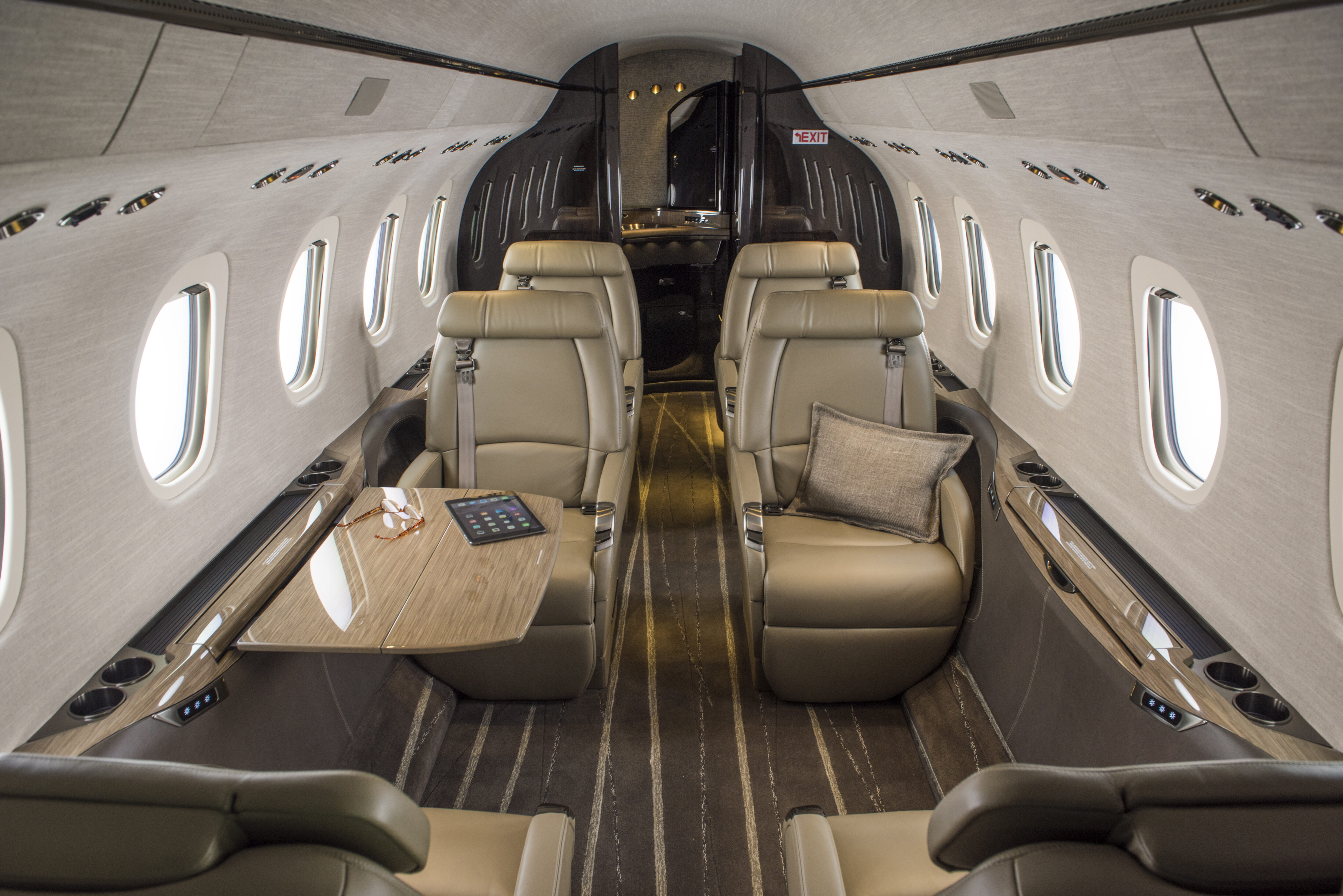
Private jet seating offers a fundamentally different experience than commercial aircraft. Seats are spacious, often adjustable in multiple directions, and designed for extended comfort on longer flights. Depending on the aircraft, you may be traveling in a configuration that feels closer to a well-appointed lounge than any airline cabin.

For longer-range flights, larger aircraft can include full lie-flat beds with quality linens, private suites, onboard showers, and dedicated business or lounge areas. Magellan Jets matches every aircraft to the journey. A short domestic hop calls for a different configuration than a transatlantic crossing, and your Private Aviation Advisor makes sure the right aircraft pairs to the right trip.

Cabin pressure and noise levels on private aircraft are also meaningfully different from commercial jets. Lower cabin altitude and quieter environments reduce fatigue on long flights, making it easier to arrive rested and ready.

Connectivity and Onboard Technology

Starlink vs Gogo wifi

Many private aircraft offer high-speed Wi-Fi, satellite phone capability, and telecommunications setups that support real working conditions in the air. Pull-out work tables, large displays, and quiet cabins make it possible to hold meetings, review documents, or close deals mid-flight without the compromises of a commercial business class seat.

Many aircraft support streaming entertainment, and larger jets let you adjust temperature by zone; handy when your group has different preferences.

Onboard Experiences

Travel often runs up against the occasions that matter most. Magellan Jets can arrange onboard experiences that mark those moments (anniversary dinners, birthday celebrations, milestone trips) so the journey itself becomes part of the memory. Your Advisor can coordinate flowers, specific champagnes, personalized setups, or whatever the occasion calls for.

How to Access These Amenities

Magellan Jets offers several ways to fly, each designed around a different set of travel needs:

  • Jet Cards offer prepaid access to private aviation with guaranteed availability, fixed hourly rates, and no exposure to peak-day surcharges or repositioning fees. Jet Card owners receive a dedicated Private Aviation Advisor, consistent aircraft standards, and access to the full range of in-flight amenities.
  • On-Demand Charter is available for individual trips with no long-term commitment. It’s the right entry point for clients who want to experience private aviation for a specific journey or who travel privately on an occasional basis.
  • Fractional Ownership and Aircraft Ownership & Management are available for clients with more intensive travel schedules who want a deeper level of customization and control.

Your Private Aviation Advisor can walk through which structure fits your travel frequency, destinations, and preferences and can adjust as your needs evolve.

The Magellan Jets Standard

Magellan Jets holds every flight detail to a consistent standard. The ethos of our company since 2008 has been that Every Journey is Personal. We purposefully select aircraft to match the specific needs of each trip. Cabins are configured and stocked before you arrive. The Client Experience team handles requests proactively, so nothing falls through the cracks between booking and boarding.

A Different Kind of Travel

Private aviation isn’t simply a faster or more comfortable version of commercial travel. It’s a different model entirely where the journey is built around you rather than the other way around.

At Magellan Jets, that principle runs through everything: how trips are planned, how aircraft are selected, how cabins are configured, and how every detail between departure and arrival is managed. The goal is simple: your time is valuable, your preferences matter, and your experience should reflect both. When you’re ready to explore what private aviation looks like for your specific needs, your Magellan Jets Advisor is the right place to start.

Connect with a Private Aviation Advisor today.

Frequently Asked Questions About Private Jet Amenities

What amenities do private jets have?

Private jet amenities include FBO (private terminal) access, personalized catering, high-speed Wi-Fi, lie-flat seating or full beds and showers on larger aircraft, onboard entertainment, and a dedicated crew focused entirely on your group.

How is private jet catering different from commercial airline food?

You specify everything in advance. The exact meals, beverages, and table setup you want and the cabin is stocked and ready when you board. There’s no menu, no cart, and no running out of options.

Do private jets have Wi-Fi?

Most modern private jets offer high-speed Wi-Fi via Gogo or Starlink, though quality varies by aircraft. Your Magellan Jets Advisor can confirm connectivity specs before you book. Compare aircraft wifi here.

What’s the difference between private jet amenities on different aircraft sizes?

Light jets cover the basics: comfortable seating and catering. They do not always have wifi. Large-cabin and ultra-long-range jets add full lie-flat beds, onboard showers, private suites, and multi-zone climate control.

Do private jets have bedrooms?

Large-cabin and ultra-long-range private jets often include dedicated sleeping areas, ranging from fully flat beds with linens to private suites with queen-size beds and privacy doors. Some configured aircraft also include separate bedroom compartments with their own temperature controls and entertainment systems.

Are private jet amenities included in the cost of the flight?

It depends on how you fly. Your Magellan Jets Jet Card tier determines which amenities are included. The Premium Card covers fuel, de-icing, catering, Wi-Fi, and repositioning fees, while the Category Card prices most of these as add-ons. Our Premium Card bundles more than the Category Card. On charter flights, amenities are not guaranteed and are typically priced as add-ons. Your Private Aviation Advisor walks you through exactly what’s included before you book.

How do private jet amenities compare to first-class commercial travel?

First class is still a shared aircraft with fixed menus and scheduled departures. Flying private means your schedule, your cabin configuration, your catering, and a crew focused solely on your party.

What should I ask about amenities when booking a private jet?

Ask about catering capabilities, Wi-Fi setup, galley size, and sleeping arrangements. A Magellan Jets Advisor will raise these proactively, but knowing your priorities makes it easier to get the right aircraft quicker.

By Joshua Marc Hebert, Founder & CEO, Magellan Jets

After flying from Boston to Sarasota, Florida, I took a scenic drive to TerraNova Equestrian Center on a Saturday morning with modest expectations. I had heard great things, but I’m not an equestrian person — or at least, I didn’t think I was. What unfolded that day in the countryside of Sarasota changed my view entirely, not just of the sport, but of what a destination community could be.

TerraNova feels like slipping through a portal into a different version of Florida — one that most people never see. Instead of palms and resorts, the road is lined for miles with towering oak trees draped in character. The sense of arrival is subtle yet powerful: this is a place shaped by nature.

TerraNova Equestrian Center in Myakka City, Florida

The moment I arrived, alongside my father, my wife, my five-year-old son, and a colleague from Magellan Jets, I was in awe of the movement and energy everywhere. Thousands of acres alive with activity: spectators, competitors, families, and staff flowing across the property on bikes, scooters, golf carts, and side-by-sides. It felt like an equestrian city, one with its own rhythm and heartbeat. The scale is staggering. Jumping arenas. Cross-country fields. Stables that seem to stretch on forever. And among the competitors were Olympic-caliber riders, treating this place as both serious sport and joyful gathering.

Joshua Hebert Son TerraNova
My son, Lincoln, in the Owner’s Barn

Our day began in the VIP grandstand overlooking the primary jumper ring. It struck the perfect balance between refinement and comfort — an open-air club atmosphere, but without the pretension. Great cocktails, attentive service, friendly conversation, and the best seats in the house. Our table sat right on what felt like the “50-yard line” of the action. It was the kind of hospitality that makes you feel instantly cared for.

And then we had the privilege of visiting The Miakka Golf Club, directly adjacent to the equestrian center. This is where the story takes another turn, because what they’re building is exceptional. The course is being designed by Fry/Straka Global Golf Design, in partnership with golf champion Paul Azinger — a name synonymous with strategic, championship-level thinking. Even with nine holes complete and the remaining nine underway, the vision is unmistakable: this is going to be a world-class course.

They’re not cutting corners. They’re literally breeding their own grass — hundreds of acres of it — developing a hardy, premium, aesthetically stunning turf specifically engineered for the course. They’re even supplying this grass to other Florida clubs because of its quality.

It’s a detail most guests would never think about, but once you see it, you understand the level of intention behind every decision here.

A place like this doesn’t happen by accident. And everything clicked the moment I met Steve Herrig. Steve is the Florida entrepreneur behind TerraNova Preserves LLC and the developer of the entire project, including the Miakka Golf Club, the clubhouse, the equestrian center, and the new residential community. He spoke openly about his previous businesses, his long-term vision for this land, the families he hopes will eventually call it home, and the legacy he wants TerraNova to hold decades from now. 

When we reached the golf course, Steve was out there playing the nine by himself — not for leisure, but to test, evaluate, critique, and make sure every contour, every fairway, every bunker lived up to his standard. Visionaries who physically participate in their own projects are rare. Visionaries who enjoy doing it are even rarer. And that’s Steve.

As if equestrian excellence and a championship-level golf course weren’t enough, Steve and his team are developing a residential community of 5- to 10-acre estate homesites, with plans for around 250 lots. We toured one of the newly completed homes — beautifully built, with the kind of quiet luxury that blends seamlessly into the natural landscape.

It wasn’t hard to see why my father, who lives downtown in Sarasota, said, “Imagine living here.” And honestly? It’s not a stretch. The serenity, the beauty, the amenities — it’s the kind of place that feels like its own world.

I’ve been in private aviation for 25 years. I’ve seen exclusive clubs, elite resorts, and iconic destinations. But TerraNova is different.

It’s not just a horse facility. It’s not just a golf course. It’s a vision being built in real time — with craftsmanship, clarity, passion, and soul. 

If I recommended TerraNova to someone, there’s simply no chance they’d return and say I exaggerated. If anything, they might tell me I undersold it.

Because some places you can describe. But TerraNova? You have to feel it.

And once you do, you don’t forget it.

TerraNova VIP Pavilion

In the realm of luxury travel, the allure of private jet flights has been steadily growing. As commercial flights become increasingly congested and airlines deal with increasing delays and cancellations, many discerning travelers have turned their gaze skyward to the exclusive domain of private aviation and air charter services.

On-demand private jet rental is a world where convenience, luxury, and saving time are paramount. However, with such bespoke advantages come costs. Let’s demystify the various components that contribute to private jet charter pricing.

what factors influence the hourly rate?

When navigating the vast world of private jet charters, it doesn’t take long to experience the complexity of the pricing structure. The hourly rate of a private jet charter, contrary to popular belief, isn’t a straightforward number. Instead, it’s a dynamic value affected by a blend of variables that cater to the wide range of preferences and needs of jet-setters.

Let’s dive a little deeper into the factors that will impact your charter quote.

aircraft category

Private planes can be compartmentalized into different categories, each tailored to suit particular travel needs:

  • Turboprops: Ideal for regional travel, these very light jets are recognized for their efficiency over shorter routes. Turboprops can touch down on shorter runways, granting access to remote and smaller airports that larger jets logistically can’t access.
  • Light jets: Light jets are perfect for medium-distance trips up and down the East and West Coasts. These jets embody the harmony of efficiency and enhanced comfort. With faster speeds and longer range than turboprops, they ensure passengers can go further, faster.
  • Midsize jets: Tailored for medium-sized transcontinental flights (think Texas to New York), midsize jets provide more cabin space and can cover longer distances without refueling.
  • Super midsize jets: Perfect for transcontinental flights from Florida to California, these long-range jets offer larger cabins, top-tier amenities, and the capability to reach further destinations with fewer stops.
  • Heavy jets: These ultra-long-range titans of the sky are perfect for transatlantic flights and come equipped with expansive interiors, lavish amenities, and state-of-the-art technology. Their hourly rates are naturally at the higher end, reflecting their unmatched offerings.

At Magellan Jets, our Private Aviation Consultants will work with you to understand your needs and pair you with the perfect aircraft for your mission via our global network of jets.

aircraft age

Much like any luxury asset, the age of the aircraft influences its appeal and, subsequently, its hourly rate.

Newer Models: Straight from the manufacturer, these jets dazzle with modern designs and cutting-edge technologies. Beyond just the technical advancements, there’s an undeniable appeal to being among the first to experience a brand-new jet. Such novelty often comes with a premium price.

Older Models: They might not have the newest entertainment system or the latest ergonomic seats, but older models have their own charm. They often present a more budget-friendly option for those looking to experience the luxury of private jet travel without the exuberance of the latest models.

how does flight time affect the cost?

Flight duration is, unsurprisingly, a significant determinant in the overall charter flight cost. Here is a breakdown of some ways that flight time can impact rental cost.

understanding billable flight hours

The adage “time is money” rings especially true in the world of private jet charters. Your chosen destination plays a pivotal role in determining the overall bill.

For instance, a transcontinental journey like Miami to New York is considerably shorter than traversing international airspace from San Francisco to London. Consequently, the former would be more wallet-friendly.

Your billable flight time will include your time in the air, of course, but depending on your provider, it may also include taxi time and daily minimum requirements.

taxi time and its implications

But the cost implications don’t cease once the plane touches down. The moments leading up to takeoff and after landing, commonly referred to as taxi time, can silently elevate the cost.

It’s not just about soaring through the skies; some charter companies integrate the taxi time—those moments the jet ambles on the runway—into the total billable hours. It’s an often-overlooked detail that, cumulatively, can noticeably inflate the final amount.

what additional costs might i encounter?

Stepping into the world of private jet charters is akin to entering a fine dining establishment. The menu price is just the tip of the iceberg, with a multitude of add-ons that can significantly alter the final check. To ensure you’re not caught off guard, let’s delve into these additional fees that come with the opulence of private air travel.

airport fees

The grandeur of descending upon an airstrip in your private jet is accompanied by unavoidable fees. Beyond the primary landing fee, there are ancillary charges, such as ramp and handling fees. While these might seem negligible at first glance, they can accumulate to add a substantial amount to your final invoice, especially if your journey involves multiple stops.

federal excise tax (FET)

Navigating the financial intricacies of private jet charters in the U.S., you’ll encounter the 7.5% Federal Excise Tax. This statutory charge, while standard, can be a sizable addition, particularly for long-haul trips. It’s vital to factor this into your budgeting to avoid any fiscal surprises.

jet fuel

The ebb and flow of jet fuel prices, vulnerable to geopolitical events like the Ukraine war as well as things like industry shortages or supply chain issues, can play havoc with your travel budget. The size, model, and efficiency of the aircraft further complicate this variable.

For instance, different aircraft models have distinct fuel efficiencies. Older jets tend to burn more fuel, whereas newer jets can make use of cutting-edge technology, allowing for fewer fuel stops and a more sustainable flight.

Your provider will be able to break down the fuel surcharge for you.

repositioning fees

Picture this: Your chosen jet is stationed in Miami, but you need it to pick you up in New York. This geographical shift, known as repositioning, doesn’t come free. It encompasses the expenses incurred to transfer the jet from its resting location to your desired starting point. It’s a charge often overlooked but can be quite significant, depending on the distance involved. Work with your provider to determine if you’ll be charged for the aircraft repositioning.

de-icing and seasonal changes

Nature’s whims can add to your travel costs. If you’re soaring the skies in winter, be prepared for de-icing and hanger fees. This essential procedure, ensuring your jet’s wings and tail are free of ice, guarantees a safe flight. However, it does come at a premium. Magellan Jets does feature optional de-icing insurance on our Jet Card offerings; it’s worth purchasing for peace of mind.

in-flight catering and concierge services

While the allure of private jets might conjure images of ground transportation, champagne, and gourmet meals, it’s crucial to understand the specifics of what’s included in your package. Basic beverages and snacks might be complimentary, but if you envision a lavish spread or specialized services tailored to your needs, anticipate additional charges.

Whether it’s a curated menu, champagne selection, or bespoke concierge services and flight attendants catering to your whims, such luxuries elevate your flying experience—and the bill to match.

other fees

Other fees that may impact your final invoice include whether or not you opt for in-flight Wi-Fi or cabin attendants. Additionally, if your flight requires any crew members to stay overnight, you can expect to see a crew overnight fee of anywhere from a couple hundred to a couple thousand dollars, depending on the size of your crew.

Check with your provider before booking your flight for a full breakdown of the included costs!

are there any ways to reduce costs?

While private jet travel epitomizes luxury and exclusivity, it doesn’t imply throwing caution to the wind in terms of expenses. Just as you might hunt for deals in high-end boutiques or negotiate prices for premium services, there are strategic ways to optimize your private flying experience without compromising on lavishness.

empty leg flights

Imagine a scenario where a private jet has just completed a one-way mission and is set to fly back to its base or another location devoid of passengers. This situation gives rise to what the industry terms “empty leg flights.”

These flights, though subject to certain inflexibilities like fixed departure times, can be a goldmine for the discerning traveler. Not only do they provide the quintessential private jet experience, but they often come with a much-reduced price tag, sometimes up to 75% off the standard charter price. You’ll have to act quickly, though, as these flights often have little advance notice and don’t stay on the market very long.

Magellan Jets allows guests to search empty leg flights online using our handy tool. Additionally, you can sign up for alerts on specific routes that you often fly, and you’ll be notified if there are empty legs available on that route. Just make sure you understand the limitations and the risks of empty-leg flying before you book.

jet card programs

For regular fliers or those who appreciate consistency in both experience and pricing, Jet Cards can be invaluable. These exclusive membership programs come loaded with perks, the most notable being a fixed hourly rate. When you fly one-off charters, your costs could spike during peak travel periods. With a Jet Card, your hourly rate stays locked in. Your Jet Card rate may also be inclusive of several of the costs mentioned above.

The catch is, you’ll be paying for your flight hours up front, usually in 25-hour blocks. For this reason, you won’t realize the value provided by a Jet Card unless you’re flying private in excess of 25 hours annually. At that volume, depending on your flight profile, your fixed hourly rate could begin to save you money.

the bottom line

Private jet travel offers unparalleled luxury, convenience, and exclusivity. However, chartering a private jet isn’t just about an hourly rate; it’s a blend of multiple variables ranging from aircraft type, make, and age to additional fees like airport charges, Federal Excise Tax, and repositioning costs. Factors like flight duration, taxi time, and seasonal availability also play into the final amount.

If you’re seeking a transparent and luxurious flight experience, consider Magellan Jets as your gateway to the skies. Our Private Aviation Consultants are ready to walk you through the costs involved in chartering your flight. Moreover, as a company, we pride ourselves on sitting on the same side of the table as our guests, going to market on your behalf to find the best price. Ready to fly? Call 877-550-5387 to contact us today—or use our tool below to request an instant charter quote.

Winter can be a difficult time for private jet travel, especially when increased flight volume around the holidays is met with weather-related delays. When every minute counts in your travel, an unexpected interruption (and bill) for the de-icing of your aircraft may be the last thing you need—but as you’ll learn below, the de-icing process is essential for your safety, and Magellan Jets works proactively to make sure your winter travel goes as smoothly as possible.

For the ultimate peace of mind, Magellan also offers de-icing insurance to new and existing Jet Card Owners.

everything you need to know about flying private this winter

aircraft de-icing

In order to remove the buildup of ice and snow on the wings and nose and ensure safe and efficient performance, your aircraft may need to be sprayed with de-icing fluid prior to your departure. The decision to initiate de-icing is done at the discretion of your flight crew, and you may be required to deplane while the aircraft undergoes the de-icing process for your comfort and safety. How long the process takes is dependent on several factors, from weather specifics to whether or not precipitation is actively falling to which chemicals are used; it will also naturally take longer to de-ice a larger aircraft. Ultimately, the process could set you back anywhere from 30-60 minutes; it could take even longer if there is a long line of aircraft waiting to be de-iced.

De-icing is an extremely important and necessary safety precaution, but if you haven’t accounted for it in the course of planning your travel, it can result in unexpected delays as well as high costs. What you pay for de-icing varies depending on the FBO, the type of fluid used, the amount of fluid needed based on conditions, and the size of your aircraft, but in some instances, it can run as high as $10,000.

Why is it so expensive? All airports must have a plan for limiting the deice fluid run-off, designating areas for deicing, or recapturing the deice fluid after its been used. The price per gallon is extremely expensive and even a small aircraft covered in snow and ice may require hundreds of gallons of the fluid.

how magellan mitigates de-icing delays & costs

Magellan’s Flight Support Department will always go the extra mile to make your flight experience as smooth as possible. For example, when winter conditions are in play, our aviation experts will look to place your aircraft in a warm hanger overnight, significantly lessening the likelihood that it will have to be de-iced. While this will incur hangar fees, those fees are often far less than the average de-icing bill. Taking a jet out of a hangar is also much less time-consuming than waiting on the de-icing line, which means you’ll get where you’re going faster—and be charged for less taxi time.

Flight Support may also move to pre-position your aircraft outside of snow and ice events, allowing your aircraft to arrive warm and on time. They may suggest small adjustments to your schedule or the date of your departure to avoid inclement weather or expected traffic congestion. In some situations, they may even recommend alternate airports in order to avoid troubling weather formations. Your Private Aviation Consultant or a member of our Flight Support Team will stay in close contact with you throughout the lead-up to your flight, and will contact you to discuss your options should inclement weather be forecast in your flight path.

purchasing aircraft de-icing insurance

When you fly private using on-demand charter, you will be billed for any de-icing required for your flight—but Magellan’s Jet Card Owners can purchase de-icing insurance, guaranteeing they won’t pay any fees for de-icing for the entire duration of their Jet Card term. De-icing insurance is priced by jet category, per 25-hour block, and begins at $2,500.

Magellan Jet Card Owners can contact their Private Aviation Consultant for more details about De-Icing Insurance, while new guests can add De-Icing Insurance to their Jet Card using our Build-A-Card tool:

Tips for private fliers this winter

You can’t control the weather, but you can be as proactive as possible to prepare for your winter travel. Here are five of our best tips for those flying during the winter months:

#1: Plan for weather delays and disruptions

Our Flight Support Department will inform you if they believe any weather-related issues may factor into your travel, but if you’re flying into or out of a part of the country that typically experiences the effects of winter weather, it’s a good idea to expect these types of interruptions. If de-icing is a probability, adjust your departure time accordingly, as the process may take additional time and delay your takeoff. In addition, you should consider the possibility your flight may have to be diverted to a different airport if weather conditions deteriorate while you’re flying.

#2: Give us all the details about your trip

Knowing all of the details about your trip will help our Flight Support Department find the most appropriate solution for you in the event icy weather changes your flight plan. Who are you traveling with? How many passengers will be on your flight? Do you have any hotel or restaurant reservations at your destination? Are you traveling with skis? Most importantly, do you have any flexibility in your departure date or time? This and other information will help us make suggestions to help you avoid or lessen weather interruptions.

#3: Book as far in advance as possible

As aircraft availability gets tight during Q4, we strongly suggest our guests book any and all expected travel as far ahead as possible through the New Year. When it comes to winter weather, booking early gives our team more time to source alternative aircraft options, pre-position your flight out of the way of wintry weather, and establish the best plan to mitigate delays and interruptions.

#4: arrive early for your flight

During the winter, it’s especially important to get to the FBO ahead of time—the longer your aircraft sits on the runway getting colder, the higher the likelihood it will need to be de-iced. You may be used to flexibility in private aviation regarding departure times, but during the winter season, you can help yourself stave off de-icing delays and bills by allowing extra time before your departure.

#5: contact us with any questions or concerns about winter travel

The Magellan Jets Flight Support Department is dedicated to monitoring weather conditions and relaying information to our guests in order to mitigate the chances any surprises—weather-related or otherwise—affect their trips. They will be working around the clock and through the holidays to make sure our guests are able to enjoy quality time with their loved ones. If you have any questions about winter weather operations, if you’re concerned about weather precautions on an upcoming flight, or if you’d like to inquire about Magellan’s De-Icing Insurance, contact your personal aviation consultant, call 877-550-5387 to speak to a private aviation expert, or fill out your information below.

If you’re considering adding a Gulfstream G400 to your fleet or purchasing one for private use, you’re likely aware of the brand’s reputation for luxury, performance, and cutting-edge technology. However, there are some critical factors to consider before making this major investment. Here are 10 things you need to know before buying a Gulfstream G400.

1. HERITAGE & LEGACY

The Gulfstream G400 carries the legacy of its predecessor, the GIV-SP, produced over a decade ago, with only 75 units made. The new G400, however, is a modern reinvention of this iconic jet, offering enhanced performance, technology, and customization options. It’s essential to understand how the G400 builds on Gulfstream’s history of innovation.

2. RANGE & PERFORMANCE

One of the biggest selling points of the new G400 is its range. With a 4,200-nautical-mile range, it’s capable of nonstop flights from New York to Rome or from Chicago to Honolulu. If you frequently travel long distances, this aircraft can significantly reduce the need for layovers or fuel stops, improving efficiency for both personal and corporate travel.

3. MULTIPLE CABIN CONFIGURATIONS

The G400 offers three different cabin configurations: 9, 11, and 12-passenger layouts. This flexibility allows buyers to choose a setup that best fits their travel needs. Whether you’re looking for a more business-focused cabin or a luxurious personal space, the G400 can be customized to meet your exact preferences.

4. advanced connectivity & comfort

Connectivity is a priority in today’s world, and the G400 doesn’t disappoint. With Gulfstream’s signature cabin management system, passengers can control the environment from their seats—whether it’s adjusting lighting, climate, or entertainment. The G400 also offers high-speed Wi-Fi, which is crucial for both business and personal use.

5. speed & efficiency

Speed is a hallmark of the Gulfstream brand. The G400 has a maximum cruise speed of Mach 0.85, allowing you to get to your destination faster while enjoying a smoother ride. Additionally, the aircraft is designed for greater fuel efficiency, helping reduce operating costs over time.

6. ideal for jet card & charter PRIVATE clients

The G400 is perfect for both Jet Card and Charter Private Clients. Its range, speed, and comfort make it a popular choice for businesses and individuals who want luxury travel without owning a full fleet. Private Clients will find the G400’s mid-size cabin and long-range capabilities a winning combination for both domestic and international travel.

7. cutting-edge technology

The G400 is equipped with Gulfstream’s most advanced avionics and safety technology. This includes Gulfstream’s Enhanced Vision System (EVS) and Synthetic Vision-Primary Flight Display (SV-PFD), designed to provide pilots with enhanced situational awareness. For buyers who prioritize safety, the G400 is among the best in its class.

8. sustainability

Private aviation has taken strides toward sustainability, and the G400 is no exception. The aircraft is built with a more fuel-efficient design and can operate with Sustainable Aviation Fuel (SAF), reducing its carbon footprint. If environmental impact is a concern, this makes the G400 a forward-thinking choice.

9. maintenance & operating costs

While Gulfstream jets are known for their durability, it’s essential to consider ongoing maintenance and operating costs before purchasing. The G400 is designed with ease of maintenance in mind, but regular inspections, fuel costs, and crew salaries can add up. Be sure to factor in these expenses when calculating the total cost of ownership.

10. resale value

Gulfstream jets traditionally hold their value well in the resale market, and the G400 is expected to follow suit. The combination of advanced technology, long-range capability, and luxury appeal makes it a solid investment for those concerned about long-term value. Whether you plan to hold onto it for years or sell it down the line, the G400’s resale value is likely to remain strong.

As the world evolves, so do the ways we travel. Private jet usage, once the exclusive domain of high net worth individuals or high-profile celebrities, has seen a significant surge, broadening its appeal to professionals and businesses across the globe.

This rise in demand has led to innovative ownership and leasing models designed to cater to varied needs. One of the most popular and time-tested models is fractional jet ownership. But is this the best option for you or your business? Let’s delve in.

what is fractional jet ownership?

Fractional jet ownership, in its simplest form, allows individuals or companies to own a “fraction” or “share” of a jet. Instead of bearing the burden of full ownership—with its immense costs and responsibilities—you buy into just a part of the aircraft. This typically grants you access for a predetermined number of hours per year.

The advantages are clear. With reduced upfront costs, you’re not tied down to the financial strain of a singular jet. Additionally, concerns like maintenance, crew hiring, and aircraft management are mostly handled by the provider. This ease makes fractional ownership especially appealing to those new to private aviation or those who fly between 50 to 400 hours annually.

Yet, it’s not without its pitfalls. Ongoing monthly management fees can quickly add up. There’s also the potential frustration of your jet being unavailable during peak times, even though you technically “own” part of it. And like a car, jets can depreciate over time, which might not provide the return on investment some shareholders expect.

These pros and cons bring forth the question: Are there better alternatives to fractional ownership?

alternative options to fractional ownership

When considering private jet travel, several alternatives offer a range of benefits and flexibility, depending on individual needs and preferences.

on-demand jet charter

This model is as straightforward as it sounds: book a jet when you need it. With no long-term commitments or upfront costs, on-demand chartering offers a plethora of aircraft choices suitable for every journey. Plus, you can avoid monthly management fees, paying only for your time in the air—and you can easily switch the type of jet you’re chartering based on different flight needs, unlike fractional, where you’re locked into only one type of jet with sometimes limited ability for cabin-size interchange.

At Magellan Jets, we source our charters from our Magellan Jets Preferred Network, our thoroughly vetted and continuously audited global network of aircraft operators and crews. You’ll work with a dedicated Private Aviation Consultant, who will go to market on your behalf to find an aircraft that best fits your travel needs. Our consultant will then give you a range of charter quotes—or, you can use our interactive quote tool to get instant charter quotes.

However, prices can be unpredictable, varying based on demand, aircraft availability, and travel dates. Furthermore, while there’s a wide selection of aircraft (the entire private aviation charter market is at your disposal), there’s no truly guaranteed aircraft availability, especially during peak seasons.

jet cards

Think of Jet Cards as debit cards for chartered flight hours. Purchasers prepay for a block of hours on a specific type or category of jet. This model offers flexibility at a fixed rate—there’s no long-term commitment (your contract commonly lasts 12 months), and users can often select from various aircraft types based on their trip’s requirements, conveniently interchanging between cabin sizes.

There’s tremendous value in locking down a fixed rate; if you or your firm are worried about potential market changes driving up the cost of your flying, a Jet Card is a great way to recession-proof your private aviation portfolio. While purchasing a Jet Card can still be quite an upfront investment, it’s extremely helpful for non-frequent fliers, those who’d like a backup plan when their personal jets are undergoing maintenance, and those who would like to avoid monthly management fees. Plus, your capital won’t be tied up in a depreciating asset.

Magellan Jets offers the widest variety of aircraft options of any Jet Card program on the market, with four premium aircraft-specific cards and four cabin-category cards. We also offer a 15-Hour Jet Card as an introduction to the world of Jet Card Ownership. Furthermore, our Jet Card program is the most customizable, allowing you to personalize your card via our industry-first Build-A-Card tool.

full jet ownership

With full jet ownership, you possess total control over your aircraft. This means unrestricted access, the freedom to customize interiors, and even the possibility of generating charter revenue—you can work with a partner like Magellan to earn passive income by letting others fly on your jet when you aren’t using it. Additionally, full ownership can offer significant tax benefits, depending on jurisdiction and usage.

However, with great luxury comes great responsibility. The initial investment is considerably high, often extending into tens of millions of dollars. Additionally, owners must grapple with maintenance, crew salaries, and insurance costs, or hire an aircraft management company to handle all of these responsibilities for them. Underutilization can also be a concern; if you’re not flying frequently, the asset might not justify its overhead. Remember, unlike the aforementioned flying methods, when you own the jet, you’ll be paying for it even when you aren’t using it.

Aircraft ownership does, however, make sense for some frequent-flier clients. If you’re interested in owning your own jet, Magellan offers Aircraft Sales Consultation services—but the real benefit in working with Magellan is that the company helps aircraft owners with all aspects of their travel portfolio. We’re with you after the point of sale, helping you establish a comprehensive Aircraft Management plan. Meanwhile, we’ll help you offset part of your ownership costs by making your aircraft available to our charter and Jet Card guests if you so choose.

FACTORS TO CONSIDER WHEN CHOOSING THE BEST OPTION

Choosing the best private jet option is no small feat and requires careful consideration of several factors:

  • Travel Frequency: If you’re jet-setting multiple times a month or hundreds of hours per year, full ownership or fractional ownership might be worth it. For those flying 25-100 hours annually, Jet Cards are a better option, and for those flying under 25 hours, we recommend charter.
  • Flight duration: For short, regional trips, you might not need the capabilities of a large, transcontinental jet. Conversely, international business travelers might prioritize larger, more comfortable cabins.
  • Budget constraints: Upfront costs vs. ongoing fees should be weighed. While full ownership has high initial costs, fractional ownership comes with recurring management fees that can accumulate.

Aircraft preference: Some individuals might have a preference for a specific jet model or brand due to its amenities, range, or performance. It’s easier to get the specific aircraft you want when you charter—or fly with a flexible Jet Card program like the one offered by Magellan, which lets you seamlessly interchange between different aircraft types. When you fly with a fractional share, you’ll be locked into one specific type of aircraft.

The right fit hinges on a mix of practicality, budget, and personal preference. The beauty of today’s private aviation market is its variety, ensuring there’s an ideal solution for every potential jet traveler.

other models of aircraft usage

Beyond traditional ownership and Jet Cards, the industry has seen a rise in more flexible, on-demand solutions tailored to the evolving needs of modern travelers.

Jet leasing

Leasing a jet is like leasing a luxury car. It provides consistent access to a specific aircraft for an extended period without the responsibilities of ownership. Generally, while the owner of the aircraft retains the jet’s legal title, the lessee actually has use of the aircraft.

A distinct advantage is the fixed monthly cost, which allows you to circumvent the large up-front capital investment required for owning your own jet outright. However, as with any lease, there’s an inherent commitment—usually multiple years in length—and there’s the potential risk of underutilizing the aircraft.

Jet Clubs or membership models

In this model, by paying a monthly or annual membership fee, users gain access to a fleet or network of aircraft. This system often combines the benefits of Jet Cards and on-demand charters, offering both priority booking and a range of aircraft options.

Still, costs can be steeper than other options, especially if you don’t utilize the service frequently. Plus, flyers are typically limited to the fleet the club maintains. Jet Card Owners typically have access to more favorable hourly rates, more aircraft flexibility, and perks like shorter callout times, catering, WiFi, and more.

the future of private jet travel

As we navigate the skies of the 21st century, the future of private jet travel is set to be marked by rapid advancements and changing priorities. Beyond traditional conveniences, emerging trends promise to redefine the essence of private aviation, offering travelers an evolved, holistic experience. Here’s a glimpse of what to expect:

Jet-sharing platforms: Emulating the “ride-sharing” model, these platforms allow individuals to book seats on private jets rather than chartering the entire plane, potentially democratizing luxury travel.

Electric and hybrid planes: As sustainability becomes central to every industry, electric and hybrid planes promise reduced emissions, potentially altering cost structures and broadening the appeal of private flight.

Environmental concerns: As the global conversation around climate change intensifies, we could see more carbon offset programs, sustainable fuel options, and new aircraft designs prioritizing eco-friendliness.

In this ever-evolving landscape, the avenues to private flight are only set to expand, offering more choices and considerations for potential flyers.

personal preferences and the drive for convenience

In an era where time is premium, convenience and customization are key. Personal preferences and experiences are playing an increasingly pivotal role in shaping the choices of potential jet travelers.

From onboard amenities to personalized flight schedules, private aviation is not just about reaching a destination. It’s about the journey itself, and travelers are looking for bespoke experiences that reflect their lifestyles and values.

The modern traveler seeks seamlessness. Jet services that integrate with digital platforms, offering ease of booking, real-time updates, and even virtual tours of available aircraft, have become increasingly popular. The synergy between technology and luxury travel ensures that not only is the flight opulent, but the process of securing it is hassle-free and intuitive.

Beyond the allure of luxury, many private jet travelers are driven by more pragmatic concerns. In an interconnected world, ensuring your security, from personal data to physical safety, becomes key. Many choose private aviation as a way to maintain their privacy, whether for business confidentiality or personal peace of mind.

Lastly, private jet terminals and lounges are becoming networking hubs for the elite. Engaging in these exclusive circles provides opportunities for business and social connections, adding another layer of value to the private aviation experience.

By prioritizing these aspects, private aviation companies are ensuring that they offer more than just a flight; they provide an entire ecosystem tailored to the discerning traveler.

finding the right fit in the skies

With every model and service, the focus of private jet travel remains on providing unparalleled experiences, convenience, and luxury. Whether it’s the complete control of full ownership, the flexibility of on-demand charters, or the predictability and reliability of Jet Cards, there’s an option tailored for every need.

Magellan’s Private Aviation Consultants are eager to serve as your guide to the many ways to fly privately. They will conduct a portfolio review, making sure you understand the intricacies of all of your options and the costs involved—both immediate and long-term—to make sure they align with your personal or corporate travel needs. Ready to discover the Magellan Jets difference? Submit your information below to request a portfolio review today.

In today’s globalized world, air travel is more essential than ever. With its convenience and speed, it’s no surprise that millions traverse the skies every day. But with this convenience comes an environmental cost.

The aviation industry, particularly private jet travel, is often under scrutiny for its carbon footprint. However, the tide is turning. Business aviation, historically seen as one of the culprits of high emissions, is now leading the way in sustainable air travel solutions.

The world of private jets is no longer just about luxury and exclusivity; it’s about pioneering change for a greener future. Business aviation stands at the vanguard of this transformation, adopting innovative technologies and methodologies to reduce its environmental impact.

the impact of business aviation

When we discuss aviation innovation, the spotlight often shines on commercial airlines. Yet, it’s the business aviation sector that frequently introduces groundbreaking changes that eventually benefit the larger aviation world. These innovations often find their way into commercial and general aviation, paving the way for a more sustainable aerospace industry.

From aerodynamic designs that reduce drag to advanced engine technologies that optimize fuel burn, business aviation is a testament to how industry needs can drive revolutionary eco-friendly advancements. The sector’s relentless pursuit of efficiency not only benefits its bottom line but also contributes significantly to lessening the environmental toll of flying.

By acting as a testing ground for novel solutions, business aviation ensures that these developments are refined, proven, and then adopted across other aviation sectors. This continuous cycle of innovation and adaptation is crucial in our collective effort to tackle climate change and make air travel more sustainable for future generations.

improving the eco-footprint of private jets

As concerns about climate change and environmental sustainability intensify, the pressure on all industries, including aviation, to reduce their carbon footprint grows. Fortunately, private jets are rising to the challenge through several cutting-edge initiatives.

Firstly, advancements in fuel efficiency and consumption have made leaps and bounds. Modern private jets are equipped with engines that can cruise at high altitudes where the air is thinner, leading to less fuel consumption and fewer emissions. Moreover, research into alternative fuels promises a future where our reliance on fossil fuels diminishes.

Emission technology, too, has seen significant evolution. Clean-burning engines and post-combustion treatments now reduce the amount of harmful particles released into the atmosphere. Additionally, aerodynamic innovations, from winglet designs to streamlined fuselages, have further minimized drag, making flights smoother and more fuel-efficient.

which jets are some of the most eco-friendly?

For those curious about the current leaders in sustainable private jet travel, several models stand out for their green credentials. These models showcase that a luxury travel experience does not have to compromise on environmental responsibility. With each flight, they’re charting a path for the industry, proving that sustainability and performance can coexist.

Embraer phenom 300e

This sleek jet doesn’t just boast of aesthetics but also of efficiency. Consuming around 19 percent less fuel than its competing light jets, the Phenom 300E exemplifies how design can marry luxury with sustainability.

dassault falcon 8x

In the realm of heavy jets, the Falcon 8X dominates with unmatched eco-credentials. It is up to 20% more fuel-efficient than other competing jets in its class. Dassault’s commitment to blending high performance with sustainability makes the Falcon 8X a symbol of progressive aviation.

pilatus pc-12 NGX

Often overlooked in the jet-dominated world, turboprops like the Pilatus PC-12 NGX are making waves in sustainable air travel. Not only is it more fuel-efficient than its main competitor, the King Air 350i, but it also consumes fuel at an impressive rate of just 55 gallons per hour.

Magellan’s commitment to sustainability

While advancements in aircraft design and technology are essential, the shift towards a greener future in aviation is also being spearheaded by manufacturers’ sustainability commitments. These commitments represent a vision that transcends immediate profits and focuses on long-term ecological stewardship.

At Magellan Jets, we have been particularly vocal about our eco-ambitions. By 2030, we pledge to power all of our flights with sustainable fuel sources. By 2040, Magellan aims to offer our clients 100% carbon-zero flights.

broader industry efforts for eco-friendly air travel

Beyond individual manufacturers and service providers, the entire aviation industry is coalescing around sustainability goals. These collective efforts mark a renaissance in air travel, where the journey is not only about reaching the destination but also about preserving our planet for future generations.

Here are some of the most promising endeavors:

sustainable aviation fuels (SAFs)

Derived from sustainable oil crops, waste oils, and even algae, SAFs can reduce life-cycle greenhouse gas emissions by up to 80 percent. The industry is increasingly investing in research and infrastructure to make SAFs a larger portion of the fuel mix.

carbon offsetting

Many aviation companies now offer carbon offset programs, allowing travelers to invest in environmental projects that counterbalance their flights’ carbon emissions. This direct approach gives passengers agency in mitigating their carbon footprint.

magellan jets + Terrapass

Our collaboration with terrapass offers our guests ability to offset their air travel in any amount they deem necessary across our purely private travel portfolio.

lighter aircraft materials

Using materials like carbon fiber composites, the industry is producing lighter jets that require less fuel. Such innovations in materials science not only lead to fuel savings but also to extended aircraft life.

more fuel-efficient engines

Engine manufacturers are continually pushing the boundaries of technology, developing engines that offer more thrust for less fuel, leading to direct emission reductions.

alternative power research

The buzz around electric, hybrid, and hydrogen-powered planes isn’t just science fiction. Several prototypes are under testing, and the industry is optimistic about these greener propulsion methods.

sustainable infrastructure

Airports and private jet facilities are also playing their part by investing in sustainable infrastructure, from solar-powered hangars to rainwater harvesting systems.

digital and ai-enhanced air traffic management

By optimizing flight paths in real time based on current weather conditions, traffic, and other variables, new systems can make travel more efficient. They can significantly reduce unnecessary fuel consumption, decrease flight times, and minimize emissions. This streamlined approach not only ensures safer skies but also contributes to a more sustainable environment.

enhanced pilot training and sustainable flying practices

Emphasis on eco-pilot training programs ensures that pilots are well-equipped with knowledge and techniques to operate flights in the most fuel-efficient manner possible. This includes practices like continuous descent approaches and single-engine taxiing, which can significantly reduce fuel use and emissions.

embracing the green passenger movement

An underrepresented but vital aspect of this sustainability journey is the rising consciousness among passengers. Today’s travelers are increasingly discerning, valuing eco-friendliness as much as luxury and convenience. The “Green Passenger Movement,” as some have termed it, is not just a fleeting trend but a powerful paradigm shift.

Customers now actively seek out airlines and private jet providers that prioritize sustainability. They’re keen to understand the carbon footprint of their travels and are willing to make choices that might come at a premium but ensure a smaller environmental impact. This includes opting for SAFs even if they are more expensive, participating in carbon offset programs, or choosing specific flight routes that are more fuel-efficient.

Moreover, frequent flyers are now more likely to engage with brands that have clear, actionable sustainability commitments. They’re attending seminars, forums, and exhibitions centered around eco-friendly travel, showcasing their commitment to understanding and championing the cause. This consumer-led demand is propelling companies to accelerate their green initiatives.

Ultimately, the relationship between providers and passengers has transformed. It’s no longer just transactional. It’s a collaborative partnership, working together towards a shared vision of a sustainable future in air travel.

soaring toward a sustainable horizon

In the ever-evolving landscape of aviation, the pivot toward sustainability is not just an optional route but a necessary trajectory. The compelling confluence of technological innovations, manufacturer commitments, and passenger consciousness paints a hopeful picture of the industry’s future.

The steps taken by industry giants, coupled with the discernment of today’s traveler, create a synergy that has the potential to reshape the very foundations of air travel. As passengers, we’re no longer mere spectators; we’re actively participating in shaping a greener tomorrow. The transformation of business aviation into a bastion of sustainability is a testament to human ingenuity and collective willpower.

As we soar through the skies, it’s heartening to know that our journey now aligns with the greater journey of protecting and nurturing our shared home. The horizon, it seems, is not just about distant lands but also about a brighter, more sustainable future for all. To learn more about how you can fly privately and sustainably, contact Magellan Jets today.

Private Jet Charter Versus Ownership: An In-Depth Analysis

The allure of private aviation is undeniable, offering unparalleled convenience, privacy, and efficiency. For individuals and businesses contemplating private air travel, the pivotal decision often revolves around choosing between chartering a jet and owning one outright. This comprehensive analysis delves into the nuances of both options, providing an expert perspective to aid in determining the most suitable choice based on individual travel needs, financial considerations, and personal preferences.

Understanding Private Jet Charter

Private jet charter involves renting an aircraft for individual trips without the long-term commitments associated with ownership. This option grants access to a diverse fleet of aircraft, allowing travelers to select models that best fit the specifics of each journey.

Advantages of Chartering a Private Jet

  • Cost-Effectiveness for Infrequent Flyers: For those who fly fewer than 100 hours annually, chartering often proves more economical than ownership. Charter clients pay solely for the flight time utilized, avoiding substantial expenses related to maintenance, crew salaries, insurance, and storage that accompany ownership.
  • Flexibility in Aircraft Selection: Chartering offers the freedom to choose from various aircraft types tailored to specific trip requirements. Whether opting for a light jet for short regional flights or a larger aircraft for international travel, this flexibility ensures optimal efficiency and comfort without the constraints of a single aircraft’s capabilities.
  • Reduced Management Responsibilities: Charter clients are relieved of the operational responsibilities inherent in aircraft ownership. Tasks such as regulatory compliance, maintenance oversight, and crew management are handled by the charter provider, allowing travelers to focus solely on their journey.

Potential Drawbacks of Private Jet Charter

  • Variable Pricing and Availability: Charter rates and aircraft availability can fluctuate based on market demand, peak travel seasons, and specific events. This variability may lead to higher costs or limited options during busy periods.
  • Limited Customization and Consistency: Since chartered aircraft are not under the traveler’s ownership, opportunities for customization are minimal. Additionally, the in-flight experience may vary between flights, as different aircraft may be used for each journey.

Understanding Private Jet Ownership

Owning a private jet entails purchasing an aircraft for personal or business use, providing exclusive access and control over its operations. This option is often considered by individuals or organizations with substantial and consistent travel needs.

Advantages of Owning a Private Jet

  • Complete Control and Customization: Ownership grants full authority over the aircraft’s configuration, interior design, and amenities. This ensures a consistent and personalized travel experience tailored to specific preferences and requirements.
  • Guaranteed Availability: With ownership, the aircraft is at the owner’s disposal whenever needed, offering unparalleled convenience for frequent travelers with demanding schedules.
  • Potential Revenue Generation: Owners have the option to offset operational costs by offering their aircraft for charter to third parties when not in use. This can generate additional income, though it also introduces considerations related to increased wear and regulatory compliance.

Potential Drawbacks of Private Jet Ownership

  • High Acquisition and Operating Costs: Purchasing a private jet involves a significant initial investment, with prices ranging from $3 million to $90 million. Annual operating expenses, including maintenance, fuel, insurance, and crew salaries, can add an additional $700,000 to $4 million. These substantial costs make ownership a viable option primarily for those who fly extensively.
  • Asset Depreciation: Aircraft typically depreciate over time, potentially resulting in a lower resale value. This depreciation should be factored into the overall financial assessment of ownership.
  • Management Responsibilities: Owning a jet entails overseeing various operational aspects, such as regulatory compliance, maintenance scheduling, and crew management. These responsibilities can be time-consuming and may necessitate engaging an aircraft management company to handle day-to-day operations.

Fractional Ownership: A Middle Ground

For those seeking a compromise between full ownership and chartering, fractional ownership presents an alternative. This model allows individuals to purchase a share of an aircraft, entitling them to a corresponding amount of flight time.

Advantages of Fractional Ownership

  • Cost Sharing: Fractional ownership distributes the costs of acquisition and operation among multiple owners, reducing the financial burden compared to full ownership.
  • Consistent Experience: Owners have access to a specific type of aircraft, ensuring a consistent in-flight experience. Additionally, fractional programs often provide access to a fleet, offering some flexibility in aircraft selection.

Potential Drawbacks of Fractional Ownership

  • Ongoing Financial Commitments: Fractional owners are subject to ongoing management fees and must commit to a predetermined number of flight hours annually. Unused hours may not roll over, potentially leading to wasted investment.
  • Limited Flexibility: While more flexible than full ownership, fractional arrangements may still lack the adaptability of on-demand charter services, particularly concerning aircraft availability during peak periods.

Making the Right Choice: Key Considerations

When deciding between chartering and owning a private jet, several factors should be evaluated:

  • Flight Frequency: Assess the number of hours you intend to fly annually. Chartering is generally more cost-effective for those flying fewer than 100 hours per year, while ownership may be justified for those exceeding 150 hours annually.
  • Budget: Consider both the initial investment and ongoing expenses. Ownership requires substantial financial commitment, whereas chartering allows for pay-as-you-go flexibility.
  • Control and Customization: Determine the importance of having a personalized and consistent travel experience. Ownership offers complete control, while chartering provides limited customization.
  • Management Willingness: Evaluate your readiness to handle the responsibilities of private jet ownership.

Find the Perfect Solution with Magellan Jets

Private jet charter, ownership, and fractional ownership all come with their distinct advantages and challenges. By carefully assessing travel needs, financial implications, and personal preferences, individuals and businesses can make informed decisions that align with their objectives. Connect with a Private Aviation Provider today to discuss which option is the best fit for you.


Air travel has experienced a dynamic evolution from its inception. Initially seen as a luxury, it’s transitioned into a necessity for mass movement and connection.

Today, the world witnesses a renaissance of luxury in air travel, driven by rising demand for bespoke experiences. For those who can afford it, private aviation offers a plush, personalized alternative to the commercial airline experience.

Both offer unique experiences, but as a traveler of the modern age, which is right for you? Private jet travel, as championed by industry veterans like Magellan Jets, is the epitome of luxury, flexibility, and personalization. Commercial flight travel, on the other hand, offers affordability and mass accessibility.

Let’s compare these two modes of air travel, covering the pros and cons of each.

comparing private aviation to flying commercial

How do the costs compare?

Embarking on a luxurious journey in the sky via private jet charters, particularly bespoke options like those offered by Magellan Jets, comes with its own set of expenses. This isn’t solely about the upfront cost, which can fluctuate based on aircraft type, duration, and the desired level of luxury. The exclusivity, personalized services, and privacy that accompany a private charter contribute to its premium pricing.

In addition to these initial costs, operational expenses must be considered. However, here at Magellan Jets, we are dedicated to cost transparency. While the cost of private aviation is considerably higher than commercial, we ensure there are no hidden fees or surprise surcharges.

Our expert Private Aviation Consultants are glad to walk you through the details of a quoted charter price or everything involved in an hourly rate. Moreover, with Magellan Jets, our clients can rest assured knowing their funds are safeguarded separately from operational finances, a practice that sets us apart in the industry.

Commercial flights, on the other hand, have established pricing models that are often perceived as more budget-friendly. But is the ticket price misleading? Extra charges like luggage fees, specific seat selections, and in-flight meals can inflate that initial ticket price. Meanwhile, with private aviation, you’ll have fewer surprise fees and, with a fixed-rate program like a Jet Card, you can take advantage of more predictable pricing.

Private jet pros:

Private jet cons:

commercial flight pros:

commercial flight cons:

which option offers more flexibility?

Consider the vast flexibility and time advantage of private aviation. Want to fly out at 2 p.m. tomorrow from a nearby regional airport? At Magellan Jets, such last-minute plans aren’t a luxury; they’re par for the course.

You’re not just booking a flight, you’re reclaiming precious hours, ensuring every moment in transit counts. This isn’t about mere convenience; it’s about maximizing your time, allowing you to depart when you wish, free from the constraints of commercial airline schedules.

Commercial flights, while efficient for major cities, often require adherence to a rigid timetable, sometimes necessitating an extremely early booking to secure a seat. More importantly, they only have access to roughly 500 airports globally. In comparison, private aviation with Magellan Jets unlocks a staggering 5,000 airports, many of which are closer to your final destination, saving you valuable time.

Such a vast network means you’re not just flying to a city’s main airport; you’re getting significantly closer to that remote getaway or branch office, reducing ground travel and making spontaneous adventures or business trips more attainable.

Private jet pros:

Private jet cons:

commercial flight pros:

commercial flight cons:

what about comfort and luxury?

Private aviation redefines air travel. Each flight becomes a personalized experience featuring meticulously curated details from a chosen vintage wine to specific movies. They also offer unmatched privacy and security.

Dubbed five-star hotels in the sky, private jets boast plush seating, ample legroom, and unparalleled freedom, contrasting with the limited space of commercial flights. Their interiors double as efficient offices, complete with state-of-the-art telecommunication tools, ensuring productivity doesn’t skip a beat.

Here at Magellan Jets, we emphasize personal preferences, from gourmet meals to favorite snacks, erasing typical airline food stereotypes. We’ve pioneered the “build-your-own” Jet Card in the charter plane industry, giving our clients the opportunity to tailor their experiences to their unique needs and preferences.

An added luxury? With Magellan Jets, your pets can fly comfortably alongside you in the cabin, a stark departure from the challenges of commercial pet travel, where pets often have to go into cargo holds.

Air travel for the masses, while functional, caters to a broader audience. While there’s still some work to do, commercial airlines have certainly upped their game and enhanced their service over the years. First class, for instance, may offer a lavish reclining seat, premium entertainment, and quality meals.

However, while the first-class seat might offer you a semblance of the comfort found on a private jet, economy and even business classes have their limits. Whether it’s the standard movie list everyone watches or the three-option meal menu, there’s a clear distinction between personal and generalized service.

Private jet pros:

Private jet cons:

commercial flight pros:

commercial flight cons:

how do they differ in terms of efficiency?

Efficiency in travel isn’t merely about reaching your destination; it’s about the journey’s quality and speed. Private jets epitomize this efficiency, transforming every journey into a seamless experience. No more long check-in lines or the mad dash through security.

With private jets, travelers utilize an FBO (fixed-base operator) or private jet terminal. These facilities are less crowded and may even feature private lounges and amenities that treat you like the VIP you are.

In some cases, you can even drive straight up to the aircraft. You’ll avoid those long security lines, be greeted by professional staff who will take care of every need, and embark within minutes. If you believe “time is money,” then private jets unequivocally translate to invaluable savings.

Commercial airlines, with their mission to serve millions daily, have a structured rhythm. Their service frequency is undoubtedly commendable given the size of their operations, but efficiency from a passenger’s perspective takes a backseat.

Additionally, commercial airlines often come with delays and cancellations, which can both disrupt travel plans and delay business operations. Overall, commercial airlines have an on-time performance rate (OTP) of just 75 percent, whereas Magellan Jets has an OTP of over 97 percent.

The two-hour prior arrival, the repetitive security checks, the boarding queues — it’s a drill many frequent travelers can recite in their sleep. While they’re efficient on a massive scale, they might not offer the same swift, streamlined experience that private jets guarantee.

Private jet pros:

Private jet cons:

commercial flight pros:

commercial flight cons:

what’s the environmental impact?

There’s no denying that private jets, on a per-passenger basis, emit a greater carbon footprint compared to commercial planes. That said, the private jet industry isn’t passive about this, and we are at the forefront of sustainability initiatives.

Not only is the industry considering new, more fuel-efficient jet models, but they’re also investing in research and partnerships to explore sustainable aviation fuels and carbon capture technologies. Furthermore, many private jet companies are striving for carbon-neutral operations within the next decade.

On the other hand, commercial flights, due to their larger capacity, generally benefit from economies of scale and have a lower carbon footprint per passenger. Their efficiency is further accentuated by the adoption of modern aircraft designs that are more fuel-efficient.

Beyond the plane’s hardware, airlines have launched eco-initiatives such as tree planting or promoting eco-tourism. They also provide passengers with carbon offset programs, allowing environmentally conscious travelers to neutralize their flight’s carbon footprint by directly investing in green projects.

Private jet pros:

Private jet cons:

commercial flight pros:

commercial flight cons:

the bottom line

Both private and commercial flights cater to the specific needs and desires of travelers. For those who place a premium on time, discretion, and unmatched luxury, the offerings from esteemed private aviation providers like Magellan Jets are a cut above the rest.

Magellan Jets’ clientele includes ultra-high net-worth individuals and corporations who value their time and comfort. On the other side, commercial flights cater to the masses, offering a blend of accessibility and cost-effectiveness.

It’s essential for potential private jet enthusiasts to delve deep into understanding the complete spectrum of costs while also weighing the unparalleled benefits. Meanwhile, those leaning towards commercial flights should remain vigilant about the often overlooked additional fees that can add up.

Diving into the diverse portfolio of product offerings from Magellan Jets might just open a world where luxury doesn’t compromise efficiency. Whichever route you choose, ensure it aligns with your preferences and needs.