Spring is one of the most exciting seasons in sports. Major events like the NCAA Men’s Basketball Tournament and the Kentucky Derby capture national attention, but for golf fans, nothing compares to the Tournament in Augusta, Georgia.
Each April, Augusta National Golf Club becomes the center of the golf world as the sport’s best players compete for the iconic Green Jacket.
For those planning to attend The Masters 2026, flying private offers the most efficient and luxurious way to travel to Augusta. Magellan Jets provides seamless private aviation solutions so you can arrive refreshed, avoid crowded airports, and focus on enjoying one of golf’s most prestigious events.
The Masters 2026: What You Need to Know
The 2026 Masters Tournament is scheduled to take place April 9–12, 2026, at the legendary Augusta National Golf Club in Augusta, Georgia.
The tournament follows the traditional Masters schedule:
Practice Rounds: Monday–Wednesday (April 6–8, 2026)
Augusta National remains one of the most exclusive and iconic venues in sports, known for its pristine fairways, azalea-lined landscapes, and legendary holes like Amen Corner (11, 12, and 13).
Demand for travel, accommodations, and Masters badges increases significantly each year, making early planning essential for anyone hoping to attend.
Tips for Attending The Masters in Augusta
1. Secure Your Tickets Early
Masters badges are among the most sought-after tickets in sports. Whether you plan to attend practice rounds, the Par-3 Contest, or tournament play, securing tickets early is critical.
2. Book Accommodations Well in Advance
Hotels and private homes throughout Augusta sell out months ahead of the tournament. Properties such as the historic Partridge Inn are particularly popular with Masters guests.
3. Plan the Best Viewing Locations
Augusta National offers incredible viewing opportunities. Fan favorites include:
Amen Corner (holes 11–13)
The 16th hole for Sunday pin placements
The 18th green for dramatic finishes
Arriving early helps secure the best vantage points.
4. Enjoy Augusta After the Round
Tournament play typically concludes by late afternoon, leaving plenty of time to explore Augusta’s renowned Southern hospitality, restaurants, and nightlife.
Fly Private to Augusta for The Masters with Magellan Jets
Traveling to Augusta during Masters week can be challenging due to limited commercial flights and increased traffic.
Flying private with Magellan Jets eliminates these obstacles while providing a superior travel experience.
Benefits of flying private include:
Access to private terminals (FBOs) with minimal wait times
Flexible departure schedules
Direct flights to Daniel Field (KDNL) or Augusta Regional Airport (KAGS)
Attending The Masters is as much about tradition as it is about golf, so dressing appropriately, and comfortably, is important. The dress code for patrons at Augusta National isn’t formally strict, but classic, polished, and weather-appropriate attire is the norm.
Here’s what to consider when packing for your Masters trip:
Comfortable Walking Shoes
Augusta National is a walking course with significant elevation changes. Choose comfortable, broken-in shoes such as stylish sneakers, loafers, or golf shoes without spikes. Avoid brand-new footwear to prevent discomfort during long days on the course.
Classic Spring Attire
The Masters takes place in early April, when temperatures in Augusta typically range from the mid-60s to upper-70s°F. Popular options include:
Women: Sundresses, golf skirts, blouses, lightweight pants, or stylish athleisure.
Think Southern spring style: clean, classic, and comfortable.
Layers for Changing Weather
Morning rounds can start cool, while afternoons warm up quickly. Pack:
A light sweater or quarter-zip
A lightweight jacket or vest
A rain shell or small umbrella in case of spring showers
Sun Protection
Augusta’s open fairways mean plenty of sun exposure. Essentials include:
Sunglasses
A hat or visor
Sunscreen
Masters-Friendly Accessories
Small bags are best since patrons often carry minimal items. Consider:
A compact crossbody or small backpack
A portable phone charger
A light folding chair (optional but popular among experienced patrons)
Magellan Jets Journey to the Masters Experience
For clients seeking a fully curated experience, Magellan Jets’ Journey to the Masters offers an exclusive luxury retreat designed around the tournament.
This three-night Masters Luxury Retreat combines private jet travel, premium accommodations, guaranteed tournament access, and VIP hospitality, creating a seamless and unforgettable Augusta experience.
This itinerary is a suggested program and can be customized to suit your preferences.
Day 1 – Arrival in Augusta
Your Masters experience begins with a private jet arrival into Daniel Field or Augusta Regional Airport.
Upon arrival, a VIP transfer service ensures a smooth transition into Augusta. Guests then settle into their accommodations, choosing between:
A luxury private residence in one of Augusta’s premier neighborhoods
The historic Partridge Inn, known for classic Southern charm
After settling in, enjoy dinner prepared by a private chef or dine at one of Augusta’s renowned local restaurants.
Day 2 – The Masters & Hospitality Experience
Your first full day includes guaranteed access to Augusta National for the Masters.
Depending on your ticket package, guests may attend:
Practice Rounds
The Par-3 Contest
Opening Tournament Rounds
Weekend Championship Rounds
Between time on the course, relax at exclusive off-site hospitality venues offering:
Gourmet cuisine
Premium beverages
Comfortable lounge spaces
Round-trip transportation ensures effortless access throughout the day.
Day 3 – Continued Tournament Access & Southern Hospitality
Your second day at Augusta National allows you to continue exploring the course while watching the world’s best golfers compete for the Green Jacket.
Guests enjoy the same seamless experience, including:
VIP transportation
Premium hospitality access
Personalized service throughout the day
In the evening, guests staying in private residences may enjoy another chef-prepared dinner, while those at the Partridge Inn can savor Augusta’s local cuisine.
Day 4 – Departure
Your Masters retreat concludes with a relaxed breakfast before your VIP transfer returns you to the airport for your departing private jet flight.
You leave Augusta with memories of one of golf’s most iconic traditions, combined with the exceptional service and luxury travel experience that define Magellan Jets.
Frequently Asked Questions About The Masters 2026 (FAQ)
When is The Masters 2026?
The Masters 2026 will take place April 9–12, 2026, at Augusta National Golf Club in Augusta, Georgia. Practice rounds occur earlier in the week from April 6–8, with the Par-3 Contest on Wednesday, April 8.
Where is The Masters played?
The Masters is held annually at Augusta National Golf Club, one of the most prestigious golf courses in the world, located in Augusta, Georgia.
What airports do private jets use for The Masters?
Private jets typically fly into:
Daniel Field (KDNL) – closest to Augusta National
Augusta Regional Airport (KAGS)
Both airports provide convenient access for private aviation during Masters week.
Why fly private to The Masters?
Flying private allows guests to avoid crowded commercial airports, enjoy flexible departure times, access private terminals, and arrive closer to Augusta National.
What is the Magellan Jets Journey to the Masters?
The Journey to the Masters is a luxury travel experience that includes private jet travel, premium accommodations, tournament tickets, VIP transfers, and curated hospitality throughout Masters week.
When should I book private jet travel for The Masters?
Private aviation demand increases significantly during Masters week. Booking several months in advance ensures the best aircraft availability and scheduling options.
Book Your Private Jet to Augusta
Private jet availability during Masters week is extremely limited.
Experience Augusta in comfort, style, and efficiency with Magellan Jets.
Even if you’re flying privately, the ripple effects of a U.S. government shutdown can extend into every layer of air travel. Air traffic control (ATC), customs, and security all depend on federal staffing. When funding lapses, these essential personnel are sometimes furloughed or working without pay, leading to reduced airspace capacity, longer taxi times, and possible delays for both commercial and private flights.
While luxury travelers enjoy more control over schedules and service, airspace management affects everyone, from a commercial jetliner to a Gulfstream G650.
The ATC Staffing Shortage: How It Affects Everyone
Air Traffic Control (ATC) professionals ensure that every aircraft in U.S. airspace remains safely separated and efficiently sequenced. They manage takeoffs, landings, ground movement, and en-route spacing for both private and commercial operations.
When controller staffing drops, the FAA must slow air traffic to preserve safety margins. That means longer taxi times, delayed departures, and—at times—holding patterns before landing clearance.
What’s Happening Now
According to the FAA, over half of the major control facilities are currently below full staffing levels. Flow programs and ground stops have most affected large hubs like Newark, Boston, Orlando, and across South Florida.
Even private jets are subject to these delays. As Christian Schaible, Senior Director of Safety and Joint Operations at Magellan Jets, explains:
“It doesn’t matter what plane you’re flying. ATC staffing affects everyone. A prolonged government shutdown impacts the entire aviation ecosystem.”
He continues:
“We have seen increasing delays due to staffing shortages and capacity limitations. ATC is slowing things down to make sure operations remain safe and controlled.”
Is It Safe to Fly During a Government Shutdown?
Yes. Safety is never compromised. As Schaible emphasizes:
“It’s safe to fly right now. They’re going to limit what they can handle based on who is available. You won’t see a safety detraction, but you may see operational limitations.”
The FAA prioritizes safety by reducing the number of active operations when staffing is thin. The result: slower throughput, but no reduction in oversight or control.
How Magellan Jets Protects Your Travel Experience
Even in challenging operational conditions, Magellan Jets’ model ensures reliability, communication, and cost transparency.
Real-Time Flight Operations Support
Magellan’s Flight Support team continuously monitors ATC conditions, customs availability, and weather impacts to proactively adjust itineraries.
“Our team is proactive and will work with you to handle anything unplanned,” says Schaible. “We can help find nearby airports that might be a better place to land than one that’s backed up.”
Flexibility and Communication
Because conditions evolve rapidly, Magellan clients benefit from continuous updates and expert handling of alternate airports, reroutes, and time shifts.
“Clients appreciate our ongoing communication with them to help sort their travel needs,” Schaible adds.
The Advantage of Estimated Flight Time Pricing
Unlike many competitors who bill based on actual flight time, Magellan Jets uses an Estimated Flight Time pricing model: an AI-driven algorithm that factors in aircraft type, winds, routing, and other factors to predict total time from departure to arrival.
“Even if your flight takes a longer route or experiences a brief delay, it won’t impact you in this regard” says Schaible. “Your estimated flight time is what we go by, not your actual. You’re not penalized for ATC delays.”
During a shutdown, when unpredictability is high, this approach provides pricing stability and peace of mind.
Travel Smart: Tips for Flying Private During a Shutdown
When the aviation system slows down, flexibility is your biggest advantage. Magellan Jets’ team helps clients adapt seamlessly to changing conditions, ensuring that every flight stays as smooth and efficient as possible, even during a government shutdown.
1. Be Flexible with Your Schedule
The most effective way to minimize disruption is to adjust your departure times around peak congestion. Early morning departures often face fewer ATC delays and flow programs. Allowing your itinerary to shift slightly can make a significant difference in overall travel time.
2. Consider Alternate Airports
If a major hub like Teterboro, Newark, or Los Angeles is experiencing congestion, Magellan can help you select and coordinate nearby regional airports that are more accessible. Our team will arrange ground transportation from your arrival point to your destination, maintaining the same level of comfort and efficiency throughout your journey.
3. Know the Customs Landscape for International Flights
During a shutdown, customs staffing is often limited at smaller airports.
“If you’re flying internationally, you might not be able to get a customs agent at certain times or locations, particularly at some of the smaller airports,” Schaible explains. “When staffing or hours of operations are reduced, customs may need prioritize staffing at other airports.”
Your Magellan Private Aviation Advisor can confirm customs availability before your trip and recommend the best port of entry to avoid delays.
4. Expect Some Operational Slowdowns
Flow programs and extended taxi times may still occur, especially in busy regions like South Florida (Naples, Sarasota, PBI) and the New York metro area. The good news: with Magellan’s proactive monitoring, your team will adjust your flight plan in real time to minimize inconvenience.
The Bottom Line
Partnering with a proactive provider like Magellan Jets ensures that you stay informed, protected, and moving forward during periods of uncertainty.
“A prolonged government shutdown affects everyone equally,” says Schaible, “but Magellan’s job is to make sure our clients feel the impact as little as possible.”
Frequently Asked Questions about Private Aviation & Government Shutdowns (FAQ):
Does a government shutdown affect private jet flights?
Yes. FAA and ATC staffing shortages during a shutdown affect both commercial and private flights, causing delays, longer taxi times, and possible rerouting.
Is it safe to fly private during a full or partial government shutdown?
Absolutely. The FAA maintains full safety oversight. The system slows down, but does not compromise safety.
Why are private flights delayed during a shutdown?
Fewer controllers mean fewer simultaneous flights allowed. The FAA uses “flow programs” and “ground stops” may be used to reduce operational load and maintain an acceptable margin of safety.
What is a flow program or ground stop?
A flow program helps manage the number of departures and arrivals to manage congestion and prevent controller overload. A ground stop halts departures an airport until conditions improve.
Are private flights exempt from the FAA’s mandatory flight reductions?
No. The FAA’s order to reduce flight operations by up to 10% at 40 major airports applies to all aircraft operations, including private aviation. These are system-wide capacity restrictions designed to maintain safety as air traffic controllers work without pay. Private flights operating at the 40 designated high-traffic airports are subject to the same reductions as commercial flights. However, working with an experienced operator like Magellan Jets can help you navigate these restrictions through flexible scheduling, alternative airport options, and real-time operational support.
What airports are affected by the TSA shortage?
All major airports in the United States are affected by the TSA shortage. Private terminals are exempt from TSA and therefore are not facing the same extended wait times and delays that commercial terminals are facing.
Christian Schaible is the Senior Director, Safety & Joint Operations at Magellan Jets. A former military helicopter pilot and drone operator, Christian brings extensive expertise in program management, risk analysis, and mission execution to his role. At Magellan Jets, he applies his operational insight and disciplined approach to deliver seamless, secure travel experiences for Private Clients across every season.
Your honeymoon marks the beginning of your life together. Make it extraordinary from the very first moment. Private aviation transforms your post-wedding journey into an intimate, seamless celebration, offering the unparalleled luxury, comfort, and personal attention you deserve as you begin this new chapter. Here’s everything you need to craft the perfect private jet honeymoon that reflects your unique love story.
What is a Private Jet Honeymoon?
Many Private Clients find that adding a private jet to their honeymoon elevates the travel experience with unmatched privacy and personalization. Your journey starts the moment you arrive at the FBO. Walk directly from your car to your waiting aircraft in minutes.
Remote destinations become easily accessible without the hassle of connecting flights or long drives from major airports. Charter a private jet to land at smaller airfields closer to your final destination. The Maldives, Santorini, Costa Rica, and other romantic getaway spots await with fewer travel complications and more time for enjoyment.
How to plan a private jet honeymoon
Choose the right aircraft
Light jets like the Phenom 300 offer perfect efficiency for shorter honeymoon routes, comfortably accommodating couples with moderate luggage needs. They’re ideal for 2–3 hour flights between nearby destinations, perfect for island-hopping or exploring several European cities.
Midsize jets provide additional cabin space and range, making them excellent for transcontinental journeys. With stand-up cabins and enhanced amenities, they balance comfort with efficiency for medium-range private jet honeymoon adventures.
Heavy jets deliver the ultimate experience for international getaways. With spacious interiors, these aircraft feature beds (not just reclining seats), full private bathrooms, sometimes with showers, and separate living areas, transforming long-haul flights into an extension of your private jet honeymoon rather than simply transportation to your destination.
Pick the perfect destination
Private aviation opens destinations beyond typical honeymoon spots. The pristine beaches of St. Barts welcome private jets to their notoriously challenging runway—a spot many commercial airlines can’t access. Cultural capitals like Paris, Rome, or Kyoto become more accessible with private terminals away from tourist congestion.
Multiple-destination private jet honeymoons become effortless. A romantic tour connecting Venice, Santorini, and the Amalfi Coast happens without airport transfers or connection waits. Your aircraft remains on standby, ready to depart on your schedule as you explore each location.
Top private jet honeymoon destinations
When you charter a private jet for your honeymoon, destinations that are as breathtaking as they are exclusive become accessible. Whether you’re dreaming of sun-soaked beaches, culturally rich cities, or tranquil natural escapes, private aviation makes even the most remote or high-demand locations effortlessly reachable.
Maldives
Overwater villas, turquoise lagoons, and private island resorts make the Maldives a top choice for private jet honeymooners. Skip the long commercial journey and fly directly to Malé or nearby private airstrips before transferring via seaplane or luxury boat. Your private jet ensures you arrive refreshed and ready to relax.
Santorini, Greece
Whitewashed cliffs, world-famous sunsets, and intimate luxury hideaways define Santorini. With limited commercial service to the island, a private jet lets you bypass Athens entirely and land just minutes from your villa.
St. Barts, Caribbean
A jewel of the Caribbean with a notoriously challenging runway, St. Barts welcomes experienced private jet crews and discerning couples. Arrive in style and enjoy French Riviera flair without the crowds.
Kyoto, Japan
For couples who want serenity, culture, and a slower pace, Kyoto offers exquisite gardens, tea houses, and centuries of history. Private terminals in Osaka or Kobe provide discreet access and easy onward ground transfer to your ryokan or boutique inn.
Amalfi Coast, Italy
Rugged coastlines, Michelin-starred cuisine, and dramatic cliffside views await in Positano or Ravello. With a private jet to Naples or Salerno, you’ll trade long train rides for direct scenic drives or helicopter transfers.
How to choose the right private flight solution
Selecting the ideal private flight solution is essential for ensuring your honeymoon remains truly extraordinary. Many Private Clients appreciate the flexibility of Jet Cards, which can provide predictable hourly rates and guaranteed availability with adequate notice.
Alternatively, Fractional Ownership grants partial aircraft equity to those seeking more long-term control, although it requires a higher commitment. Meanwhile, On-Demand charter suits a single-day wedding journey or multi-stop honeymoon, allowing direct service to remote destinations.
Comparing repositioning policies, peak-day surcharges, and aircraft categories helps keep your honeymoon flight tailored to personal preferences.
Ground Transportation and Transfers
Extend your premium experience beyond the tarmac with coordinated ground transportation. Step off your jet directly into a waiting luxury vehicle from GoRentals without the hassle of baggage claim or transportation queues.
For island destinations, arrange yacht transfers for a spectacular arrival experience.
At Magellan Jets, your Private Aviation Advisor and Client Experience team are happy to coordinate these arrangements, ensuring smooth transitions throughout your private jet honeymoon journey with minimal effort. Enjoy a honeymoon with zero logistical stress, only the perfect experience for you and your spouse.
Private jet honeymoon cost factors
Understanding aircraft pricing
When you charter a private jet, travel operates on hourly rates that vary by aircraft category. Light jets serve as the entry point, while large-cabin jets command higher rates for their enhanced capabilities and comfort.
The flexibility of private flying allows selecting different aircraft for various segments of your honeymoon. Use a light jet for shorter legs and upgrade to midsize or large-cabin aircraft for overnight or overseas portions of your journey.
Additional costs to consider
Aircraft sometimes need repositioning to your departure location and this incurs positioning fees. Understanding these potential additions helps create a comprehensive budget for your honeymoon plans.
Seasonal pricing considerations
The summer months and December typically see increased demand for honeymoon travel due to wedding seasons. These peak periods can mean premium rates and reduced aircraft availability if you choose the wrong private aviation provider.
Booking early for peak seasons provides better aircraft selection and more favorable positioning. Securing your preferred aircraft 3–6 months ahead ensures availability during busy periods when demand becomes elevated.
Personal touches for your journey
Curated in-flight dining
Elevate your private jet honeymoon with personalized dining at 40,000 feet, from champagne service to custom menus designed around your preferences.
Couples looking to create a truly memorable moment in the air can also enhance their journey with Journey Above the Vines, Magellan Jets’ signature onboard wine experience. Guided by Magellan Jets Sommelier Jesse Rodriguez, this curated tasting transforms your flight into a sensory journey where altitude subtly changes aroma, texture, and flavor. Beginning with a preflight tasting on the ramp and continuing at cruising altitude, it’s a unique way to celebrate your new chapter together, whether you’re flying to wine country or simply toasting the moment.
Special dietary requirements? No problem. Whether you desire a particular vintage of champagne or wish to recreate your wedding menu, your Private Aviation Advisor makes it happen.
Customized cabin decor
Transform your aircraft into a romantic haven with thoughtful decorative elements for your private jet honeymoon. Fresh flower arrangements featuring your wedding blooms create a sensory connection to your special day, while customized mood lighting sets the perfect ambiance.
Romantic onboard surprises
Create unforgettable moments with special surprises coordinated with your flight crew. Custom gift baskets await your arrival onboard.
Imagine settling into your seats and discovering a curated welcome gift designed just for you. Premium skincare sets, custom luggage tags with your new initials, handwritten notes, or a bottle of the same champagne served at your wedding await your arrival. Gift baskets can be themed to your honeymoon destination or even filled with items that hold sentimental value.
Your Private Aviation Advisor ensures these surprises remain confidential until the perfect reveal, creating cherished memories from the moment you board.
The Magellan Jets difference
At Magellan Jets, we understand that your honeymoon journey is the beginning of the first chapters of your life together. Our asset-light model means we select the perfect aircraft for your specific needs. This flexibility allows us to craft truly bespoke and safe honeymoon experiences.
Our 24/7 Client Experience Team proves invaluable for honeymoon journeys, where small details make extraordinary differences. From arranging surprise welcome amenities to coordinating last-minute itinerary changes, our team remains on standby throughout your celebration for every Private Client.
Begin your journey together
Your honeymoon is the first chapter of your shared story, where every detail matters and every moment deserves to be extraordinary.
From selecting the perfect aircraft and curating personalized touches to coordinating seamless ground transportation and unforgettable onboard experiences like Journey Above the Vines, a private jet honeymoon offers the privacy, flexibility, and romance that this once-in-a-lifetime journey deserves.
At Magellan Jets, we believe every journey is personal, and your honeymoon should reflect the unique relationship you’ve built together. Our Private Aviation Advisors specialize in crafting bespoke experiences that go beyond transportation, creating memories that last a lifetime.
Whether you’re dreaming of the Maldives, the Amalfi Coast, or a multi-destination adventure across continents, we’re here to make those dreams possible. Talk to a Private Aviation Advisor today to start planning your perfect romantic getaway.
Spring Break offers a moment to step away, reconnect, and create lasting memories with family. Whether the itinerary calls for a sun-soaked coastal retreat, an exclusive island sanctuary, or a skiing destination with every detail prearranged, chartering a flight ensures the journey is just as effortless as the destination itself.
At Magellan Jets, safety and precision define every flight. Our Safety-First Approach provides families with peace of mind, with access to the most rigorously vetted aircraft and crews, seamless FBO experiences, and a dedicated team handling every detail of your itinerary.
These top Spring Break destinations offer something for every family—whether the priority is complete privacy, outdoor adventure, or refined leisure.
Fort Lauderdale (KPBI): A Gateway to the Water
For those who prefer their Spring Break on the water, Palm Beach International Airport (KPBI) provides direct access to the world’s finest marinas, superyachts, and fishing waters. With a private car from GoRentals waiting just steps from your jet, it’s only minutes to a luxury beachfront estate, exclusive resort, or private yacht.
What to Experience in Fort Lauderdale:
Yacht Charters & Dolphin Watching – Charter a fully crewed yacht for a family-friendly day on the water, including dolphin spotting, snorkeling, and water sports.
VIP Polo & Horseback Riding – Watch a private polo match at the International Polo Club or arrange a horseback riding experience for the kids at an elite equestrian facility.
Beachfront Dining & Kid-Friendly Cuisine – Enjoy a family dinner with ocean views at Evelyn’s at Four Seasons or try the chef’s table experience at TRP Taste for an elevated meal.
Interactive Wildlife Experiences – Book a private behind-the-scenes experience where children can feed flamingos and interact with rescued wildlife in a lush botanical setting.
For families seeking both relaxation and adventure, Fort Lauderdale offers the perfect mix of beachfront luxury and outdoor fun.
Aspen (KASE): Spring Skiing and Mountain Adventures
For families who prefer snow-capped mountains over sandy beaches, Aspen/Pitkin County Airport (KASE) offers direct access to some of the best late season skiing in North America.
What to Experience in Aspen
Private Ski & Snowboarding Lessons – Book VIP ski instructors at Aspen Snowmass, ensuring personalized coaching for kids and adults alike.
Dog Sledding & Sleigh Rides – Experience a private dog sledding tour or a horse-drawn sleigh ride through the Maroon Bells wilderness.
Exclusive Après-Ski Dining – Enjoy a family-friendly fondue experience at Cloud Nine Alpine Bistro or an intimate fireside dinner at Element 47.
Hot Air Balloon Rides – Take in breathtaking mountain views with a private sunrise hot air balloon experience.
Aspen blends outdoor adventure, five-star hospitality, and refined family experiences, making it a premier Spring Break destination for ski enthusiasts.
Turks & Caicos (MBPV): A Private Island Escape
For families looking to disconnect and immerse in natural beauty, Turks & Caicos offers an unmatched level of privacy and relaxation. A Spring Break private charter flight to Providenciales International Airport (MBPV) allows for a seamless transition to a private beachfront villa, luxury resort, or fully staffed estate.
What to Experience in Turks & Caicos:
Private Beachfront Villas with Family Amenities – Stay at Ambergris Cay or COMO Parrot Cay, where families enjoy private pools, full-time staff, and kid-friendly water activities.
Guided Snorkeling & Glass Bottom Boat Tours – Explore shallow reefs with a marine biologist or take a glass-bottom boat tour for a kid-friendly introduction to marine life.
Helicopter & Yacht Excursions – Charter a yacht to uninhabited cays or arrange a private aerial tour over the islands.
Exclusive Dining & Kid-Friendly Culinary Experiences – Arrange a family cooking class with a private chef or enjoy a sunset beach barbecue prepared exclusively for your group.
With its crystal-clear waters and private island atmosphere, Turks & Caicos offers the ultimate Spring Break retreat for families.
30A Scenic Highway Destinations (KECP): A Coastal Retreat for Families
The 30A region has become a preferred Spring Break destination for those who seek a refined yet relaxed experience. Arriving at Northwest Florida Beaches International Airport (KECP) allows for a quick, private transfer to a Gulf-front home in one of 30A’s exclusive enclaves.
What to Experience along 30A:
Beachfront Homes with Concierge Services – Stay in Rosemary Beach or Alys Beach, where families can enjoy private chefs, beach bonfires, and full concierge service.
Exclusive Outdoor Adventures – Kayak through Coastal Dune Lakes, take a private wildlife tour in Point Washington State Forest, or take a family-friendly a deep-sea fishing trip.
Gourmet Dining in a Laid-Back Setting – Enjoy family-style dining at Farm & Fire or try a curated seafood experience at The Citizen.
Private Tennis or Pickleball Instruction – Arrange private lessons for the whole family at the Watersound Club.
For families looking for a balance of adventure and relaxation, 30A offers the perfect blend of privacy and coastal charm.
Nassau, Bahamas (MYNN): The Launch Point for the Exumas
For travelers who prefer island-hopping over a single destination stay, Nassau offers seamless access to the Exumas and beyond. A Spring Break private charter flight to Lynden Pindling International Airport’s (MYNN) private terminal ensures a swift transition from jet to yacht or villa.
What to Experience in Nassau:
Private Island Rentals – Reserve a fully staffed estate on Over Yonder Cay or Musha Cay, offering total privacy and family-friendly activities.
Superyacht Expeditions to the Exumas – Visit uninhabited islands, explore Thunderball Grotto, and swim with Exuma’s famous pigs.
VIP Marine Encounters – Arrange a private stingray or turtle encounter, ideal for young explorers.
For those seeking turquoise waters, unparalleled privacy, and effortless island-hopping, Nassau is the ultimate gateway.
Lake Tahoe (KTVL): An Alpine Escape for Families
For families seeking mountain adventure, Lake Tahoe Airport (KTVL) provides direct access to skiing, snowboarding, and breathtaking natural beauty. Whether it’s a cozy cabin retreat or a five-star resort stay, Lake Tahoe delivers a memorable Spring Break experience before the ski season comes to an end.
What to Experience in Lake Tahoe:
Private Ski & Snowboarding Lessons – Secure VIP access to ski resorts with private instructors for all ages and skill levels.
Snowmobiling & Dog Sledding Adventures – Take the family on a guided snowmobile tour or experience a thrilling dog sled ride through the Sierra Nevada.
Luxury Lakeside Lodging – Book a private home with a hot tub and personal chef, or stay at The Ritz-Carlton, Lake Tahoe for ski-in, ski-out luxury.
Outdoor Exploration & Stargazing – Embark on a private snowshoe trek through the Sierra Nevada, ending with a private stargazing session led by an expert astronomer, complete with warm beverages and blankets.
For families who prefer the mountains over the beach, Lake Tahoe offers adventure, privacy, and a stunning natural setting.
Why Book a Spring Break Private Charter Flight with Magellan Jets?
Personalized Service – Work with a dedicated Private Aviation Advisor to customize your itinerary.
World-Class Operations – Our 24/7/365 Flight Support team ensures seamless execution from takeoff to touchdown.
Industry-Leading Safety – Fly with confidence knowing Magellan Jets exceeds FAA minimum requirements, working exclusively with ARGUS Platinum & Wyvern Wingman-certified operators.
Best of the Best – Recently named “Best Private Jet Charter” by Modern Luxury, Magellan Jets continues to be recognized for precision, safety, and tailored service.
Frequently Asked Questions About Spring Break Charter Destinations (FAQs):
Do I need to book months in advance for a spring break private jet charter?
During peak spring break weeks, it is best to reserve your charter well in advance. Clients who plan ahead often enjoy better aircraft availability and more airport choices. However, off-peak opportunities may still be possible on shorter notice.
What factors make private jet costs vary so much?
Private jet costs can vary significantly based on several key factors, including aircraft type, flight distance, routing, and travel dates. Larger, long-range jets typically cost more than light or midsize aircraft, and pricing increases with flight time and fuel burn. Availability, peak travel periods, repositioning fees, airport selection, international handling, crew overnight costs, and in-flight catering requests can also impact the total.
When is Spring Break 2026?
Spring Break 2026 varies by school and district, as there is no single nationwide date. However, most U.S. K–12 schools and colleges schedule Spring Break in March 2026, with the most common week falling around March 16–22, 2026. As a result, Charter prices surge during this period. For exact dates, it’s best to check your specific school or district’s official academic calendar.
Spring Break Availability is Limited: Reserve Your Charter Today.
Contact our team now to reserve your preferred Spring Break private charter aircraft and itinerary.
Travel to Mexico has faced sudden travel disruptions following a significant military operation in Jalisco. If you are planning travel to Puerto Vallarta, Guadalajara, or surrounding regions, it’s important to stay informed with the latest updates.
This update outlines what happened, which areas are affected, how Magellan Jets is responding, and what travelers should consider before booking or departing.
What Triggered the Current Travel Disruptions?
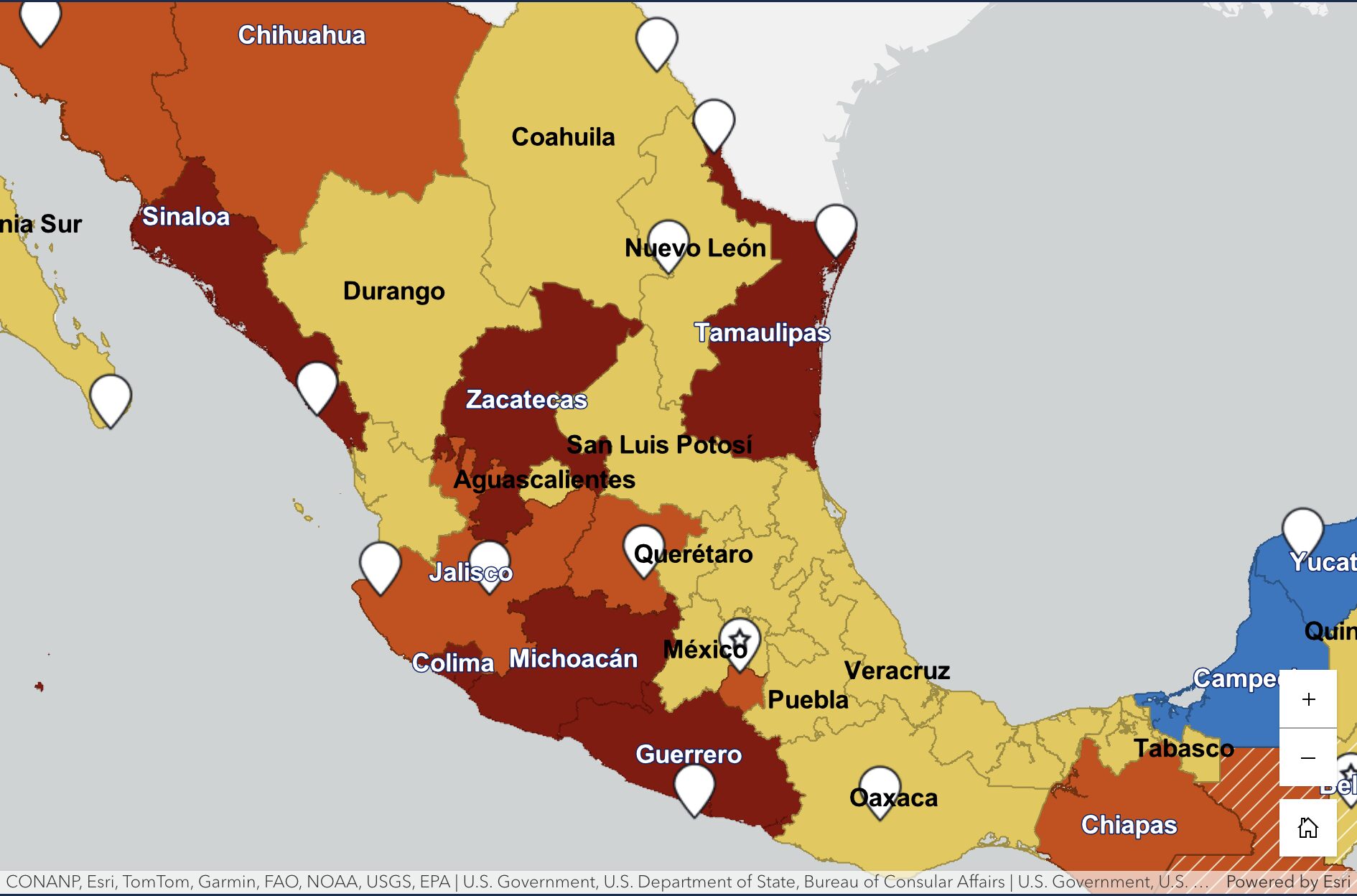
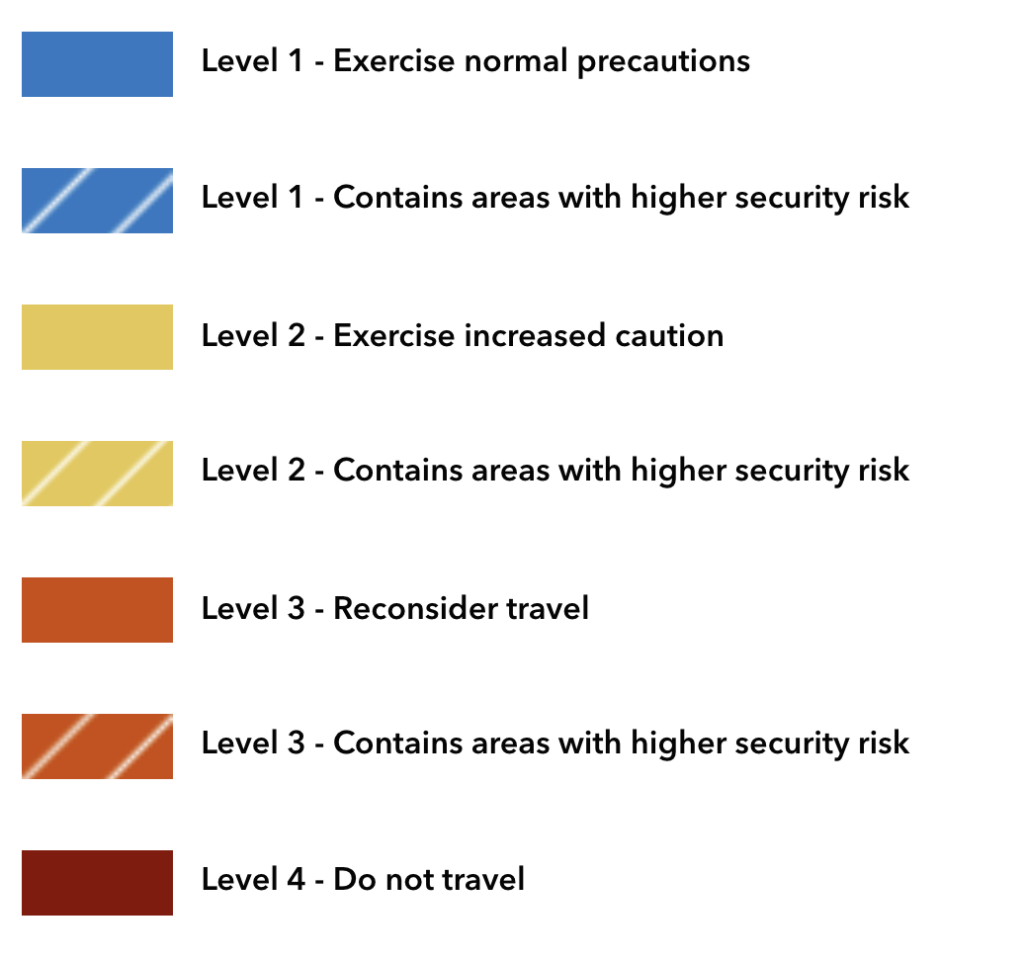
U.S. Government, U.S. Dept. of State, Bureau of Consular Affairs
On February 22, 2026, the Mexican military conducted a Special Forces operation in Tapalpa, Jalisco, which targeted the Jalisco New Generation Cartel (CJNG). This has since led to significant unrest in the region, resulting in disruptions to travel and heightened security measures in affected areas.
In the hours that followed, unrest spread across parts of Jalisco. Authorities reported security incidents, road blockades, and visible smoke in Puerto Vallarta. Social media footage showed travelers experiencing delays and disruptions at Puerto Vallarta and Guadalajara airports as the situation unfolded.
Jalisco (including Puerto Vallarta and Guadalajara)
Michoacán
Guerrero
Nuevo León
Tamaulipas
Canada also issued a high-risk advisory recommending that citizens avoid non-essential travel to Mexico.
Updated Government Guidance (As of February 24, 2026)
Conditions are evolving.
The U.S. government has lifted all restrictions related to February 22 events for staff in:
Tijuana (Baja California)
Monterrey (Nuevo León)
However, U.S. government personnel in the following locations remain subject to restrictions:
Guadalajara (Jalisco)
Puerto Vallarta (Jalisco/Nayarit)
Ciudad Guzmán (Jalisco)
In these areas, U.S. government staff are under nighttime curfew and may not travel outside their metropolitan areas.
This indicates improving stability, though certain precautions remain in place.
Which Airports and Flights Are Affected?
Guadalajara International Airport (MMGL)
Flight schedules have returned to normal.
Airport facilities are secure and fully operational.
Puerto Vallarta International Airport (MMPR)
Many airlines have added extra flights on February 24 to accommodate earlier cancellations.
Airport operations are secure.
Amenities are available.
Some travelers may still experience schedule adjustments.
If a direct flight to the United States is cancelled, travelers may consider connecting itineraries through other Mexican or U.S. cities.
While airport operations have largely stabilized, conditions remain dynamic and subject to change.
Geopolitical events can reroute aircraft and disrupt airport operations with little notice. Even flights not destined for affected cities may experience ripple effects.
Road Conditions
No confirmed reports of official road closures directed by local authorities.
Some highways in Jalisco, including portions of the corridor between Guadalajara and Puerto Vallarta, are not yet fully reopened.
Ground transportation timelines may vary.
Travelers should allow additional transit time and verify routing before departure.
Is It Safe to Travel to Mexico Right Now?
Mexico is geographically diverse, and conditions vary significantly by region.
While airports in Guadalajara and Puerto Vallarta are operating normally, security measures remain elevated and certain government travel restrictions are still active.
Travel considerations include:
Nighttime movement limitations in select metro areas
Potential highway delays
Heightened security presence
Continued monitoring by U.S. authorities
Baja California Sur (Los Cabos) remains classified by the U.S. Department of State as Level 2: Exercise Increased Caution and continues normal operations.
Travelers should review official government advisories and confirm real-time operating status before departure.
What This Means for Private Aviation Clients
At Magellan Jets, safety remains the foundation of every operational decision.
While commercial flight operations have largely resumed in Guadalajara and Puerto Vallarta, we continue to closely evaluate:
Airport security stability
Ground access reliability
Airspace continuity
Government advisories
Due to ongoing restrictions affecting U.S. government personnel and partial road limitations in Jalisco, we are exercising heightened operational scrutiny for flights into:
Jalisco (Puerto Vallarta, Guadalajara, Ciudad Guzmán)
Michoacán
Guerrero
Tamaulipas
Each trip request is being reviewed individually based on current intelligence, airport conditions, and crew safety assessments.
As conditions stabilize further and advisories are lifted, we will adjust operational guidance accordingly.
If flexibility is available, our team can recommend alternative destinations in:
The Caribbean
Central America
Baja California Sur
Other unaffected Mexican regions
Our Private Aviation Advisors are actively monitoring developments in real time.
Strategic Planning for Mexico Travel in 2026
When geopolitical events intersect with travel, proactive planning becomes essential.
Consider these steps:
Monitor U.S. State Department advisories daily.
Confirm airport and airspace status before departure.
Maintain flexibility with routing and scheduling.
Identify alternative destinations as contingency options.
Work with an experienced aviation advisor who tracks developments in real time.
Prepared travelers maintain control, even when conditions shift.
Frequently Asked Questions about Mexico Travel Restrictions (FAQ):
Is Puerto Vallarta safe right now?
Puerto Vallarta airport is currently secure and operating. However, Jalisco remains under partial U.S. government personnel restrictions, including nighttime curfew and limited travel outside metro areas. Travelers should monitor conditions closely.
Is it safe to travel to Cabo right now?
Los Cabos (Baja California Sur) is not part of the Jalisco-related restrictions. It remains classified as Level 2: Exercise Increased Caution by the U.S. Department of State and is operating normally.
Are flights to Puerto Vallarta operating?
Most airlines have suspended, diverted, or canceled flights following the military operation. This includes both Private and Commercial flights. Flight schedules continue to adjust based on security assessments.
Why were Guadalajara and Puerto Vallarta airports disrupted?
Disruptions followed a Mexican military operation targeting cartel leadership in Jalisco. Security incidents and road blockades impacted airport access and operations.
Which areas in Mexico are under advisory?
Current advisories include Jalisco, Michoacán, Guerrero, Nuevo León, and Tamaulipas. Travelers should confirm the most recent government guidance before planning travel.
When will travel to affected regions resume normally?
There is no confirmed timeline. Restrictions on U.S. government personnel remain in select Jalisco metropolitan areas during nighttime hours. Authorities continue to assess conditions.
Are other parts of Mexico impacted?
Mexico is geographically diverse. While certain states face disruption, other regions may operate normally. Travelers should evaluate each destination individually.
Travel Safely to Mexico with Magellan Jets
Mexico remains a vibrant, globally recognized destination. Recent cartel-related developments in Jalisco have created temporary disruption in key travel corridors, particularly Puerto Vallarta and Guadalajara.
In situations like this, informed decision-making matters. Clear intelligence, operational discipline, and real-time monitoring allow travelers to adapt with confidence.
While other Operators may sacrifice safety for convenience, Magellan Jets continues to prioritize safety, precision, and strategic guidance as conditions evolve. We remain committed to helping clients navigate complex travel environments with clarity and confidence. Get in touch with a Private Aviation Advisor here.
By Anthony Tivnan, Founder and President, Magellan Jets
The private aviation industry is evolving at an incredible pace. As we look ahead in 2026, the trends shaping how we fly are becoming clearer, driven by new technologies, shifting Client expectations, and a new generation of travelers. The 2025 holiday season gave us a preview of this future, as Magellan Jets experienced unprecedented growth that signals a fundamental shift in the market.
For example, over the Thanksgiving weekend, Magellan Jets saw a 43% increase in travel volume compared to the previous year. The Monday following the holiday saw a staggering 66% rise in flights. This surge in activity underscores a key reality: private aviation is no longer just a luxury. It has become an essential tool for individuals and businesses that value their time, demand convenience, and prioritize peace of mind for every Client.
Based on what we’re seeing, here are four key predictions for the future of private aviation in 2026 and beyond.
1. Frictionless Experiences Will Define Success
In 2026, the provider that makes it easiest for Clients to fly will win. The modern private flyer expects a seamless, intuitive, and personalized journey from the very first interaction. Clients are looking for a “one-stop-shop” mentality similar to how they interact with other services—ordering groceries, booking a car, or finding a ride instantly. They want that same ease of access when booking a private jet. The days of complicated booking processes and fragmented communication are numbered. Clients want efficiency and clarity, allowing them to focus on their destination, not the logistics of getting there.
However, technology alone is not the answer. The future lies in finding the perfect balance between automation and the human touch. Clients appreciate the ability to self-serve for simple tasks, like reviewing flight details or checking Jet Card hours. By leveraging technology to remove administrative burdens, we free up our advisors to focus on what truly matters: enhancing the Client experience. But for more complex needs or when the unexpected occurs, access to a dedicated, knowledgeable expert is non-negotiable. The most successful companies will be those that integrate technology, including AI tools, to enhance, not replace, the deeply personal and trust-based relationships that define premium service.
2. Personalization is the Ultimate Differentiator
In an increasingly crowded market where many competitors make similar claims, true differentiation will come from personalization. As luxury becomes less about material goods and more about unique experiences, the focus for ultra-high-net-worth (UHNW) Clients has shifted. Providing a safe and efficient flight is a non-negotiable, but that alone is not enough; the experience itself must be memorable.
Recent studies confirm this trend, showing that 83% of UHNW Clients plan to increase their spending on travel. This signals a clear preference for experiences over material possessions.
For us, this means the journey begins the moment a Client steps on board or even enters the terminal. Whether it’s acknowledging a special anniversary, theming a flight for a major sporting event, or curating one-of-a-kind Magellan Jets Journeys, we are committed to making every moment exceptional. This level of tailored service is what transforms a trip into an unforgettable experience.
3. A New Generation of Clients are Taking Flight
The private aviation landscape is also being reshaped by a significant demographic shift. The ‘Great Wealth Transfer’ is underway, with high levels of wealth moving from older generations to Gen X and Millennials. This is creating a new profile of private flyers with different expectations and priorities.
By 2040, Gen Z and Millennials will comprise nearly 35% of the global UHNW population, a dramatic increase from just 8% today. Meanwhile, Gen X will account for 45% of this group. These younger Clients place a high value on experiences, time, and convenience.
The current demographic of flyers is in a sweet spot where they have wealth, health, and time—and they are eager to utilize all three simultaneously. We must adapt to the preferences of this new generation of Clients.
4. Navigating Competitive Skies
While new players are entering the market, it is the credible, established players who will continue to set the standard and lead the industry forward. We are seeing the asset-light model gain substantial popularity, provided it is backed by premium inventory. Unlike brokers who might scramble to find any available aircraft our model focuses on premium aircraft without the rigidity of whole ownership.
Track records of safety, decades of operational expertise, and the trustworthiness cannot be replicated overnight. In this environment, providers who compete on price alone will struggle to deliver the quality and reliability that discerning Clients demand.
Leading the Way Forward
Looking ahead in 2026, Magellan Jets is committed to leading through innovation and expertise. We are leveraging data and AI technology to enhance our services, not as a replacement for our people, but as a tool to empower them. By combining great people, powerful technology, and a flexible asset-light model, we are building a future that prioritizes flexibility and transparency. By automating internal processes, we free up our team to focus on what they do best: building strong, lasting relationships with our Clients.
About Anthony Tivnan
Anthony Tivnan is the President and Co-Founder of Magellan Jets, which he launched in 2008 and has grown into a trusted leader in private aviation through a relentless focus on safety, service, and innovation. With more than 20 years in aviation, including a leadership role at Jets International, Anthony has built Magellan Jets into an award-winning company recognized for exceptional client experience, industry-leading satisfaction scores, and prestigious safety certifications like the WYVERN Wingman Broker distinction. He also serves on the board of the Camp Harbor View Foundation and is committed to fostering strong relationships with clients, partners, and his team.
For Private Clients seeking the perfect balance of performance, range, and comfort, the Challenger 300 stands as the definitive choice. This super-midsize jet is crafted for those who demand uncompromising reliability and a seamless private aviation experience. Whether your journey serves business or personal pursuits, the Challenger 300 delivers best-in-class performance, every time.
With its spacious cabin, advanced avionics, and impressive range, this jet has earned the trust of discerning Private Clients. Executives, families, and individuals who value both comfort and efficiency consistently choose this aircraft. In this spotlight, we’ll explore what makes the Challenger 300 a preferred choice in private aviation.
Challenger 300 performance and range
The Bombardier Challenger 300 is built to perform. With a range of 3,100 nautical miles, this super midsize jet can fly nonstop between major cities like New York to Los Angeles, Miami to Seattle, or even transcontinental routes with ease. While optimized for North American routes, the jet’s impressive range enables select transatlantic crossings under favorable conditions, such as New York to the Azores or certain European destinations. Its powerful twin Honeywell HTF7000 engines provide high thrust and efficiency, allowing it to climb quickly and cruise at a speed of Mach 0.80 (approximately 541 mph).
Additionally, the Challenger 300 is known for its exceptional short-runway performance, meaning it can access more airports than larger aircraft in its class. This flexibility allows travelers to land closer to their final destinations, reducing ground transportation time and making business and leisure journeys more efficient. The aircraft requires two qualified pilots to operate, ensuring the highest standards of safety and operational excellence.
Spacious and thoughtful cabin design
Step inside the Challenger 300, and you’ll experience true comfort in the sky. With seating for up to 9 passengers in a comfortable configuration, the spacious, flat-floor cabin provides ample room to move, work, or relax. The aircraft can accommodate up to 16 passengers depending on layout preferences. The generous 6-foot standing height and large windows enhance the open feel, while low cabin altitude and advanced soundproofing make for a peaceful flight.
Cabin features include:
Fully reclining seats with ergonomic design for maximum comfort on long flights.
Large windows that provide stunning views and natural light.
Advanced soundproofing to reduce cabin noise and create a quiet environment.
Customizable interior configurations to suit business meetings, family trips, or leisure travel.
Generous baggage capacity, with 106 cubic feet of storage, so you can bring all your essentials without compromise.
In-flight connectivity and entertainment
Staying connected during your journey is essential for both business and personal travel. The Challenger 300 jet is equipped with high-speed Wi-Fi, allowing passengers to work productively, stream entertainment, or maintain important relationships with colleagues and family throughout their flight.
Other connectivity and entertainment features include:
Multiple power outlets and USB charging ports for all your devices.
Touchscreen cabin management system to adjust lighting, temperature, and entertainment settings.
Premium sound system for high-quality audio enjoyment.
Satellite phone capabilities, ensuring communication even in remote locations.
Whether you need to join a conference call mid-flight, relax with entertainment, or curate the perfect in-flight ambiance, the interior is thoughtfully equipped to meet every Private Client’s needs.
Smooth and reliable flight performance
Designed for efficiency and reliability, this business jet features powerful Honeywell HTF7000 engines and advanced avionics systems, ensuring a smooth ride. Pilots appreciate its Rockwell Collins Pro Line 21 avionics suite, which enhances safety and navigational accuracy with advanced navigation and weather detection capabilities.
Challenger 300 production and ownership insights
The Challenger 300 remains a prominent choice among those seeking an exclusive private aviation experience, even though Bombardier has discontinued its production. Initially introduced to fill the sweet spot in super-midsize performance, this jet quickly attracted the loyalty of Private Clients for its proven reliability. Because no new airframes are rolling off the line, well-maintained pre-owned models can be an exclusive opportunity for Private Clients seeking a relationship-based ownership journey.
Challenger 300 compared to other jets
The Challenger 300 plane is often compared to other super-midsize aircraft, such as the Citation Sovereign, Gulfstream G280, and Legacy 500. The Challenger 300 stands out with its exceptional balance of range, cabin comfort, and operational efficiency that defines this category of private aviation.
More spacious cabin compared to competitors in its class.
Superior baggage capacity for longer trips.
Access to a wide range of regional airports, offering greater travel flexibility.
Better overall operational efficiency, making it a cost-effective option for frequent travelers.
Curious what makes the Challenger 300 different from the Challenger 350? Read more here .
Can the Challenger 300 fly transatlantic?
The Challenger 300 can cross some North Atlantic routes under ideal circumstances, but it is not often regarded as a true transatlantic workhorse. Bombardier’s published performance materials cite a range around 3,065 nautical miles, which can make select eastbound crossings feasible with limited passengers and favorable winds. Westbound journeys, however, frequently require a tech stop due to stronger headwinds and reserve fuel considerations. Your Private Aviation Advisor can help determine what the ideal aircraft is for your transatlantic journey.
Fly the Challenger 300 with Magellan Jets
At Magellan Jets, we provide exclusive access to the Challenger 300 and 350 through both Charter and dedicated Jet Card programs. Whether you’re looking for flexibility, consistency, or a superior private jet experience, our Challenger 300/350 Card provides a seamless way to fly on one of the most trusted aircraft in the industry for Private Clients.
Tips for booking a Challenger 300
Book in Advance for Peak Travel Seasons – The Challenger 300 is a popular choice for business and leisure travelers alike. Secure your preferred itinerary early to avoid scheduling conflicts.
Take Advantage of Short-Runway Capabilities – When booking your trip, ask about regional airports closer to your destination.
Customize Your Onboard Experience – Work with Magellan Jets to tailor in-flight dining, entertainment, and other amenities to your preferences.
Consider a Jet Card for Added Flexibility – With a Challenger 300/350 Card , you can enjoy guaranteed availability and fixed hourly rates with no blackout dates.
Magellan Jets Challenger 300/350 Jet Card
Contact a Private Aviation Advisor today to discover how the Challenger 300 can elevate your private jet travel—fly smarter, fly with confidence, fly with Magellan Jets.
Frequently Asked Questions About the Challenger 300 (FAQs):
How much does a Challenger 300 cost?
The cost of a Challenger 300 in the pre-owned market can vary widely depending on its production year, engine hours, and maintenance records. Magellan’s Private Aviation Advisors can assist with Aircraft Sales and Management.
Does the Challenger 300 require two pilots?
Yes, the Challenger 300 is typically operated by a two-pilot crew in line with its certification requirements. Pilots are generally required to hold a BD-100 type rating, which encompasses both the Challenger 300 and 350 series.
How many passengers can a Challenger 300 seat?
Typical executive seating configurations often accommodate eight or nine Private Clients.
What is the Challenger 300’s typical range?
The Challenger 300 has a published range of about 3,065 nautical miles. Real-world factors such as wind conditions and payload can affect its nonstop capabilities.
Experience the Challenger 300 difference with Magellan Jets
The Challenger 300 is among the top three Private Jets chartered by Magellan Jets Clients. From its impressive 3,100-nautical-mile range to its thoughtfully designed cabin that accommodates up to nine passengers in comfort, this super-midsize jet continues to set the standard for private aviation. Whether you’re flying coast-to-coast for business or planning an international journey, this jet delivers a consistently superior experience that reflects your commitment to quality and efficiency.
At Magellan Jets, we make accessing this exceptional aircraft seamless through our Challenger 300/350 Jet Card program. With guaranteed availability, no blackout dates, and the flexibility to tailor every aspect of your journey, you’ll experience private aviation the way it should be: personal, reliable, and designed around your needs. Connect with a Private Aviation Advisor today .
Follow Your Team: Fly Private for College Basketball’s Biggest Tournament
As college basketball’s most thrilling time of the year approaches, fans prepare to witness history unfold. Whether attending a single game or following your team through each round to the championship, private aviation delivers unmatched flexibility and a bespoke journey that ensures you never miss a moment on the court.
Private Aviation for Athletes
The NCAA often designates a distance threshold, commonly around 350–400 miles, above which teams are required to fly instead of traveling by bus. These guidelines ensure safer, more efficient journeys for student-athletes, but fans seeking an elevated experience typically rely on private aviation for even shorter distances. Under NCAA championship guidelines, many teams board charter flights coordinated by official travel operations to ensure streamlined logistics and consistency.
Men’s March Madness tournament schedule
March Madness kicks off with Selection Sunday on March 15, 2026, setting the stage for weeks of high-intensity matchups and bracket-busting excitement. Here’s a look at key dates and locations so you can plan your March Madness private jet travel:
Selection Sunday – March 15, 2026
First Four – March 17–18, 2026 | Dayton, OH
(Closest private airport: Dayton International Airport – KDAY)
First Round & Second Round – March 19–22, 2026 | Multiple locations
Sweet 16 – March 26–27, 2026
Elite Eight – March 28–29, 2026
Final Four – April 4, 2026 | Indianapolis, IN
National Championship – April 6, 2026 | Indianapolis, IN
(Championship venue: Lucas Oil Stadium)
Women’s March Madness tournament schedule
Selection Sunday – March 15, 2026
First Four – March 18–19, 2026
First Round & Second Round – March 20–23, 2026
Sweet 16 – March 27–28, 2026
Elite Eight – March 29–30, 2026
Final Four – April 3, 2026 | Phoenix, AZ
National Championship – April 5, 2026 | Phoenix, AZ
Preparing for bracket surprises with private aviation
Each March, fans discover which city their team will play in only after Selection Sunday, creating a unique blend of anticipation and logistical challenges. Rather than scramble for last-minute commercial routes, booking a private aviation option ensures your schedule aligns perfectly with every game result. High-profile sporting events often drive significant spikes in private flight demand. This surge in activity can restrict availability, making advanced planning especially valuable if you hope to secure a midsize or larger private aircraft for your journey. However, even last-minute flights can often be arranged if you partner with an experienced Private Aviation Advisor who can navigate the complexities of peak-season scheduling. By prioritizing flexibility and foresight, you’ll be ready to pivot as your team advances, ensuring a seamless journey to any tournament location.
March Madness private jet travel options
Your March Madness travel plans should be as dynamic as the games themselves. Whether you’re catching one electrifying matchup or following your team through every round, Magellan Jets offers tailored solutions to maximize your tournament experience.
Flying to a Single Game? Charter a Private Jet.
If you’re looking to attend one specific March Madness matchup, a Private Charter is the perfect solution. With access to executive airports minutes from every tournament venue, you can skip commercial airline crowds, arrive refreshed for tip-off, and fly home on your schedule, no matter how late the final buzzer sounds.
Following Your Team? A Jet Card Offers Ultimate Flexibility.
For dedicated fans following their team’s March Madness journey from round to round, a Jet Card provides guaranteed availability and effortless booking with no blackout dates during tournament season. No matter where your team’s championship run takes you, from coast to coast, you’ll have seamless private jet access that adapts to every bracket development.
Private airports near March Madness venues
To help streamline your travel, here are the top private airports near key tournament locations:
Lexington, KY – Blue Grass Airport (KLEX)
Providence, RI – T.F. Green International Airport (KPVD)
Seattle, WA – King County International Airport (KBFI)
Wichita, KS – Wichita Dwight D. Eisenhower National Airport (KICT)
Cleveland, OH – Cleveland Hopkins International Airport (KCLE)
Denver, CO – Centennial Airport (KAPA)
Milwaukee, WI – Milwaukee Mitchell International Airport (KMKE)
Raleigh, NC – Raleigh-Durham International Airport (KRDU)
Newark, NJ – Teterboro Airport (KTEB)
San Francisco, CA – San Francisco International Airport (KSFO)
Atlanta, GA – DeKalb-Peachtree Airport (KPDK)
Indianapolis, IN (Men’s Final Four & Championship) – Indianapolis Executive Airport (KTYQ) and Indianapolis International Airport (KIND)
Phoenix, AZ (Women’s Final Four & Championship) – Phoenix Sky Harbor International Airport (KPHX), Scottsdale Airport (KSDL), and Phoenix Deer Valley Airport (KDVT)
Frequently Asked Questions About Basketball Tournament Travel (FAQs):
Do college basketball teams fly private for the NCAA tournament?
Yes, many Division I programs rely on charter flights for the NCAA tournament, with arrangements often handled by official NCAA travel operations. For more details on how teams travel, you can visit the NCAA’s official site.
Can I find last-minute private flights during March Madness?
Yes, but they may be limited. Last-minute access is possible, though the surge in demand around popular sporting events can reduce aircraft availability, according to WingX. It’s best to plan ahead and engage an experienced Private Aviation Advisor to secure your ideal aircraft if your team advances unexpectedly.
What are some benefits of a Jet Card for March Madness travel?
A Jet Card offers guaranteed access to private aircraft with fewer scheduling restrictions, even during popular events. This means you can quickly adapt your journey plans when your team advances, ensuring seamless support from a dedicated Private Aviation Advisor. Consult Private Jet Card Comparisons to learn more about available benefits.
Experience the Magellan Difference
Flying private for March Madness isn’t just about convenience, it’s about creating an unforgettable championship experience. From personalized in-flight catering to seamless ground transportation, our team ensures every detail of your basketball tournament journey is as exceptional as the games themselves.
Don’t let commercial flight delays or tournament logistics stand between you and March Madness action. Whether you’re cheering courtside for a single game or following your team’s championship run to Indianapolis or Phoenix, Magellan Jets delivers March Madness private jet travel with unmatched ease and precision.
Ready to plan your March Madness travel? Contact a Private Aviation Advisor today to secure your private jet and elevate your tournament experience before availability tightens.
In today’s hyper-competitive landscape, visionary CEOs understand that agility, presence, and decision velocity are essential to leadership. Business aviation, when leveraged properly, becomes a strategic asset that fuels enterprise growth and resilience.
At Magellan Jets, we enable CEOs to move quickly, lead visibly, and drive strategy without compromising fiscal responsibility, governance standards, or shareholder trust.
Aviation as a Strategic Business Asset, Not a Status Symbol
Business aviation’s role has evolved. The market today demands leaders who use aviation not as a symbol of privilege, but as a pragmatic tool for enabling performance:
Speed to market
Real-time site evaluations for acquisitions
Direct leadership connection with distributed teams
Fast, decisive crisis management
Magellan Jets is built for CEOs who prioritize smart, efficient leadership, and delivering mission-critical aviation services that align with corporate strategy and financial responsibility.
Whether through On-Demand Charter, Jet Card, or Aircraft Ownership and Management, Magellan offers the flexibility to meet each organization’s specific aviation needs.
Real-World Validation from Leading Organizations
The impact of choosing the right aviation partner is best illustrated by those who demand the highest standards.
Sam Kennedy, President and CEO of the Boston Red Sox, shared:
“It’s a privilege to fly private from time to time with Magellan Jets, but more importantly, when we need Magellan, they’re always there for us. For our players. For people in our front office. If we have emergency situations, the team on the ground at Magellan, right here in Boston, is always there for us. They’re very focused on the customer experience.”
This trust, built over years of partnership, reflects the standard we bring to every client relationship—whether it’s moving world-class athletes or corporate executives.
In a governance-driven era, how a company manages aviation matters as much as why it uses it. Magellan’s flexible and disciplined model supports responsible leadership by providing:
Transparent, predictable pricing structures (no co-mingled funds)
Environmentally-conscious options, including carbon offset programs
Clear reporting to distinguish business use to meet compliance standards
A culture founded on safety, service, and reliability
Choosing Magellan sends a strong, clear signal to boards and shareholders: leadership is acting with prudence, foresight, and accountability.
Flexible Aviation Solutions to Match Every Business Phase
Different phases of business growth require different aviation strategies. Magellan offers a range of solutions—including On-Demand Charter, Jet Cards, Aircraft Sales and Management, and Fractional Ownership—so that companies can select the structure that best supports their goals, budget, and evolving needs.
This flexibility allows CEOs to:
Scale travel up or down as market conditions evolve
Access simultaneous aircraft scheduling with no blackout dates
Right-size aircraft to each mission, optimizing spend, time and resources
When strategy requires speed, whether scouting an acquisition, leading a market entry, or rallying a dispersed team, Magellan ensures leadership gets there, prepared and protected.
Safety First: Protecting Your Most Valuable Assets
Leadership is the ultimate intellectual property of any organization. Magellan’s commitment to safety is unmatched, anchored by:
A flawless safety record since being founded in 2008
Recognition by Wyvern Wingman, ARGUS, and IS-BAO
Longstanding participation in the Air Charter Safety Foundation (ACSF) at the board level
A documented Safety Management System (SMS)
An entirely in-house team, no outsourced call centers, ensuring clients are supported by experts who know their unique requirements
Whether executives need to travel together or separately for risk mitigation, Magellan provides the flexibility and assurance modern enterprises demand. Read more about the highest safety standards in the industry here.
Aviation That Advances Enterprise Value
Today’s visionary CEOs are choosing aviation solutions that:
Enhance leadership reach and speed
Protect brand reputation and financial health
Deliver shareholder-aligned optics and governance credibility
Provide unmatched agility to capture opportunities and navigate challenges
With Magellan Jets, leadership is supported by aviation that is every bit as strategic, efficient, and high performing as the organizations they run.
St. Patrick’s Day is a global celebration of Irish heritage, culture, and vibrant festivity. Whether you’re drawn to the spirited parades of major U.S. cities or the authentic charm of Ireland itself, your private jet journey ensures unforgettable moments without the stress. With Magellan Jets, experience unparalleled flexibility, bespoke comfort, and personal attention so you can fully embrace this festive occasion.
Here are the premier destinations for St. Patrick’s Day, and why travelers return to them year after year.
Major departure hubs for a seamless journey
For Private Clients looking to begin their Saint Patrick’s Day journey in style, selecting a major departure hub can significantly reduce congestion. Major U.S. hubs include: Teterboro (KTEB) near New York, Van Nuys (KVNY) in Los Angeles, Opa-Locka (KOPF) in Miami, and Dallas Love Field (KDAL) in Texas. These airports offer minimal lines compared to commercial terminals, ensuring a smoother start to your St. Patrick’s celebration. Renowned for impeccable FBO infrastructure, they also provide exclusive lounges, concierge services, and customized logistics to enhance the client experience. By choosing a strategic point of departure, you can arrive at prime destinations like Dublin or Chicago in a timely, stress-free manner with Magellan Jets.
Dublin – The Authentic St. Patrick’s Day
For an authentic celebration, there’s no place like Dublin. The city’s iconic Saint Patrick’s Festival (March 15–17, 2026) features a spectacular parade, live music, and cultural events across town. Private jet to Dublin ensures you arrive refreshed and ready to immerse yourself in Ireland’s most celebrated tradition. After enjoying the festivities, escape to Ireland’s lush countryside or a five-star stay at The Shelbourne or The Merrion.
Where to Land:
Dublin Airport (EIDW) offers dedicated private aviation services with full-service FBOs, ensuring a seamless arrival experience that places you directly in the heart of Ireland’s capital.
New York City – The World’s largest parade
New York’s legendary Saint Patrick’s Day Parade dates back to 1762 and is the largest in the world. Thousands line Fifth Avenue to watch the grand procession, and a private jet to New York positions you perfectly for the celebration. Exclusive festivities continue at Manhattan’s finest establishments, like The Dead Rabbit and Connolly’s Pub and Restaurant, where live Irish music keeps the energy going late into the night.
Where to Land:
Opt for a private arrival at Teterboro (KTEB), offering superior FBO services and the quickest access to Manhattan’s festivities.
Boston – America’s most Irish city
With nearly a quarter of its population claiming Irish heritage, Boston is an exceptional private jet destination for Saint Patrick’s Day. South Boston’s historic parade draws massive crowds, while the city’s Irish pubs, like The Black Rose and authentic Irish pubs, like The Black Rose and Mr. Dooley’s, offer an authentic atmosphere. Pair the celebration with accommodations at the Boston Harbor Hotel or The Newbury Boston.
Where to Land:
Magellan Jets’ Private Clients have exclusive access to our Private Terminal located in Bedford, Massachusetts (KBED).
Chicago – The famous green river celebration
Chicago takes Saint Patrick’s Day to extraordinary heights by dyeing the Chicago River green; an annual tradition dating back to 1962. Private jet to Chicago delivers you directly to this spectacular celebration featuring parades, fireworks, and high-energy nightlife at venues like The Gage and Z Bar.
Where to Land:
Fly into Chicago Executive Airport (KPWK) or Midway (KMDW), both offering exceptional private aviation services with convenient downtown access.
Savannah – Southern St. Patrick’s Day
Savannah’s Saint Patrick’s Day celebration ranks among the largest in the U.S., featuring vibrant parades and city-wide parties infused with unmistakable Southern charm. Private jet to Savannah places you at the center of riverfront festivities, exclusive yacht charters, and premium accommodations at The Perry Lane Hotel.
Where to Land:
Savannah/Hilton Head International Airport (KSAV) provides a comprehensive private aviation experience with dedicated FBO services and efficient ground transportation connections.
Frequently Asked Questions About St. Patrick’s Day Travel (FAQs)
What are some popular private jet departure hubs for St. Patrick’s Day?
Many Private Clients begin their St. Patrick’s Day journey at hubs like Teterboro (KTEB) near New York, Van Nuys (KVNY) in Los Angeles, or Dallas Love Field (KDAL) for convenience. These airports offer advanced FBO facilities and minimal congestion, ensuring a relaxed departure experience.
How early should I book a private jet for holiday events?
It is advisable to reserve well in advance for popular celebrations like St. Patrick’s Day, as available aircraft may fill up quickly. Peak travel seasons typically require more lead time to secure your desired itinerary.
Experience St. Patrick’s Day with the Magellan Jets Advantage
High demand for premium St. Patrick’s Day travel means securing your preferred aircraft early is key to a seamless experience. Our Private Aviation Advisors are ready to design your personalized itinerary, from selecting the ideal departure hub to arranging ground transportation and bespoke in-flight amenities. Talk to a Private Aviation Advisor today and discover how Magellan Jets delivers safety-first operations, individualized attention, and the flexibility you deserve, making your St. Patrick’s Day journey as memorable as the celebration itself.