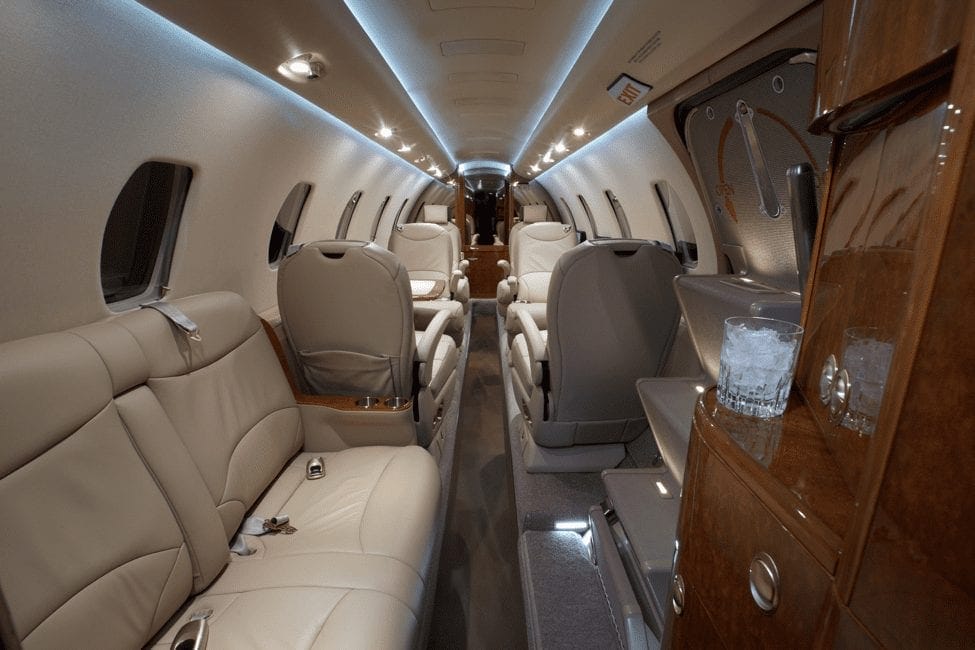
There are many ways to fly privately, but only one provides the experience of aircraft or fractional owner without the cumbersome costs or long-term commitments. If you’re looking into a private jet card, we’ve got you covered on what you need to know. Here are eight reasons why you should consider jet cards.
What are private jet cards?
1. Many Jet Cards Are Customizable
One of the biggest benefits for some jet cards is customizability. Overall, many programs are highly personalized to fit your leisure travel or business needs. From your preferred aircraft to the types of amenities you like, everything is customized just for you. Specifically with Magellan Jets, our Build-a-Card tool allows you to easily create your program, purchasing in 25-hour blocks from a selection of 10 of the most popular aircraft, such as the Phenom 300, Falcon 2000, Gulfstream IV and more.
2. Aircraft Access
Another benefit for some programs is always having a guaranteed aircraft solution on hand. Whether you’re planning a trip for later in the year, or need a last-minute lift, these types of programs are built to meet your needs. Magellan Jets card owners, for example, can schedule a flight on as little as 8-hours’ notice.
3. if you’re looking to buy an aircraft, but worried about risk
This private aviation solution is popular because many programs offer the benefits of ownership without the risks. People and businesses who own an aircraft outright or take part in fractional programs are often burdened by this heavy investment, which is akin to investing in an airline. Rather than putting your money into a depreciating asset, jet card ownership allows you to invest in just your travel, with no long-term commitments or strings attached.
4. When Supplemental Lifts Are Needed, You’ll Want a Plan
Additionally, these some of these programs are useful as supplemental lifts for aircraft owners and fractional programs. When an aircraft needs maintenance or isn’t accessible, many people and businesses turn to jet card ownership.
5. Safer Business Travel Solutions
In particular, safe solutions for corporate use is another big factor. Executives and employees are able to use private aviation to avoid congested terminals, as well as other commercial travel risks. Private travel helps businesses protect their most important assets: their people. However, you have to make sure you do your research and use a trusted provider like Magellan Jets.
6. Many Jet Cards Offer Flexibility and Transparency
In general, these programs offer flexibility, consistency and convenience. With Magellan Jets, being flexible and transparent are key benefits for clients. Also, jet card owners with 50+ hours can easily customize options to fit their needs. Additionally, all Magellan Jets card owners receive peace of mind will full pricing transparency and no hidden fees or surcharges.
7. Flying on Your Terms Is Possible
One of the best parts is flying on your terms. By working with Magellan Jets, you’ll never have to worry about hidden costs, monthly membership fees or a large upfront capital purchase. Additionally, you also have the freedom to use only what you need, plus have the ability to scale your program up or down on an annual basis.
8. Experience Amenities That Fit Your Needs
As if there weren’t enough benefits already, typically these programs come with other amenities as well. Specifically with Magellan Jets, you’ll receive catering and Wi-Fi included with cards of 50+ hours. Also, you’ll receive other benefits, including multiple aircraft daily usage, round-trip discounts, long-leg discounts and more. Speak with our Private Aviation Consultants to learn more.
During these times of uncertainty, many first-timer private jet flyers are now entering the private aviation space. From concerns over commercial airline safety to the reliability and convenience of flying private, there are many factors behind this influx of newcomers. Here are seven reasons why first-time flyers are choosing private aviation.
1. Private Aviation Is SafeR Than Commercial Air Travel
As the world endures the ongoing coronavirus crisis, many first-time flyers are choosing private jet travel as a safer alternative to commercial air travel. According to a recent New York Times article, a travel analysis shows that a “person on the average commercial flight has about 700 points of contact with other people and objects.” Meanwhile, private jets significantly reduce exposure risks by limiting touch points to just “20 to 30.” Many private aviation companies, including Magellan Jets, are also enacting enhanced health and safety standards beyond what’s required by the CDC and WHO, further protecting first-time flyers transitioning from first class or commercial business class.
2. Access More of the World
Utilizing private aviation offers travelers access to more parts of the world, as, unfortunately, most commercial airlines are scaling back operations in the wake of COVID-19. Private aviation is often the only option for traveling to some regions. Overall, private travelers can access more than 5,000 terminals and fixed-based operators (FBOs), while commercial aviation only has 500 available airports.
Another big factor for first-time private jet flyers is the level of guest services. Private aviation provides personalized experiences, with teams working tirelessly to ensure perfection. Here at Magellan Jets, our Guest Services team always puts your needs first. We can help arrange everything from in-flight catering and Wi-Fi, to ground transportation and more, making sure each aspect of your journey is just right.
4. Reliability & Convenience
Even first-class flyers have to wait in airports sometimes. Meanwhile, private jet travelers experience another level of reliability and convenience. Whether you’re chartering a private flight or flying as a member or jet card owner, flying private means landing and take off fit around your schedule. Overall, purely private solutions are more reliable and convenient than their commercial counterparts.
5. Ensure Business Continuity
Beyond leisure travel, private aviation is a great resource for businesses as well. Whether it’s providing safe transportation for executives and employees to transporting critical cargo and essential workers, first-time flyers trust private jets to keep business moving.
Whether it’s short-notice scheduling or changing aircrafts, private aviation is much more flexible than commercial travel. In particular, Magellan Jets members can schedule a flight on as little as 12 hours’ notice, with no blackout dates 365 days a year. Members also receive a 12-month locked-in hourly rate, so you’ll never be surprised by hidden fees or surcharges.
7. Guaranteed, Purely Private Solutions
Private aviation provides guaranteed solutions, so you always have an aircraft ready when you need one. Having this invaluable resource offers peace of mind, as you’ll know your experiences will always fit your needs. Explore Magellan Jets’ portfolio of purely private solutions below and start traveling on your terms today.
Taking the leap from first-class to a private jet charter is quite the experience. While many aspects feel familiar-like the thrill of soaring through the sky en route to your favorite destination-others may need some getting used to. In order to help get you onboard, here are 10 frequently asked questions answered for first-time flyers.
10 Private Jet Charter Questions Answered
What is a private jet charter?
Private jet charters are one of several options available for private travelers. Unlike models such as fractional ownership or membership programs, a private jet charter is an on-demand service paid for on a per-flight basis. Charter flights are ideal for leisure travel as well as essential transportation for individuals and businesses.
What types of aircraft can I access?
After more than 12 years in business with a 100% safety record, the Magellan Jets team will always help you find the perfect aircraft to meet your needs. Depending on the specifics of your travel (number of passengers, length of trip, etc.), there are hundreds of aircraft options to choose from with our meticulously selected partners and providers in the Magellan Jets Preferred Network. Explore with our Aircraft Comparison Tool, or reach out to our Private Aviation Consultants for more information.
Domestic and international Travel: Where can I fly?
In 2019, 13,000 passengers flew in and out of more than 70 countries with Magellan Jets. From island paradises to the great American outdoors, we can help you discover the world, as our private jet charter services accommodate both domestic and international travel.
How much does it cost to charter a private jet?
A private jet charter’s cost depends on several factors, which are taken into consideration when a total cost is presented during the booking process. Overall, some of the biggest factors are the plane’s size and age, the length of the flight and how many passengers will be onboard. Click here to get a quote now.
Accommodations: How do I order catering or ground transportation?
While booking your trip with a Private Aviation Consultant, guests can order catering and ground transportation. Whether it’s a meal and a bottle of wine from that special restaurant or a latte to go with your favorite newspaper, the Magellan Jets team is here for all of your needs. We’ll stop at nothing to ensure your amenities, food and beverage choices meet your requests.
We are also more than happy to arrange ground transportation and rental vehicles. Magellan Jets has a network of top-rated affiliates available to help take you to your final destination. Our team will work directly with your driver to make sure your transportation is seamless, with your vehicle fully equipped for all your needs.
How to Book a Private Jet Charter: First-Time Flyer Boarding Questions
What do I need to bring for my first private jet charter flight?
For a private jet charter flight, you may need some documentation. In particular, domestic flights require an official photo ID like a driver’s license. Meanwhile, international travel usually need a passport and/or visa.
Our Private Aviation Consultants and Flight Support team will be here to guide you through the process. We’ll show you exactly which documents you’ll need while booking your private jet charter trip.
Airport security: How early do I need to get there?
Private aviation terminals allow you to arrive within minutes of departure. Since the Flight Support team oversees all the details, you can walk directly through the fixed-based operator (FBO) and board your aircraft. While documents may be reviewed upon boarding, the process is efficient, secure and seamless.
The amount of luggage you and your fellow passengers can bring depends upon the specifications of the aircraft in use. Our Private Aviation Consultants will help you find the right option to accommodate your baggage needs.
Last-minute changes: Who can I call if I need anything?
Comprised of FAA-licensed pilots and highly-trained aviation professionals, our Flight Support team is available 24/7, 365 days a year. Please contact Flight Support at 1-844-316-6972 or by email flightsupport@magellanjets.com should you require any last-minute changes to your itinerary, answers to questions or additional resources.
Can I bring my pets?
Private jet charter flights typically allow pets. Just make sure to talk with your Private Aviation Consultant first. They’ll ensure your aircraft choice is just right for you and your furry friend. Additionally, Magellan Jets’ Flight Support team will inform the flight crew as well as check for any regulations or paperwork needed for authorization prior to boarding. Check out our guide to traveling with pets for helpful tips and more information.
Choosing the best private travel solution for your business can be time-consuming since there are a number of private jet companies. If you’re considering private travel for the first time, or changes in your mission have made it necessary to re-evaluate your travel portfolio, there are a few key points you should consider. After all, private jets and programs are as individual as the travelers that use them. We’ve identified 7 of the major factors you should consider in selecting a private jet provider.
Best Private Travel Solution: 7 Factors to Consider
Safety
Air travel is considered one of the safest forms of transit, and the numbers back it up. In private aviation, the safety of your trip can be greatly affected by the training and certifications of your operators and flight crew. When evaluating your options, look for a private jet operator that meets Federal Aviation Administration (FAA) safety standards, and ideally performs its own inspections and certification for operators.
Capacity
When it comes to private jets, bigger isn’t always better. Consider your overall travel needs when choosing an aircraft: How many hours a year are you flying? How many people will generally be aboard? With many aircraft and options available, it’s important that your chosen aircraft meets the majority of your needs for both headcount and luggage capacity. Also, if pets figure into your travel, be sure your four-legged guests are welcomed aboard.
Distance
Just as important as capacity, make sure your private jet of choice can “go the distance” for all your major routings. Selecting the appropriate weight class for your private jet ensures that your time and investment enjoy maximum efficiency by reducing or eliminating fuelstops during travel.
Amenities
With logistics decided, you should carefully consider the comfort factors of your choice. Be sure your operator can meet all your expectations in the air and on the ground; amenities such as catering, ground transportation, in-flight wifi, even the right reading materials can help you make the most of your flight hours. Also, be sure to evaluate the flight support services of your chosen provider. A solid Flight Support team is vital for the rare occasion when things don’t go according to plan.
Commitment
There are many different ways to fly private, and each presents different challenges and benefits. While fractional and whole jet ownership were once the de facto choices, depending on your business travel needs these options can become both costly and limiting. Carefully consider whether a long-term contract commitment involving a single aircraft is the best private travel solution for your business. You may find that a Membership Model offers better value and service.
Flexibility
Plans and missions change frequently. The aircraft or fractional share that works for your business today may become inadequate a year from now. That may force you to use supplemental lift of private jet charter services to meet your needs. While these are both useful options in certain circumstances, relying on them heavily may be a sign you require more flexible options for your changing business needs.
Investment
When all is settled, the value of your investment in private travel should be a priority. Private jet travel isn’t the place for bargain hunting. But, choosing a provider with the best options and flexibility means you’ll realize the best return on this important investment.
Your Research Partner
We understand there are many factors in selecting the best private jet options for your business. Making the right choice requires a fair amount of research and due diligence. However, with the best information and a thorough understanding of your options, you’ll reap the benefits. The best private travel solution offers unmatched convenience, comfort, and safety, while assuring the most value for your investment.
If you’d like to save time in understanding your private jet options, our Private Aviation Consultants are available to assist you. We’ve conducted the necessary research to help you understand private jet variables and come to the best decision for your business and lifestyle.
There’s no one right way to fly private: travelers who prefer or require private aviation for their business or personal needs have a variety of options on deck. If you’re unsure of how to fly private in a way that meets your needs exactly, we can help.
The four most common ways to fly private include jet card memberships, fractional ownership, chartering, and outright ownership. In this article, we’ll take a look at the various ways to fly private so that you can make an informed decision about which option is best for you.
Fractional:
Fractional ownership, or partial ownership of a jet, gives you the ability to fly a certain number of hours per year. It’s a happy medium between ownership and memberships. Travelers who want to go this route typically plan to fly 50 or more hours per year, which makes purchasing equity in a jet a savvy idea. The number of hours you can fly each year depends on how large of a share you’ve purchased in the aircraft, such as one-sixteenth or one-fourth of the aircraft.
The benefit of fractional ownership is that frequent flyers receive the perks of jet ownership but are not solely responsible for the jet. Instead, all owners share the responsibilities of ownership with peers who have similar flight needs. While a guarantee to have access to an aircraft whenever one wants is there, some things to consider and evaluate:
– Peak travel seasons, holidays, and major events will limit how many hours a plane is available.
– If another part-owner of your share has already requested the jet, you might need to change your itinerary.
– Some programs reach out to charter providers in order to fulfill the request, some have the ability to change the departure time +/- 3 hours or so, and some only guarantee availability based on share size.
– You are signing a five-year term contract and could sometimes exit after 3 years and have your share repurchased or resold.
– You are allowed to use the number of hours allotted to you, and depending on share size, you may have the option to borrow against future annual allocations, typically 25% of your hours/days.
– The fleet availability could mean you will fly an older aircraft when your newer aircraft is unavailable, most often on peak travel dates. Some share owners might get an incentive of a free upgrade if only larger jets are available.
Jet Card Membership:
For travelers who fly 25 hours or more per year, jet card memberships might be the perfect solution. Through a jet membership, travelers can purchase flight time in hourly increments. The reason to the popularity of the membership model is clear, the focus being the TOTAL EXPERIENCE of the member: flexibility in the type of plane to match the specific profile of the trip, the cost of the flight, hand-picked crew, customized amenities on board, and more.
Membership perks and amenities can vary widely. Magellan Jets rebuilt their membership program to include even greater flexibility and member-focus in Elevate, the premier jet-specific membership.
Charter:
Chartering aircraft gives you the ability to pay as you go rather than purchase flight time up front. When you charter a flight, you choose the destination, departure time, and more. Chartering flights works well for the price-conscious, those who have one-off trips, or those who own their own aircraft but occasionally need to supplement their travel.
Charter often requires some flexibility on departure dates and times, as planes are only available if they are not already booked, and fleets may be limited. If chartering may be a good fit for you, we invite you to get a quote at Magellan Jetsand determine if we are the right company to meet your needs.
Ownership:
An outright ownership is another option when it comes to flying private.
If you’ve flown private for some time and discovered that ownership is the right route for you, we’re happy to assist in making your transition seamless. We can recommend companies that are able to advise whether buying is the right choice for you based on your individual situation. We are happy to lend you our private aviation expertise and assist along the way.
There are few things more frustrating than having purchased a specific aircraft share or jet card, booking a flight, receiving all the details in advance and then finding out on the morning of your flight that you will be making two flights instead of one. You’ve been politely scheduled for a “tech stop” (also known as a Fuel Stop) without your knowledge or consent. Adding insult to injury, you’re flying private, paying a LOT of money, and now and you’re going to be late.
I’ve spent time with our Private Aviation Consulting and Flight Support Teams to document the top five frequently asked questions about fuel stops that Magellan Jets clients and members have asked over the past ten years. Most of these questions come early in the relationship, when prospective clients and members are unhappy with their current private aviation arrangement and are calling us to seek out a more personalized private transportation solution. We’ve used our combined experience to answer the FAQs from the point of view of a client or member.
Will my aircraft be able to make this trip all year?
Though I will usually be travelling alone or with one other person, what will the range of the aircraft be if I need to put a person in every seat?
If the aircraft can perform my routing all year long and with every seat occupied, why do I need a fuel stop today?
Can I interchange or upgrade to an airplane that will go non-stop? Will you advise me when I need to do so.
So, I have to make a fuel stop anyway. How long is this going to take?
Don’t be duped by aggressive salesmen, glossy brochures, or promises about how fleet size and “bigger is better” makes the difference in safety and maintenance. Simply ask our questions and seek short, uncomplicated answers.
1. Will my aircraft be able to make this trip all year?
A small cabin or light jet that is advertised to carry you, your best friend, and your golf clubs from New York to Central Florida will not be able to make that trip non-stop all the time. A mid-cabin aircraft flying coast-to-coast will not be able to go non-stop all the time. A very impressive-looking jet will not be able to go from Aspen to Chicago all the time.
What gives? The weather. The Jets Stream is the culprit. The fast-moving river of air in the atmosphere that moves our weather systems from the West to the East in the Northern Hemisphere presents planes with headwinds time many times stronger in the winter than prevailing winds in the Summer.
What about the Aspen to Miami trip? For high-altitude airports, warm temperatures are problematic. Hot summer temperatures severely degrade aircraft performance, requiring the airplane to be lighter in order to make a safe takeoff. Fuel is heavy. Take less fuel, get more along the way, make it to Miami.
2. Though I will usually be travelling alone or with one other person, what will the range of the aircraft be if I need to put a person in every seat?
More people equals less range. Most aircraft are sold on ranges based on four people and cruise speeds less than high-speed cruise. Especially when presented with winter headwinds, many small or light jets can require a fuel stop – depending on the number of passengers and the amount of baggage.
When requesting a trip that may require a fuel stop, consider requesting an upgrade or an interchange to a mid-size jet or larger.
3. If the aircraft can perform my routing all year long and with every seat occupied, why do I need a fuel stop today?
Sometimes things don’t go as planned. Should the crew have to plan the route around this week’s storm of the century, or if there is an operational reason that the crew needs to fly at a lower altitude, the airplane will burn more fuel. In most cases the crew will know in advance, with enough time to advise you of the fuel stop. There are a pair of circumstances when a fuel stop can be required with little or no notice:
If the departure or destination airport is experiencing some kind of problem that requires a partial runway closure, the crew will need to plan as though they are using a shorter runway – sometimes requiring less fuel and resulting in a fuel stop. How is this possible? Private jets have access to over 3000 public-use airports in the United States. Most of them are much smaller than the 10,0000-ft runways in major metro areas. With the majority of the airports equipped with only one runway, at times portions of the runway are closed for maintenance.
If the aircraft experiences a temporary maintenance issue. Today’s planes are equipped with multiple redundant systems. As a result, aircraft can be dispatched with one or more minor systems (such as long-range navigation) inoperative, so long as redundant systems are working. There are several systems that when off-line may require the crew to operate at a lower altitude, therefore burning more fuel and possibly requiring a fuel stop.
4. Can I interchange or upgrade to an airplane that will go non-stop? Will you advise me when I need to do so?
Maybe. It depends on who is providing you with your private jet. Ride sharing? No. Never. Charter? Unlikely. Your own airplane? Only if you have a jet card backup that allows interchanges (we have a solution for that). Fractional? Maybe. Will they will be carefully watching your flight or busy booking one of the other 5000+ “owners”? Maybe not. But that fractional salesperson will be excellent at the one-minute apology. Practice makes perfect.
We would be delighted to arrange an aircraft that is appropriate for your mission. It is our mission to understand your needs and match the right aircraft to go to work for you. Advising you on the best option and procuring it at the best possible price is what we do.
5. So, I have to make a fuel stop anyway. How long is this going to take?
It’s up to the crew. A proficient crew can execute a safe fuel in as little 30 minutes of ground time.
If you are forced to make a fuel stop, try to make the best of it. When travelling internationally, ensure that on the way home the fuel stop coincides with your customs stop and put the 30 minutes of the fuel stop to work for you. If you are traveling in a small or light jet with seven of your closest friends and their dogs, use the opportunity to get out and stretch your legs while the crew cleans the aircraft and refreshes the on-board snacks.
Allow us the pleasure of worrying about fuel stops for you. It is our job to work for you and only you and consider all of the above questions on your behalf. Ensuring that you have been presented with the best options long before the day of travel and helping you make the best of an unplanned stop is our job and we love what we do.
Todd Weeber Your Personal VP of Services and Support
Owning an aircraft has many obvious advantages, but a break during tax season isn’t always one that comes first to mind. Some owners, whether a business or individual, do not utilize all of the eligible deductions simply because they’re unaware. Here are some things to consider that may ease the financial burden of owning an aircraft come tax time.
Modified Accelerated Cost Recovery System (MACRS) depreciation
One of the best tax advantages to owning an aircraft comes from the corporate side. When your business is the owner of the aircraft, there are certain depreciation’s you are entitled to that allow you to deduct greater amounts in the early years of ownership. Of course, there are always exceptions to the rule with the IRS, but more often than not, MACRS will put a good amount of money back in your pocket as an owner.
Operating Costs Are Deductible
Once you become an aircraft owner, many of the necassary costs associated with operating the aircraft become deductible. Essentially, anything that falls under the category of a “business expense” may be eligible. The trick is understanding what the IRS considers a business deduction.
According to the Aircraft Owners and Pilots Association (AOPA), Internal Revenue Code (IRC) Section 162 tells us that “[t]here shall be allowed as a deduction all the ordinary and necessary expenses paid or incurred during the taxable year in carrying on any trade or business . . . .”.
As with all language from the IRS, there are many intricacies as to what qualifies as business or trade related, so it’s important to research and consult with a professional before anything is done. However, AOPA does a great job of explaining tax deductions in greater detail here.
Individual Ownership Can Also Be a Deduction
Deducting the operating costs are not always limited to a business ownership. There are many cases in which an individual who owns an aircraft can qualify for these deductions as long it is used for business reasons. However, it is more a matter of proving the operating costs are “ordinary and necessary” to your trade or business.
With all of the financial commitments that come with purchasing a jet, it is crucial to understand how you can use those commitments to get some money back. So before you make the mammoth investment to become an aircraft owner, do your research and consult with a professional.
There are no shortage of interesting names when it comes to airports around the world. While some are straightforward, others often leave us wondering the history behind their title. We’ve compiled a list of 10 airports with a back story you may not know.
LAGUARDIA AIRPORT, QUEENS, NEW YORK CITY
LaGuardia Airport was originally named Glenn H. Curtiss Airport, after the aviation pioneer. It was later renamed twice before becoming LaGuardia Airport in 1947. It is named after Fiorello La Guardia who was the mayor of New York when the airport was originally built. La Guardia served for three terms and is known as one of the greatest mayors in American History.
LOGAN INTERNATIONAL AIRPORT, BOSTON, MASSACHUSETTS
Originally named Boston Airport when opened in 1923, Logan International was renamed General Edward Lawrence Logan International Airport in 1956, after Massport obtained ownership. The new name honored local politician and military leader Edward L. Logan, who achieved several promotions throughout his military career. Although the airport still operates under the same name today, it is more commonly known as Logan International or Boston Logan Airport.
HEATHROW AIRPORT, LONDON, UK
Before the construction of what was then known as London Airport, the location was used as a military airfield for “aircraft assembly and testing” during World War I. Construction and inevitable expansion of the airport led to the demolition of cottages in a village called Heathrow, which is roughly where Terminal 3 stands today. In 1966, London Airport was renamed Heathrow Airport, after the area which it took over. Due to fear that people wouldn’t be able to pronounce the name “Heathrow,” the airport was almost renamed Swintonfield, after Air Minister Lord Swinton.
O’HARE INTERNATIONAL AIRPORT, CHICAGO, ILLINOIS
O’Hare was originally named Orchard Field Airport, giving its airport code ORD some explanation. In the 1940’s, the airport was constructed in a two-million-square-foot area, with close proximity to the city and transportation. In 1949, the airport was renamed O’Hare International Airport in honor of Edward O’Hare, who was a part of the U.S. Navy and the first recipient of the Medal of Honor in World War II.
YEAGER AIRPORT, CHARLESTON, WEST VIRGINIA
Yeager Airport opened in 1947 under the name Kanawha Airport. It operated under this name for about 40 years, until it was renamed Yeager in 1985. The current name pays tribute to General Chuck Yeager, a native of a nearby colony in West Virginia, who piloted the world’s first supersonic flight.
As the first airport in Spain, Adolfo Suarez Madrid-Barajas Airport was originally known as just Madrid-Barajas Airport. In 2014, Adolfo Suarez was added to the name, paying tribute to the prime minister of Spain who died that year. He was awarded the titles of duke of Suarez and grandee of Spain in 1981 by King Juan Carlos.
GENERAL MITCHELL INTERNATIONAL AIRPORT, MILWAUKEE, WISCONSIN
Since 1941, Milwaukee County’s airport has held the name of General Mitchell International Airport. General Mitchell was a prominent figure in military aviation. At his highest aviation command, Mitchell was appointed Chief of Air Service. He is remembered for his perseverance in aviation and outspoken influence on the role of aviation in war.
Flin Flon Airport, Manitoba, Canada
Flin Flon Airport is named after the town of Flin Flon, in the province of Manitoba, Canada. The town’s name comes from the novel “The Sunless City” by J.E. Preston-Muddock. The novel surrounds main character Josiah Flintbbatey Flonatin, who guided a submarine through a bottomless lake and passed through a hole lined with gold, leading him to a peculiar underground world. The town is known for mining, and while the first explorers of this land were searching for rocks, they found the novel on a path and decided to name the town Flin Flon after the main character.
WILLIAM P. HOBBY AIRPORT, HOUSTON, TEXAS
The William P. Hobby Airport was built in 1927 and started as a 600-acre landing field. Originally known as the Houston Municipal Airport, it served only two airlines. When international flights became possible, the airport was renamed Houston International Airport. In 1967, it was renamed William P. Hobby Airport, to honor the 27th governor of Texas and publisher of the Houston Post.
Since 2008, there’s been a new normalwhen it comes to aircraft ownership. A lot of sectors felt the downturn around that time, and plane sales hit slow growth – a trend that isn’t expected to change for another decade.
That means planes are sitting idle, and such widespread downtime makes a quick impact. Depreciation of new aircraft that are maintained and in use is around 10 percent in the first year, and about 5-7 percent per year thereafter. If a plane is sidelined for any reason (CEO quits, death in the family, etc.), depreciation is even higher.
Surprisingly enough, as idle time hits an all-time high, we’ve seen business aviation at its busiest level since pre-recession days. More people are in the air but they’re hesitant to buy, so travelers are accessing options – primarily through membership programs – that provide the benefits of ownership without additional cost and maintenance burdens.
Even for companies that do own planes, membership programs provide an important option. When the company plane is down or in use, it doesn’t mean they lose access to their preferred aircraft. Using member hours for supplemental lift gives additional time on the same model aircraft through a shared service.
In fact, supplemental lift is becoming more common because of the strain a shared jet has on executives’ schedules. A recent survey found 74 percent of pilots say their companies operate just one airplane. It’s hard enough to schedule multiple meetings for executive teams, let alone trying to sort out sharing an aircraft.
Beyond the numbers, membership at Magellan Jetsalso means getting access to the specific plane you choose and the high touch service that goes with it. This stands in stark contrast to the industry standard, where most private aviation vendors focus on getting customers to their destination in relative style, without much emphasis on personal preferences. They provide certain categories of planes and don’t do the research necessary to give travelers a truly personalized experience.
The reason? Pure economics: there are operational challenges in the details, and it is much easier to approach bookings in terms of plane optimization (which planes in the fleet can most readily be put into play) rather than customer optimization (which plane best meets the traveler’s profile).
Want to read more about why you benefit when you feel like the aircraft you’re on belongs to you? Read our white paper on flying like you own it.
Magellan Jets is the leader in domestic and international private jet travel offering private and corporate travel memberships and charter flights. With a global network of thousands of pre-qualified aircraft, Magellan Jets is committed to the highest safety standards, personalized experiences and top level customer service.
877-550-5387 www.magellanjets.com
Do you know all the hidden costs in owning an aircraft? Should you truly be an owner? Is saving money more valuable than consistency in aircraft and operator? Answering questions like these are some of the many things you should address before deciding to purchase an aircraft. Fortunately, Magellan Jets offers everything you need to know in our free whitepaper “How to Buy a Jet” .
Buying a jet can be a rewarding experience! Done properly, the result is a significant improvement in your productivity and quality of life, at a manageable cost, and with no negative surprises. However, the jet buying process is complex and full of potential pitfalls.
This expert guide will explain the pitfalls and help you get the aircraft solution that best meets your needs – even if that means advising you to go with charter or fractional ownership instead of buying a whole aircraft
Magellan Jets is the leader in domestic and international private jet travel offering private and corporate travel memberships and charter flights. With a global network of thousands of pre-qualified aircraft, Magellan Jets is committed to the highest safety standards, personalized experiences and top level customer service.
877-550-5387 www.magellanjets.com